AI Agents
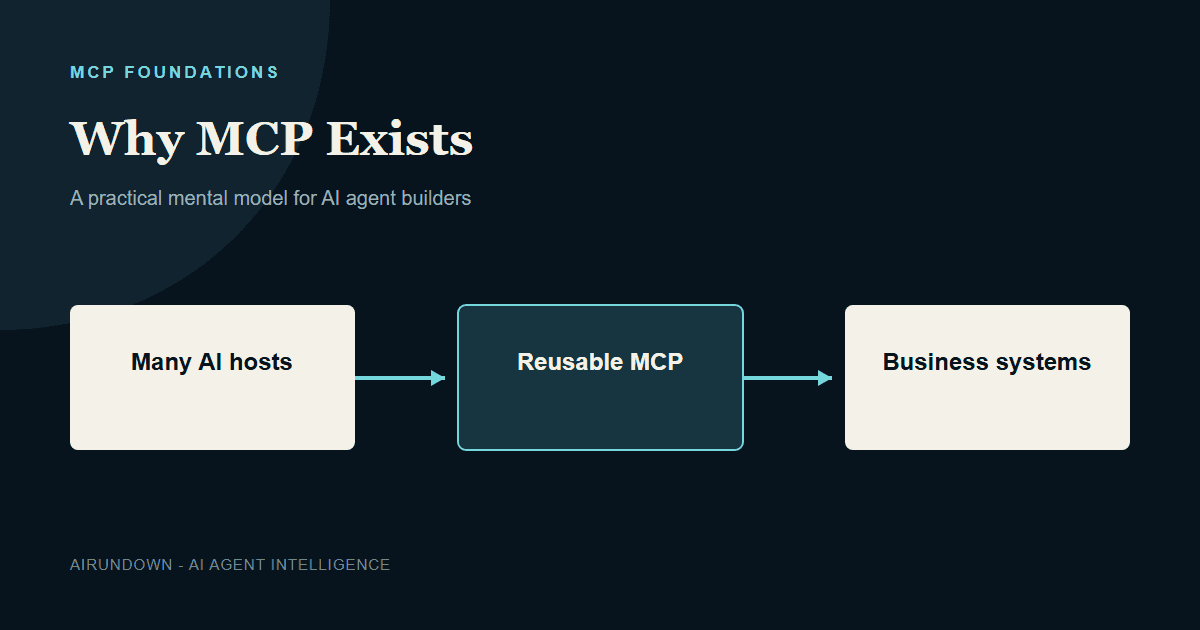
Why MCP Exists: The Integration Problem It Solves
Understand why AI integrations become difficult at scale and how MCP creates a reusable boundary between AI applications and external systems.
Priya Nair5 min read
Editorial Team Profile
Tech Culture & Business Writer
“Narrative-driven, warm, human-centered”
Understand why AI integrations become difficult at scale and how MCP creates a reusable boundary between AI applications and external systems.
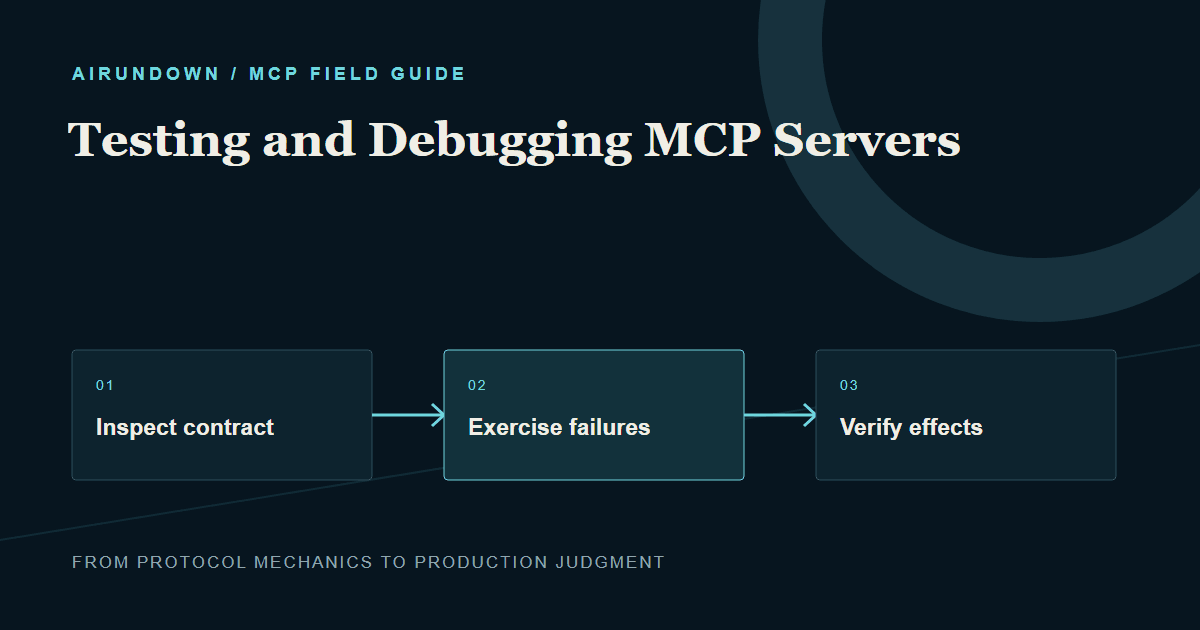
A practical workflow for inspecting, testing, and debugging MCP servers from protocol exchange to downstream side effects.
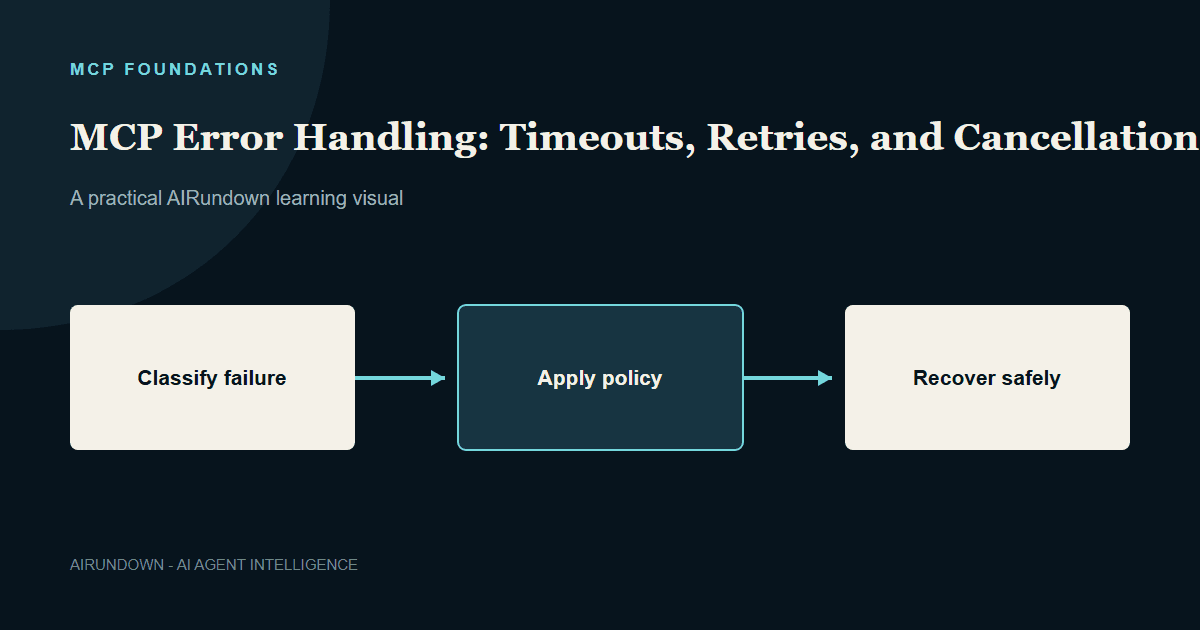
A reliability guide to MCP errors, deadlines, retries, cancellation, progress, idempotency, ambiguous writes, and observable recovery.
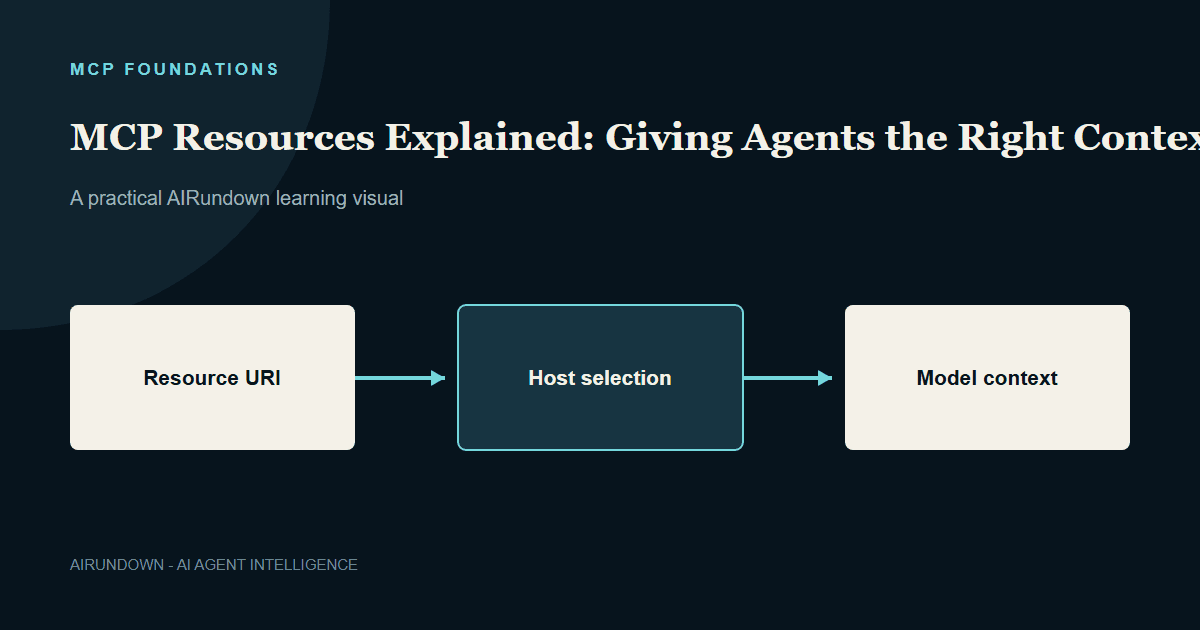
Understand MCP resources, resource URIs, templates, discovery, reading, subscriptions, and safe context selection.
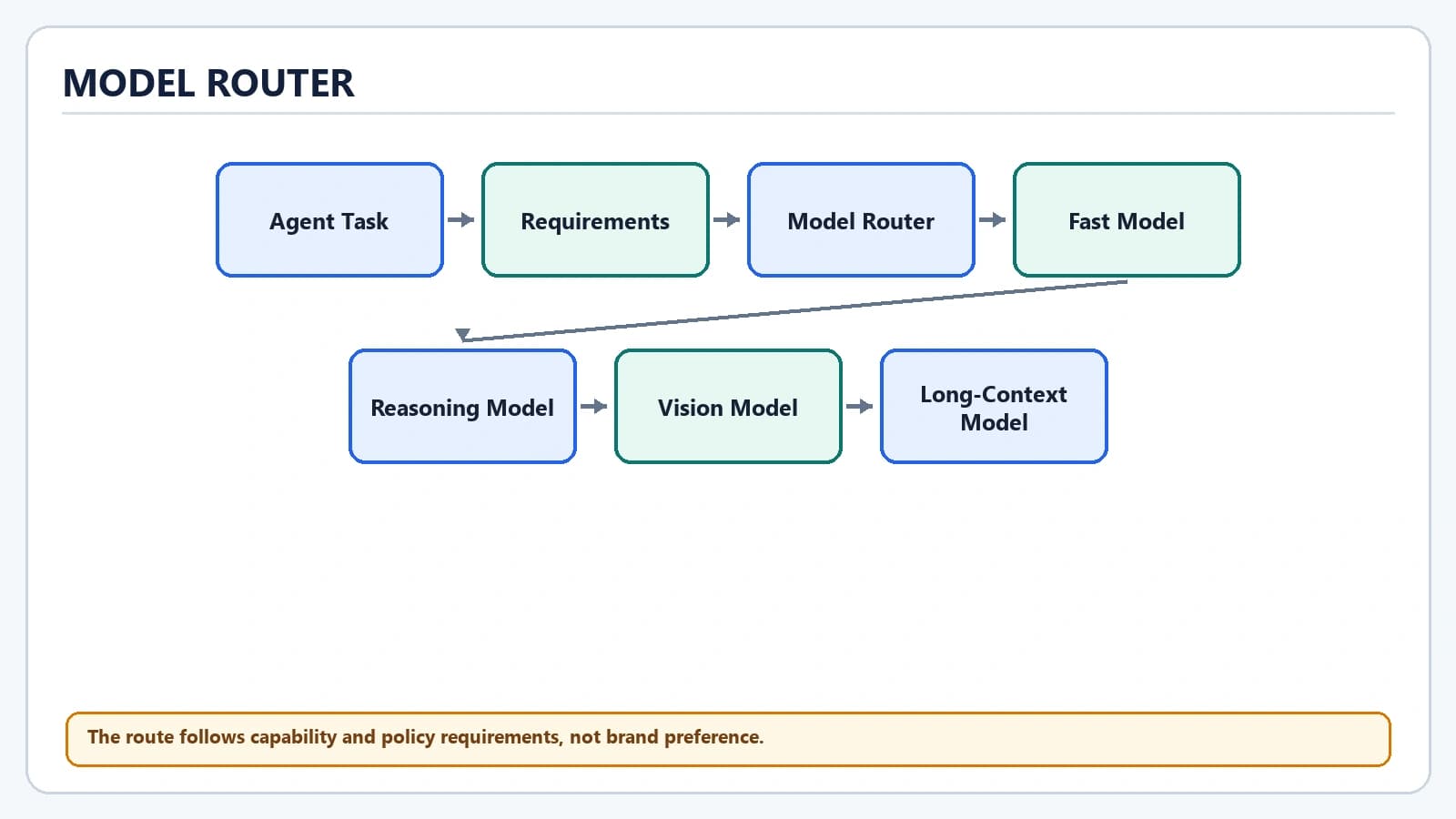
Choose models by task requirements, policy, quality, latency, and cost instead of sending every step to one default.
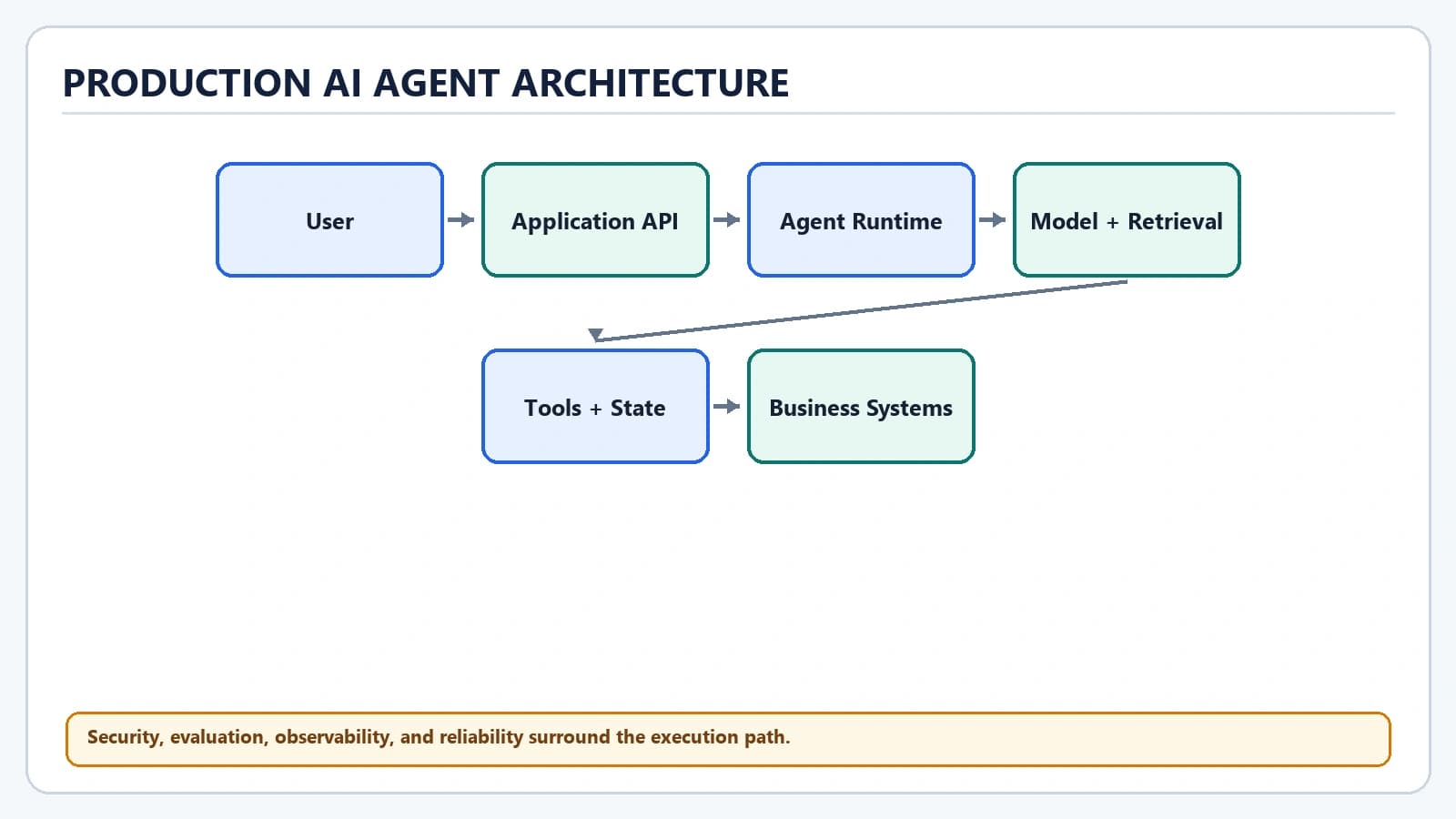
A practical path from a local agent prototype to a controlled, observable, and reversible production service.
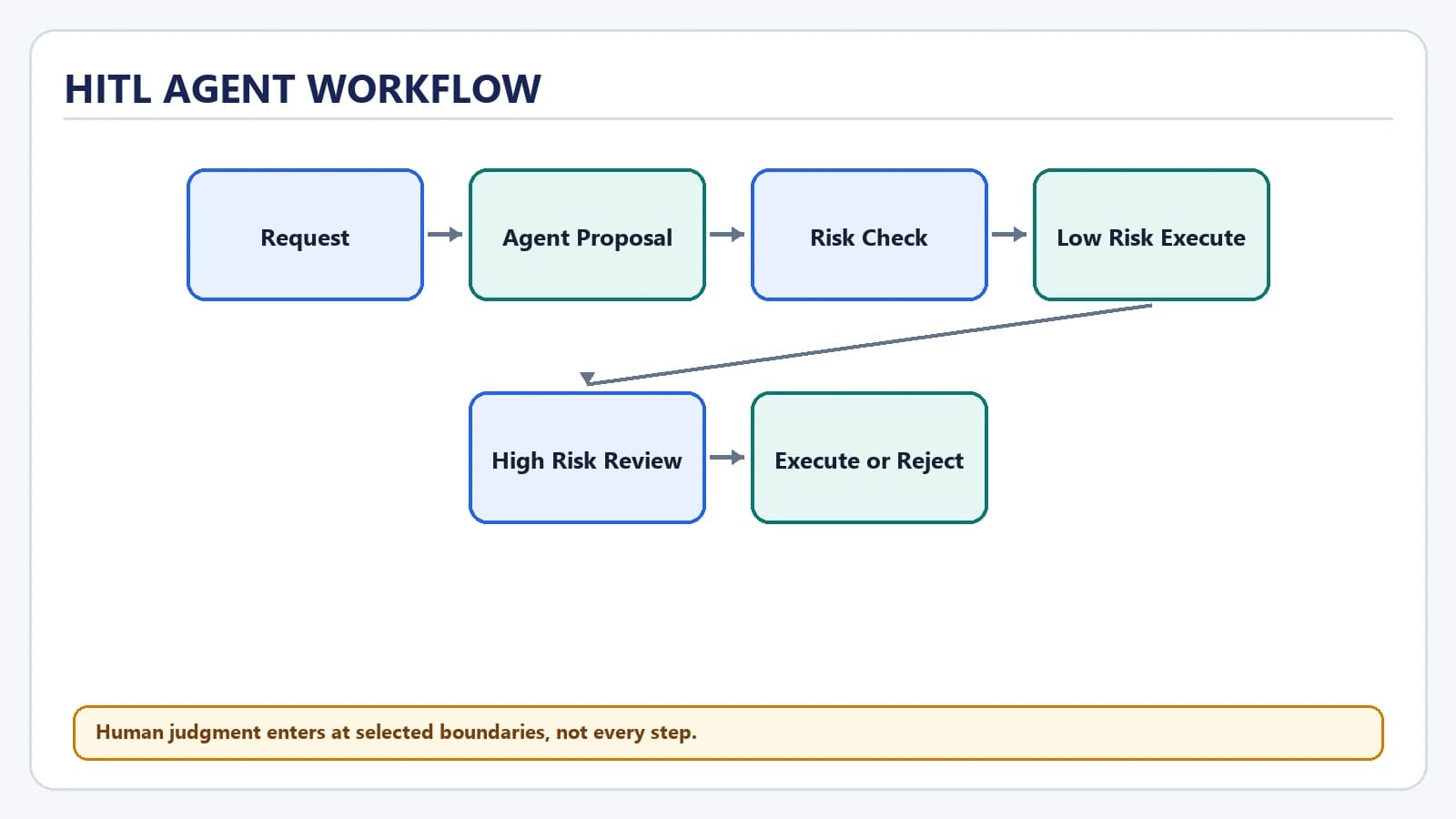
A practical, production-oriented explanation of human-in-the-loop control, with examples, boundaries, trade-offs, and failure handling patterns.
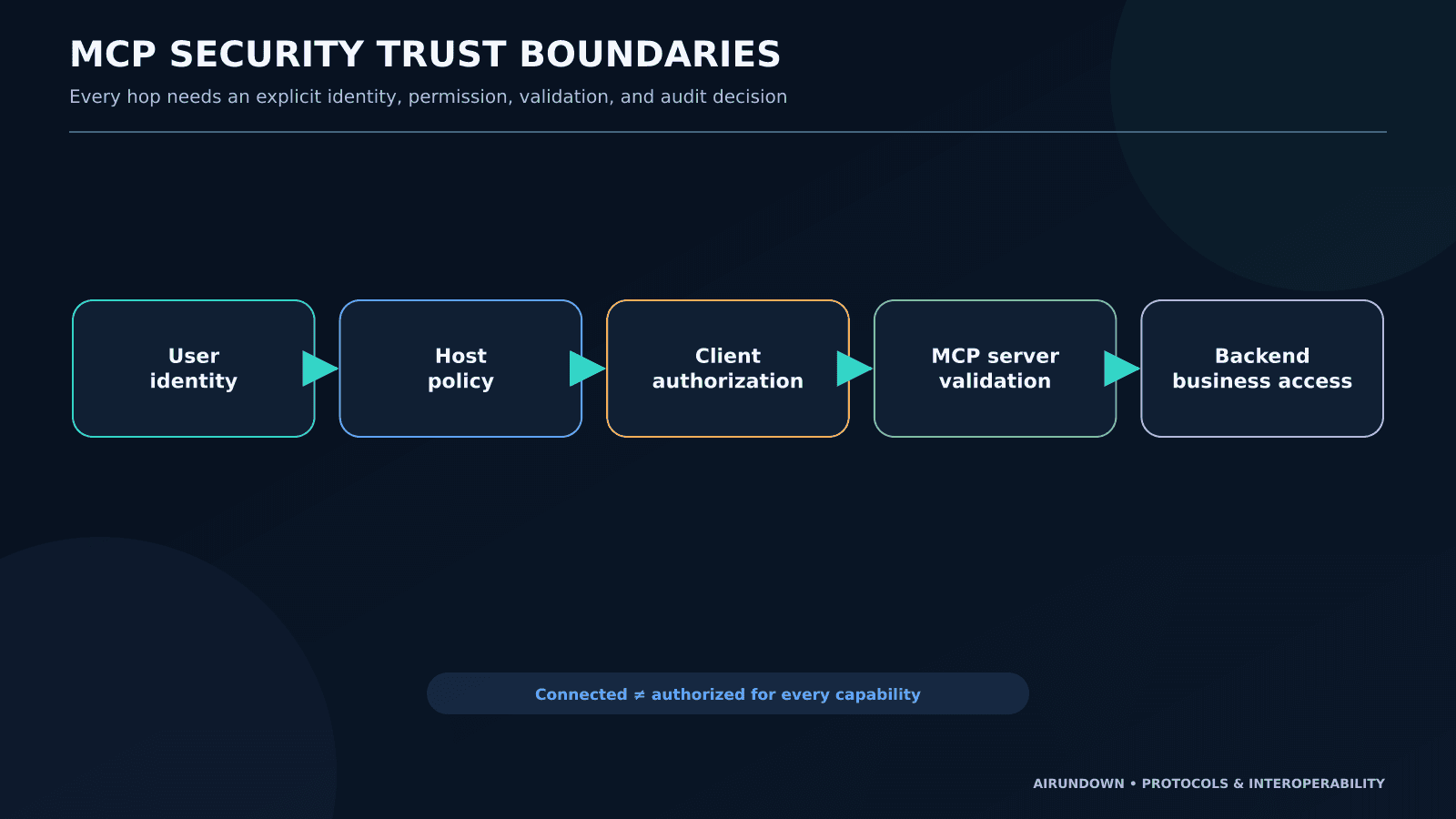
A practical security model for MCP trust boundaries, authorization, least privilege, approvals, external content, backend credentials, and auditability.
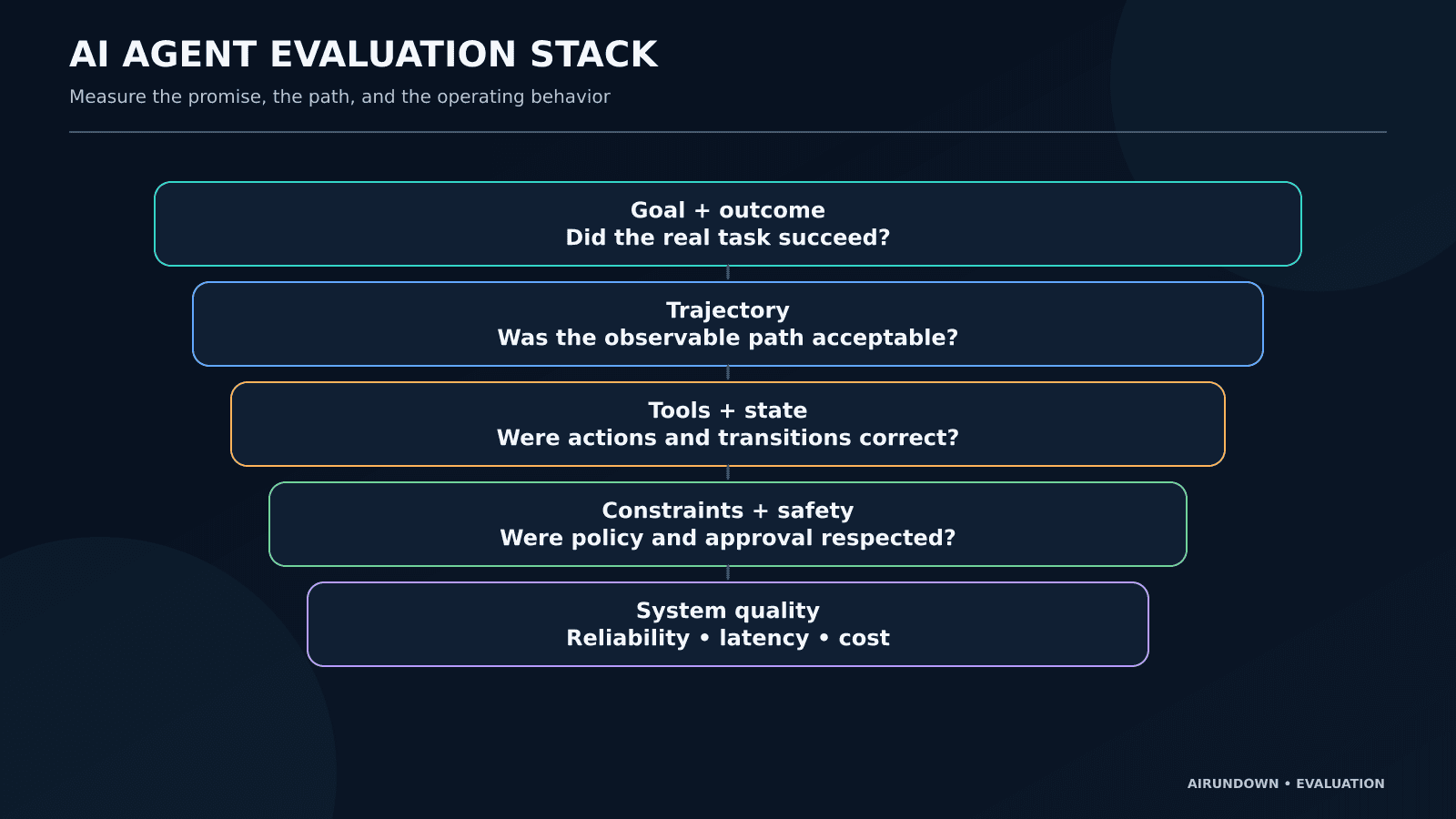
Agent evaluation measures task outcomes, trajectories, tool behavior, constraints, safety, reliability, latency, and cost—not only final prose.
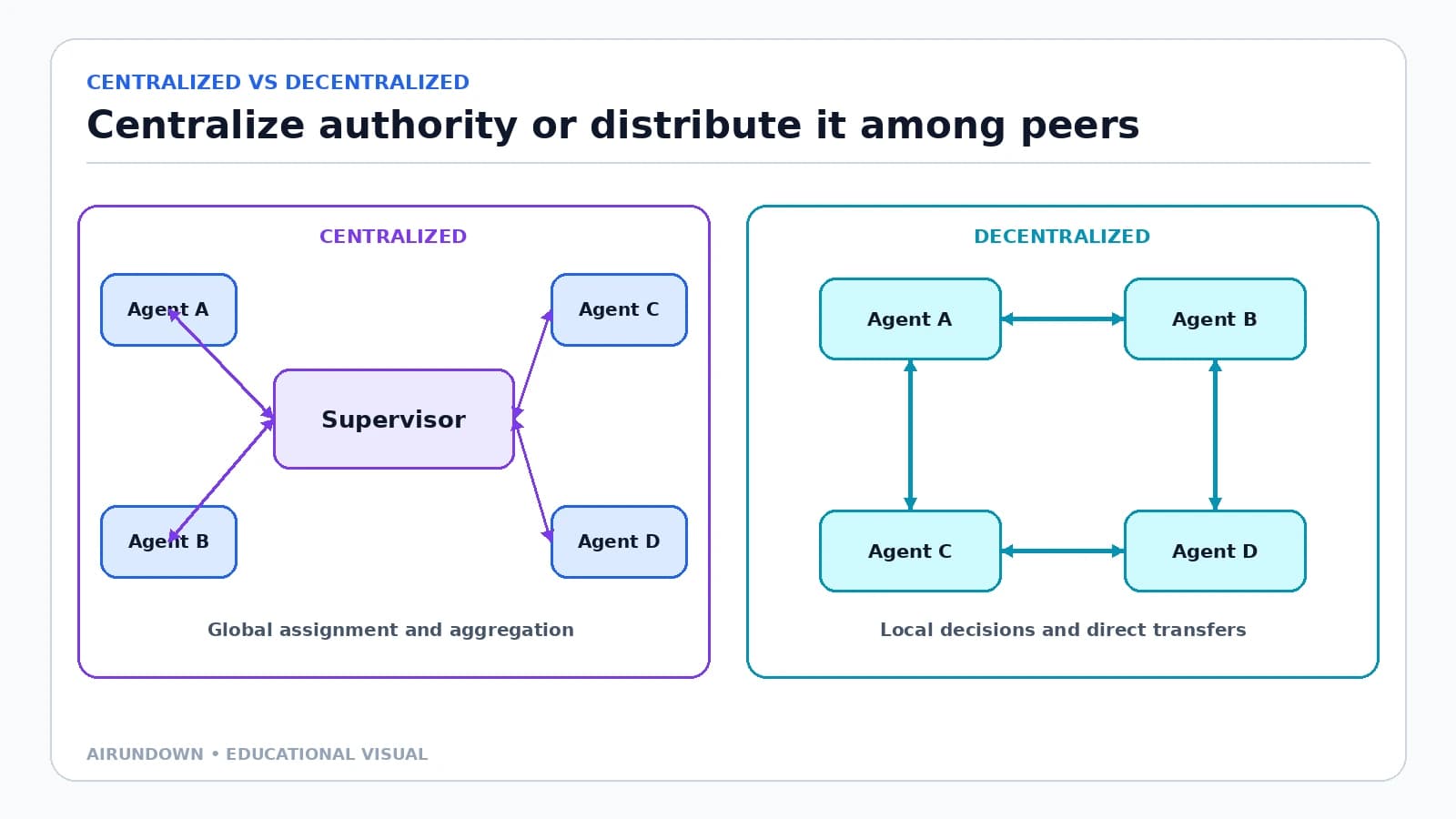
Compare centralized, decentralized, and hybrid multi-agent architectures across control, state, coordination, scale, observability, governance, and resilience.
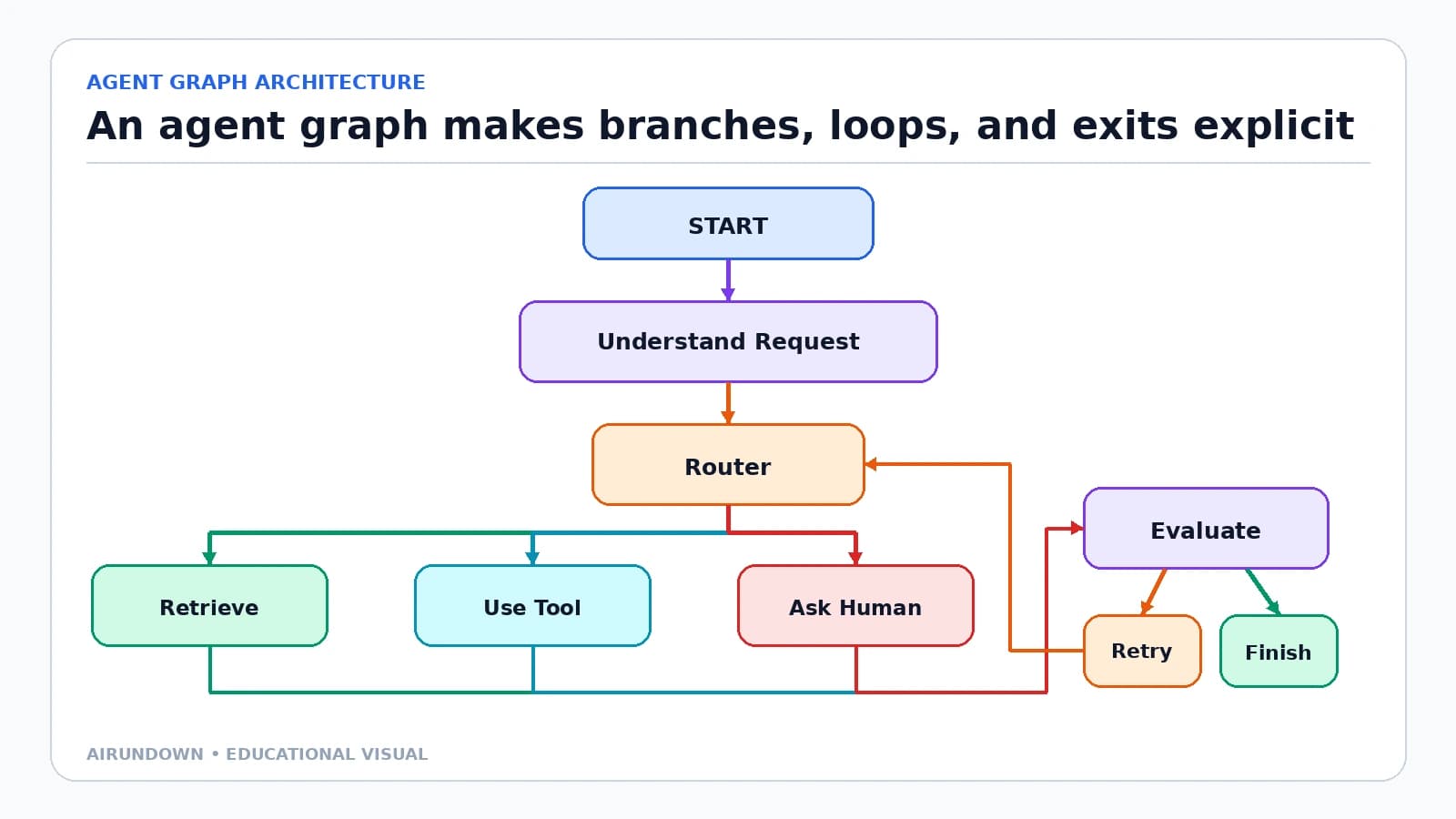
Learn how agent graphs and state machines make nodes, edges, branches, loops, checkpoints, transitions, retries, and terminal outcomes explicit.
A beginner-friendly mental model of embeddings, vectors, similarity, and how AI agents use them for retrieval and memory without confusing similarity with truth.
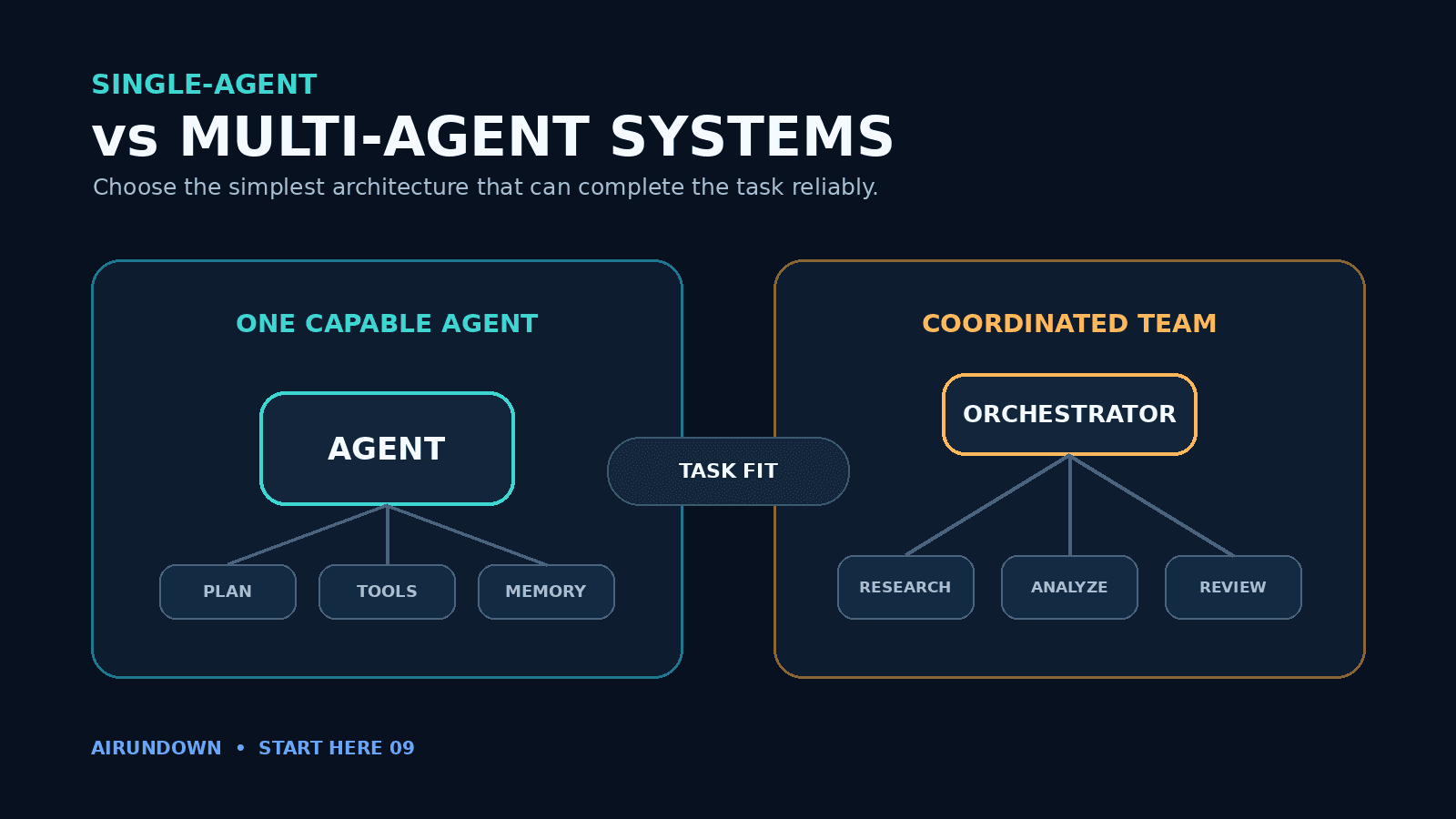
Learn how single-agent and multi-agent systems differ, what extra coordination costs, and how to choose the simplest architecture that works.
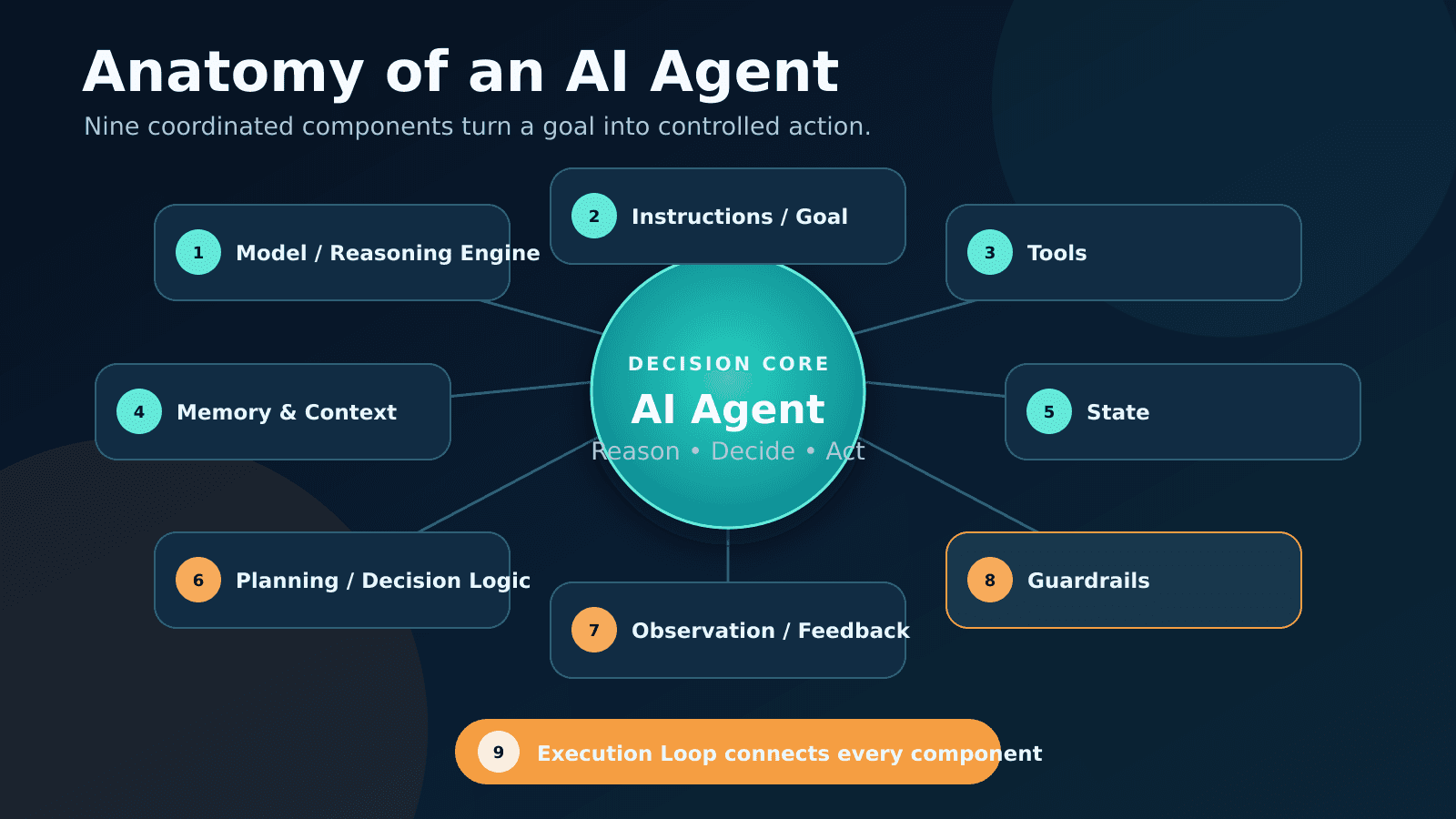
A beginner-friendly breakdown of the model, instructions, tools, memory, state, planning, feedback, guardrails, and execution loop inside an AI agent.
DeepSeek is designing its own AI inference chip to cut its reliance on Nvidia and Huawei, Reuters reported on July 7. The effort is early and faces steep manufacturing hurdles under U.S. export controls, but the intent is unmistakable. It signals that China's top AI lab now treats owning its compute as a strategic necessity, mirroring recent custom-silicon moves by OpenAI and Anthropic. For PMs, it is an early warning that the AI supply chain may split into two stacks, and your vendor choices will increasingly carry geopolitical weight.
The FTC's proposed AI accuracy policy statement, out July 1 and open for comment until July 31, 2026, says steering a model's output away from the correct answer without disclosure can be deception under Section 5. It was ordered by Trump's Executive Order 14365 and singles out Colorado's AI Act as impliedly preempted. The bigger signal: federal and state law now point AI teams in opposite directions over what a model is allowed to say. For PMs, the liability lands not on the labs but on the companies deploying these models into regulated decisions.
Kuaishou's Kling AI closed a funding round of roughly $2.8 billion at an $18 billion valuation ahead of a planned Hong Kong spin-off listing, backed by Tencent, Alibaba Cloud, Baidu, and Chinese state-linked funds. The raise lands five months after OpenAI shut down Sora, which generated just $2.1 million in lifetime revenue against roughly $1 million in daily operating costs. Kling's edge isn't a flashier model — it's pricing 65% below Sora and distribution embedded directly into Kuaishou's commerce ecosystem. For PMs, the lesson is that vendor selection in generative video should weight unit economics and distribution over demo polish, because the category is now punishing spectacle and rewarding plumbing.
Together AI raised $800 million at an $8.3 billion valuation, according to Reuters, one of the largest bets yet on open-source AI infrastructure. The round signals that investors see real, durable demand in helping companies run open-weight models outside the big proprietary labs. It's a sign that vendor lock-in has become a boardroom-level risk, not just an engineering preference. For PMs, it means the case for open-source model infrastructure, on cost and control, just got a lot harder to ignore.

Jeff Bezos watched the large language model revolution happen from the sidelines — a remarkable thing to say about the founder of AWS the infrastructure that runs half the AI industry. Now Bezos wants Amazon to build what he calls an AI engineer: autonomous systems that can write test and deploy code with minimal human oversight.
In 2025 venture capital made a decision. Not gradual but an abrupt unmistakable pivot. AI did not just attract more funding than any other sector. It absorbed the kind of capital that used to flow toward climate tech biotech and fintech combined.
Meituan open-sourced LongCat-2.0, a 1.6 trillion-parameter model it claims was trained entirely on a 50,000-card domestic ASIC cluster — a first for China at this scale. The model matches DeepSeek's V4-pro in parameter count and context window, but unlike DeepSeek, Meituan says it used homegrown chips for both training and inference. This breaks the assumption that restricting Nvidia exports throttles China's ability to build frontier models, not just run them. For PMs, the supply-chain risk calculus for AI infrastructure just shifted — and your vendor dependency audit probably hasn't caught up.
vivo launched the X Fold6 on June 26, 2026, positioning it as an on-device AI workstation powered by a custom co-developed MediaTek Dimensity 9500 Super Edition chip and OriginOS 6 Fold. The device delivers a 111% NPU performance boost with 56% lower power consumption, plus a 7x improvement in offline voice transcription speed. The launch signals a broader industry shift toward edge AI productivity as a primary mobile use case, with implications for enterprise software and platform strategy well beyond China.
Baidu has merged its three fragmented ERNIE AI interfaces — ERNIE Bot, Wen Xiaoyan, and Baidu ERNIE Assistant — into a single portal at chat.baidu.com, ending years of confusing brand overlap caused by siloed internal teams. The cleanup is overdue but arrives as Baidu's consumer AI position has already weakened significantly, with ERNIE App at roughly 5 million DAU against ByteDance's Doubao at over 140 million. For PMs, the story is a case study in how organizational structure, not model quality, can determine product fate.
Daikin Industries has approved a ~$108 million investment to establish its first global R&D hub outside Japan in Haryana, India, focused on advanced cooling solutions for AI data centers. The move reflects the growing thermal crisis in AI infrastructure, where high-density chips like NVIDIA's Blackwell require fundamentally new cooling approaches. For the broader industry, it signals that critical AI infrastructure innovation is increasingly being anchored in the Global South.
India's pickleball market has grown from a niche weekend activity to a $50 million industry with over 1,200 courts and a projected 26% CAGR through 2030. The sport's low infrastructure costs, high social appeal, and celebrity-backed professional leagues are accelerating adoption across urban India. For product managers and founders in SportsTech, D2C hardware, and community platforms, this represents a rapidly closing window to establish distribution and brand loyalty before the market consolidates.