AI Agents
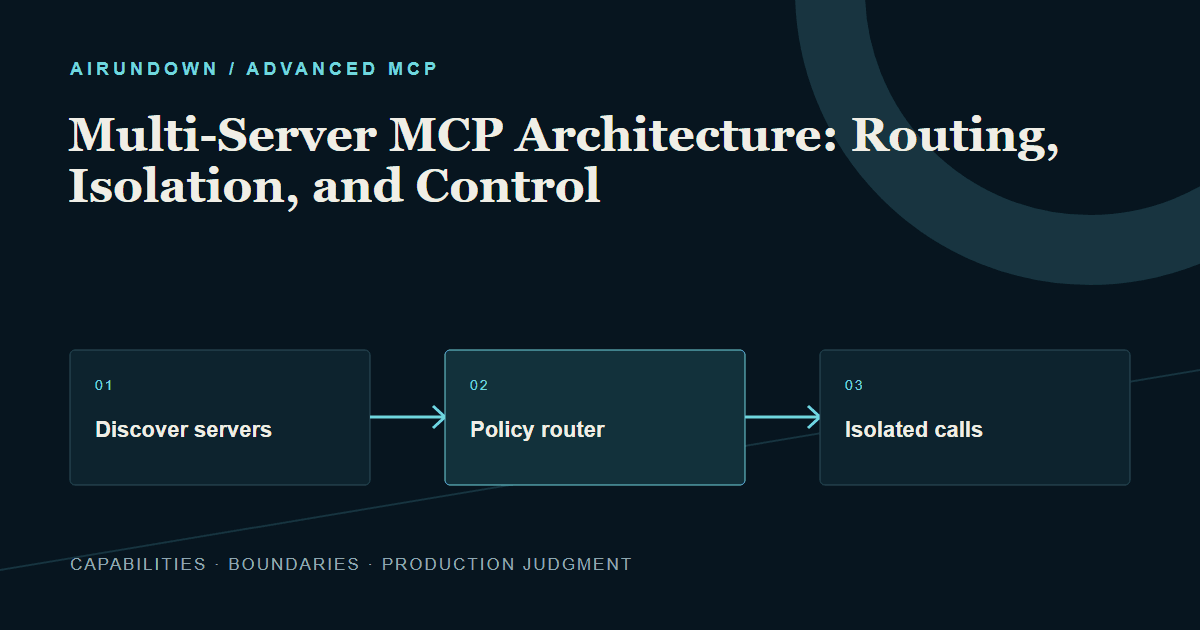
Multi-Server MCP Architecture: Routing, Isolation, and Control
An architecture guide for coordinating multiple MCP servers without creating tool collisions, permission sprawl, or shared failure domains.
Maya Chen4 min read
Editorial Team Profile
Senior AI Strategy Analyst
“Data-led, authoritative, precise”
An architecture guide for coordinating multiple MCP servers without creating tool collisions, permission sprawl, or shared failure domains.
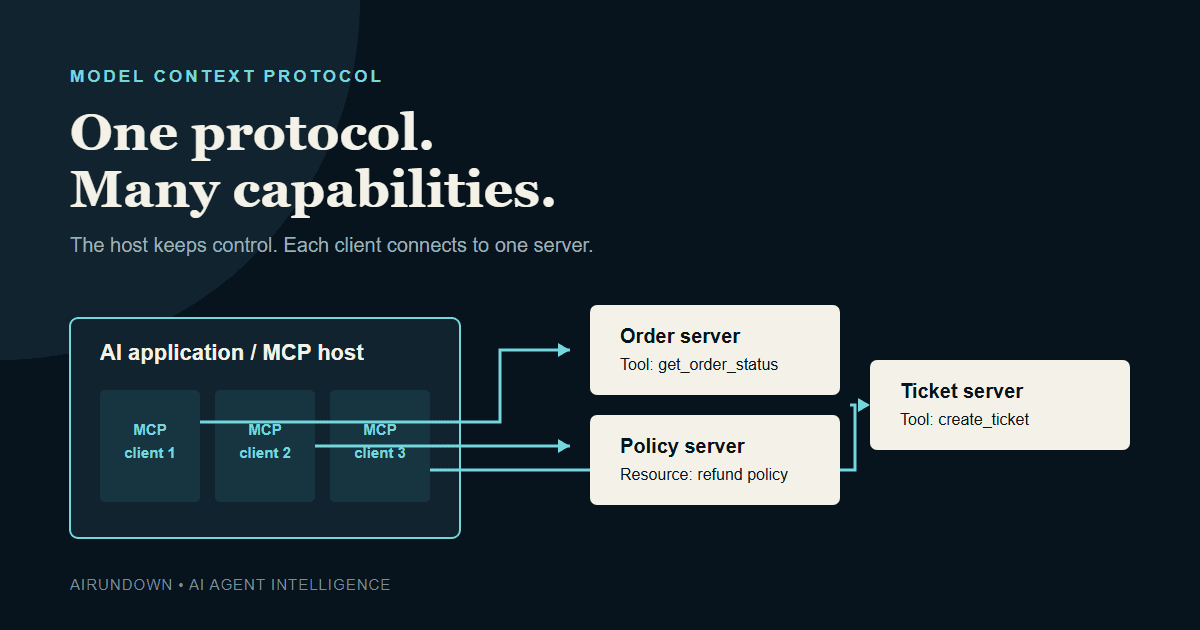
A practical, beginner-friendly guide to the Model Context Protocol: its host-client-server architecture, tools and resources, request flow, trade-offs, and security boundaries.
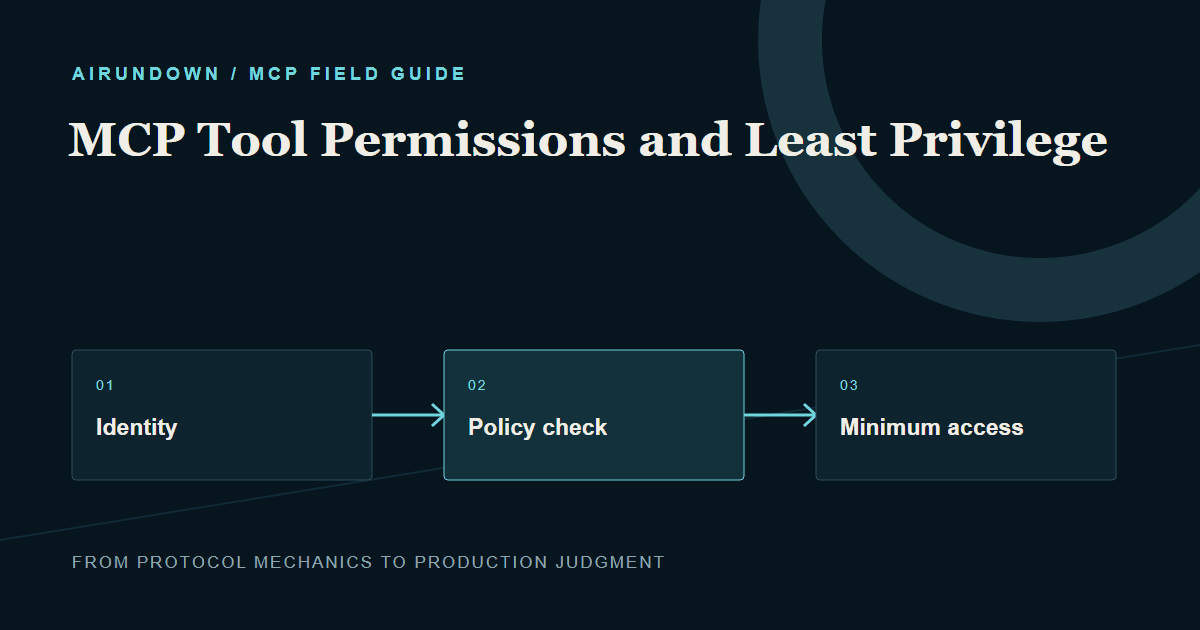
A practical permission model for controlling which MCP tools users and agents can discover, call, and approve.
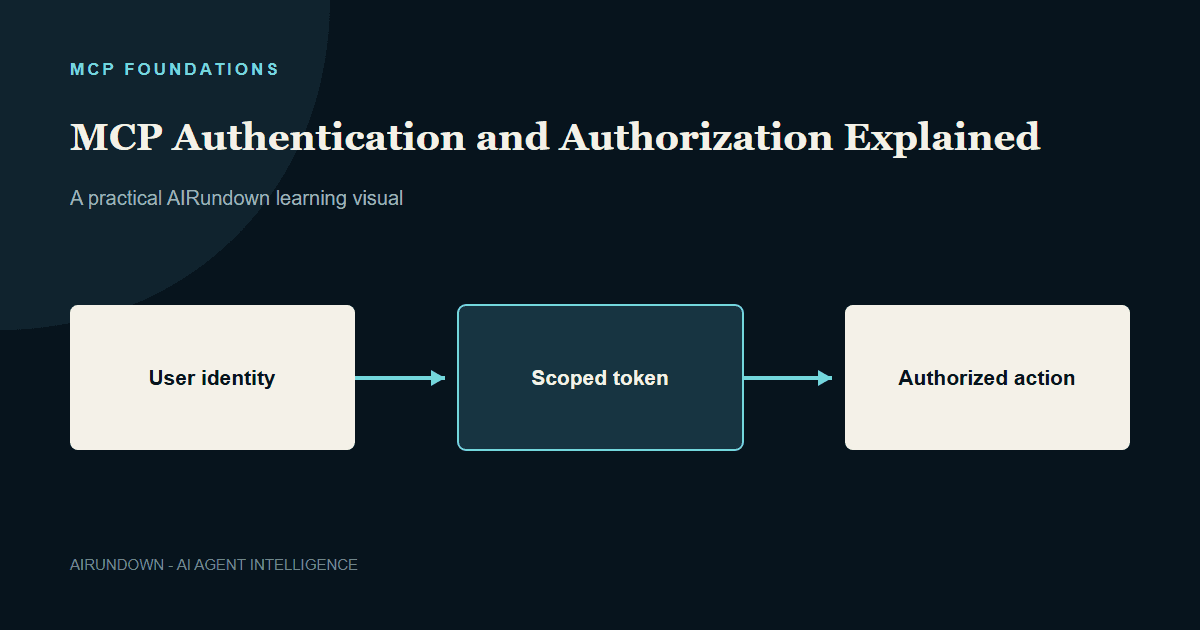
A production-focused guide to authenticating MCP clients and authorizing users, tools, resources, tenants, and downstream actions.
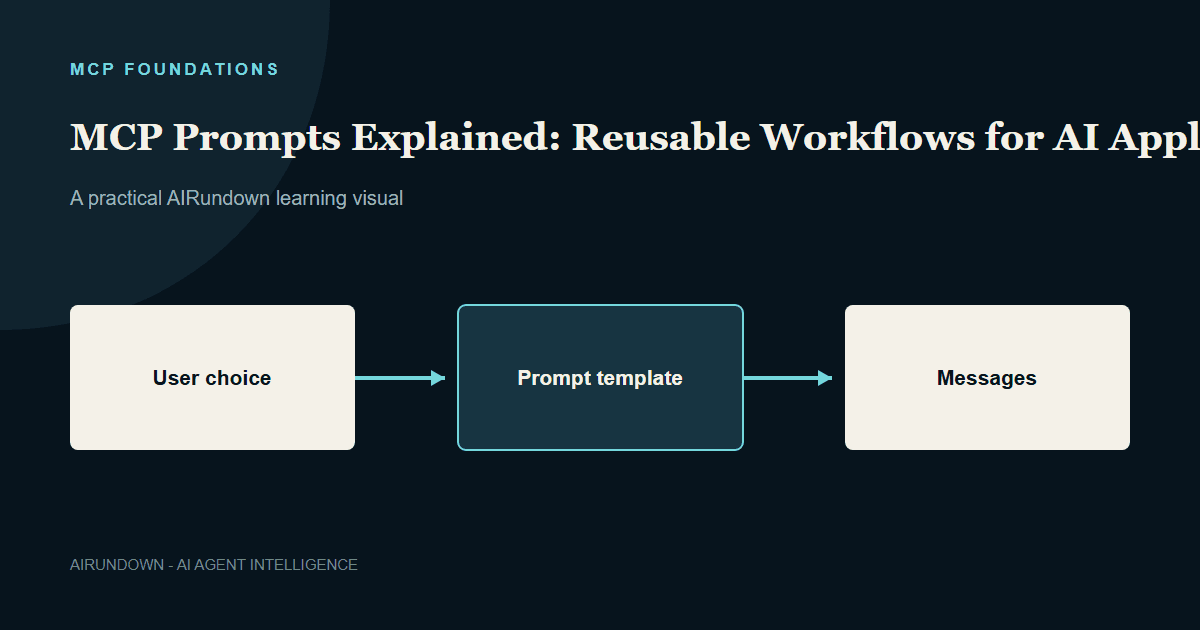
A practical guide to MCP prompts, including discovery, arguments, message content, user control, safety, and design patterns.
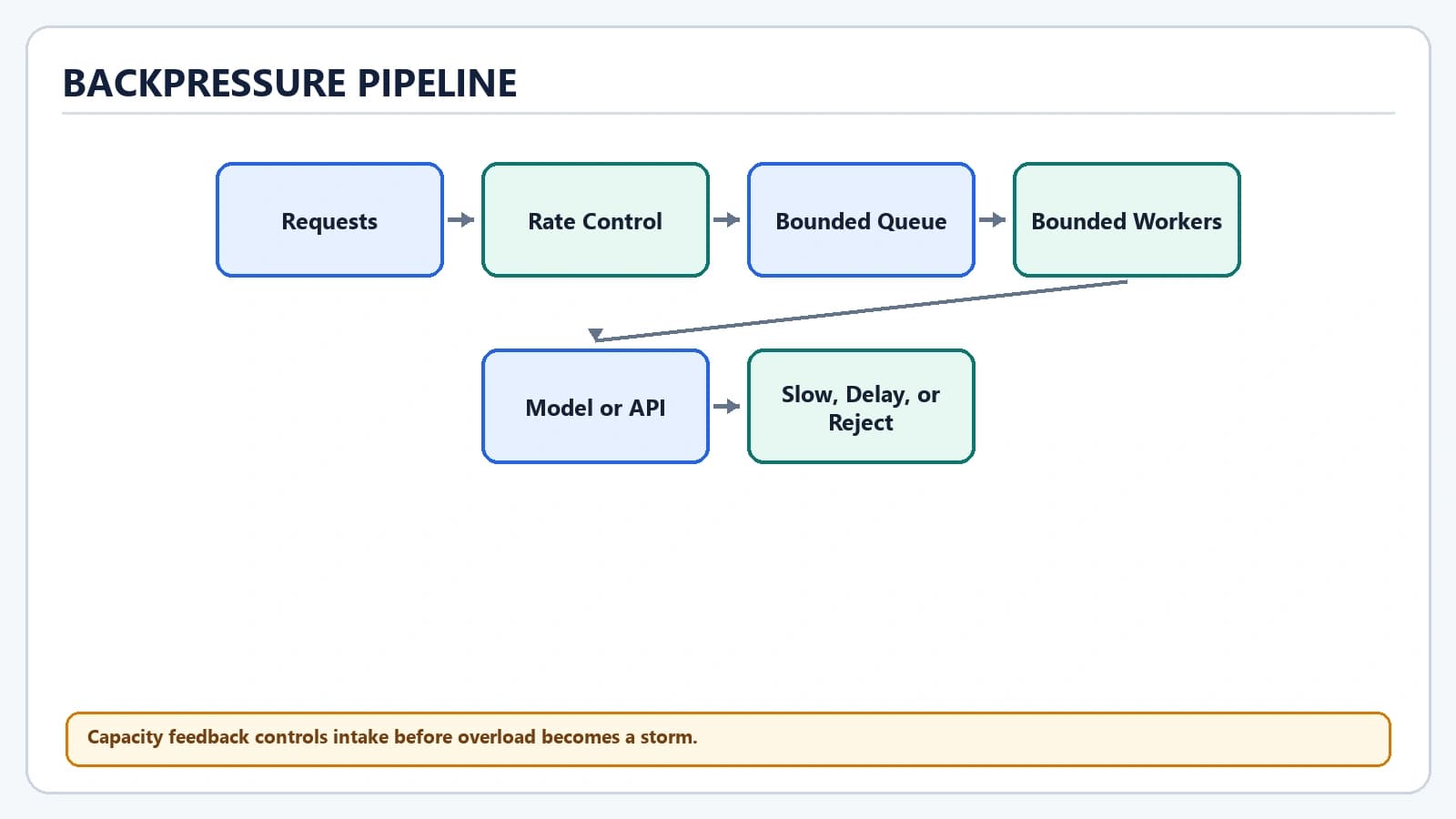
Control overload before immediate retries turn constrained models, tools, or workers into a failure storm.
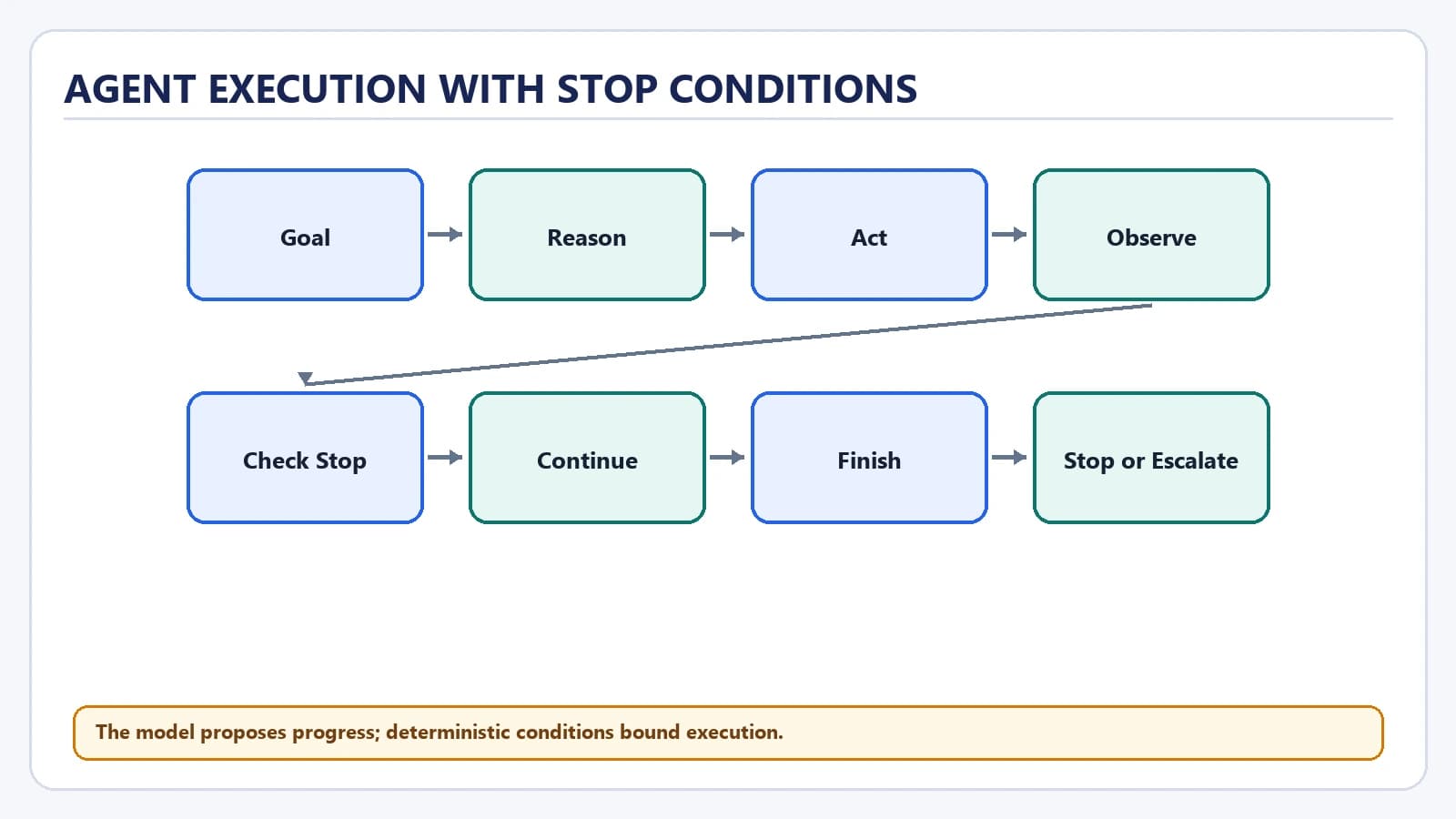
A practical, production-oriented explanation of agent stopping conditions, with examples, boundaries, trade-offs, and failure handling patterns.
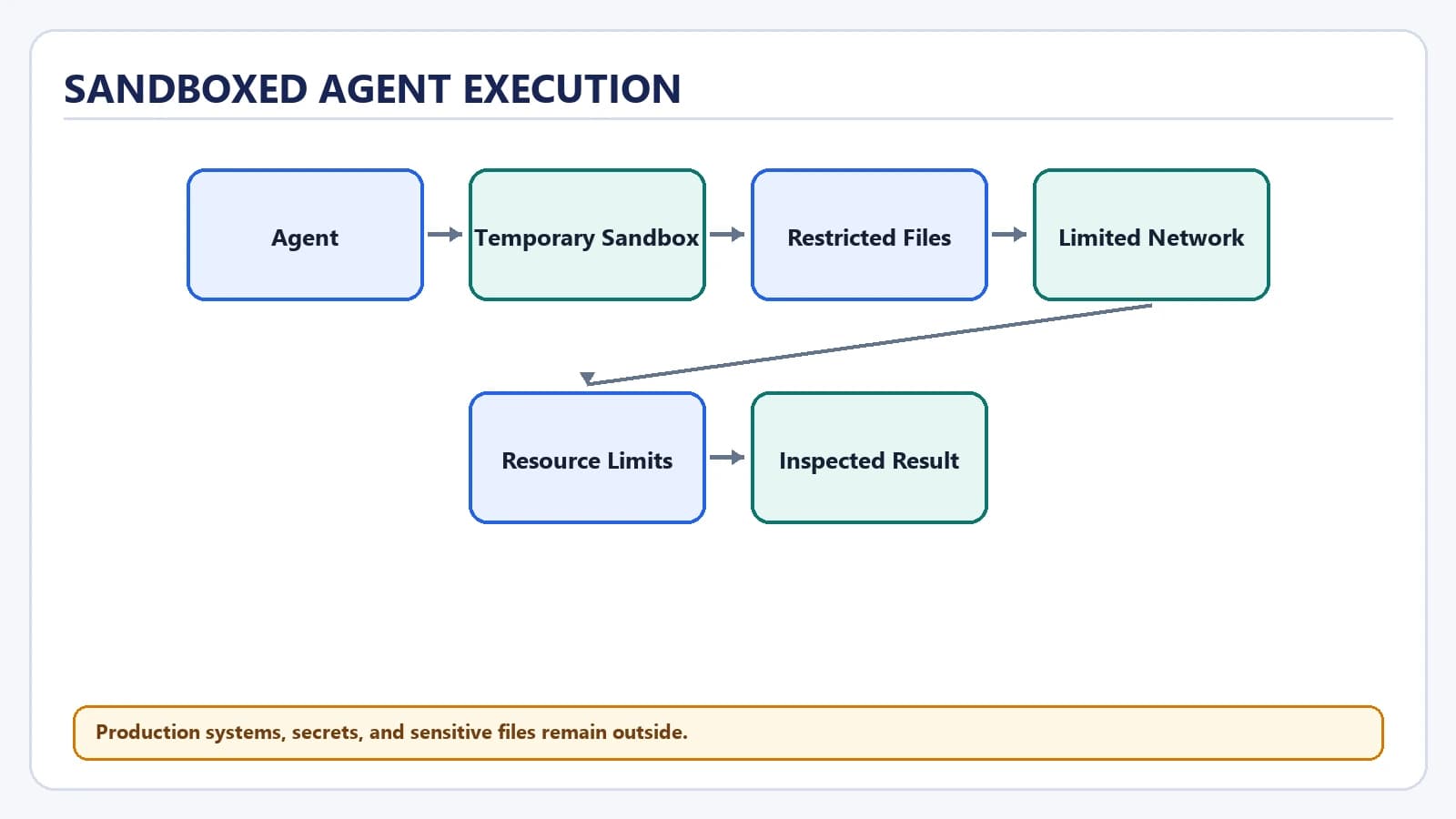
A practical, production-oriented explanation of sandboxed agent execution, with examples, boundaries, trade-offs, and failure handling patterns.
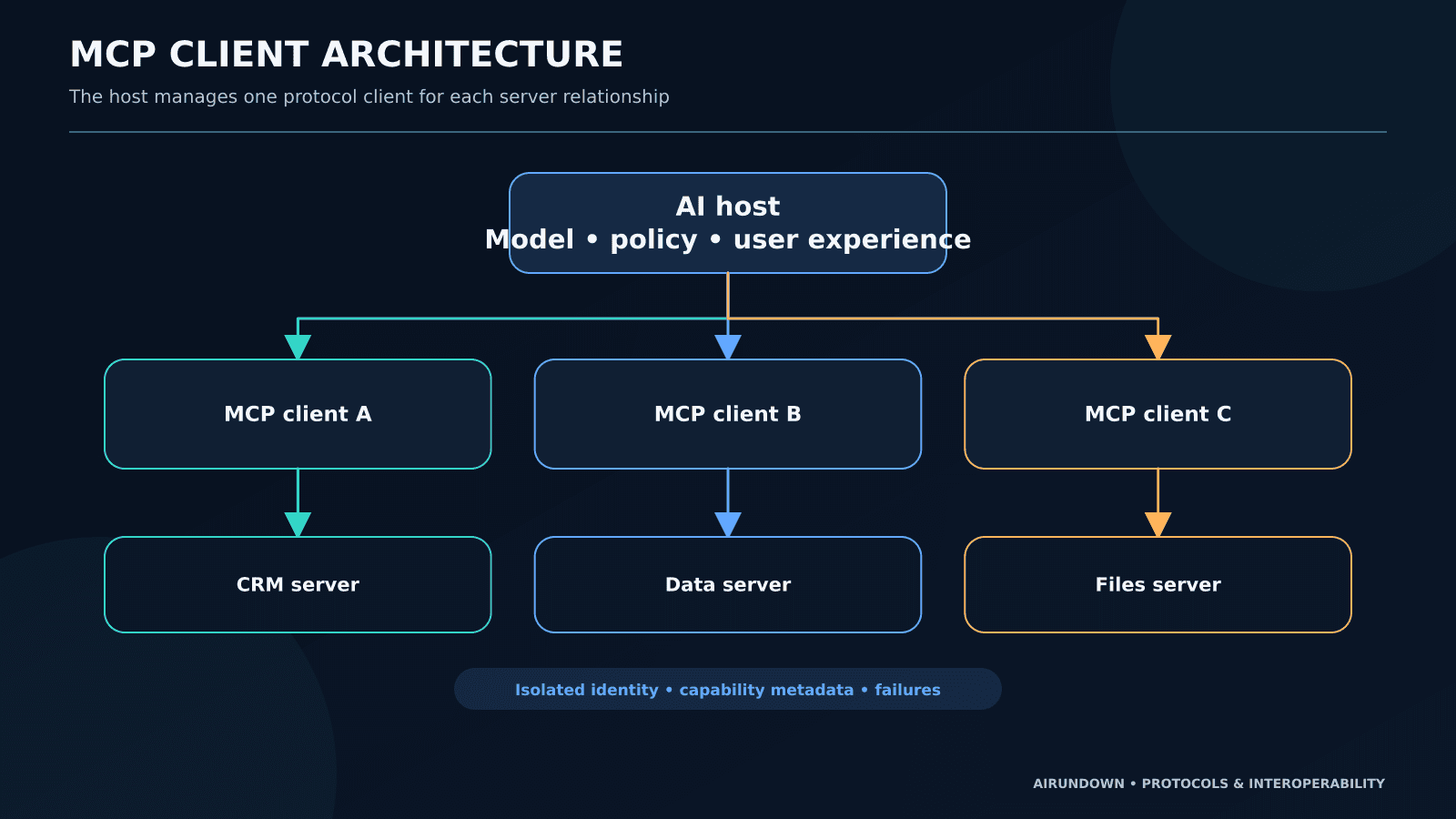
Understand how an MCP host manages dedicated clients, discovers server capabilities, applies policy, invokes operations, and handles failures.
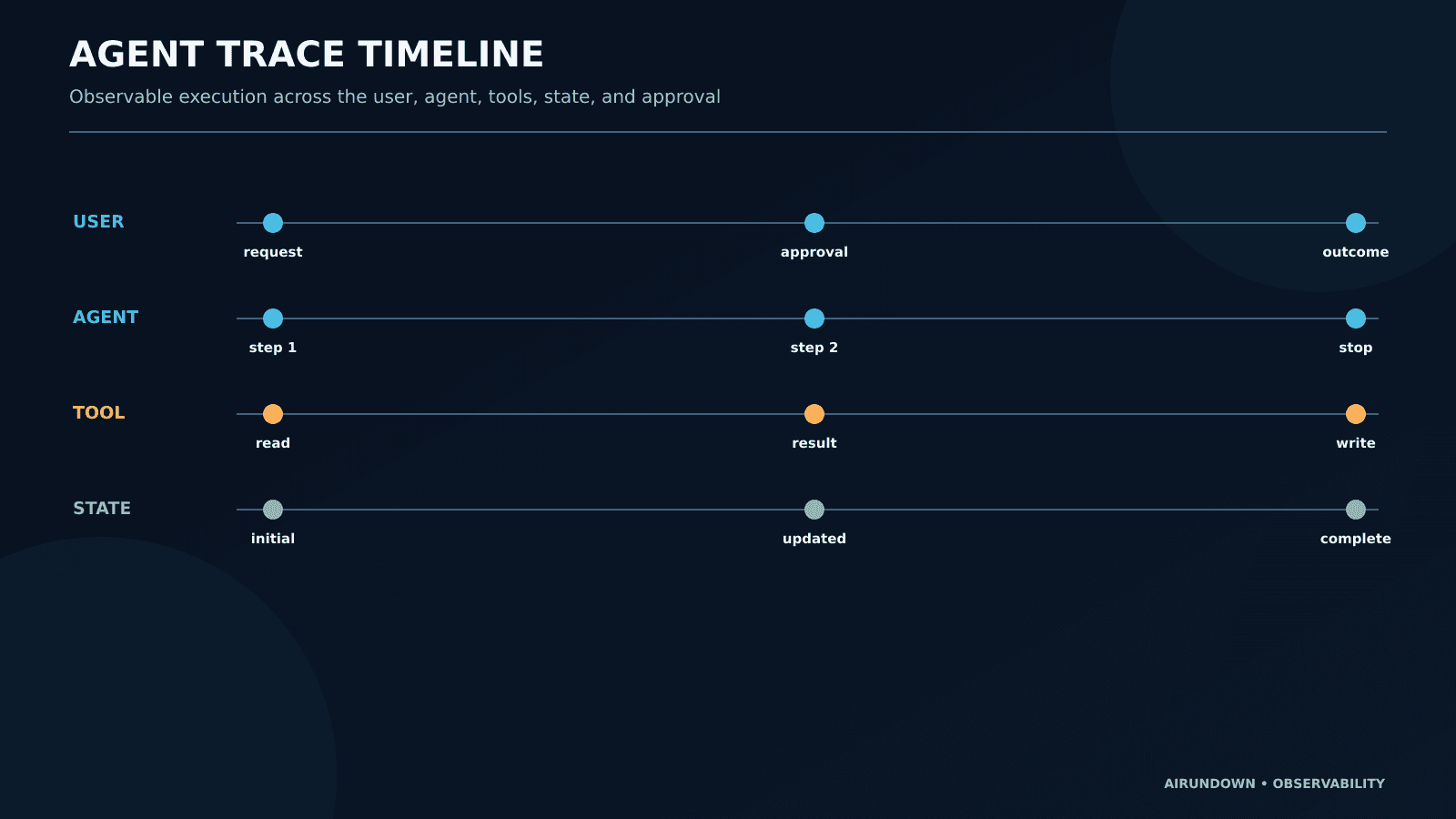
Learn how traces and trajectories represent observable agent execution without requiring storage or exposure of private chain-of-thought.
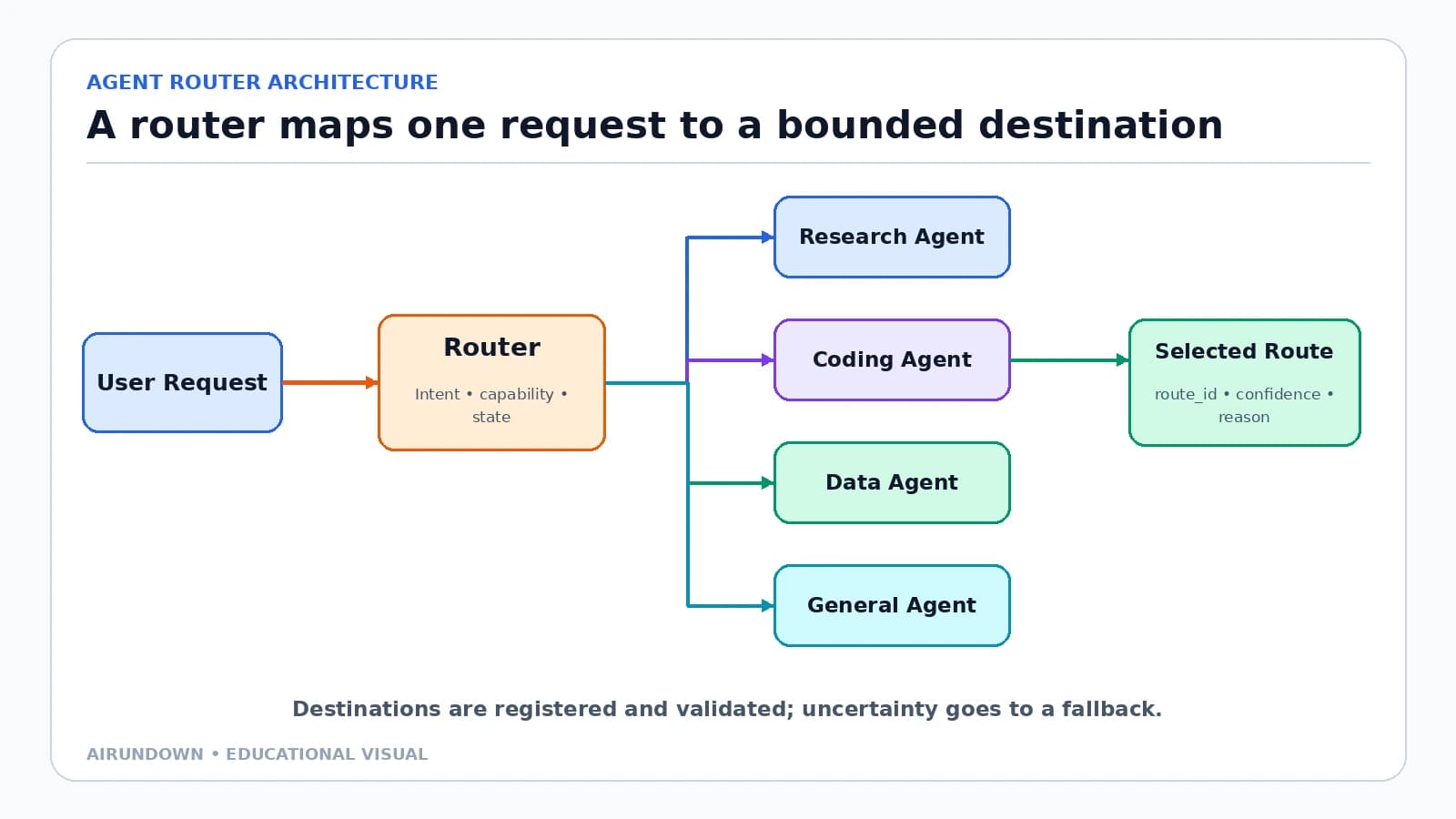
Learn seven agent-routing patterns, from deterministic rules and classifiers to semantic, capability-aware, hierarchical, and fallback routing.
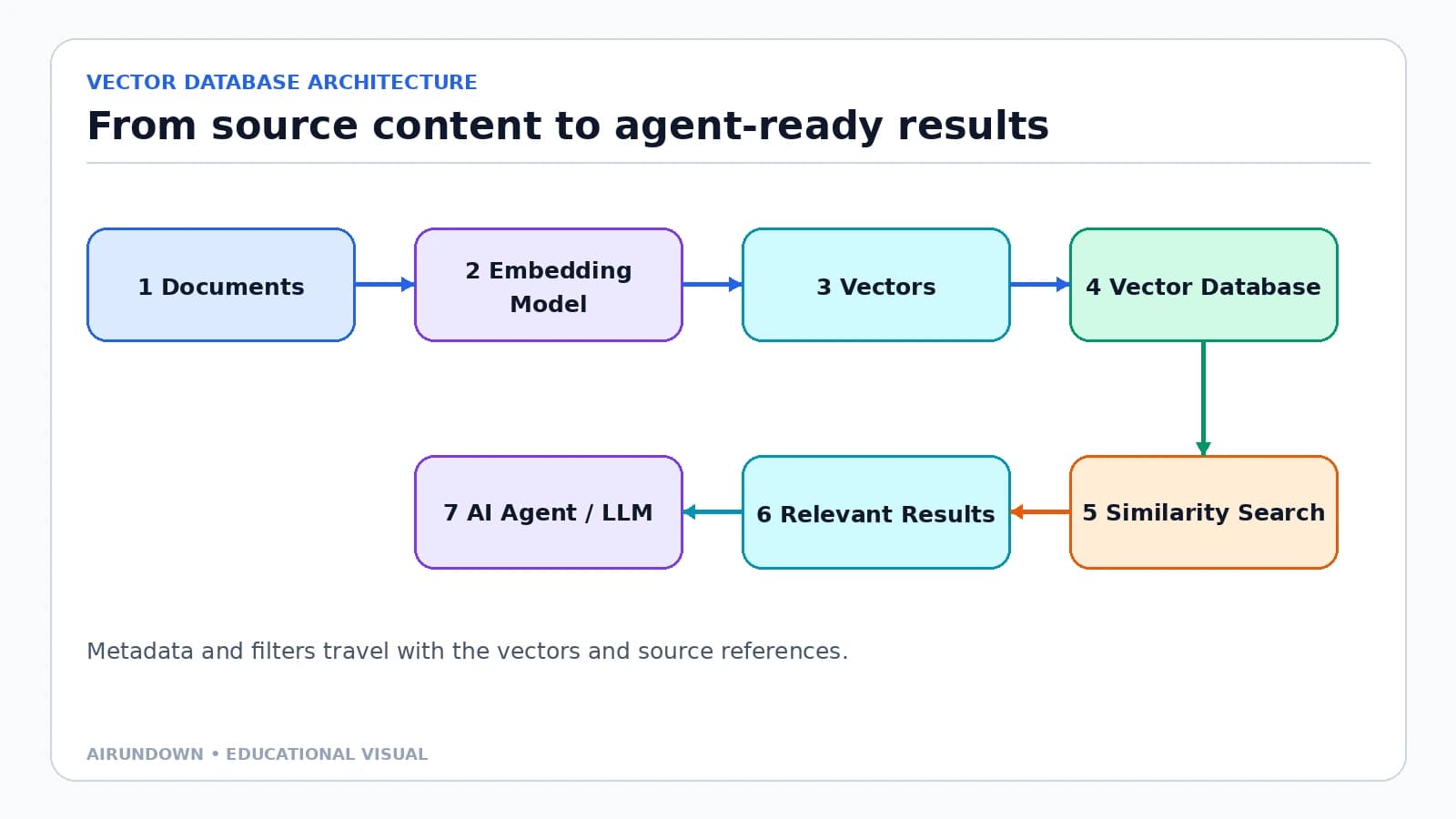
Learn how vector databases store embeddings, power semantic search, and support RAG and memory without replacing a knowledge base or relational database.
A practical comparison of external knowledge retrieval and agent memory, including their overlap, different data lifecycles, and shared vector infrastructure.
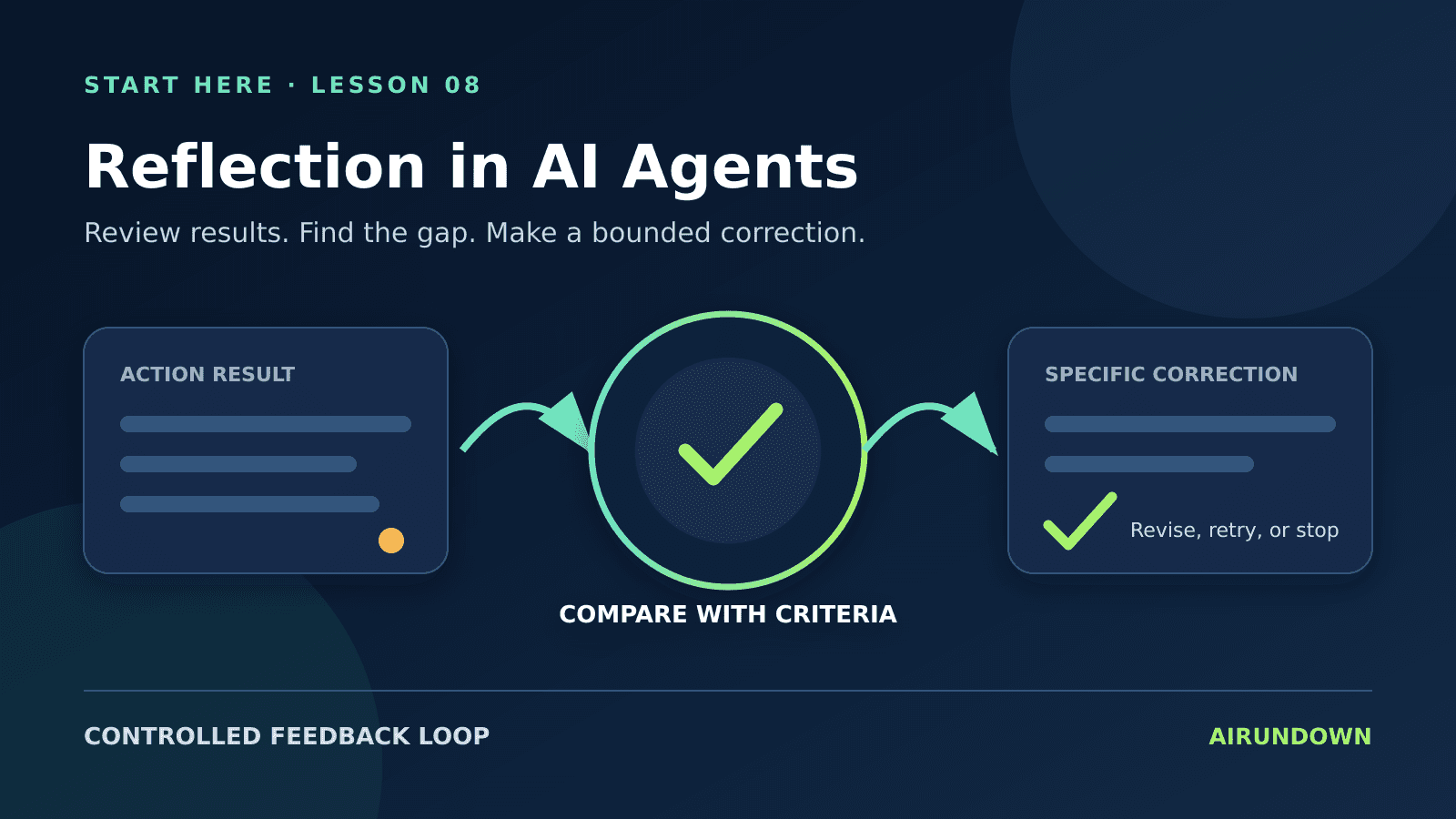
Learn how AI agents use feedback, critique, and execution review to detect mistakes, revise their approach, and improve results without endless retry loops.
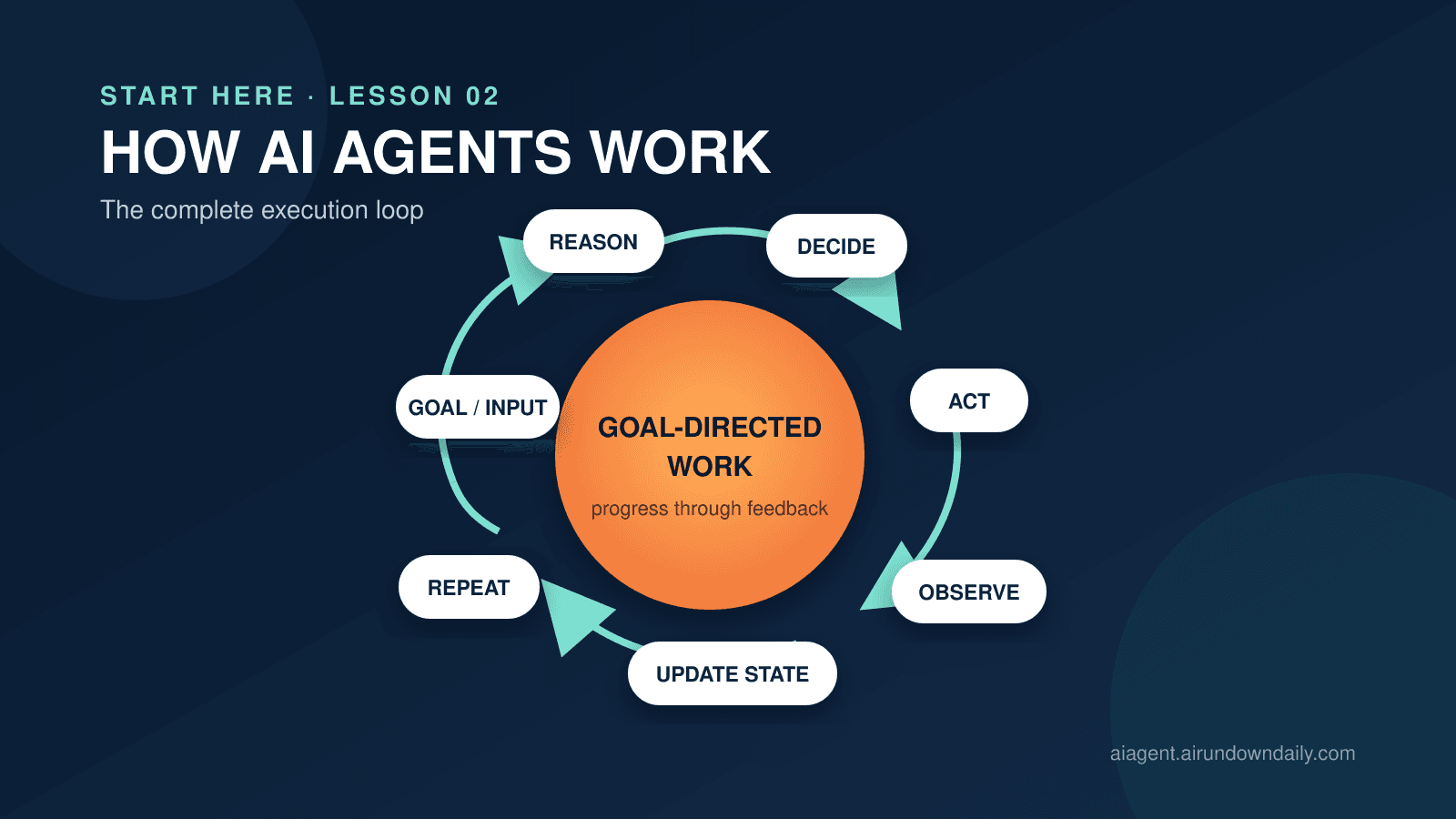
Follow the seven-stage execution loop that lets an AI agent reason, choose actions, use tools, learn from results, and keep working toward a goal.
LLM pretraining is the next-token-prediction process that turns trillions of tokens of text into a raw base model, the foundational step before any fine-tuning, safety work, or product polish happens. As of mid-2026, frontier runs reportedly cost $200 million to $500 million and increasingly hinge on gigawatt-scale power availability, not just GPU counts, as clusters like xAI's roughly 555,000-GPU Colossus show. That cost curve is reshaping who can credibly compete at the frontier and pushing more industry innovation into post-training and inference-time techniques. For PMs, the pretraining-cost gap is the clearest signal yet for deciding whether your product needs a frontier model's raw capability or can run cheaper on a smaller, fine-tuned one.
Constitutional AI and RLAIF (reinforcement learning from AI feedback) let labs replace much of the human-rater pipeline with a model judging outputs against a written set of principles, rather than thousands of contractors ranking responses by hand. Anthropic pioneered the approach in 2022 and Google DeepMind's follow-up RLAIF research found AI-judged training could roughly match human-judged training on preference tasks. The bigger signal is a cost and speed curve: rater pipelines scale with headcount and queue time, AI-judged pipelines scale with compute, which is why labs can now run safety-tuning passes far more often. For PMs, this changes the math on whether your own fine-tuning or moderation layer still needs a human-labeling vendor for routine judgment calls, or just a well-written rulebook.
Mixture-of-Experts (MoE) is the architecture behind why frontier models keep getting bigger on paper while getting cheaper to run in practice. This piece breaks down total parameters versus active parameters per token, using DeepSeek-V3, Llama 4, Qwen3, and Kimi K2 as verified examples. The trend line matters more than any single spec: active-parameter share has been shrinking with every major release since 2023, decoupling capability from compute cost. For PMs, a vendor's headline parameter count is now closer to a marketing figure than a cost or performance signal, and knowing which number to ask for is a negotiating advantage.

Tokenization is the subword-splitting step every large language model runs before it ever reasons about your prompt, and it isn't neutral. The same byte-pair-encoding process that makes English cheap to process can cost 50% to over 12x more tokens for other languages, and it explains why models stumble on letter-counting and arithmetic. As AI products expand into global markets, tokenizer behavior is turning into a hidden line item in unit economics and a real security surface, not just an engineering footnote. For PMs, the fix starts with actually measuring token counts across the languages and data types your product claims to support.
Continual learning is the AI research goal of models that keep absorbing new knowledge after deployment without forgetting old skills — but no production LLM actually does this today. Frontier models like Claude Opus 4.8 and GPT-5.5 ship with fixed knowledge cutoffs and stay frozen until the next full retrain, months later; what looks like "learning" in products is really context windows, retrieval (RAG), and memory features re-injecting facts, not weight updates. The gap between the research narrative and shipped reality is widening as vendors add memory features that feel like learning but aren't. For PMs, this matters because any roadmap that assumes the model will organically get smarter about your users is building on a substitute, not the real thing.
Claude Sonnet 5 ($2/$10 intro through August 31) and GPT-5.6 Terra ($2.50/$15) are fighting for the mid-tier where most production LLM spend actually lands. Sonnet 5 posts an 85.2% SWE-bench Verified score while OpenAI no longer reports Terra to that board, and Anthropic exempts cached reads from input rate limits. The catch: Sonnet's standard $3/$15 pricing arrives September 1, handing the input-cost edge to Terra. For PMs, the choice comes down to workload shape — cache-heavy agentic work favors Sonnet 5, input-heavy stable budgets favor Terra.
OpenAI's GPT-5.6 Sol undercuts Claude Fable 5 at $5/$30 per million tokens against $10/$50, with a slightly larger 1.05M-token context window. But Fable 5 leads the third-party coding boards OpenAI no longer reports to, including an 80.3% vs 64.6% SWE-bench Pro result per BenchLM's July 2026 tracking. Fable also carries a fresh scar: an export-control suspension that ended July 1. For PMs, the switching decision comes down to cost per token versus cost per solved task — and whether your architecture keeps the choice reversible.
Three frontier model releases landed inside ten days in early July 2026: Anthropic's Claude Sonnet 5, xAI's Grok 4.5, and OpenAI's GPT-5.6 family. The pace, not any single model, is the real event. It signals that 'best available' now resets on a roughly monthly clock while prices converge inside a few dollars per million tokens. For PMs, that turns model choice from a quarterly bet into a portability problem your architecture has to solve now.
OpenAI published research arguing that AI agents are changing how work actually gets done, with usage shifting toward longer, more complex tasks rather than single-turn questions. The company frames this as an early but consistent behavioral pattern across how people now delegate work to agents. That shift signals the chat-box interaction model is becoming the exception, not the rule, for serious agent use. For PMs, it means the roadmap conversation should move from response quality to workflow design, checkpoints, status visibility, and intervention points, before competitors rebuild around it first.
Anthropic released Claude Sonnet 5 on June 30 with near-flagship performance at mid-tier pricing. The model scores 63.2% on SWE-bench Pro approaching Opus 4.8 at 69.2% while costing roughly 60% less per token. The timing is not accidental. With a blockbuster IPO on the horizon Anthropic is compressing the price-performance gap to accelerate API adoption and grow the user base that justifies its valuation.
A new Nature study has upended a core assumption in medical AI: that specialized clinical models outperform general-purpose ones. The research shows frontier LLMs including GPT-4 and Claude consistently score higher on medical benchmarks than tools built specifically for clinical use.
A June 25 arXiv paper tested personality-prompted frontier LLM teams across coding, research collaboration, and bargaining. The finding: low-agreeableness agents may not hurt structured coding milestones, but they degrade outcomes when tasks depend on collaboration, synthesis, or negotiation.
Nvidia’s AI chip sales in China have stalled as local suppliers, led by Huawei, gain traction under U.S. export controls and Chinese procurement preferences. The shift matters because AI infrastructure is fragmenting into regional stacks, forcing product teams to plan for different hardware, costs, tooling, and launch timelines across markets.
OpenAI is collaborating with Broadcom and TSMC to design its first in-house ASIC for AI inference. The move represents a major strategic shift towards securing independent chip supply and reducing dependency on Nvidia hardware.
Google has officially released Gemini 2.5 Pro, expanding its native context window to two million tokens and boosting logic reasoning performance on complex multimodal software engineering tasks.

Quantum computing scientists have successfully demonstrated physical error rates that decrease as logical qubits scale up. This represents a foundational step towards fault-tolerant quantum commercial applications.