AI Agents
MCP Logging and Completion Utilities
A practical reference to MCP logging notifications and completion suggestions, including current status, security, and implementation boundaries.
Daniel Park4 min read
Editorial Team Profile
Critical Tech Analyst
“Balanced, questioning, intellectually rigorous”
A practical reference to MCP logging notifications and completion suggestions, including current status, security, and implementation boundaries.
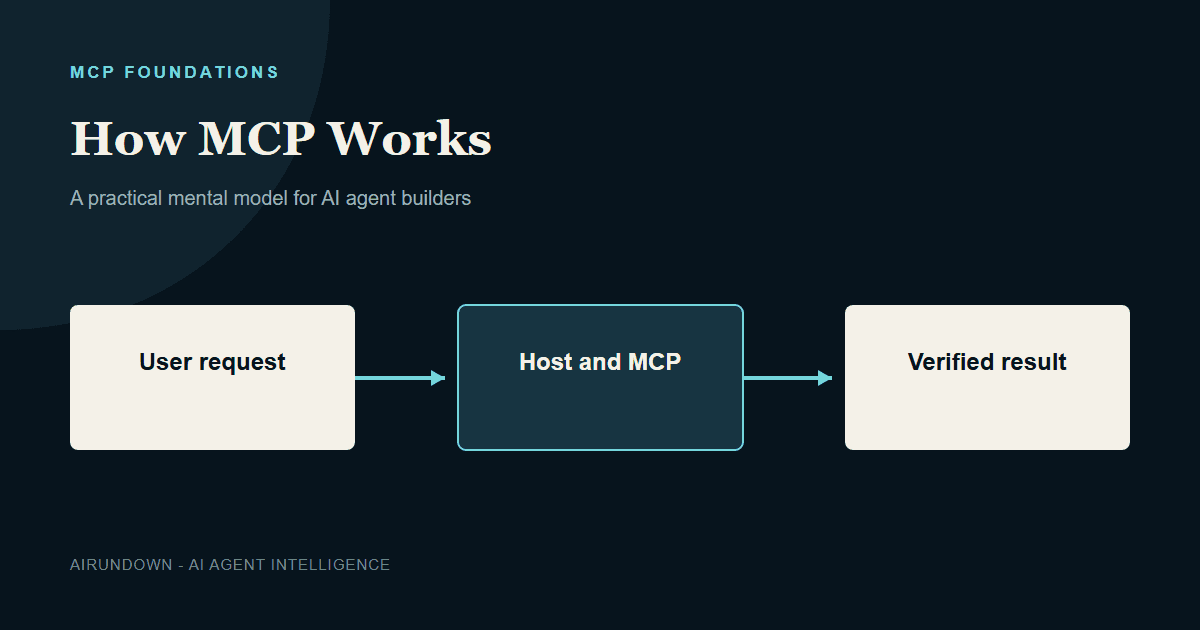
Trace an MCP interaction from server discovery through model tool selection, host authorization, execution, and the final answer.
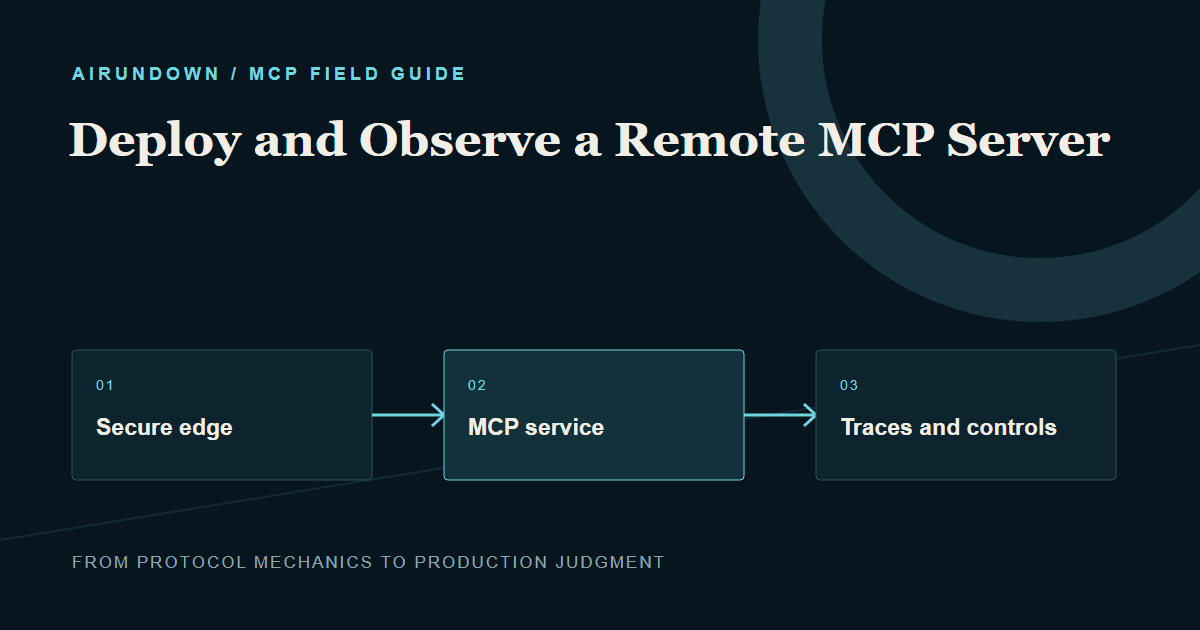
A production deployment guide for remote MCP servers covering network boundaries, identity, scaling, observability, and rollback.
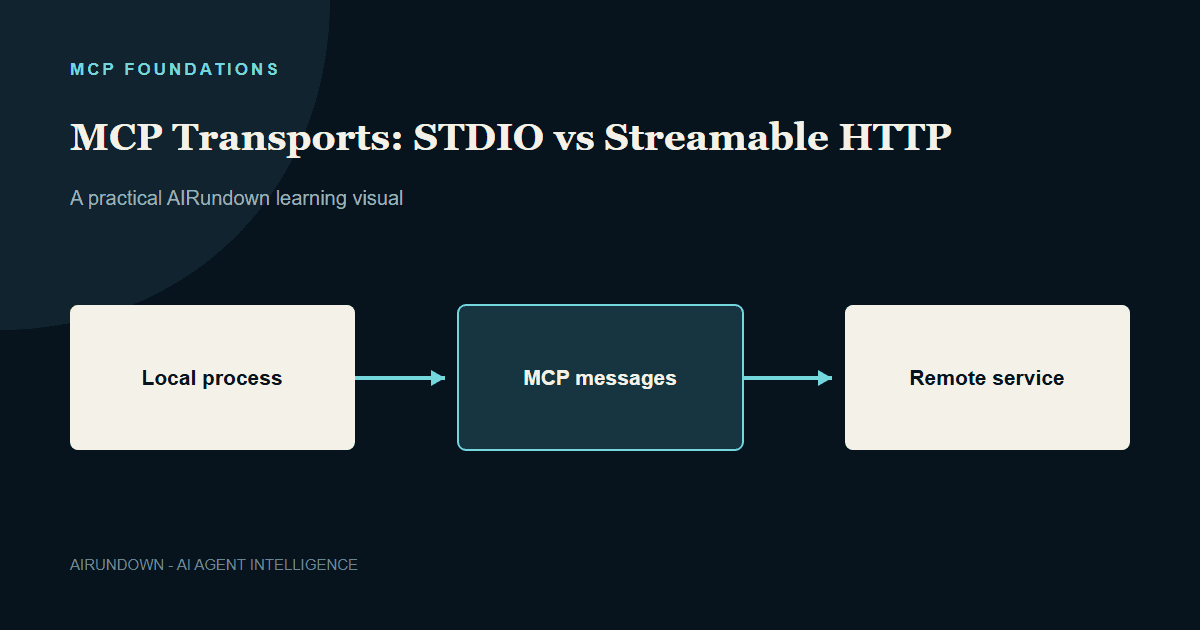
Understand how MCP messages travel over STDIO and Streamable HTTP and how to choose the right transport for local and remote servers.
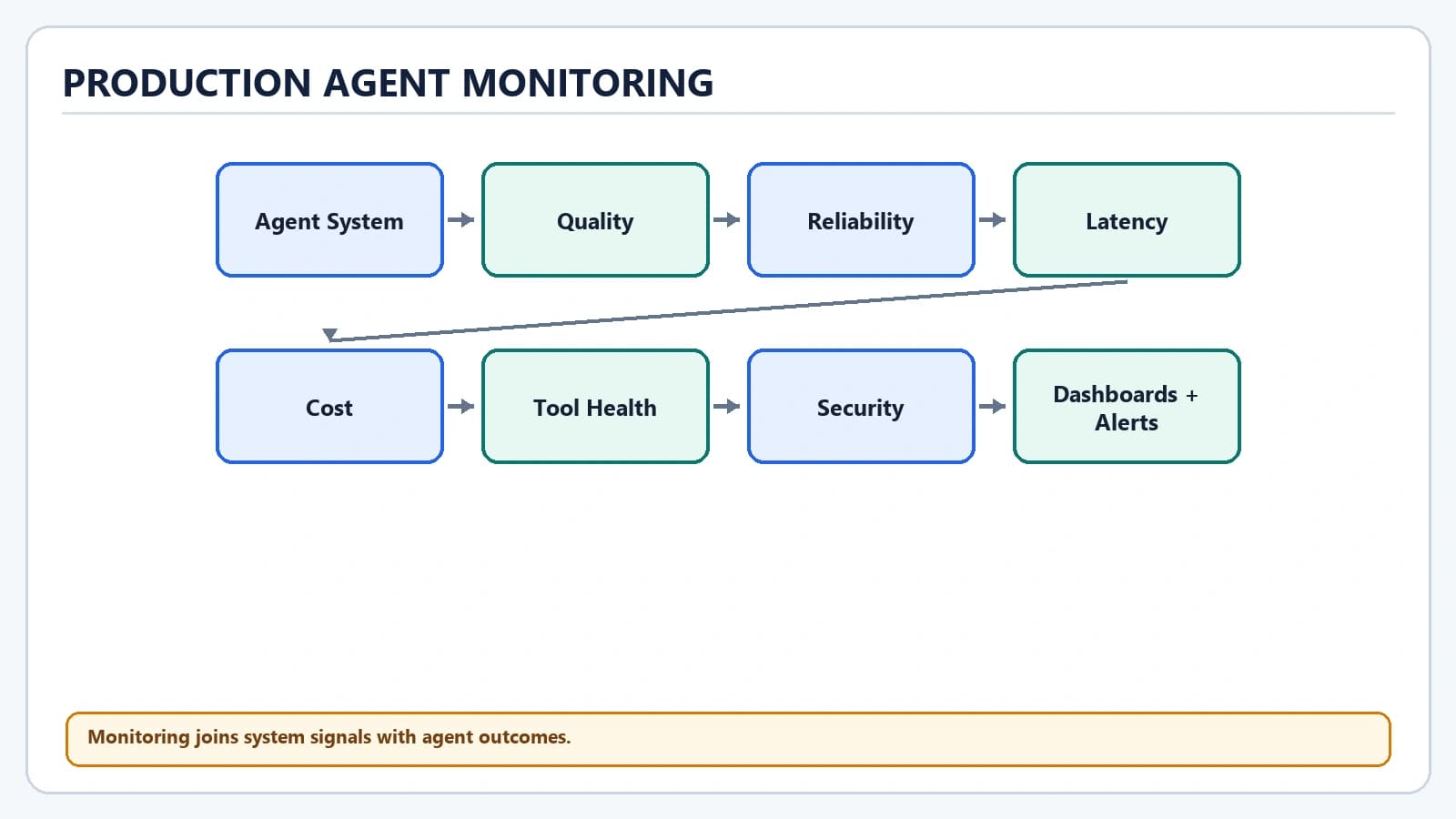
Turn traces, metrics, logs, and evaluations into selected production signals, thresholds, dashboards, and actionable alerts.
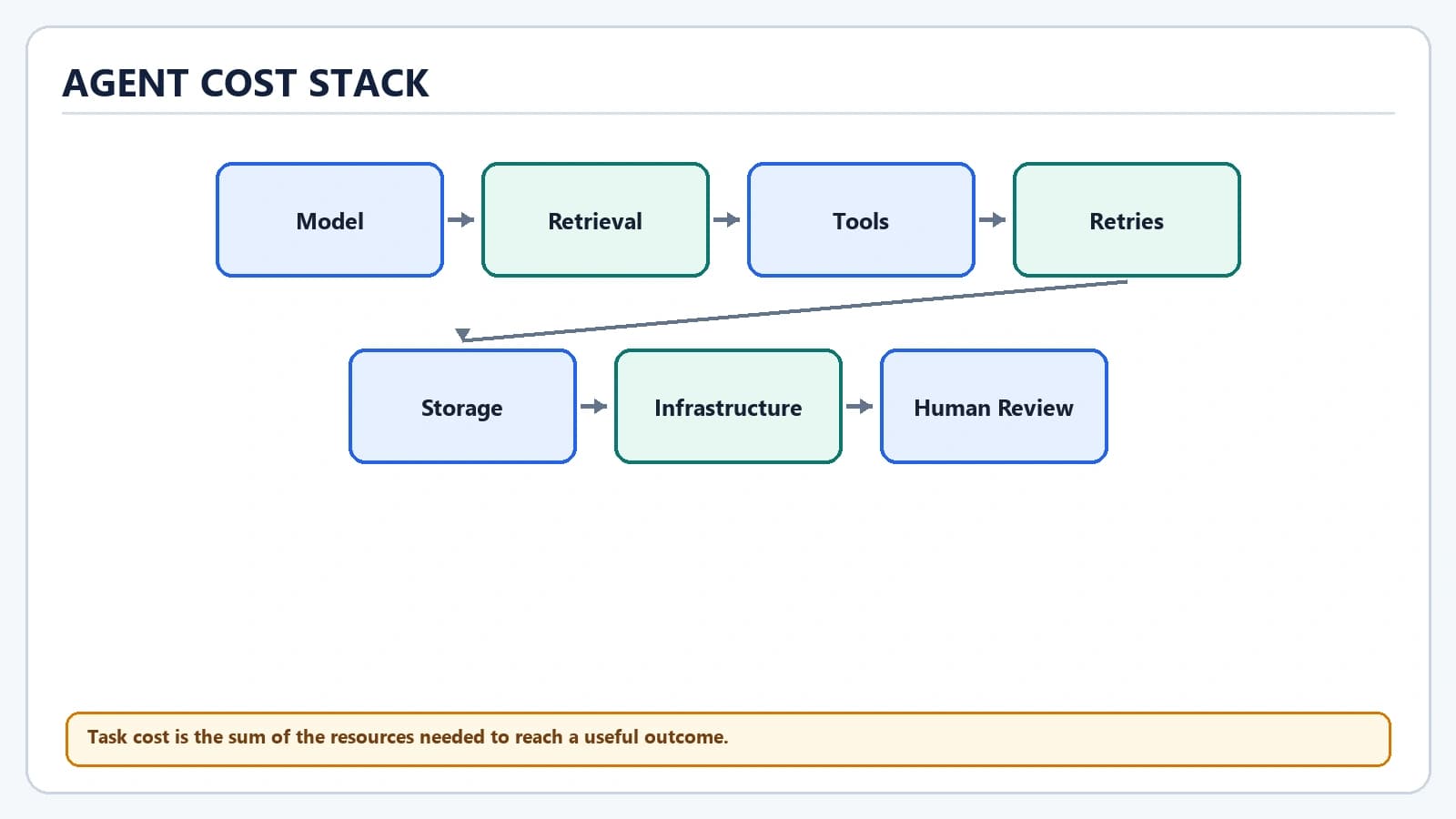
Control the cost of successful agent outcomes, not merely the price of one model call.
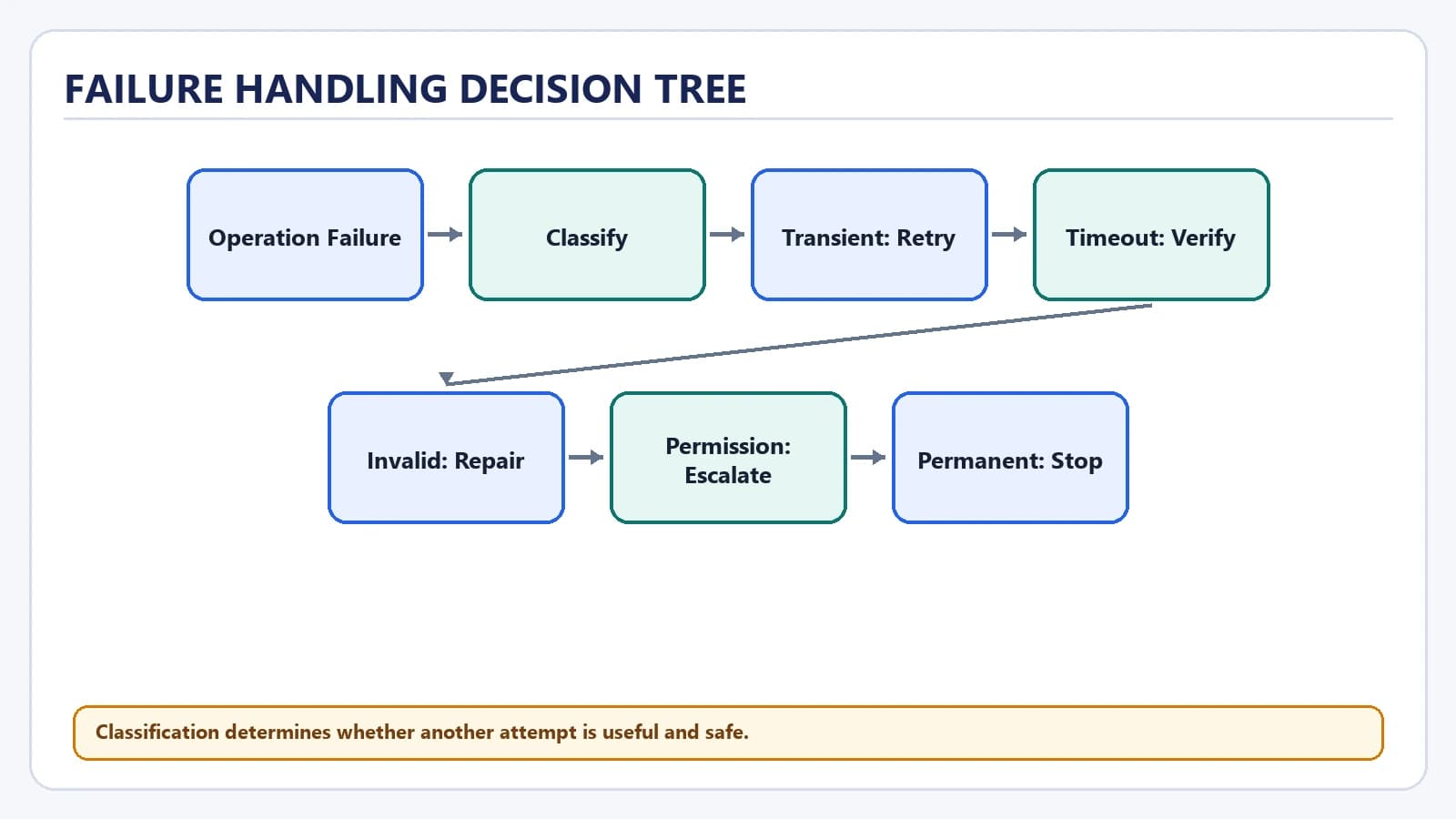
A practical, production-oriented explanation of retries, timeouts, and failure recovery, with examples, boundaries, trade-offs, and failure handling patterns.
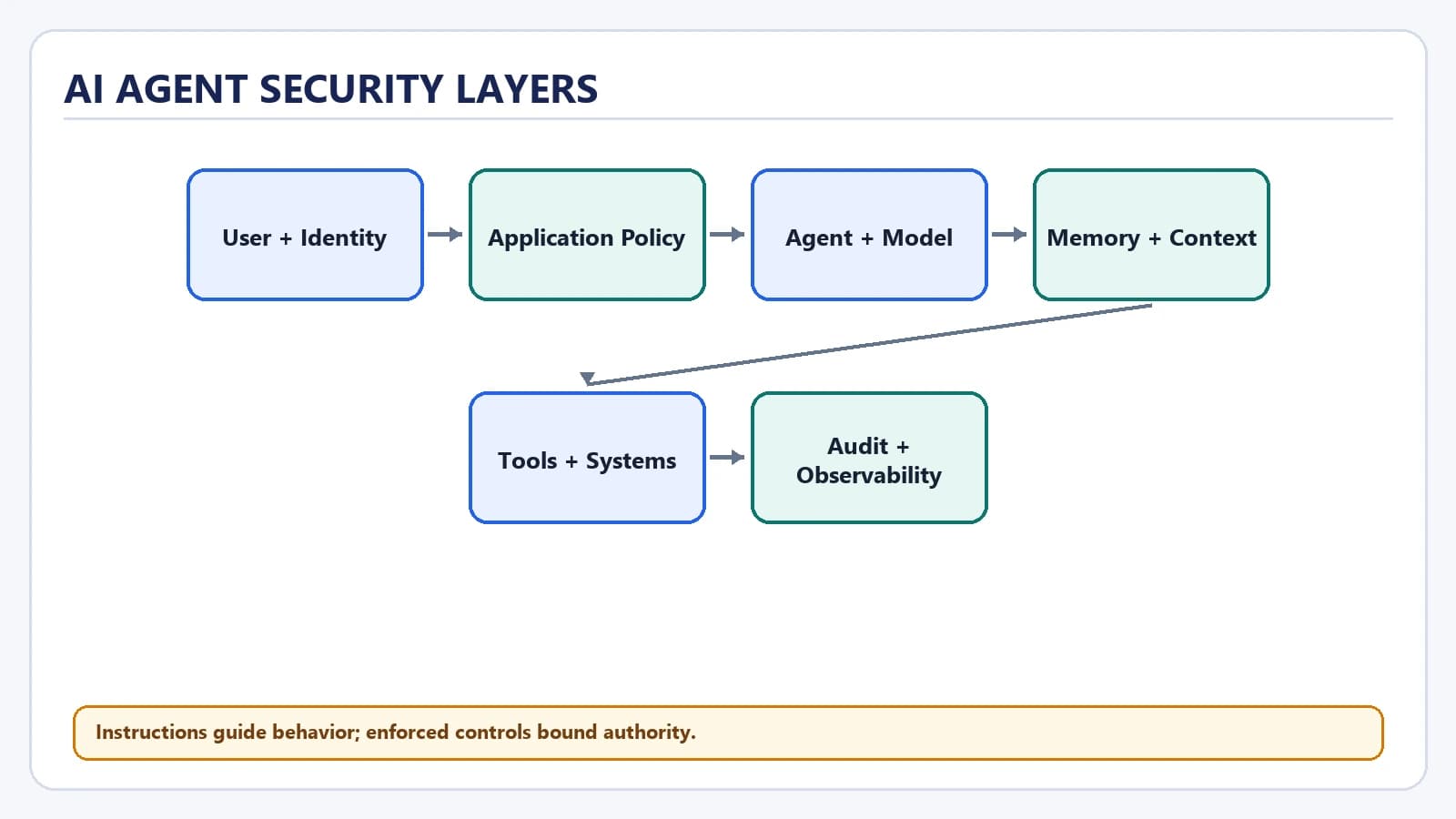
A practical, production-oriented explanation of the security model of an AI agent, with examples, boundaries, trade-offs, and failure handling patterns.
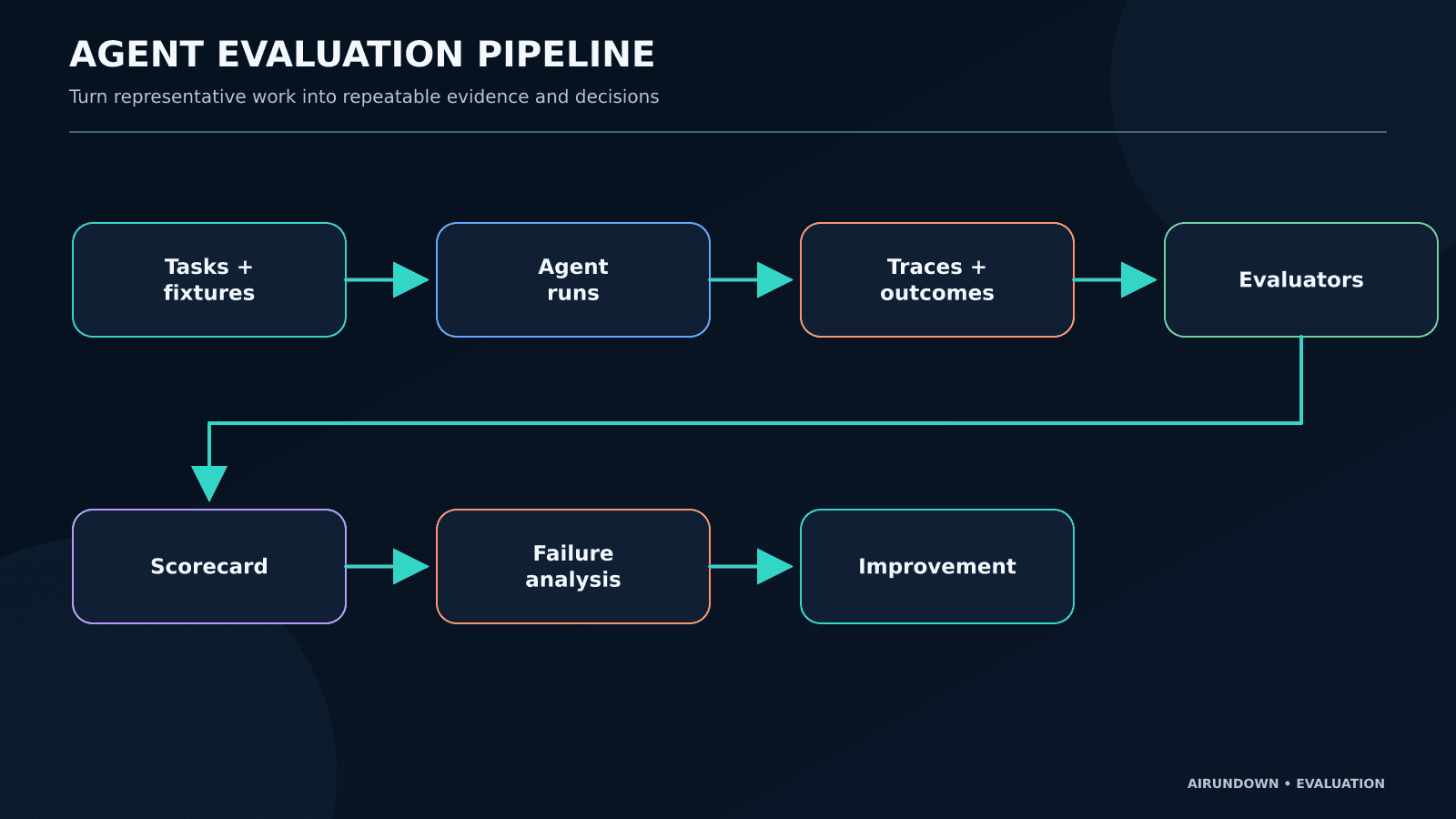
A practical workflow for defining agent success, building evaluation datasets, capturing traces, scoring behavior, analyzing failures, and preventing regressions.
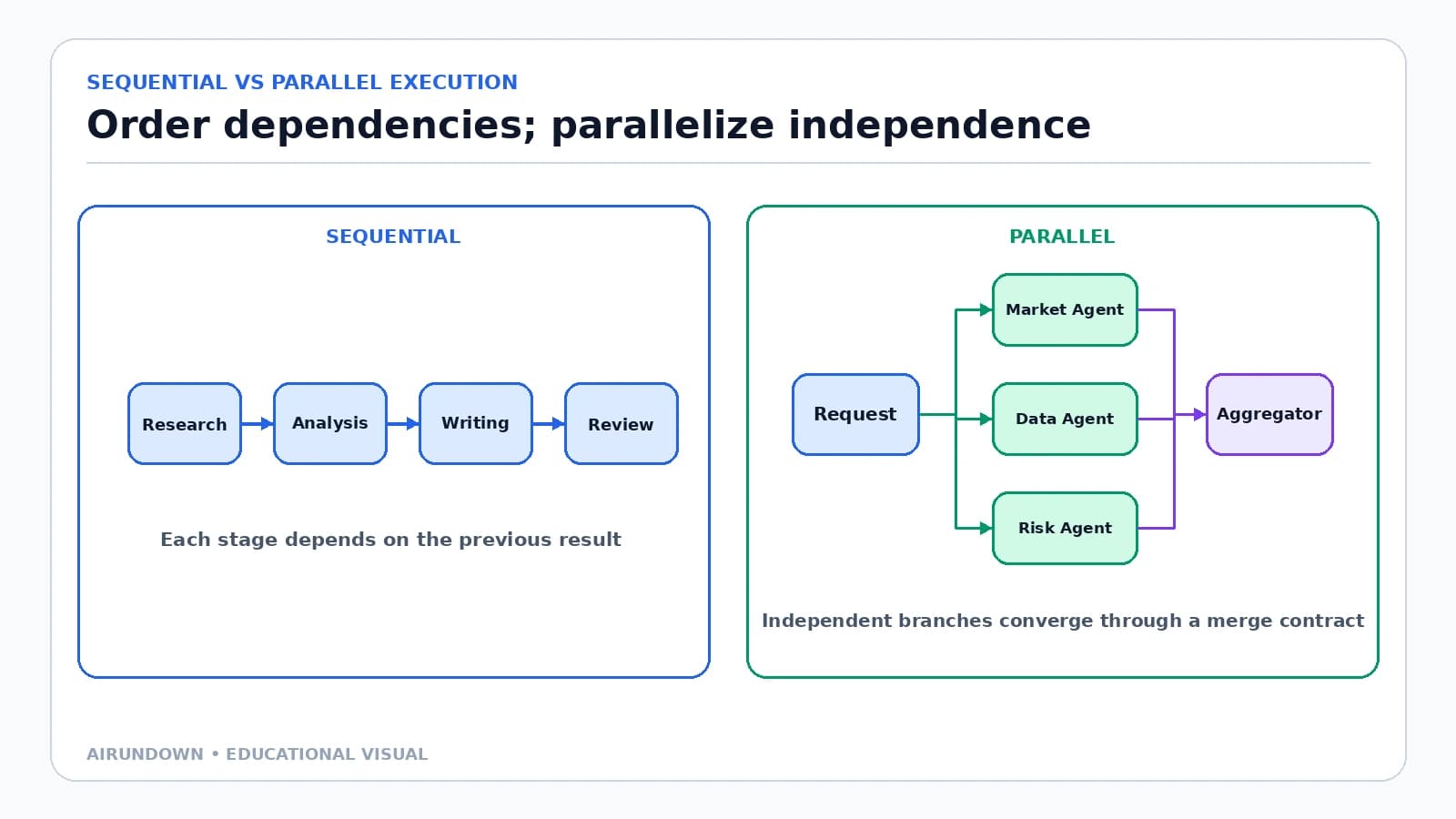
Compare sequential, parallel, and hybrid agent execution by dependencies, latency, cost, state transfer, synchronization, aggregation, and failure handling.
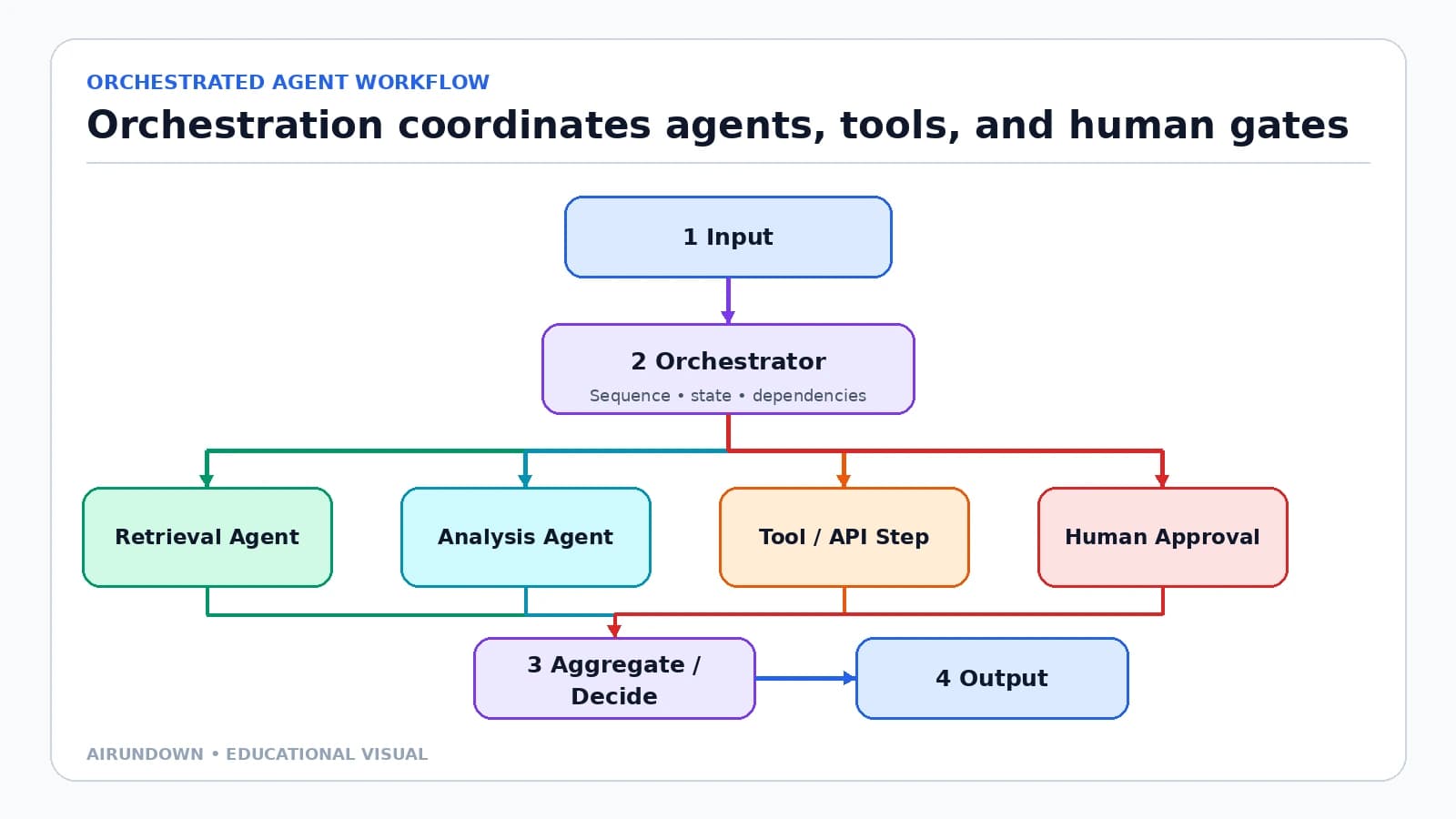
Learn how agent workflows and orchestration coordinate steps, dependencies, branches, parallel work, retries, checkpoints, tools, agents, and humans.
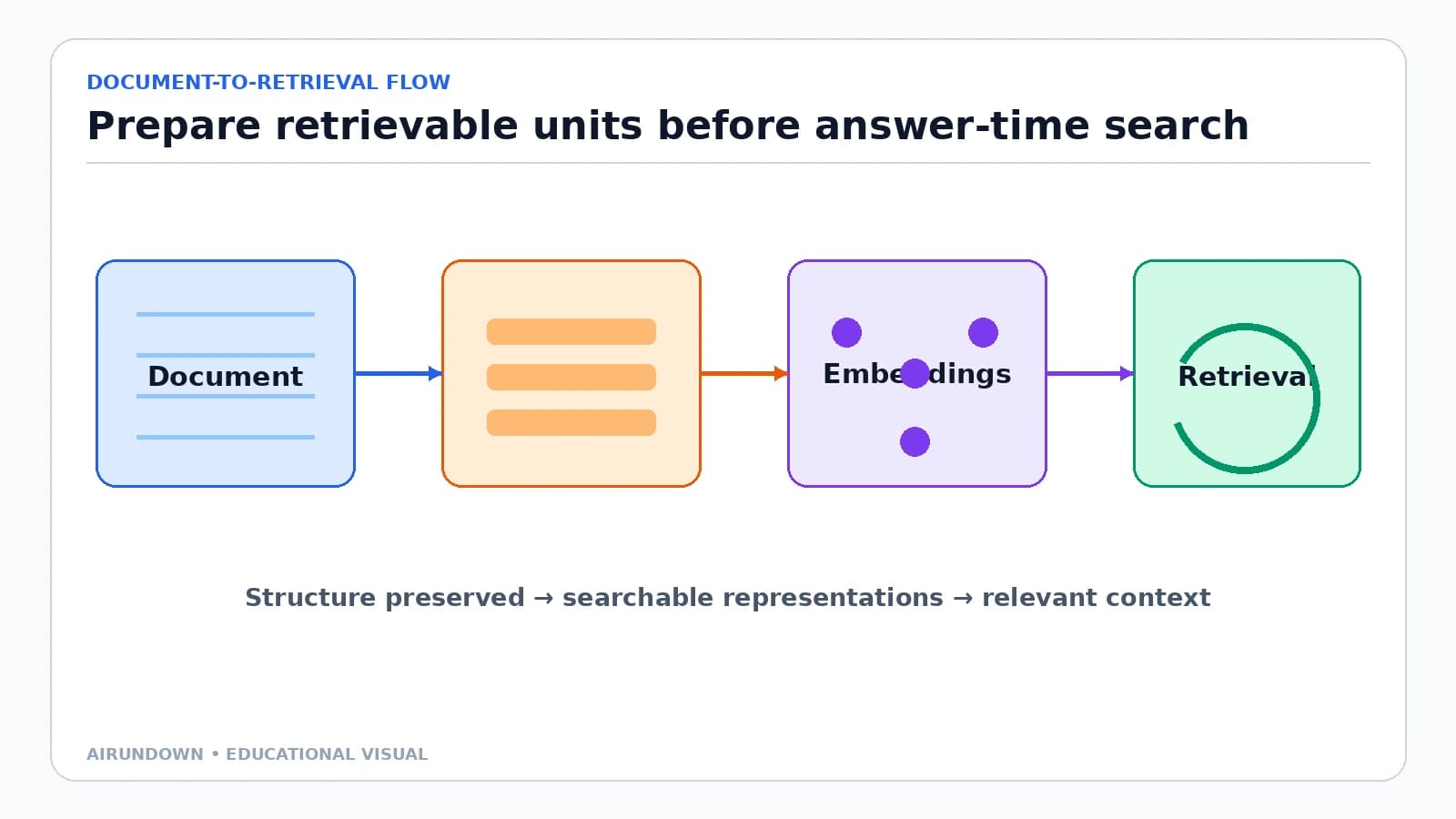
Compare fixed-size, recursive, semantic, and document-aware chunking for RAG, with practical guidance on chunk size, overlap, metadata, and evaluation.
A step-by-step guide to the complete RAG pipeline, from document chunking and indexing through retrieval, reranking, context construction, and grounded generation.
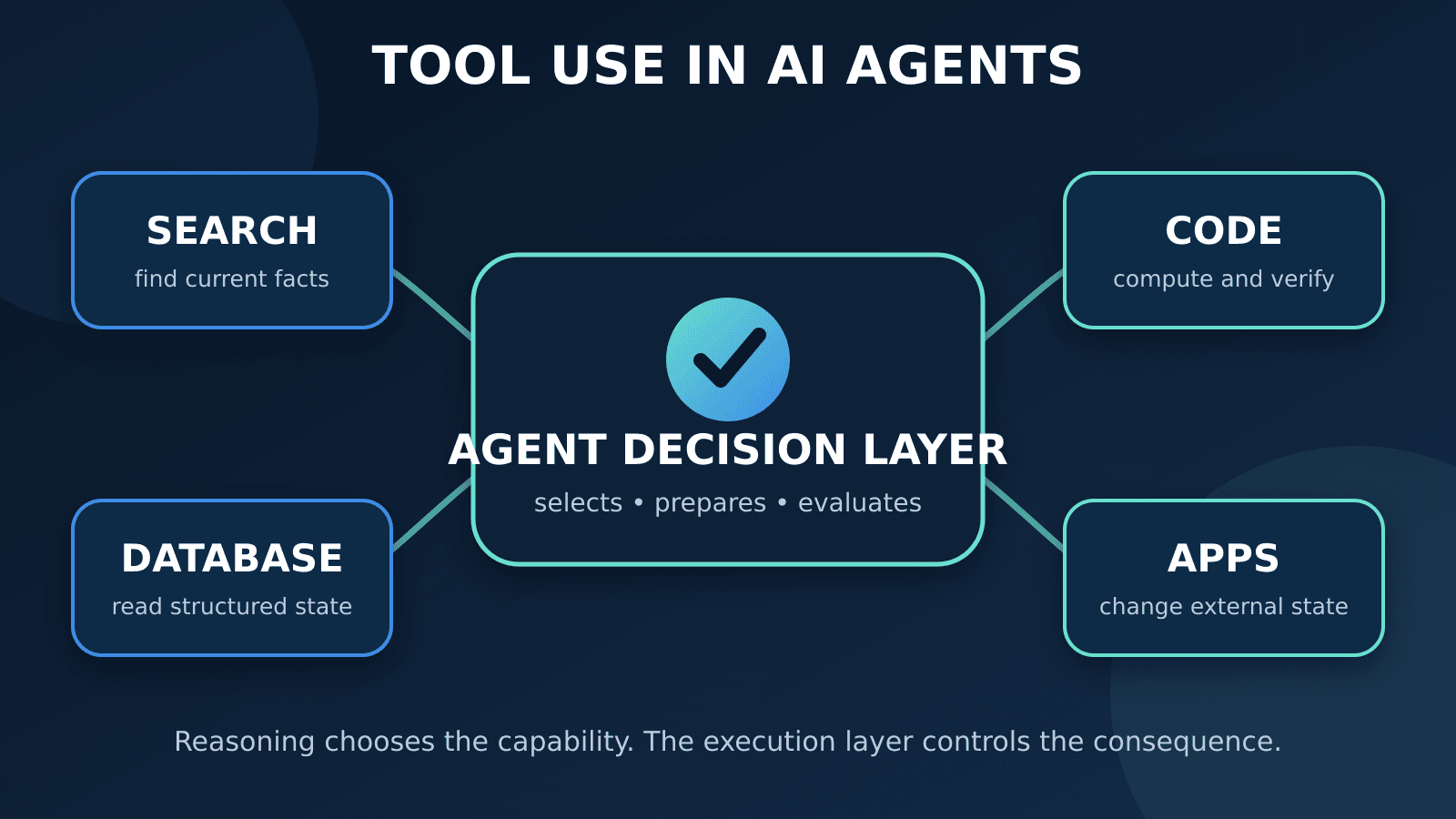
Learn how AI agents select tools, prepare arguments, execute functions and APIs, observe results, recover from errors, and stay within safe permission boundaries.

Fine-tuning, prompt engineering, and RAG each solve a different failure mode, and picking the wrong one is an expensive way to paper over a problem you never diagnosed. OpenAI's May 2026 wind-down of its self-serve fine-tuning platform, now down to a single model, and Anthropic's decision never to ship a public fine-tuning API both signal a market retreat from an over-used technique. The bigger signal: most 'let's fine-tune it' requests turn out to be knowledge gaps or instruction gaps in disguise, fixable with retrieval or a better prompt at a fraction of the cost. For PMs, the takeaway is a triage habit: diagnose whether you're facing stale facts, inconsistent format, or a genuinely novel reasoning task before you authorize a training run.
Scaling laws are the empirical rule that predicts how a language model's performance improves as you add compute, parameters, and training data, and they've been the single best predictor of AI progress since 2020. DeepMind's Chinchilla paper corrected the original formula in 2022, showing labs had been building models too large for the data they fed them. As of mid-2026, the live debate isn't whether the law holds — it's whether returns are bending at the high end and whether training data and inference cost, not GPU count, are now the binding constraint. For PMs, that shift changes whether the smarter bet is renting a frontier model, fine-tuning a smaller one, or architecting around inference cost rather than waiting for the next parameter jump.

Catastrophic forgetting is the tendency for fine-tuning to sharpen a language model on a narrow task while quietly degrading capabilities it never touched during training. It happens because fine-tuning overwrites shared weights rather than adding isolated new knowledge, and the severity ranges from negligible to severe depending on method, learning rate, and how repetitive the data is. As fine-tuning becomes a default lever for teams shipping specialized AI features, the gap between "it got better at X" and "it got worse at everything else" is turning into a quiet source of production incidents. For PMs, the fix isn't avoiding fine-tuning, it's building an eval suite that checks capabilities you didn't train for, not just the one you did.
Safety tuning is the two-layer process labs use to make models refuse harmful requests: refusal behavior trained directly into the weights via reinforcement learning, plus separate classifier systems that screen inputs and outputs after generation. Red-teaming — human specialists and, increasingly, automated adversarial models — is how labs find the gaps in both layers before and after release. The bigger signal as of mid-2026: independent grading from the Future of Life Institute's Summer 2026 Index puts the best-performing lab at a C+, while binding audit requirements under the EU AI Act apply to only a handful of the largest systemic-risk models. For PMs, every refusal your users hit is a tuning decision made by someone else's safety team, and the over-refusal rate is now your product's problem to manage, not just the vendor's.

AI benchmarks like MMLU, GPQA, and HumanEval each test a narrow, mechanically-graded proxy task — multiple choice, exact match, or unit tests — not general capability. As of mid-2026, many older benchmarks have saturated (top models clustering 88-99%) while contamination and funding conflicts of interest have eroded trust in what leaderboard rank actually proves. The gap between benchmark performance and real-world task performance is now the central skepticism story in AI evaluation. For PMs, a vendor's leaderboard screenshot should shortlist candidates, never decide a contract.

Claude Sonnet 5 beats Sonnet 4.6 on SWE-bench Verified (85.2% vs 79.6%) and undercuts it on price until August 31 — a combination rare enough to deserve scrutiny. The catches are real: a new tokenizer that inflates token counts on the same text, breaking API changes around sampling parameters and extended thinking, and a discount that ends September 1. A separate Sonnet 5 rate-limit bucket, distinct from the combined Sonnet 4.x pool, makes running both models during a canary rollout unusually practical. For PMs, the move is an eval-first migration before August 31 — capture the discount window only if your regression suite clears.
GPT-5.6 reached general availability on July 9, 2026 at the exact $5/$30 price GPT-5.5 charged, with a February 16, 2026 knowledge cutoff and cheaper Terra and Luna tiers underneath. The quiet improvement is what disappeared: GPT-5.5's long-context surcharge above roughly 272K input tokens. But the alias default, prompt regressions, and account-specific rate limits make a careless swap riskier than it looks. For PMs, this is a worthwhile migration that should still run behind an eval suite, not as a model-string find-and-replace.

Illinois's new AI safety law, SB 315, makes it the third US state to regulate frontier model developers, joining California and New York. Signed July 6, 2026, it adds a first-in-the-nation independent audit requirement that neither predecessor has. The bigger signal is that a state-by-state AI compliance patchwork is now the operating reality, not a forecast. For PMs, the takeaway isn't 'comply with Illinois'; it's whether to build governance to the highest common standard now or bet on federal preemption later.
OpenAI has reportedly proposed handing the U.S. government a 5% equity stake, worth about $42.6 billion at its $852 billion valuation, according to the Financial Times. Sam Altman frames it as sharing AI's upside with the public through an Alaska-style sovereign fund. But the offer landed days after Washington delayed GPT-5.6, no deal is signed, and Anthropic reportedly isn't in the conversation. For PMs, the real signal is strategic: if your regulator becomes your vendor's shareholder, the frontier model layer may be turning into a utility you're captive to, not a market you can freely shop.
OpenAI deferred the full public rollout of GPT-5.6 after the US government requested early access to the frontier model, according to Reuters. The delay itself is confirmed; the government's exact reasoning and timeline are not. It signals that frontier AI launches increasingly run through government review, not just internal safety checks. For PMs, it means your product roadmap can no longer assume a vendor's release date is entirely the vendor's call.
OpenAI previewed GPT-5.6 Sol along with Terra and Luna versions, according to the company's official announcement. The three names map a clear hierarchy, signaling a formal move toward a flagship, mid-tier, and cheaper model lineup rather than ad hoc suffixes. It's the clearest sign yet that tiered pricing and capability structures are becoming the default shape of frontier AI, not an exception. For PMs, it means the model your product depends on today may soon have two siblings worth evaluating, and your integration layer needs to be ready before pricing and availability are even confirmed.
The Trump administration lifted access restrictions on Anthropic Fable models with full restoration beginning July 1. Before reading this as a straightforward AI deregulation win it is worth asking three questions: what the restrictions actually covered who benefits from their removal and whether lifting them creates risks the original policy was designed to address.
A hands-on test by MakeUseOf had Claude, ChatGPT, and Gemini each build a working simulation from scratch. Claude came out ahead. But before you update your AI tool stack based on one informal benchmark, there are three things worth examining.
Baidu shares rose 7% after CNBC reported that its AI chip arm Kunlunxin is said to be targeting a Hong Kong IPO at a $50 billion valuation. The report matters because it signals rising investor interest in domestic AI compute capacity, but the central question remains whether Kunlunxin has proven production-scale adoption, margins, and software maturity.
Baidu shares rose 7% after CNBC reported that its AI chip arm Kunlunxin is targeting a Hong Kong IPO at a valuation of about $50 billion. The report matters because domestic AI compute is becoming strategically important in China, but the available evidence is still a media report rather than a prospectus, audited financials, or proof of broad production adoption.