AI Agents
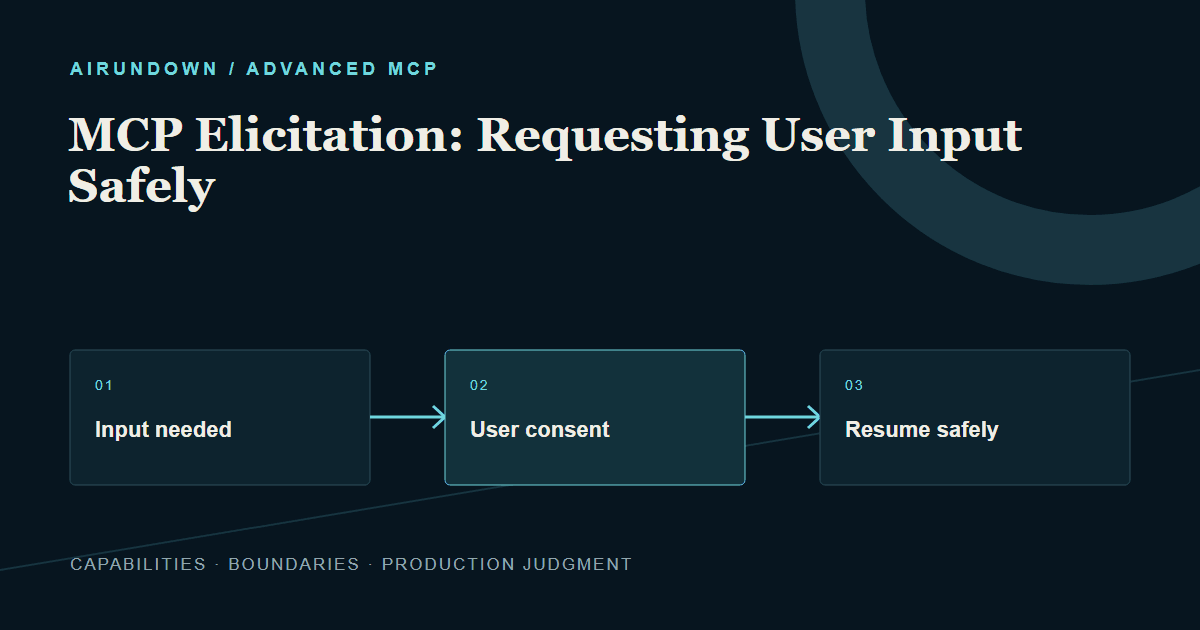
MCP Elicitation: Requesting User Input Safely
A practical guide to requesting missing user input during MCP operations without confusing conversation, consent, or credentials.
Ryan Torres4 min read
Editorial Team Profile
AI Business & Deals Reporter
“Conversational, sharp, like a smart friend briefing you”
A practical guide to requesting missing user input during MCP operations without confusing conversation, consent, or credentials.
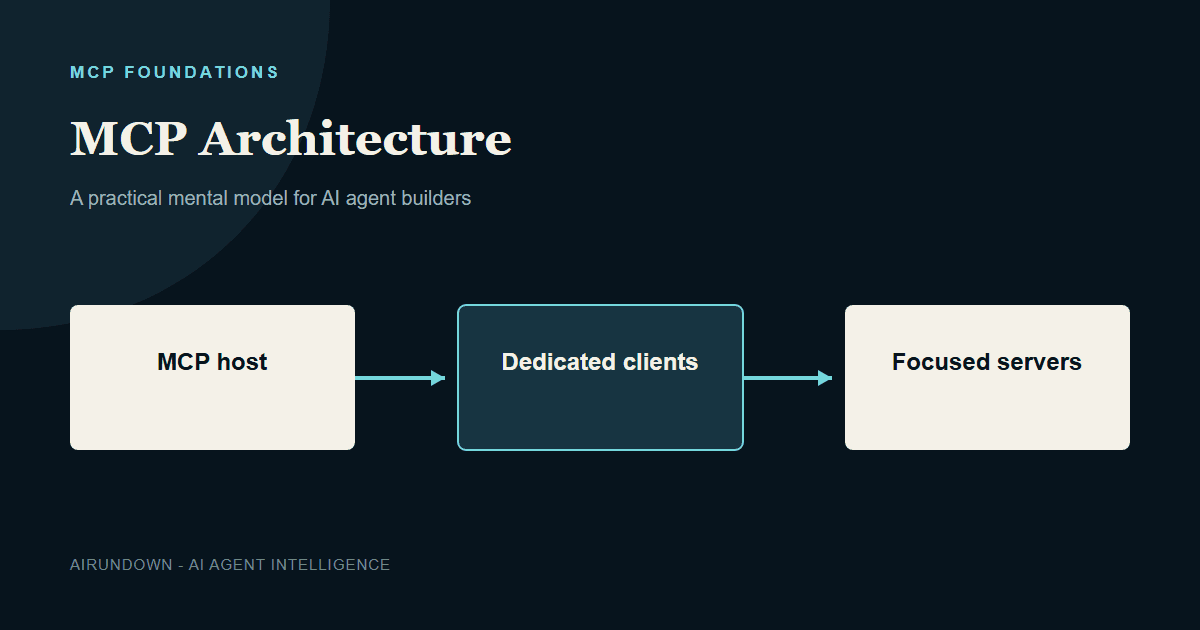
A component-by-component guide to MCP architecture, including host and client responsibilities, server primitives, transports, and trust boundaries.
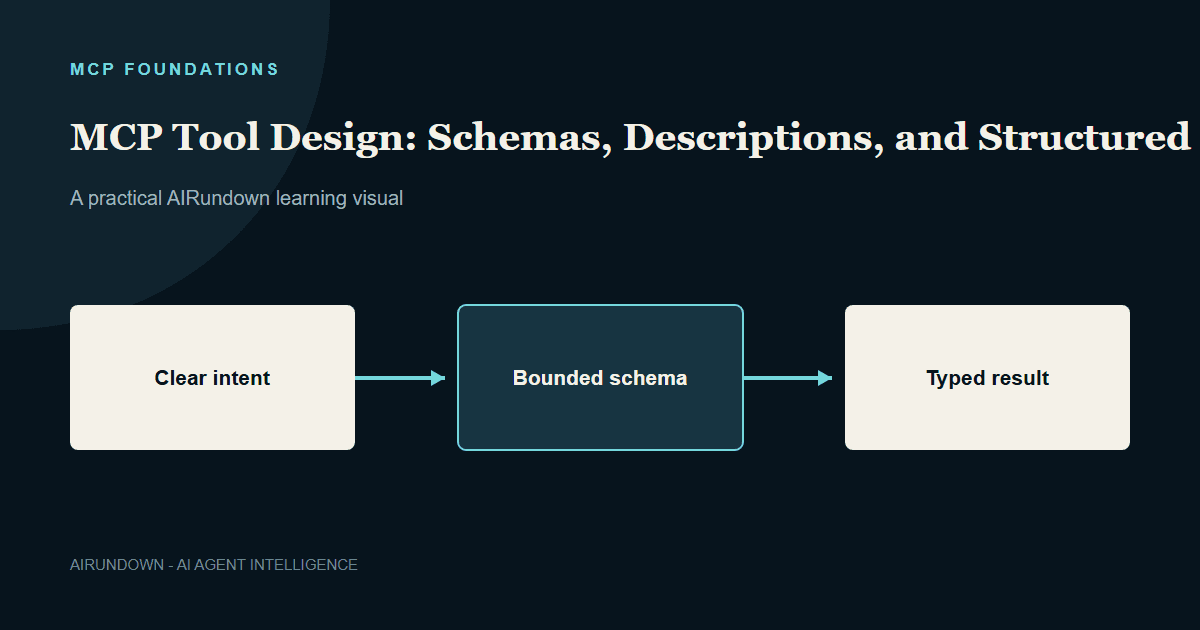
Practical MCP tool-design guidance covering names, descriptions, JSON Schema, structured results, errors, permissions, and testing.
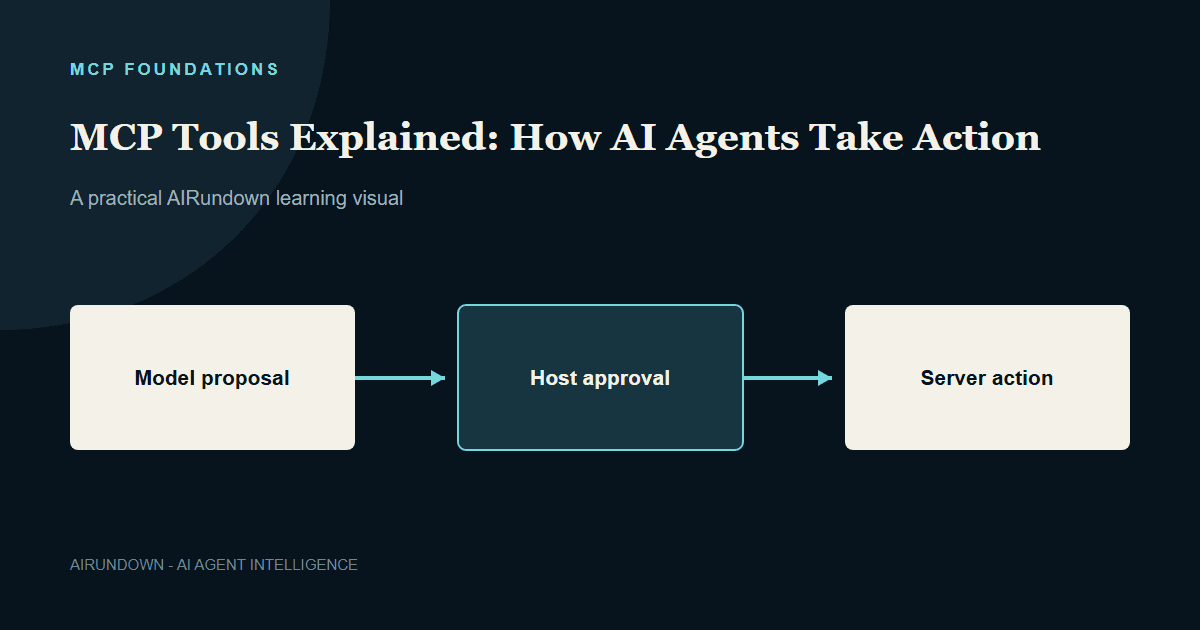
A practical guide to MCP tools, including schemas, discovery, execution, approvals, errors, and safe production design.
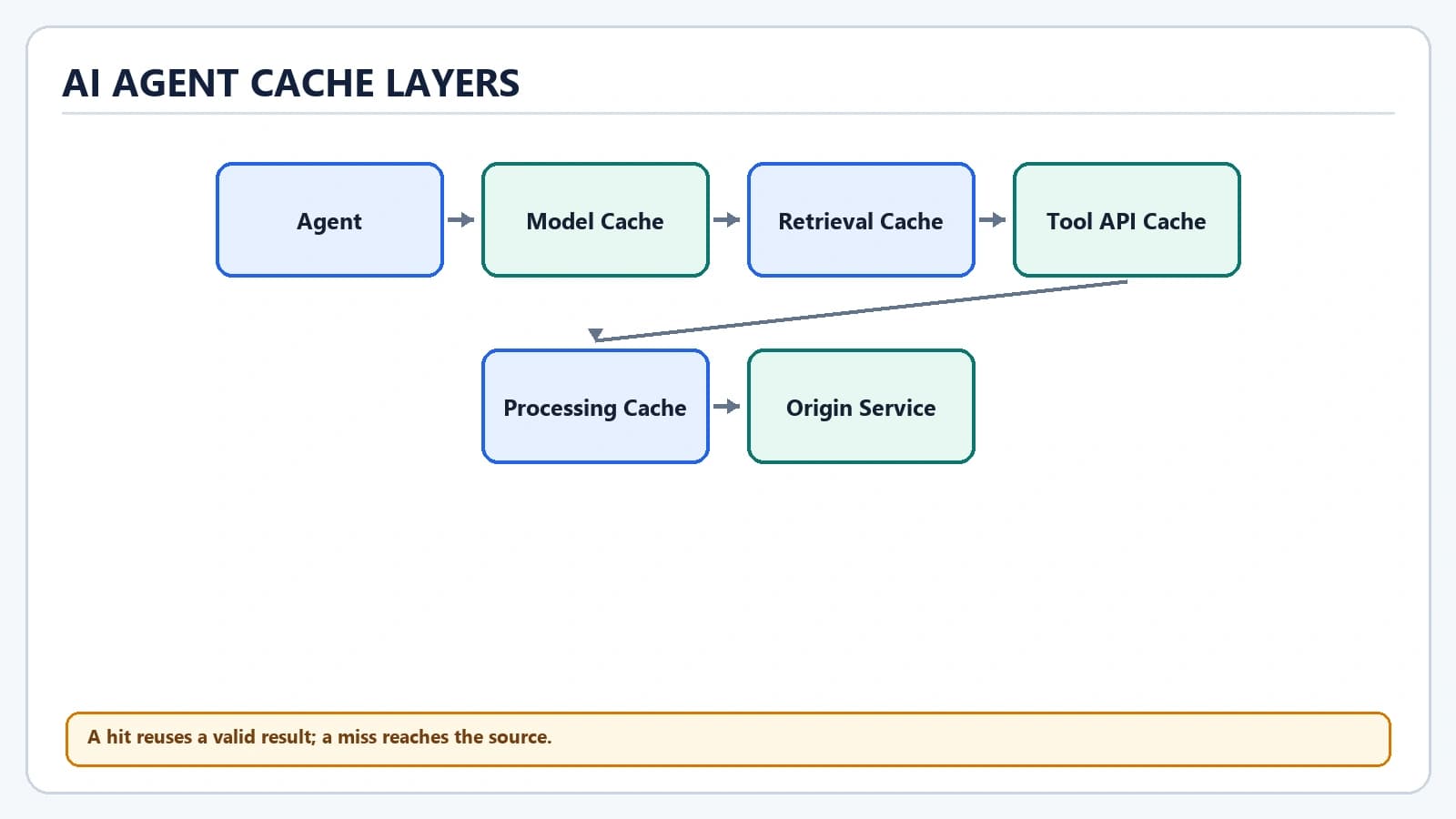
Reuse expensive results only when identity, freshness, authorization, and side-effect semantics make reuse safe.
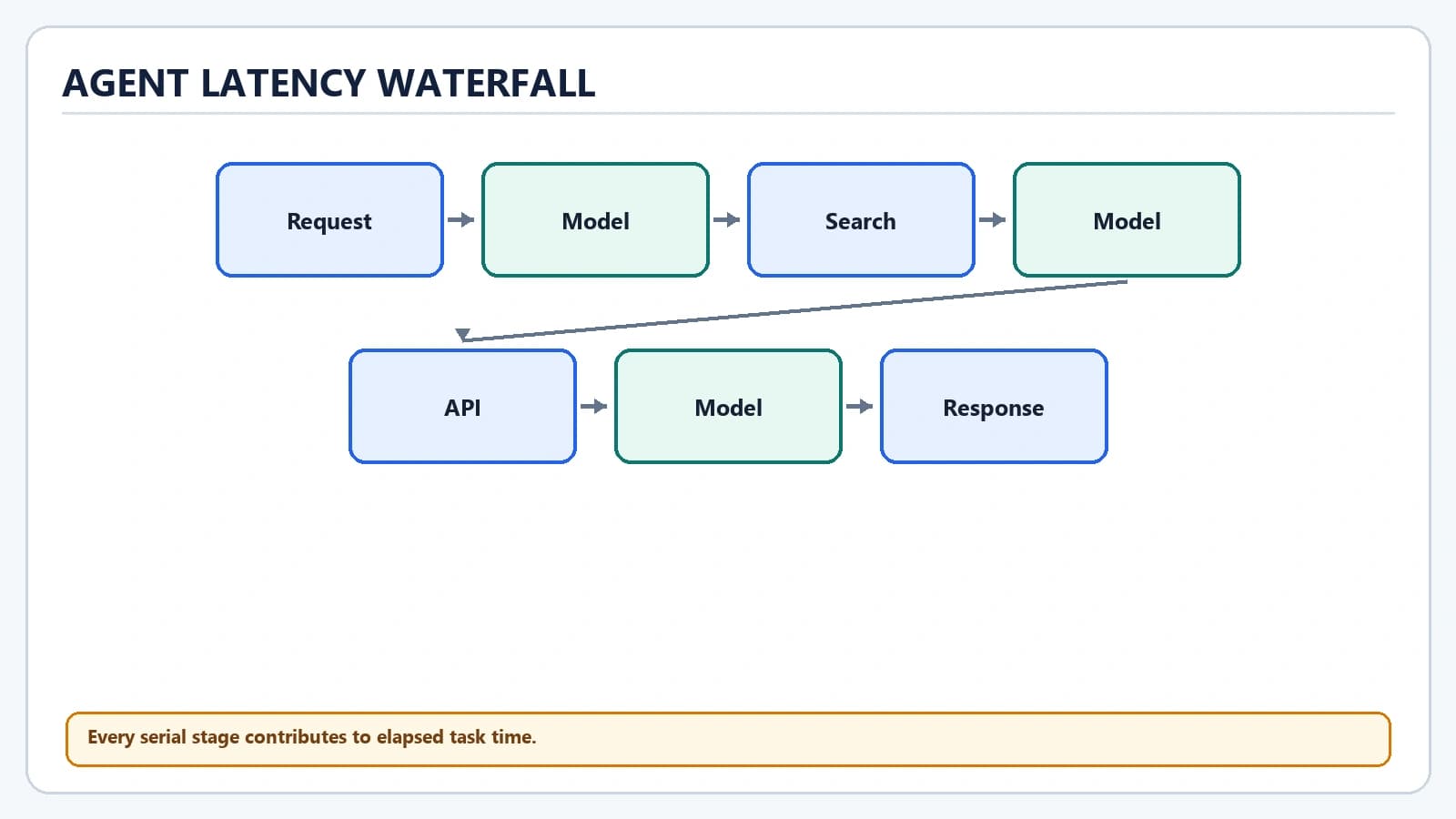
Why multi-step agents feel slow, where elapsed time accumulates, and how to improve speed without breaking the task.
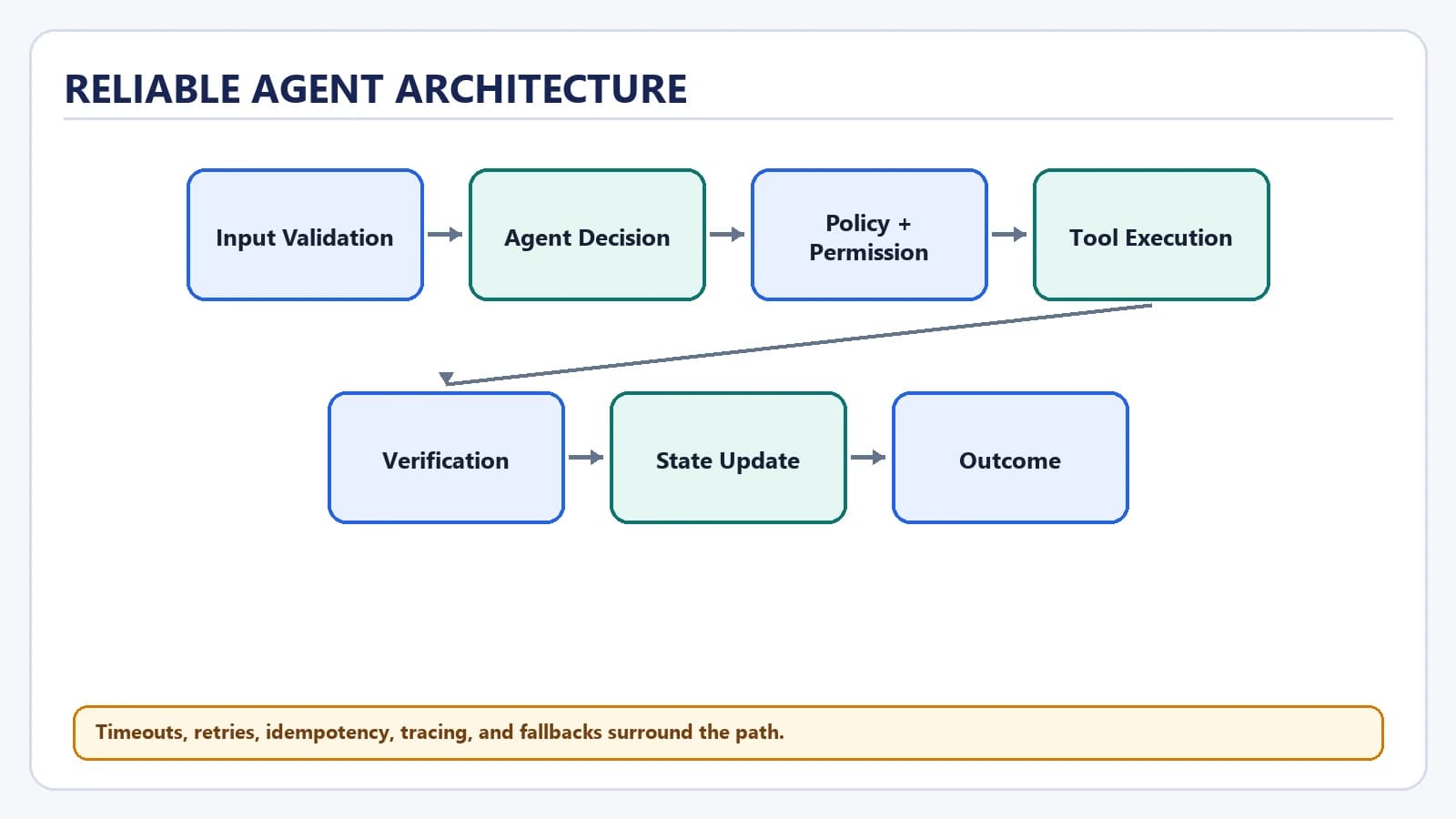
A practical, production-oriented explanation of reliable AI agent architecture, with examples, boundaries, trade-offs, and failure handling patterns.
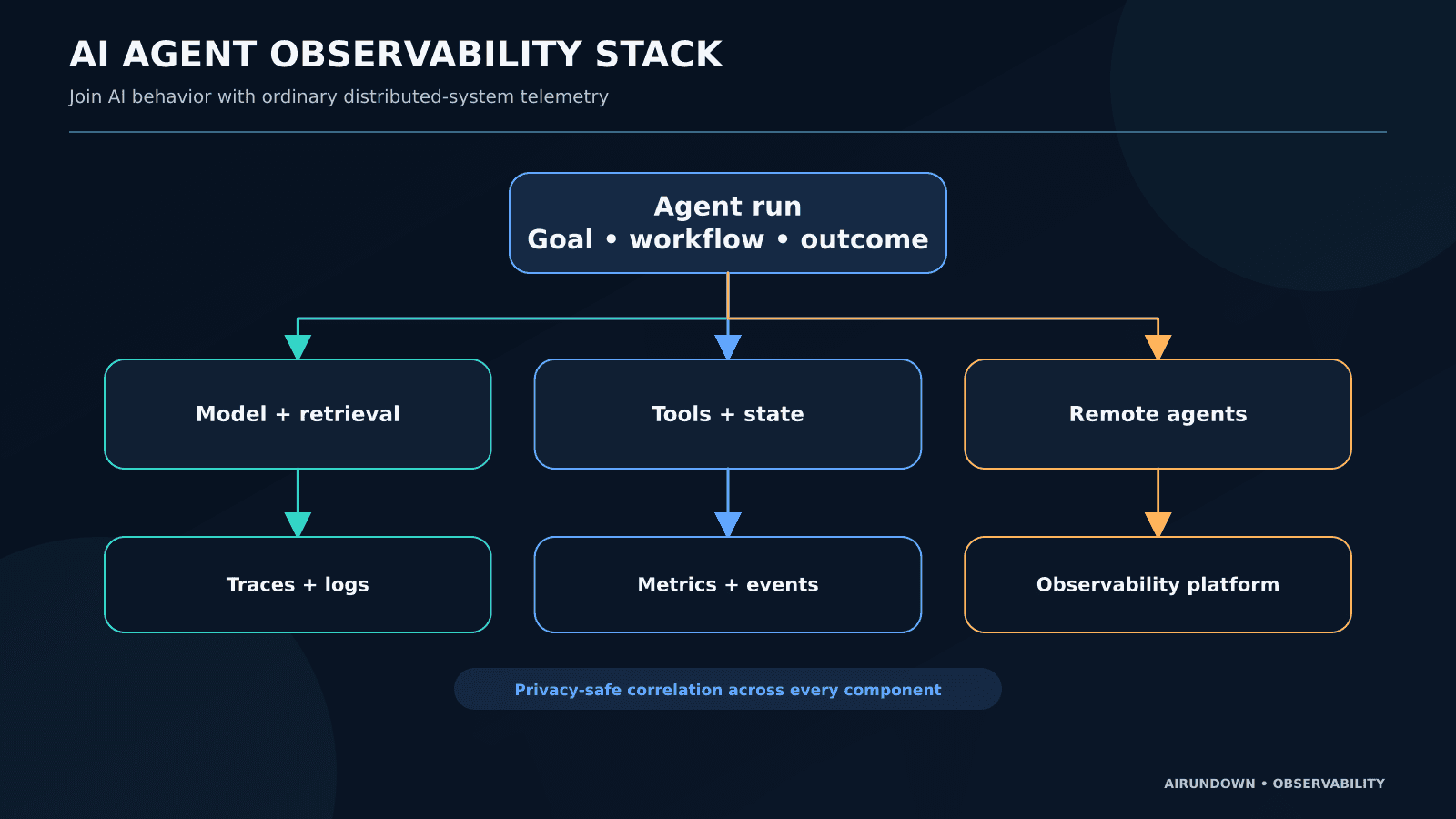
A production observability model for agent, model, retrieval, tool, sub-agent, and infrastructure signals—with privacy and redaction controls.
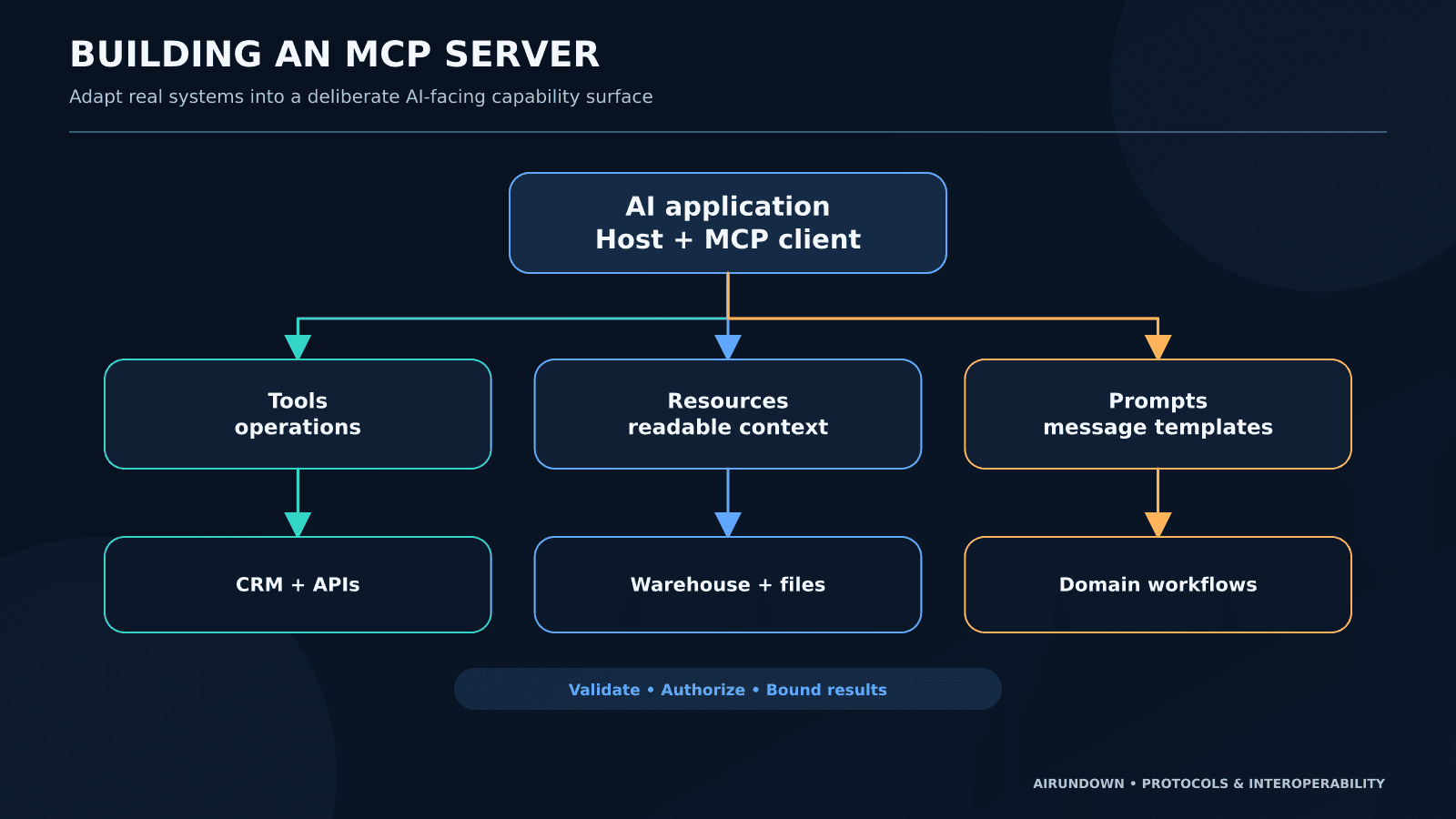
A framework-neutral tutorial for designing, implementing, testing, securing, and deploying an MCP server over real backend systems.
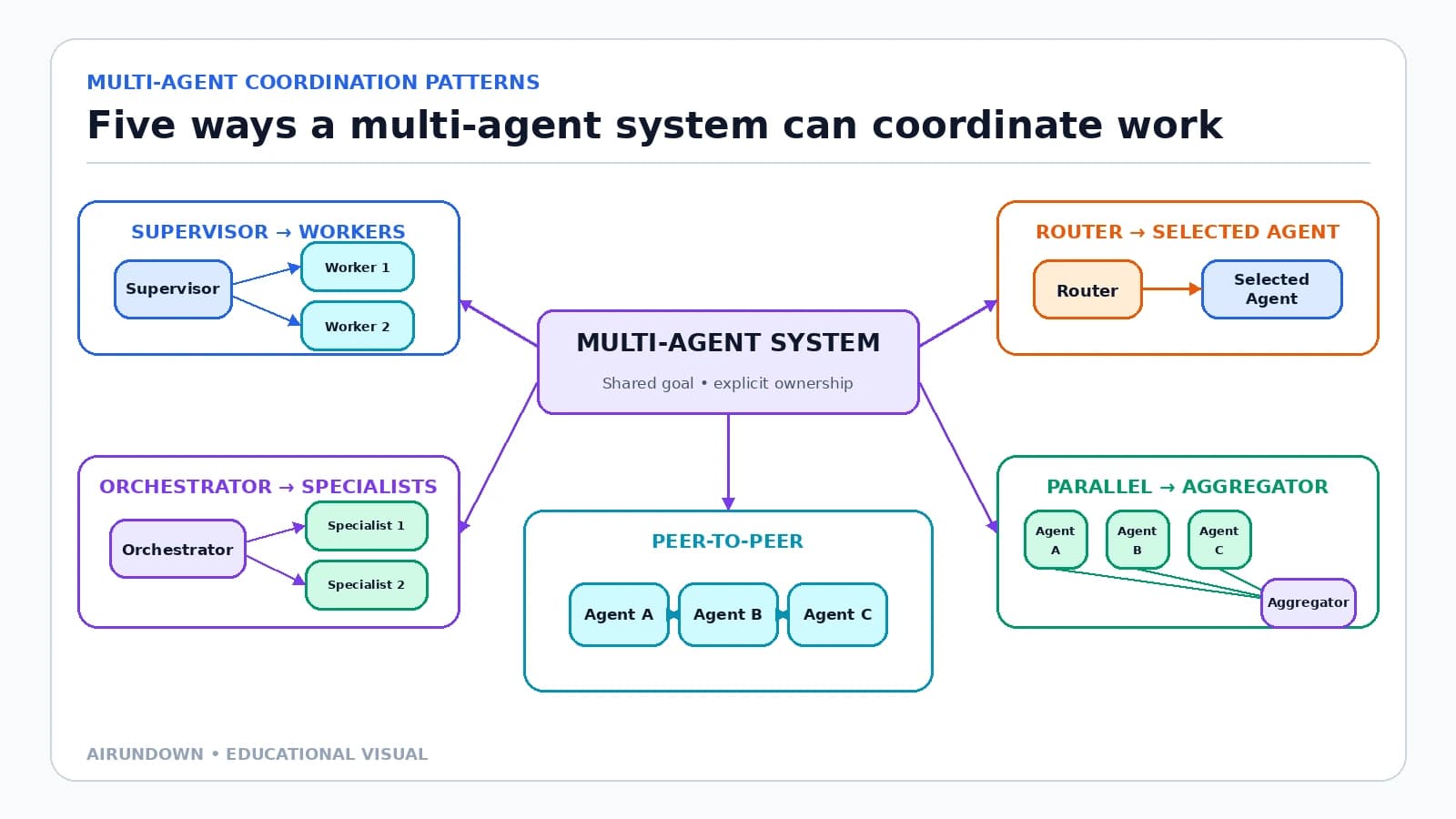
Learn seven practical multi-agent coordination patterns and how they manage roles, ownership, state, handoffs, aggregation, conflicts, and stopping.
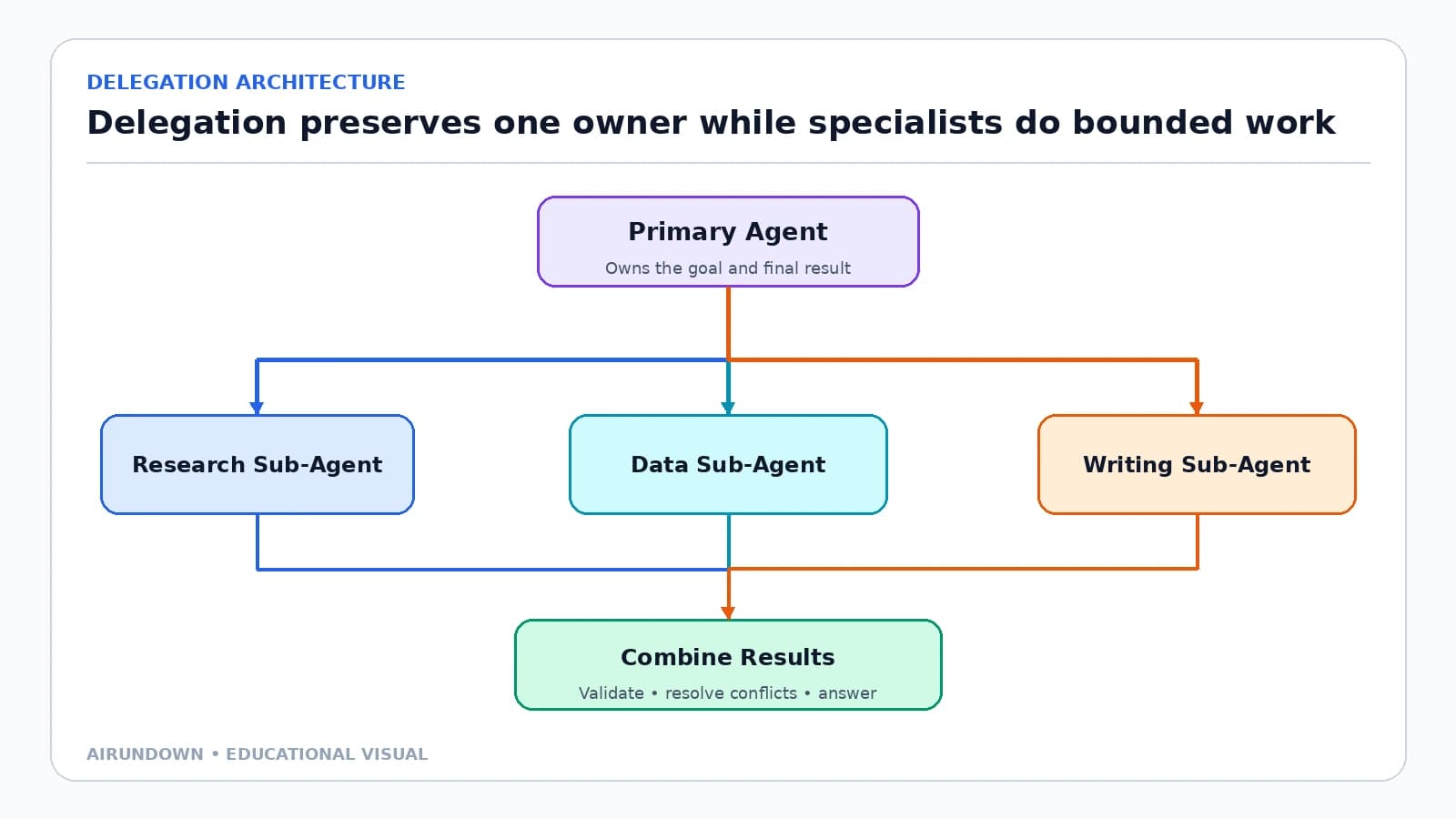
Learn how delegation, handoffs, and sub-agents divide work while preserving task ownership, context, state, permissions, and reliable result contracts.
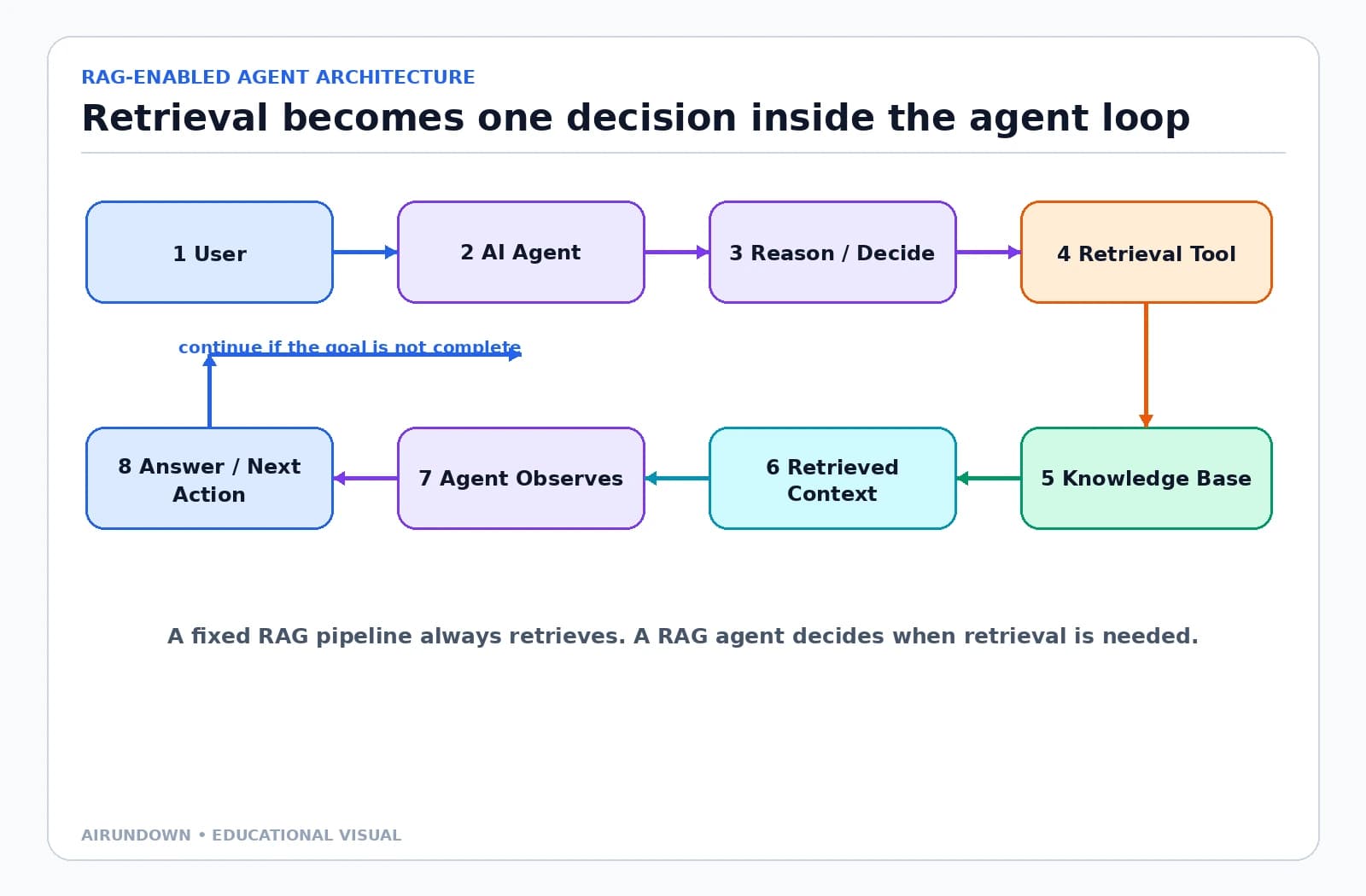
Build a framework-neutral RAG agent with a controlled retrieval tool, attributable evidence, bounded loops, citation checks, traces, and layered evaluation.
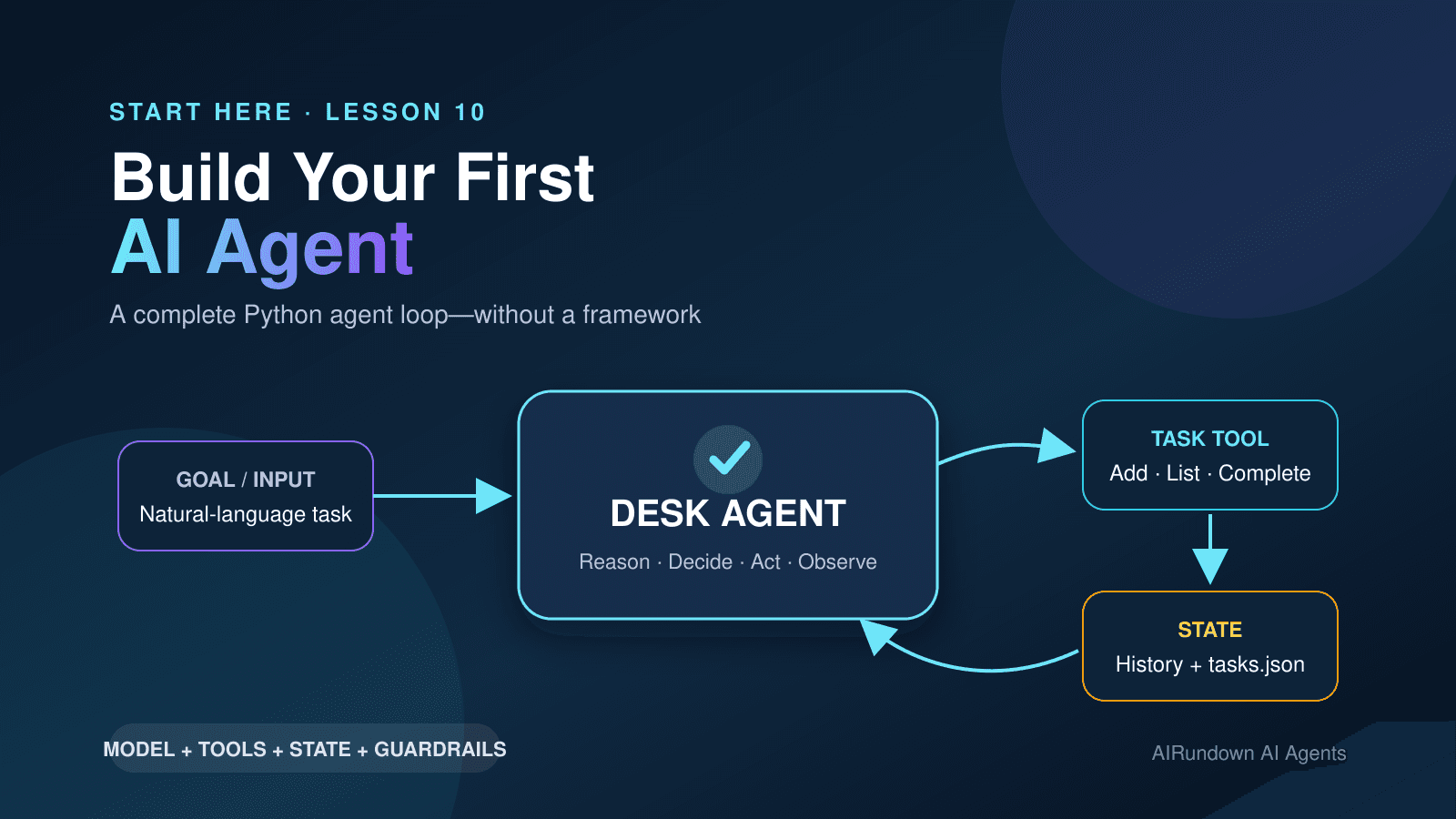
Build a genuine AI task agent in plain Python with tool calling, observations, state, guardrails, logging, error handling, and tests.
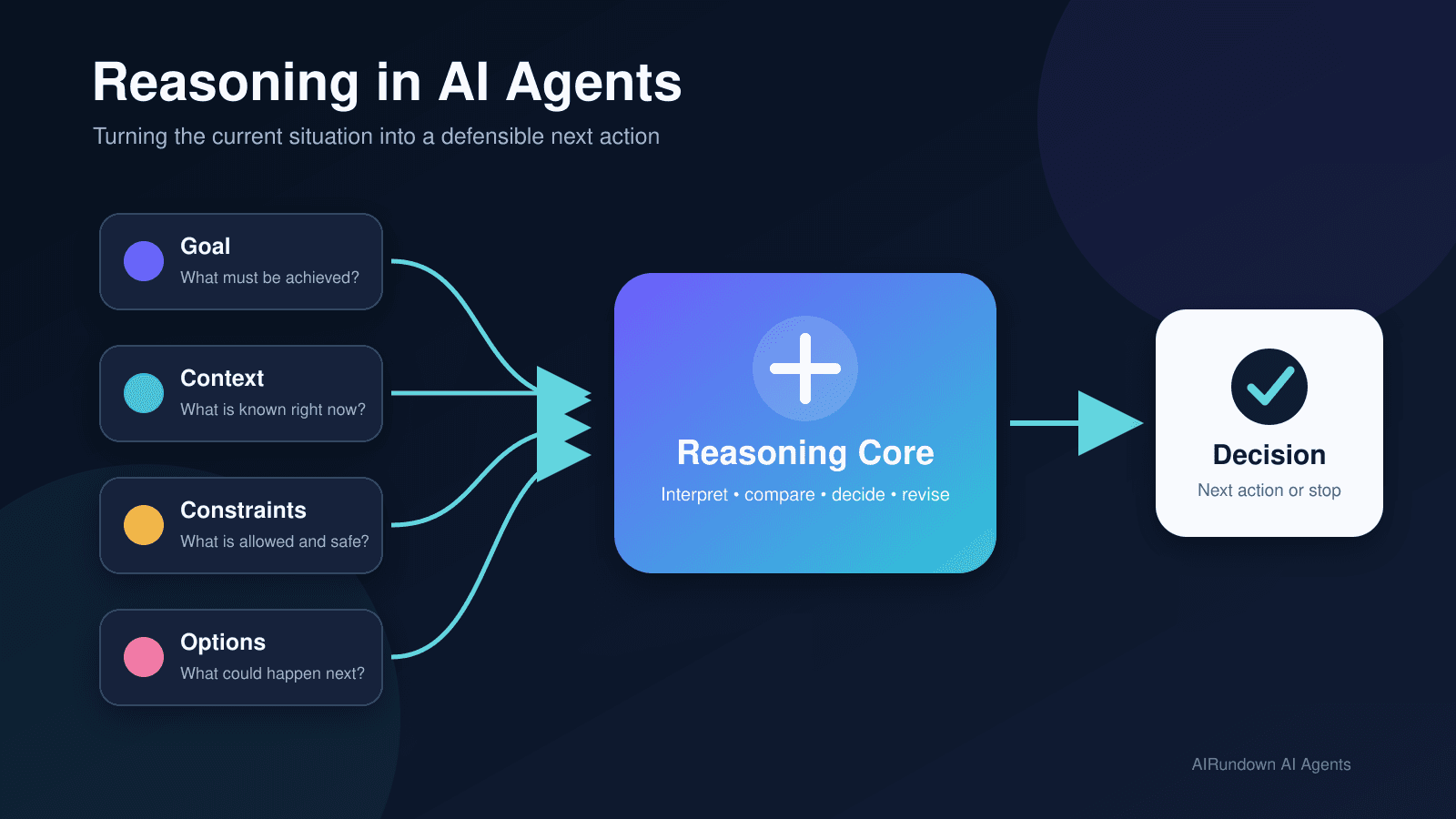
Learn how AI agents interpret goals, break down tasks, handle uncertainty, choose tools, reflect on results, and decide what to do next.
Agentic and function-calling fine-tuning is the specific post-training work — synthetic tool-use trajectories, multi-step reasoning traces, rewards tied to task completion rather than next-token accuracy — that separates models that can actually run an agent workflow from ones that just have a big context window. As of mid-2026, benchmarks like tau-bench and the newly reweighted BFCL v4 show frontier models clustering near parity on single tool calls but diverging sharply on multi-turn, multi-constraint tasks. That divergence is now the signal worth watching as more products get built as agents rather than chatbots. For PMs, the takeaway is blunt: stop evaluating vendors on single-function-call demos and start asking what their post-training actually rewarded.
The real cost of training a frontier AI model in 2026 is far higher than the compute figure quoted in press releases, because that number only covers the final run's GPU-hours. Data licensing, researcher salaries, safety evaluation, and legal compliance stack on top of it, often eclipsing the headline number. This gap is widening as labs push toward $1 billion and $10 billion training runs, reshaping who can credibly compete at the frontier. For PMs, it reframes the build-versus-buy call: the deciding factor isn't GPU pricing, it's whether your company can carry the legal and safety cost structure of an AI lab.

Claude Sonnet 5's introductory API pricing of $2 per million input tokens and $10 per million output ends August 31, 2026, stepping up 50% to the standard $3/$15 on September 1. That intro window is the only period the model is both cheaper and stronger than Sonnet 4.6, which already costs $3/$15. Prompt caching and the Batch API stack with the discount, pulling effective input rates as low as $0.20 per million. For PMs, the move this quarter is to run migrations and evals at intro rates while modeling all unit economics at the standard price.
OpenAI lists GPT-5.6 at $5/$30 for Sol, $2.50/$15 for Terra, and $1/$6 for Luna per million tokens — but almost nobody running production should pay list. Prompt caching cuts repeated input to a tenth of sticker and Batch mode halves the rest, dropping a realistic workload roughly 48% below the naive bill. Once discounts are in play, the fight with Claude Sonnet 5's $2/$10 intro pricing and Gemini 3.1 Pro's $2/$12 is closer than the stickers suggest. For PMs, the takeaway is that model cost is now an architecture decision, not a procurement one.
OpenAI closed a record $122 billion private round at an $852 billion post-money valuation, with Amazon committing up to $50 billion and Nvidia and SoftBank $30 billion each. The bigger move is buried in the terms: AWS becomes the exclusive third-party cloud distributor for OpenAI's new enterprise platform, Frontier, backed by a ~$100 billion compute expansion. It signals that frontier AI, hyperscale compute, and custom silicon are consolidating into a few mega-alliances. For PMs, that means your cloud and model choices are quietly fusing into a single bloc decision you'll struggle to reverse.
Lantern spent 2024 as a loyalty-tech startup before relaunching in July 2026 as a generative engine optimization (GEO) platform for e-commerce brands, according to Business Insider. The pivot rides a real trend — AI-driven shopping traffic is up 4,700% year over year and converts 5-8x better than Google organic, even though 60% of it never clicks through. Founder Andrew Lissimore raised a $3.1 million seed round led by Salesforce Ventures and hired ex-Amazon engineers to build the visibility-scoring model behind it. For PMs, the lesson isn't about Lantern specifically — it's that GEO tooling is becoming a required line item, and you need to vet the measurement claims before you buy.
Meta is reportedly exploring a plan to sell excess AI computing capacity through a cloud business, according to Bloomberg reporting picked up by Reuters. No pricing or launch details have been confirmed, but the move signals that even Meta's aggressive AI buildout has produced more capacity than its internal roadmap currently needs. That's a meaningful data point for anyone tracking whether GPU scarcity, and the pricing power that comes with it, is starting to loosen. For PMs, this is a signal to rethink how long you lock in compute contracts before the pricing floor shifts under you.

Wayve the UK-based autonomous vehicle AI company launched an $85 million employee tender offer at an $8.5 billion valuation on July 1. On the surface it is a liquidity event for early employees. Look closer and it is a deliberate talent retention mechanism in the hottest AI hiring market ever seen.

Morgan Stanley deployed AI agents in P&L reconciliation and cut the time per book from six hours to two to three hours. The insight that made it work is not what most AI vendors want you to hear: the system achieved its efficiency gains by keeping humans tightly in the loop — not by maximizing autonomy.
Crunchbase latest data confirms what many founders outside the US already know: the AI startup funding surge is heavily concentrated. The US UK and China are absorbing the vast majority of AI venture capital while founders elsewhere compete for a fraction of the pie.
JPMorgan Chase laid out its plan to become the world first fully AI-powered megabank. Look closer and it is actually the most detailed public blueprint any Fortune 50 company has released for enterprise-wide AI transformation covering model deployment workforce redesign data infrastructure and governance.
AI startup Rocket is reportedly in talks to raise $40 million to $50 million, according to The Economic Times. The bigger signal is that AI investors are still active, but they are backing companies that can prove distribution, retention, and durable workflow value rather than generic AI hype.
Z.ai released the open-weight GLM-5.2 model, and researchers say it can match Anthropic’s Mythos in some cybersecurity and bug-finding scenarios. The bigger point is not that China has caught up everywhere, but that specialized AI capability is closing fast in domains where enterprises and governments spend real money.
Rokid reported 800% year-on-year sales growth at its June 26 Open Day, with 50-60% of users wearing the glasses daily — a retention signal that suggests smart glasses are moving beyond novelty. The company unveiled YodaOS, an Agent-first operating system that abandons the app paradigm, while CEO Misa Zhu compared the current market moment to the pre-iPhone BlackBerry era. The deeper story is a fundamental split between Western fashion-first and Chinese AI-first product philosophies that will shape how the entire category develops.
The source article for this piece — a Nikkei Asia story about Tokyo cat cafes — contained no AI business content, no relevant research context, and no applicable key facts. Rather than fabricate an angle, this piece uses the miscategorization as a lens on a real issue: how AI content curation pipelines handle low-relevance matches from high-trust sources, and why that failure mode matters for PMs building or buying information tools.