AI Agents
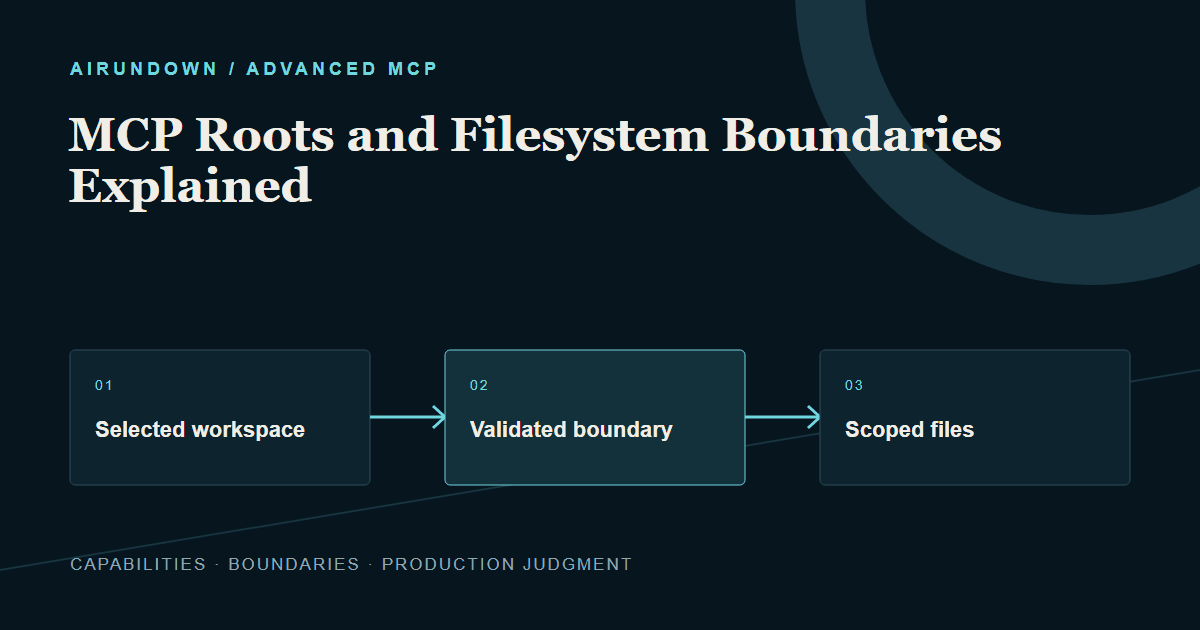
MCP Roots and Filesystem Boundaries Explained
A security-focused guide to MCP roots, file URI validation, workspace boundaries, user consent, symlinks, and modern alternatives.
Aisha Williams4 min read
Editorial Team Profile
AI Futures & Strategy Editor
“Big-picture, visionary, grounded in evidence”
A security-focused guide to MCP roots, file URI validation, workspace boundaries, user consent, symlinks, and modern alternatives.
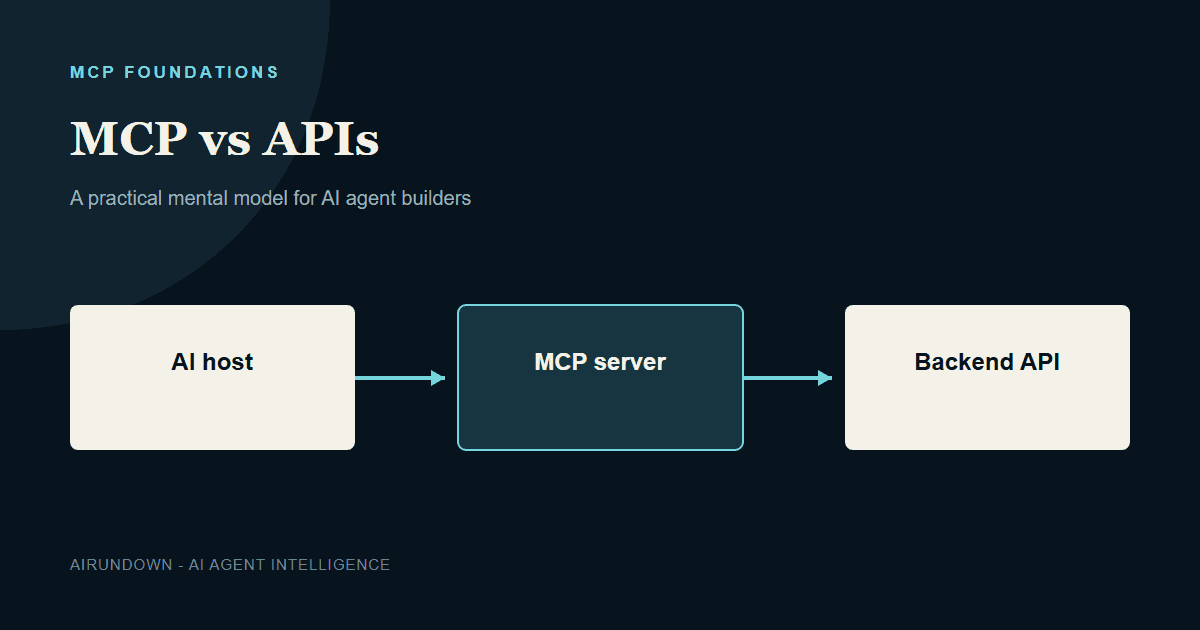
Learn how MCP relates to REST APIs and SDKs, what each layer owns, and why most production MCP servers still call existing APIs.
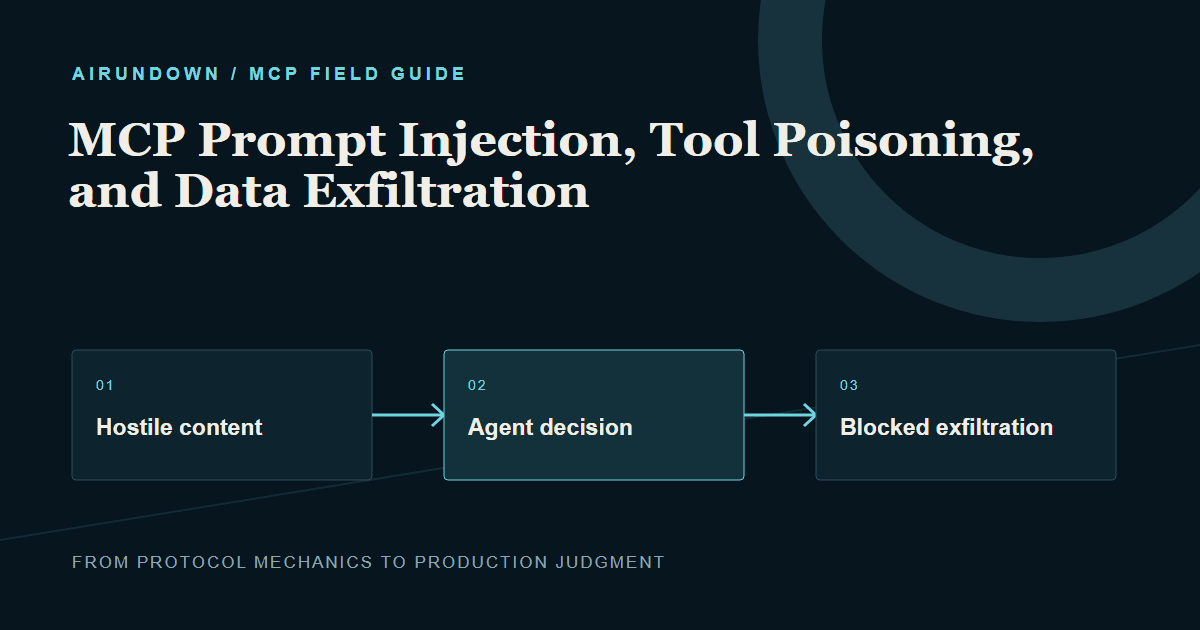
A defensive guide to prompt injection, tool poisoning, confused-deputy risks, and data exfiltration in MCP systems.
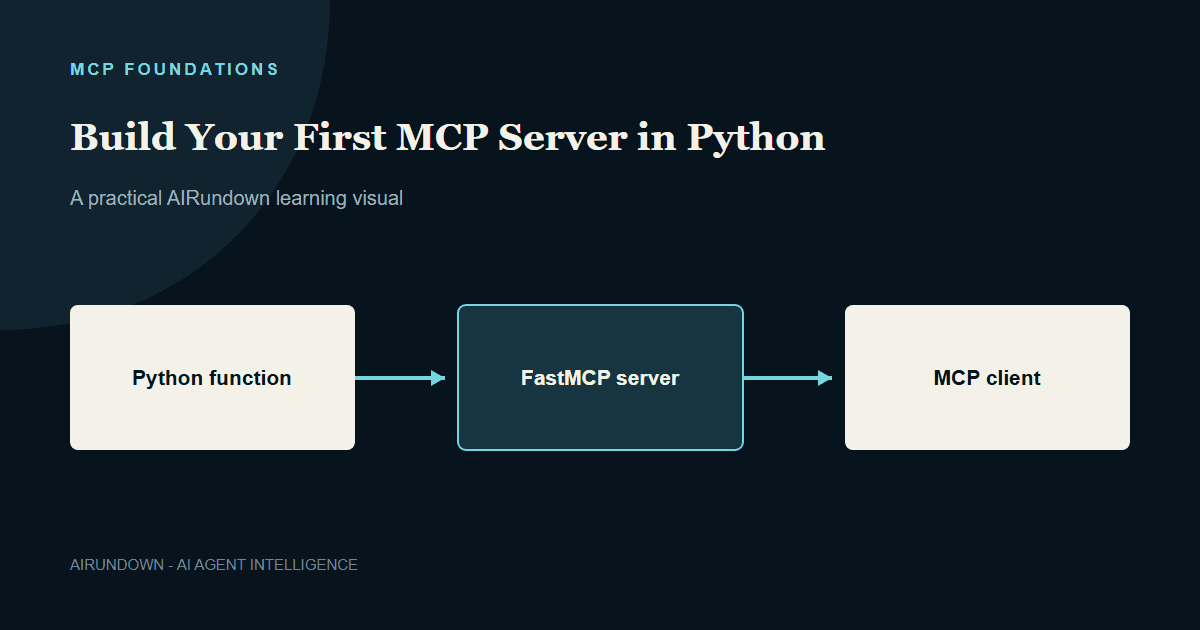
A step-by-step Python tutorial for building, running, testing, and hardening a small MCP server with a typed tool.
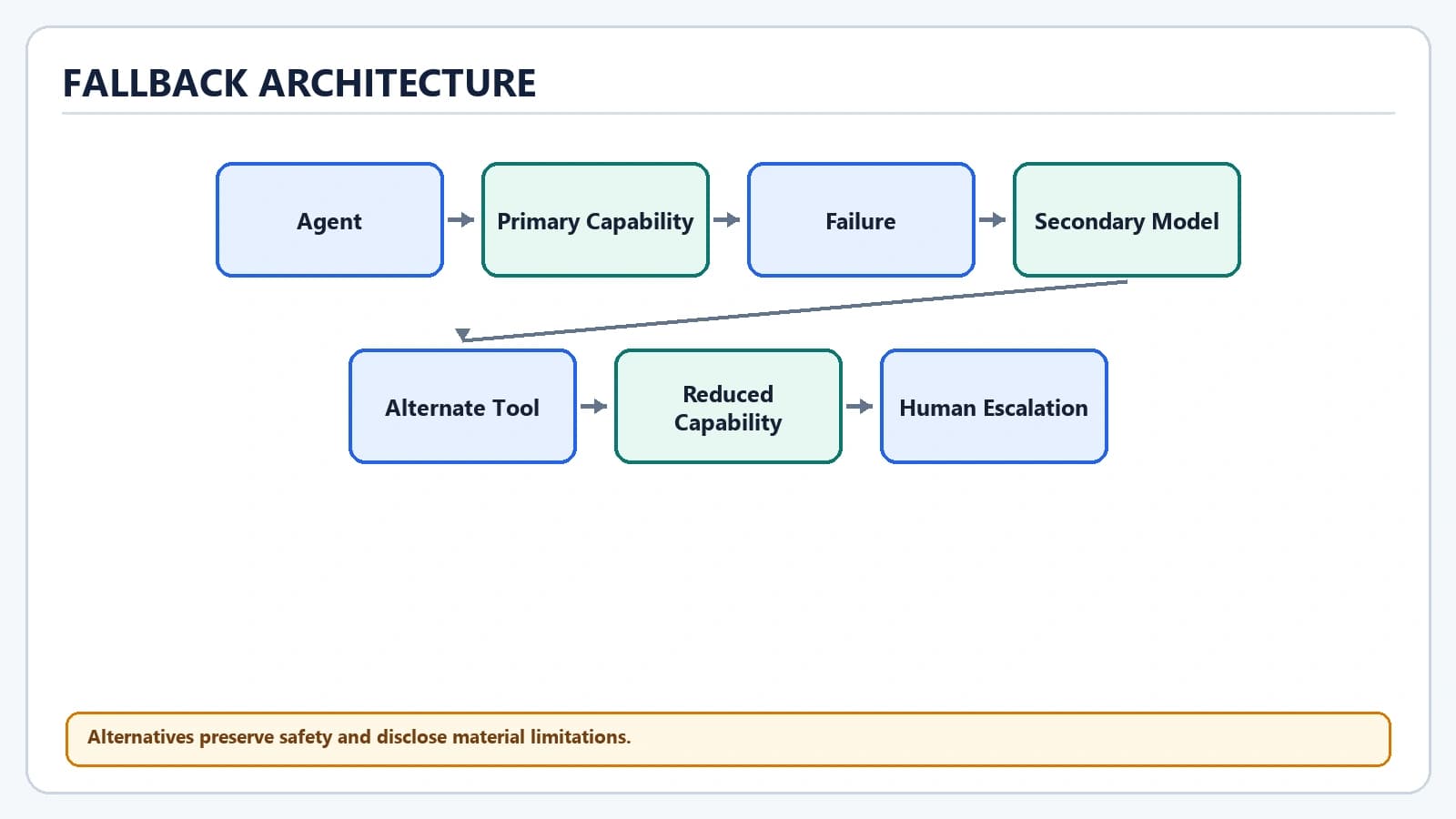
Keep an agent safely useful when models, tools, data, or specialists fail—without fabricating success or silently weakening controls.
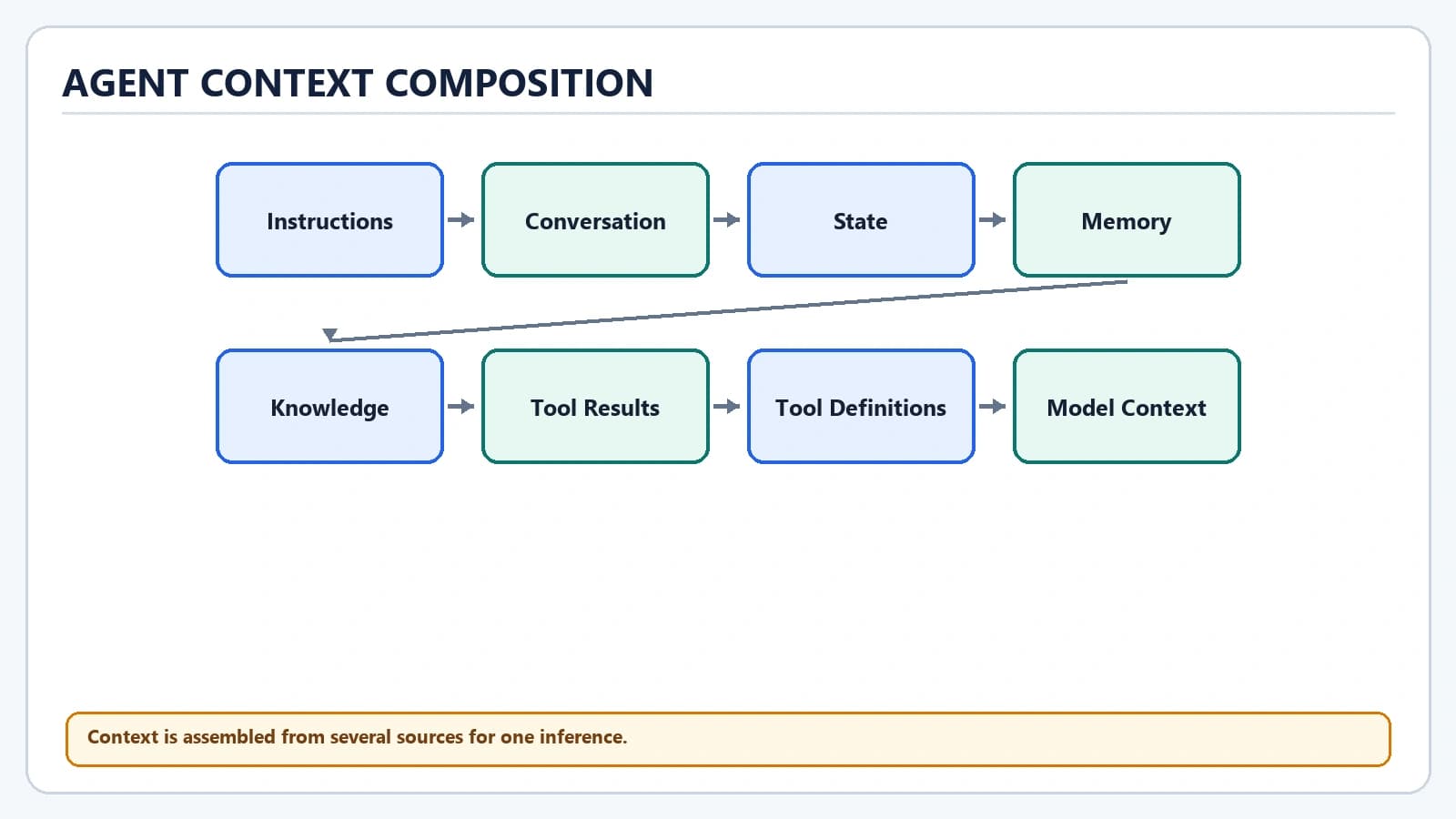
Build focused model context that preserves decision-relevant information while removing repeated and irrelevant tokens.
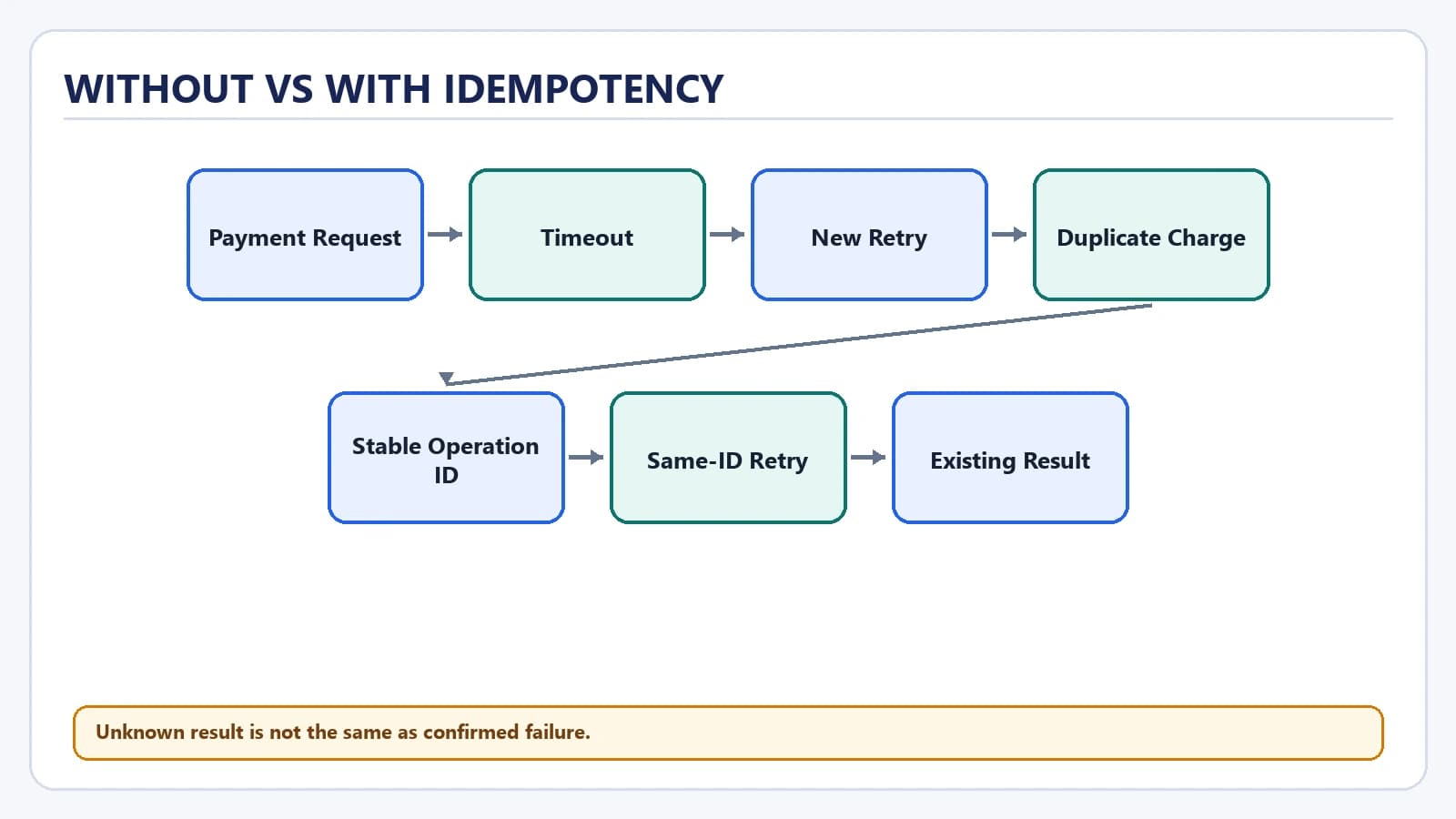
A practical, production-oriented explanation of idempotency in agent workflows, with examples, boundaries, trade-offs, and failure handling patterns.
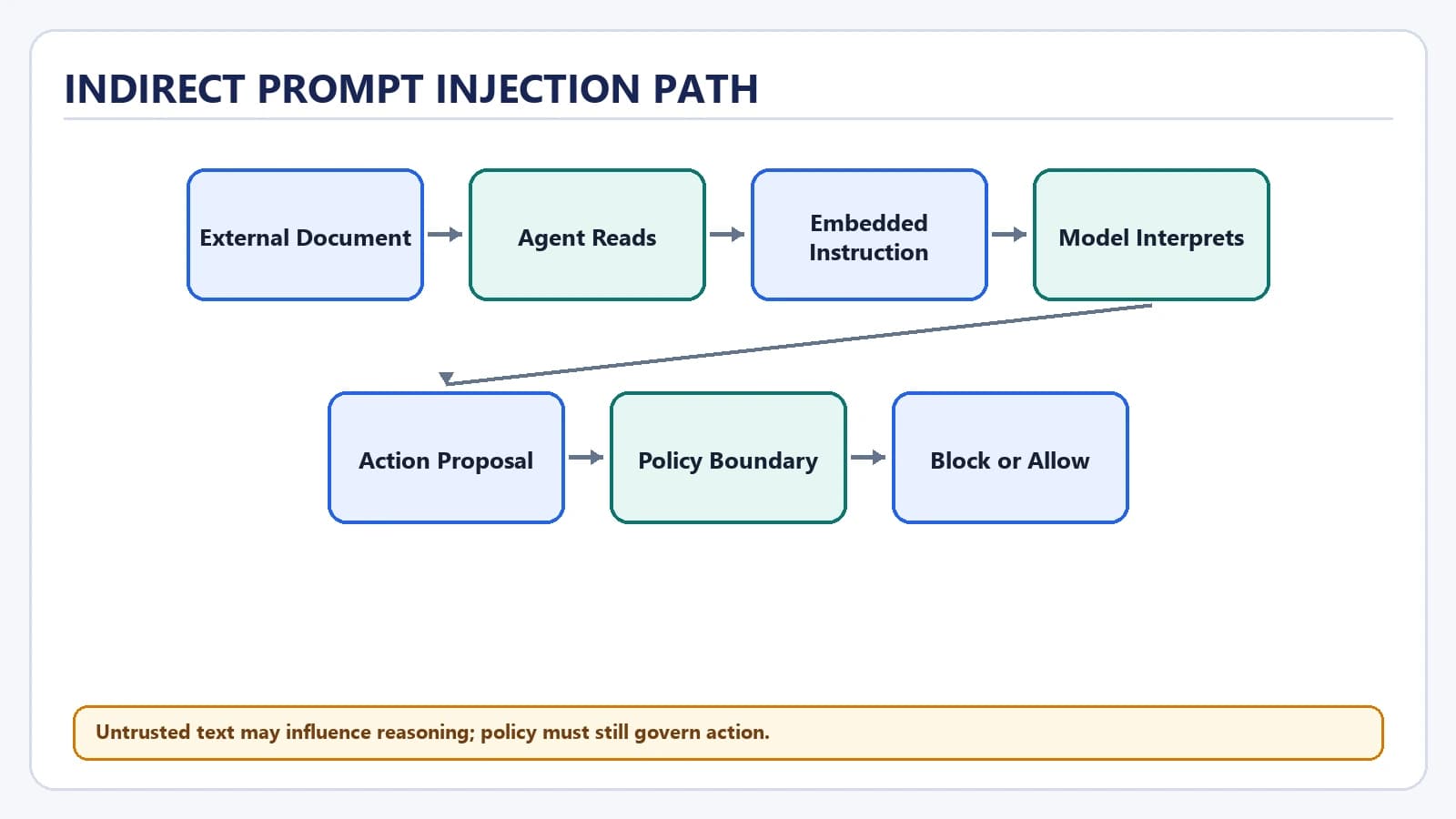
A practical, production-oriented explanation of prompt injection in tool-using agents, with examples, boundaries, trade-offs, and failure handling patterns.
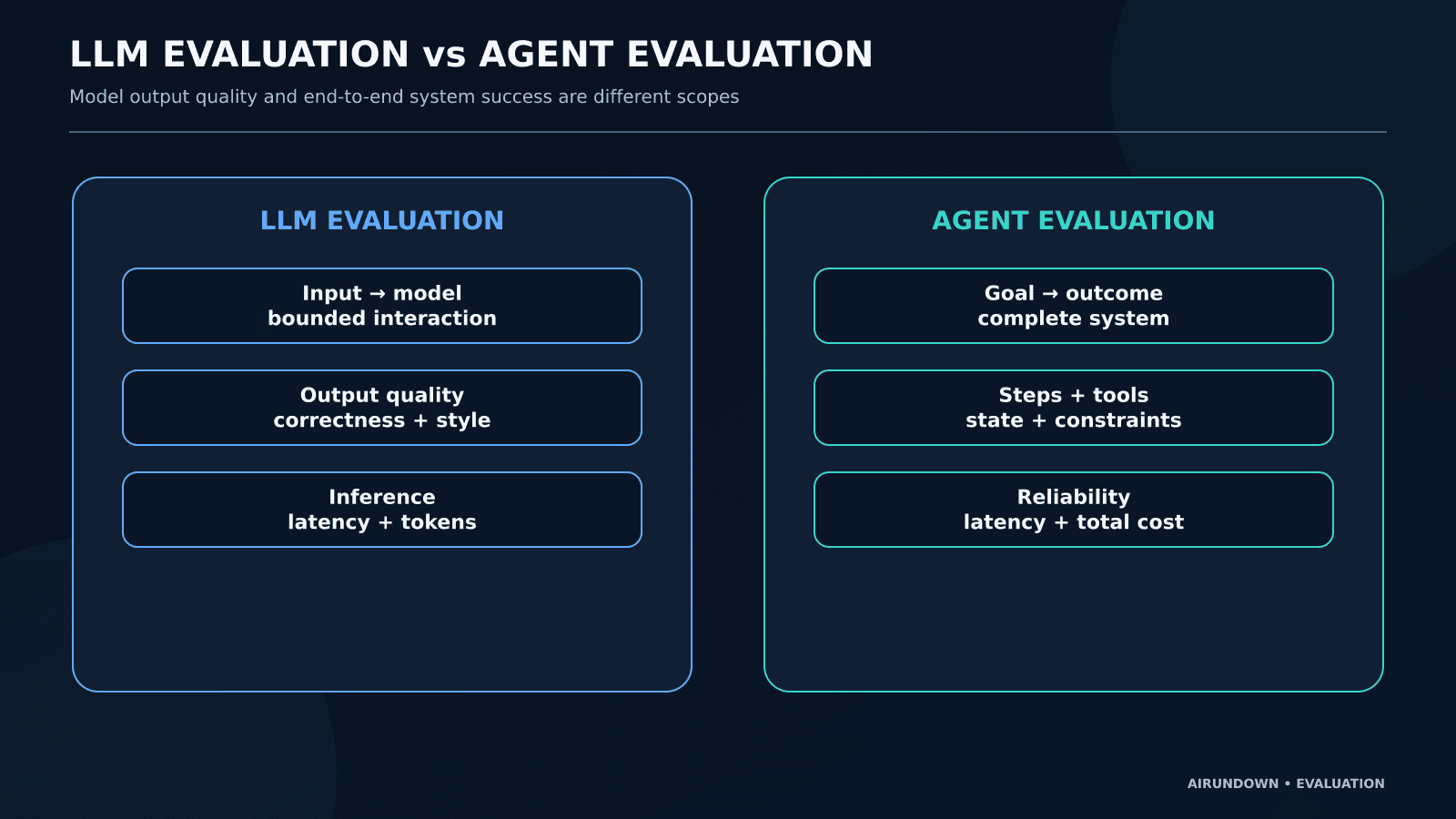
LLM evaluation scores model outputs; agent evaluation measures the whole goal-directed system, including tools, state, constraints, reliability, latency, and cost.
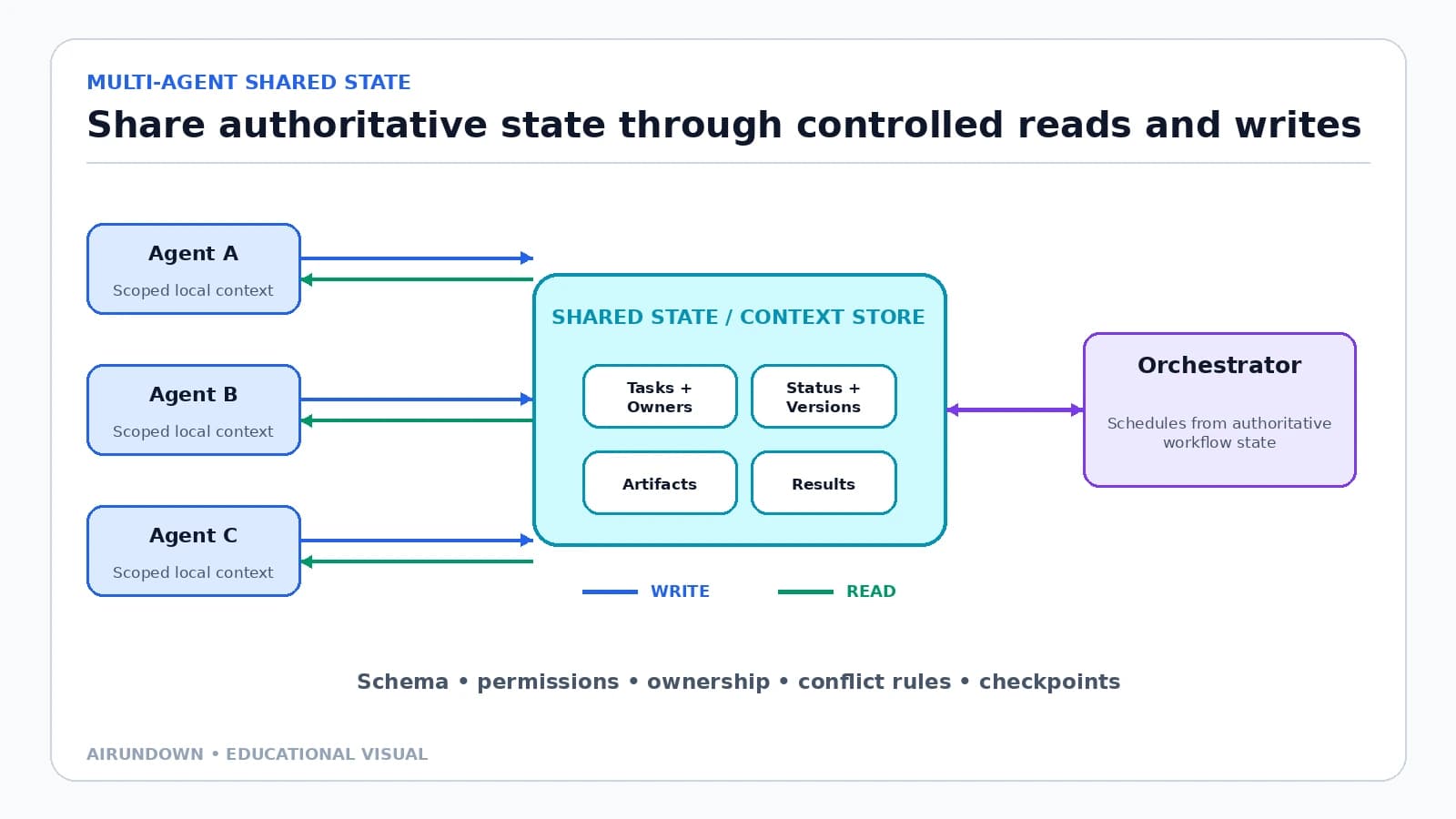
Learn how multi-agent systems separate local context from shared workflow state, exchange artifacts, synchronize updates, persist checkpoints, and avoid state conflicts.
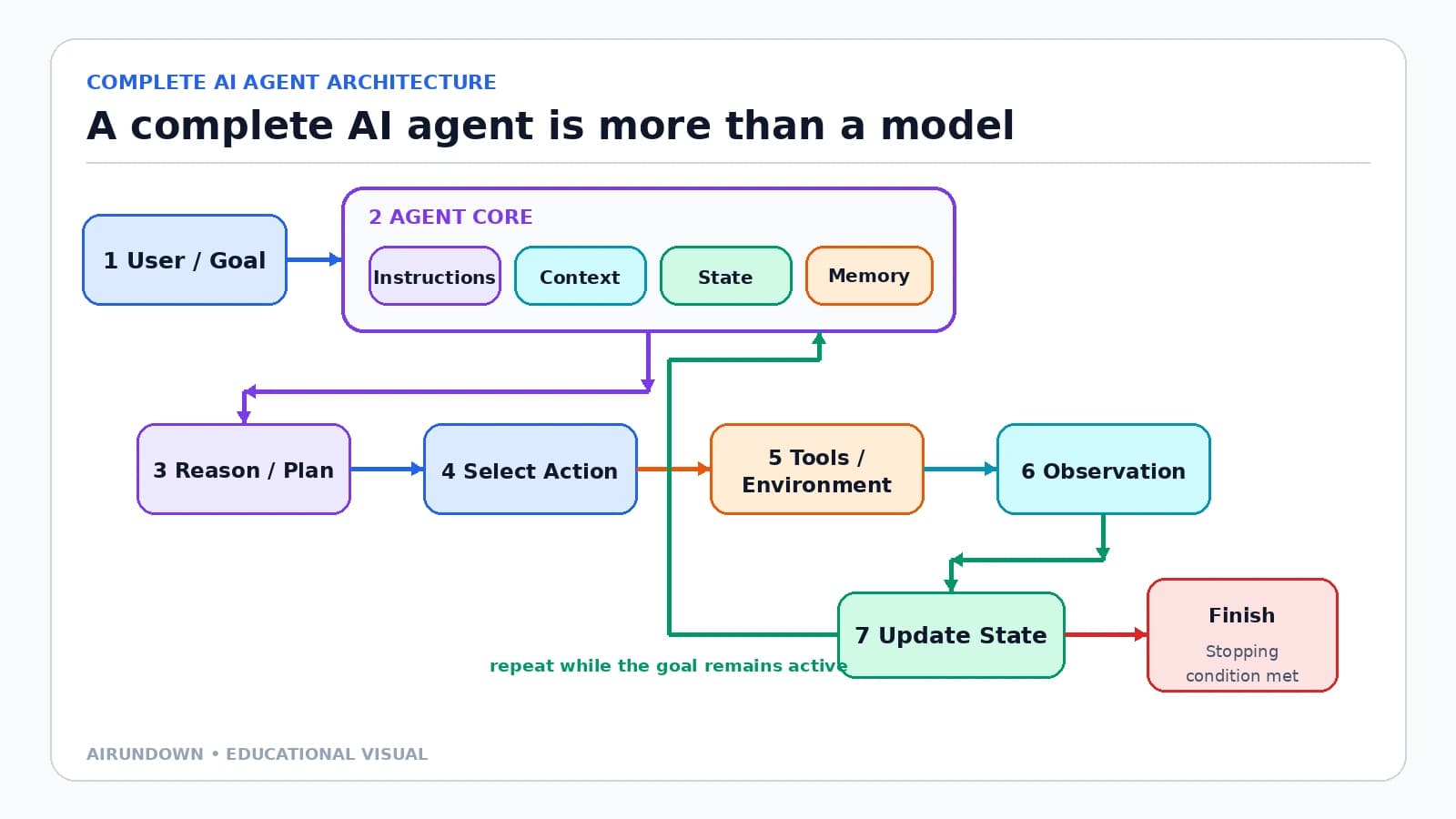
Understand modern AI-agent architecture from goals and instructions through reasoning, tools, observations, state updates, guardrails, and stopping.
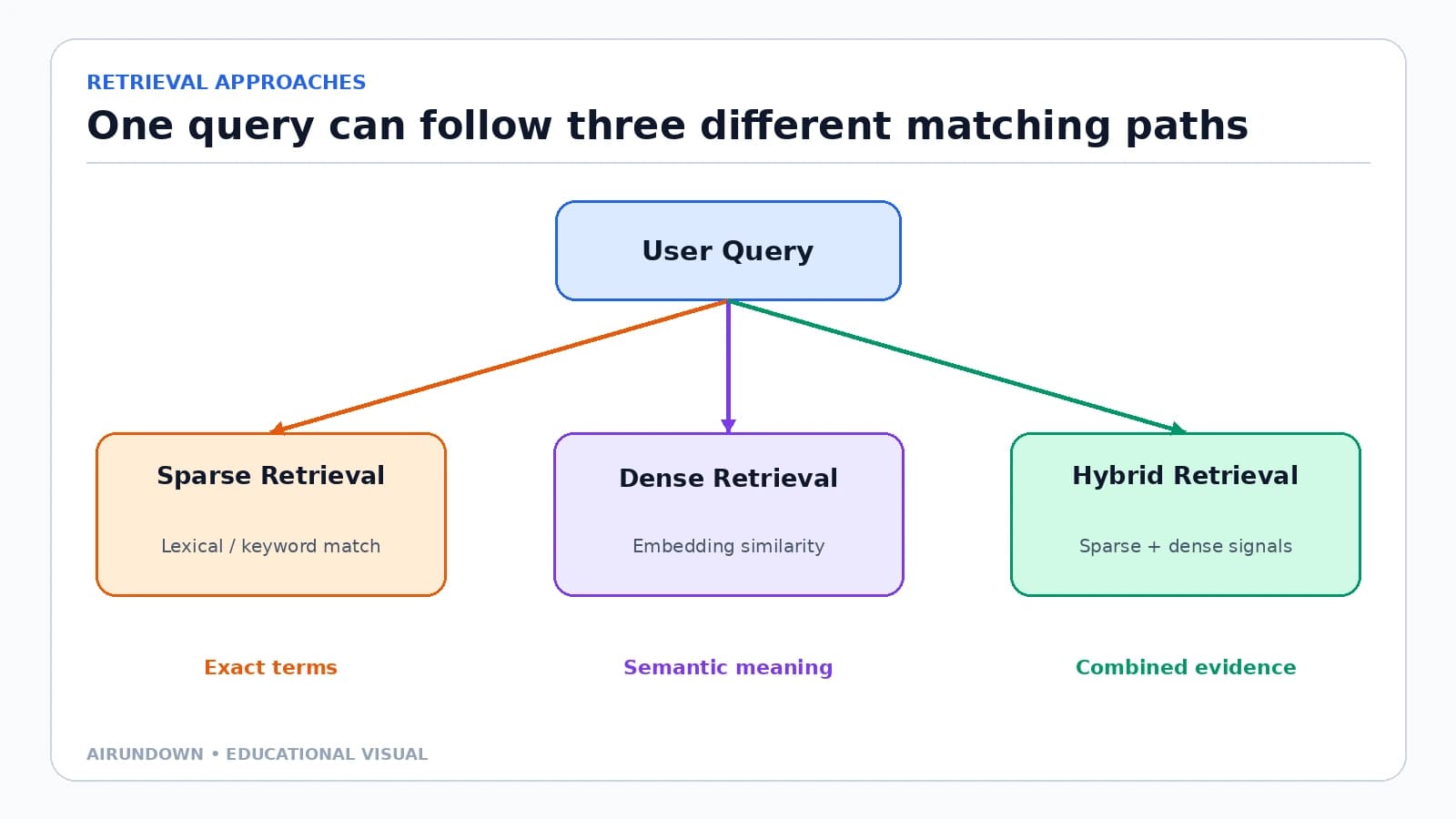
Compare sparse, dense, and hybrid retrieval by matching signal, strengths, failure modes, fusion methods, and the evidence needed to choose a RAG baseline.
A practical introduction to retrieval-augmented generation, why external knowledge matters, and where RAG fits beside fine-tuning, memory, and AI agents.
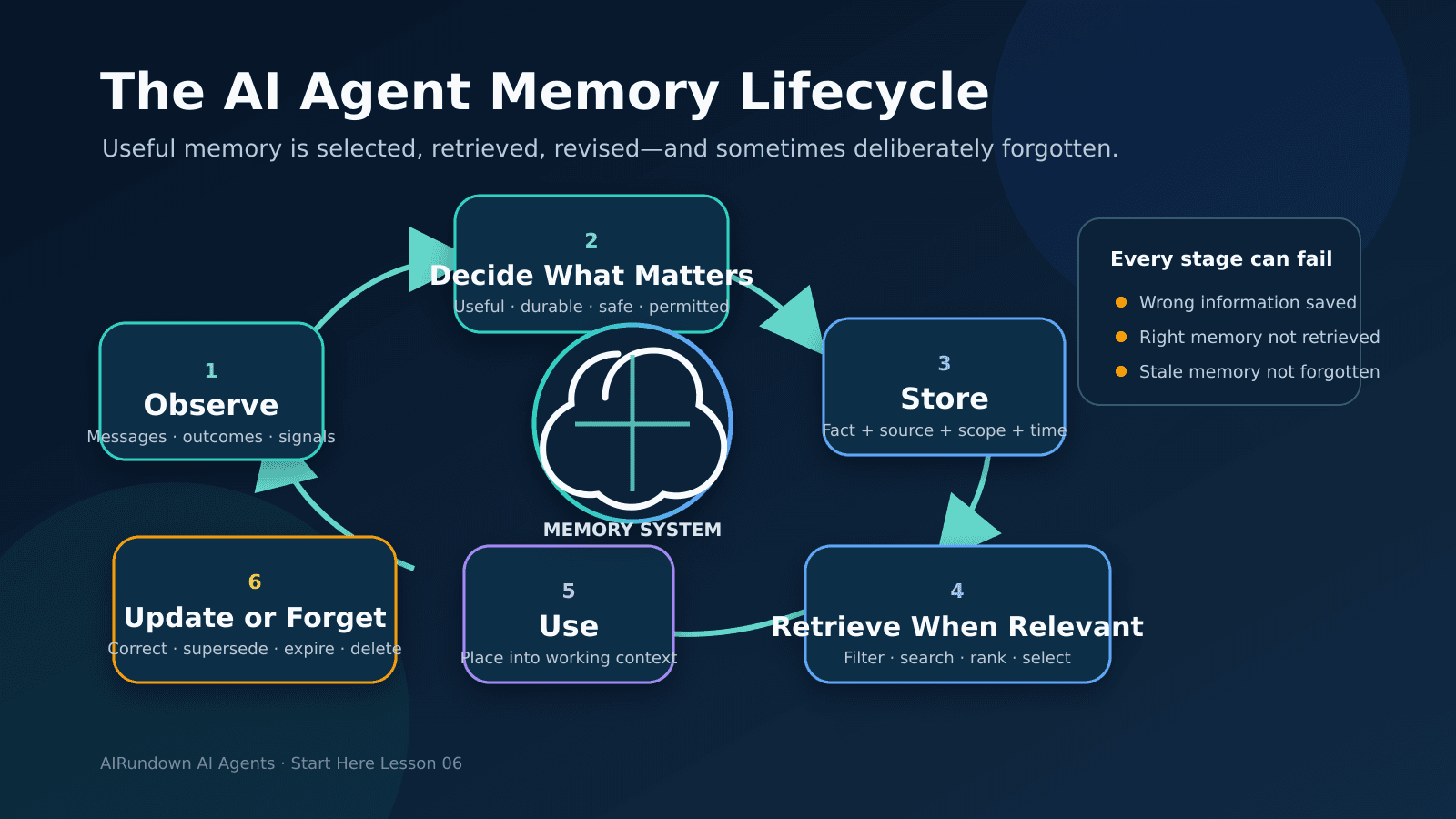
Learn how AI agent memory works, from context windows and working memory to persistent stores, retrieval, updating, forgetting, and memory quality.
RLHF (Reinforcement Learning from Human Feedback) is the training step that turns a raw, pretrained language model into a usable assistant, using human rankings of outputs to train a reward model, then optimizing the base model against that reward model, typically via PPO. It's the technique behind ChatGPT, Claude, and Gemini's instruction-following behavior, but as of mid-2026 the industry has largely moved on to cheaper successors: DPO for general preference tuning, RLAIF for AI-generated feedback, and RLVR for verifiable-reward reasoning models. The bigger signal is that alignment is getting radically cheaper and more DIY, which changes who can afford to do it well. For PMs, that means the competitive moat of "better-behaved AI" is eroding faster than most roadmaps assume, and in-house preference tuning is now within reach of teams that could never have run an RL pipeline.
Multimodal model training works by converting text, images, and audio into a shared embedding space, then feeding those tokens into either a bolted-on adapter or a natively fused transformer trained end-to-end. The two approaches produce very different capabilities: adapters are cheap and fast to ship, but native fusion is what lets a model reason and generate across modalities in both directions. As of mid-2026, frontier labs are converging on native fusion as the default architecture, and the gap between the two approaches is becoming a competitive divide rather than a rounding error. For PMs, the question isn't which model to buy this quarter — it's whether your product's multimodal roadmap is built on an architecture pattern the industry is quietly abandoning.
Direct Preference Optimization (DPO) collapses the three-network, reinforcement-learning pipeline behind classic RLHF, a reward model plus PPO, into a single supervised-style loss trained directly on preference pairs. It has become the default preference-alignment method across most open-weight model releases, while frontier labs increasingly pair it with on-policy RL only for reasoning tasks that carry verifiable rewards. The bigger signal is that preference optimization is consolidating into a modular pipeline rather than any one algorithm winning outright. For PMs, which alignment method a vendor or in-house team actually runs says a lot about whether they're optimizing for stability and speed, or holding onto flexibility for the next hard problem.
Synthetic data — text and examples generated by one model to train another — has become a core input at frontier AI labs as the supply of fresh, high-quality human text runs thin. Researchers are split between two camps: synthetic data as the fix for the looming data wall, and model collapse as the hidden cost of models increasingly training on machine-generated output. The split matters now because the labs pulling ahead aren't avoiding synthetic data, they're building verification layers around it, while smaller players risk quietly degrading their models by skipping that step. For PMs, the real exposure isn't in the lab's training pipeline — it's in whether you're watching your own vendor's outputs for the early signs of homogenization.
Open-weight and open source AI are not the same thing, and the gap between downloadable weights and fully disclosed training data, code, and evals defines a real spectrum rather than a marketing checkbox. Nearly every model marketed as open source today — Llama, DeepSeek, Qwen, Mistral — is open-weight only, while true full openness stays confined to smaller research models. Regulators, especially under the EU AI Act, are now writing their own definition of "open" tied to concrete exemption criteria, which will matter more than any lab's self-description. For PMs, the license terms attached to an "open" model can cap your user base, restrict redistribution, or evaporate your compliance exemption without warning.
Claude Sonnet 5 pairs a 1M-token context window with flat $2-per-million intro pricing — no long-context surcharge, unlike Gemini 3.1 Pro's step-up above 200K tokens. The window itself matters less than the economics of re-reading it: cache reads run up to 90% cheaper and skip Anthropic's input rate limits. Known caveats remain, from mid-window quality degradation to a 128K output cap. For PMs, the make-or-buy math on retrieval infrastructure just changed — corpora under a million tokens may no longer need a RAG pipeline at all.

OpenAI's GPT-5.6 launched without a score on the tracked SWE-bench Verified board, and the numbers that do exist swing wildly by who runs the test. BenchLM's July 2026 tracking puts Sol at 64.6% on SWE-bench Pro against Claude Fable 5's 80.3%, a figure that is scaffold-dependent and partly self-reported. The gap says less about the model than about the collapse of shared benchmarks as a buying signal. For PMs, the practical move is to stop reading leaderboards and run a small eval on your own workload instead.
Gemini Deep Think has crossed from benchmark scores into real research, with Google DeepMind's Aletheia agent autonomously resolving four previously open Erdős problems out of 700 and contributing to published papers. A year after its 2025 IMO gold-medal run, the model is now producing publishable-quality mathematics and physics results with a human in the loop. The bigger signal: frontier reasoning is moving from passing exams to doing net-new expert work. For PMs, the defensible layer is shifting from the base model everyone rents to the verifier and problem-framing scaffold you build around it.
The EU AI nudification ban takes effect December 2, 2026, outlawing AI systems that generate non-consensual intimate imagery of identifiable people or CSAM under an amended Article 5. Paired with the July 7 Cybersecurity and AI Action Plan, it marks the first time Europe has prohibited a specific generative capability rather than a use case. The signal is a shift from policing behavior to policing what models can do — and building the state capacity to test it. For PMs, safeguard evidence for image-generation products is becoming a condition of EU market access, not a nice-to-have.
Anthropic's newest models, Claude Fable 5 and Mythos 5, went dark worldwide on June 12, three days after launch, when a US export-control directive left the company unable to verify user nationality. The controls were fully lifted on June 30 and access is being restored, with Anthropic agreeing to new safety commitments. The episode landed just as Anthropic prepares a reported Q4 IPO that depends on global availability. For PMs, the takeaway is that export policy is now a first-class variable in vendor choice and roadmap planning, not a geopolitical footnote.
Anthropic brought Claude Fable 5 back online in July 2026 with a four-category cybersecurity classifier and a proposed CJS-0 to CJS-4 scale for rating how dangerous an AI jailbreak really is. The jailbreak that triggered it worked on rival models too, which is the point: these weaknesses are a property of capable models, so the durable news is the scoring standard, not the one patch. Think of it as CVSS arriving for AI jailbreaks, a shared severity language that turns safety from anecdote into something buyers can demand. For PMs, it signals that severity-scored safety evaluation is about to move from research virtue to procurement requirement, and your release process should get ahead of it.
A longitudinal study of 802 developers and 196,212 pull requests at an enterprise AI mandate found per-developer throughput more than doubled — but human review coverage fell from 89% to 68% while silent, comment-free approvals held flat even as volume doubled. Automated review overtook human review, and reviewer load doubled alongside authoring output. For PMs, the lesson isn't that AI writes bad code — merge and revert rates barely moved — it's that authoring capacity and review capacity no longer scale together, and most teams haven't rebuilt review to match.
Anthropic has restored global access to Claude Fable 5 after applying safety updates to the model, ending a period where the model was pulled from availability. The company confirmed the rollout in an official announcement. The move signals that pull-patch-restore cycles are becoming a standard part of how frontier labs manage model safety, not an emergency exception. For PMs, it's a reminder that any product roadmap built on a single hard-coded model dependency now carries availability risk that needs an explicit fallback plan.
Anthropic launched Claude Science this week, according to Reuters, moving the company directly into scientific research workflows rather than staying a general-purpose chatbot. The launch signals that Anthropic sees the era of one-size-fits-all AI chat interfaces ending, replaced by specialized vertical workbenches for high-stakes professional domains. It's the clearest evidence yet that foundation labs plan to compete directly in healthcare, research, and data analysis markets, not just supply the models underneath them. For PMs, it means the foundation model vendor you build on today could become tomorrow's direct competitor in your vertical.
A new arXiv paper proposes AI-ModelNet, a network architecture for connecting heterogeneous AI models so they can share capabilities and collaborate on reasoning. The idea matters because enterprise AI is shifting from monolithic large models toward smaller, private, domain-specific systems that need orchestration, governance, and interoperability.
Crypto Briefing reports that OpenAI, Anthropic, and xAI now consume 21% of global AI compute, signaling a sharp concentration of capacity among frontier AI labs. For business leaders, the issue is no longer only model quality; it is whether product roadmaps can withstand compute scarcity, pricing shifts, and vendor dependency.

BOE Technology Group has sampled glass-based carrier substrates for advanced semiconductor packaging to domestic Chinese customers, with some clients progressing to technical testing after concept verification. Backed by over RMB 1.3 billion in investment since 2022, BOE's pilot line reached full automation in H1 2026 with capacity for 1,000 substrates per month. This marks a meaningful step in China's effort to build domestic alternatives to Japanese and U.S.-aligned packaging substrate suppliers — a supply chain gap that export controls have made strategically urgent.
Honda CEO Toshihiro Mibe confirmed a formal merger with Nissan is 'close to announcement,' a deal that would create the world's third-largest automaker by volume. Beyond manufacturing scale, the tie-up represents a strategic consolidation of AI driving data and software platforms — including Nissan's 400 million kilometers of ProPilot data — as legacy OEMs race to build defensible AI infrastructure ahead of 2030 autonomy mandates.