MCP Sampling Explained: Model Calls Requested by Servers
A practical explanation of MCP sampling, including message flow, model preferences, tool use, approvals, security, and current design status.
47 articles — updated daily
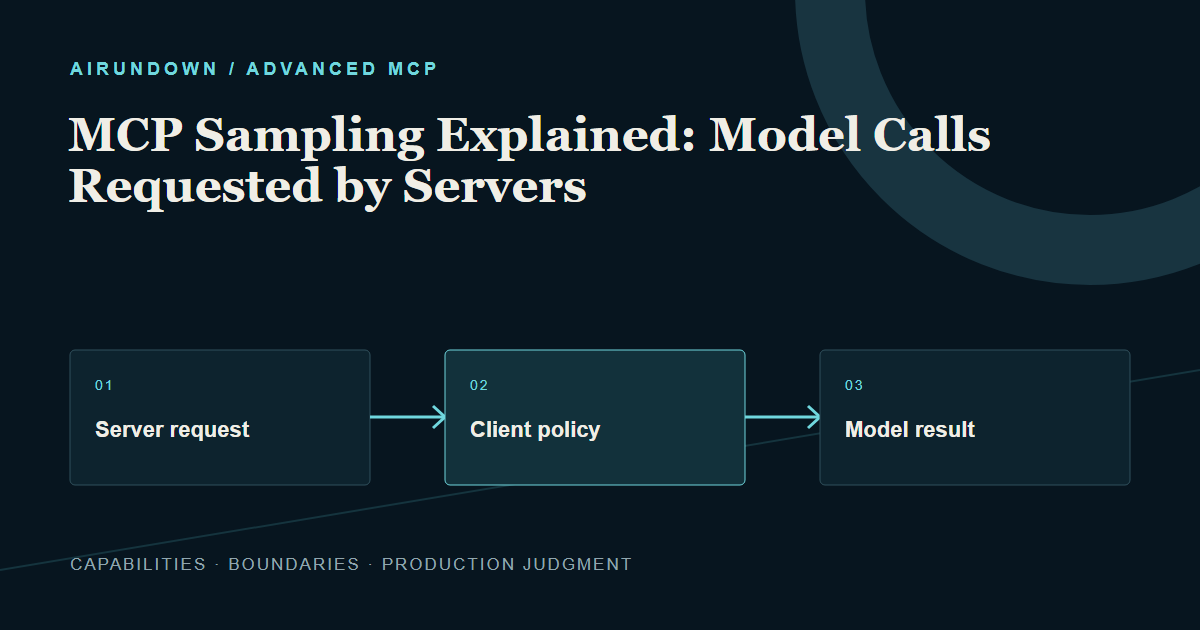
A practical explanation of MCP sampling, including message flow, model preferences, tool use, approvals, security, and current design status.
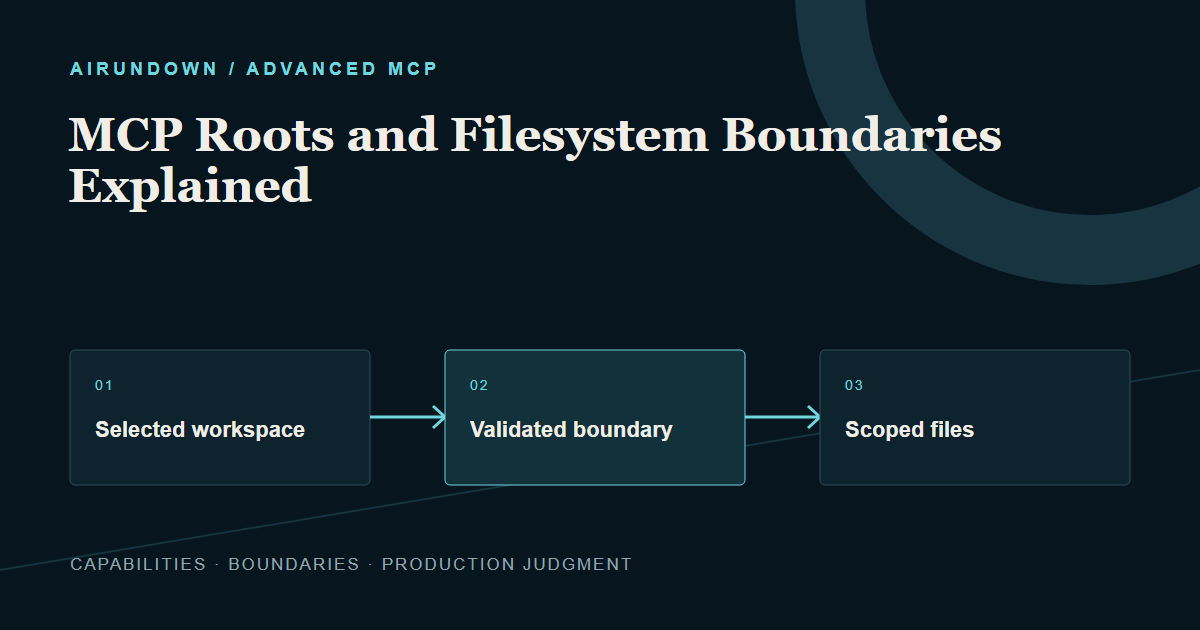
A security-focused guide to MCP roots, file URI validation, workspace boundaries, user consent, symlinks, and modern alternatives.
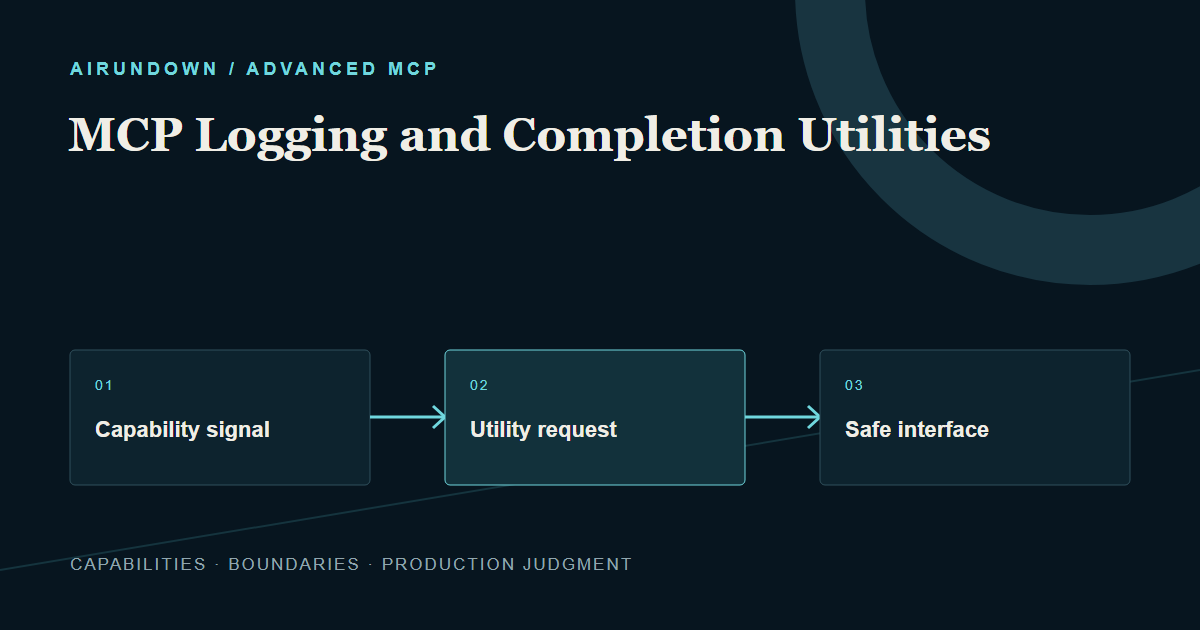
A practical reference to MCP logging notifications and completion suggestions, including current status, security, and implementation boundaries.
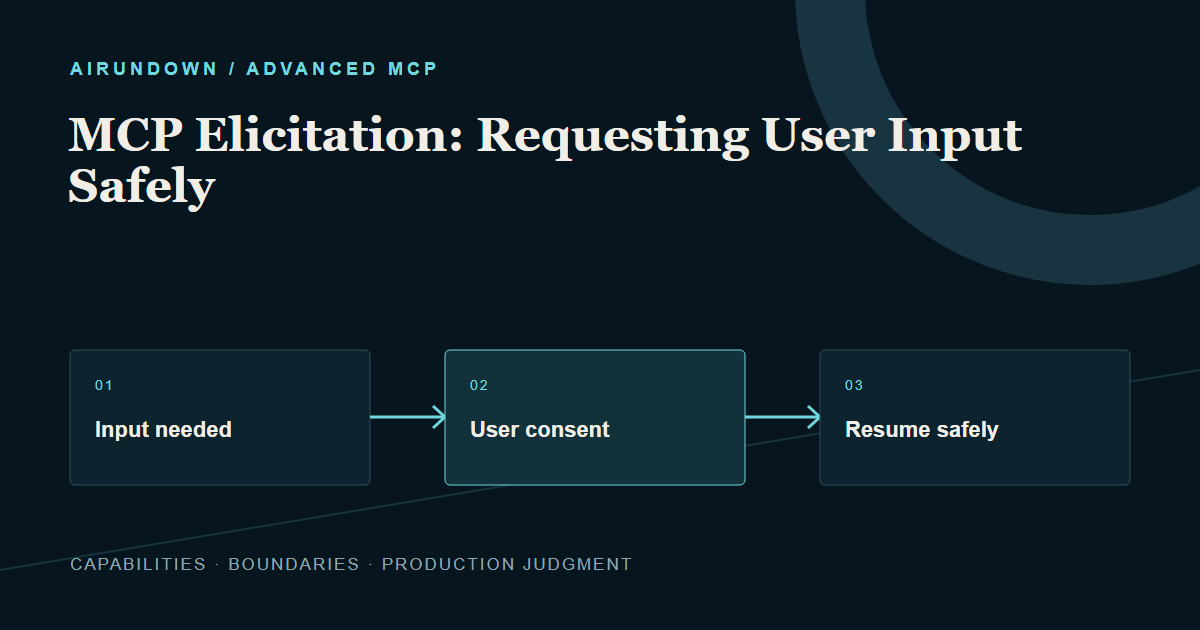
A practical guide to requesting missing user input during MCP operations without confusing conversation, consent, or credentials.
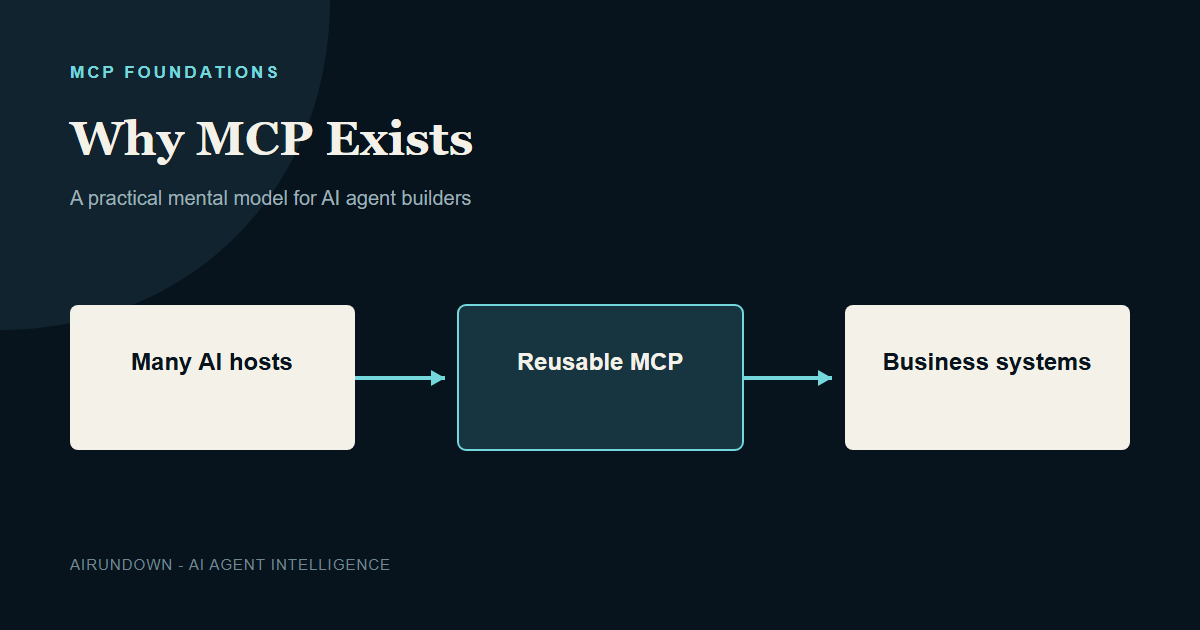
Understand why AI integrations become difficult at scale and how MCP creates a reusable boundary between AI applications and external systems.
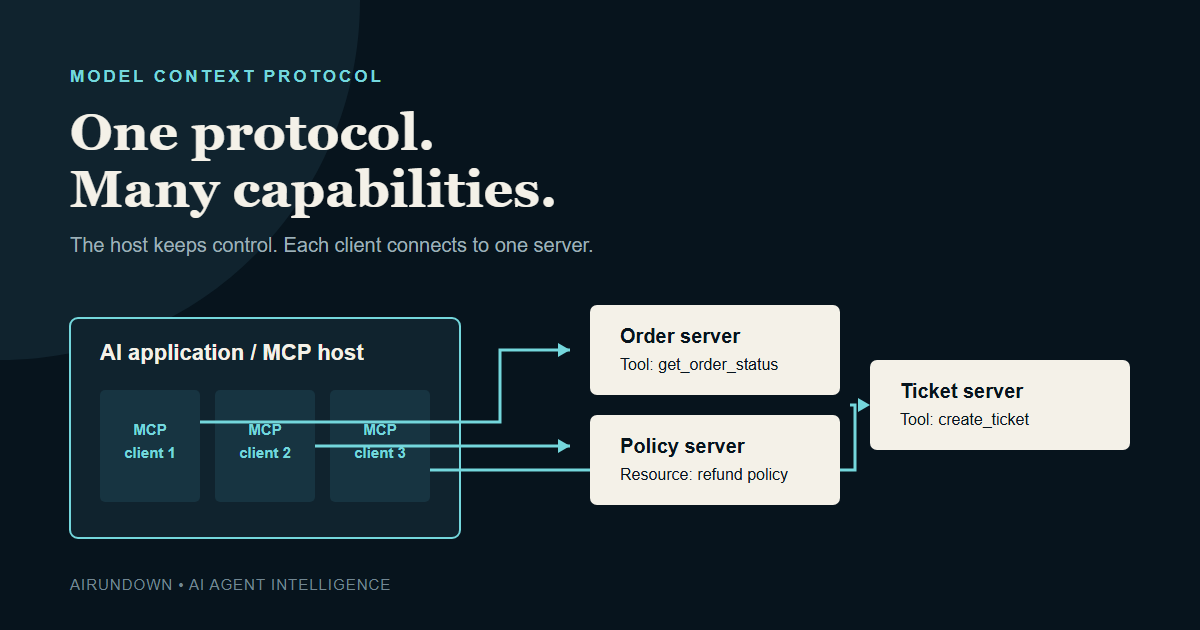
A practical, beginner-friendly guide to the Model Context Protocol: its host-client-server architecture, tools and resources, request flow, trade-offs, and security boundaries.
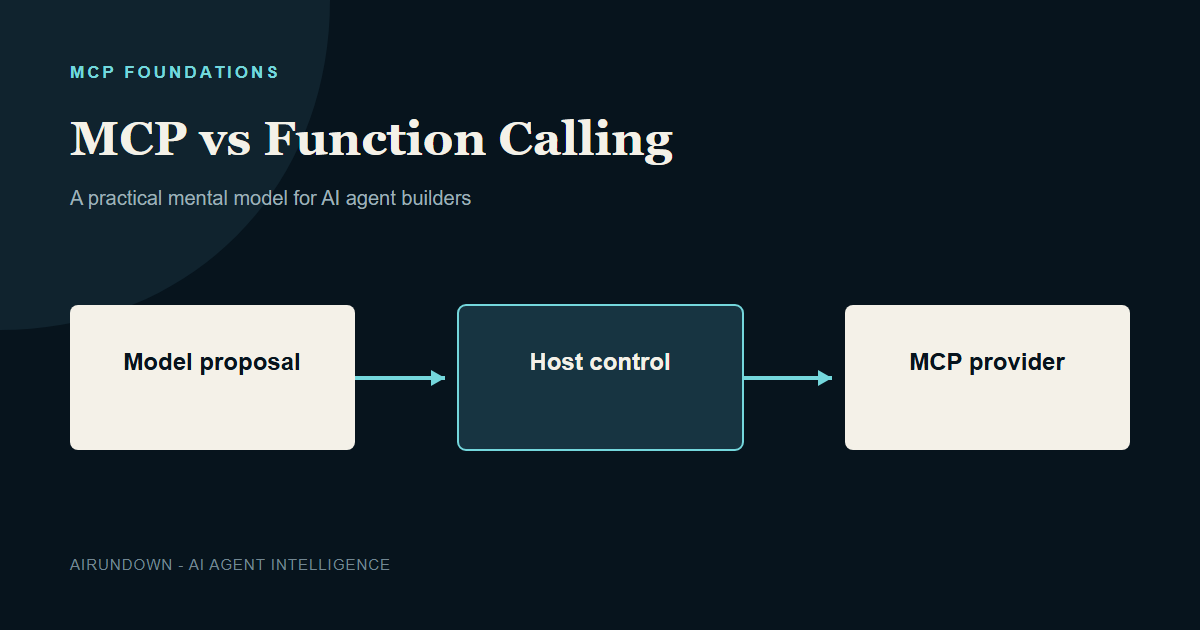
A practical comparison of MCP and model function calling, including their boundaries, request flow, portability, security, and combined architecture.
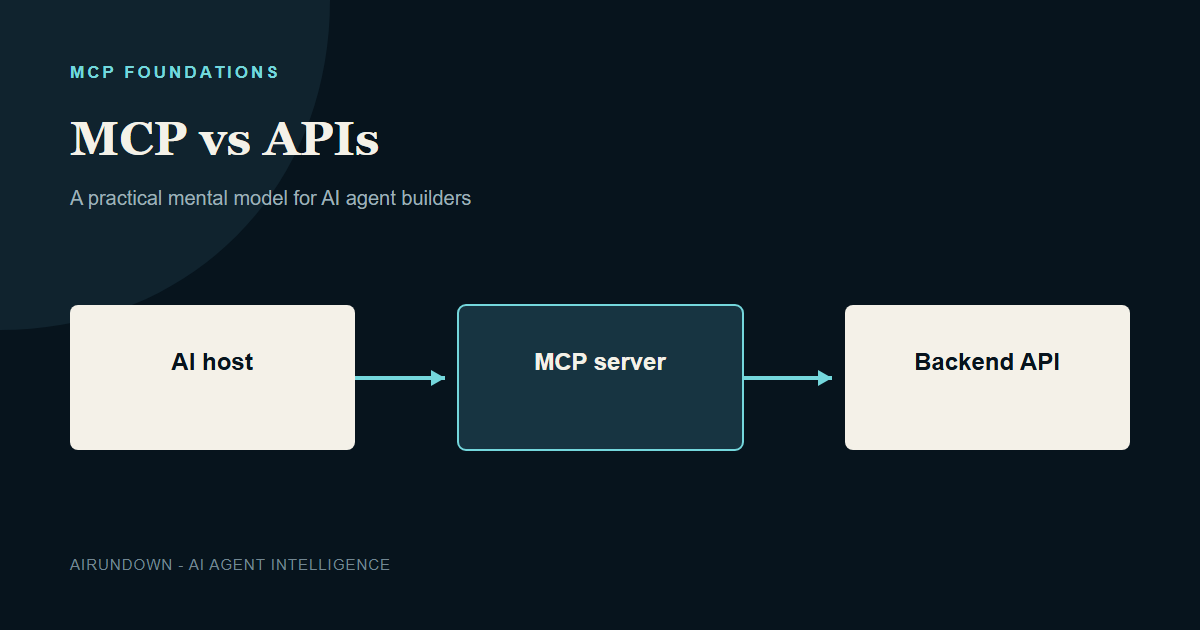
Learn how MCP relates to REST APIs and SDKs, what each layer owns, and why most production MCP servers still call existing APIs.
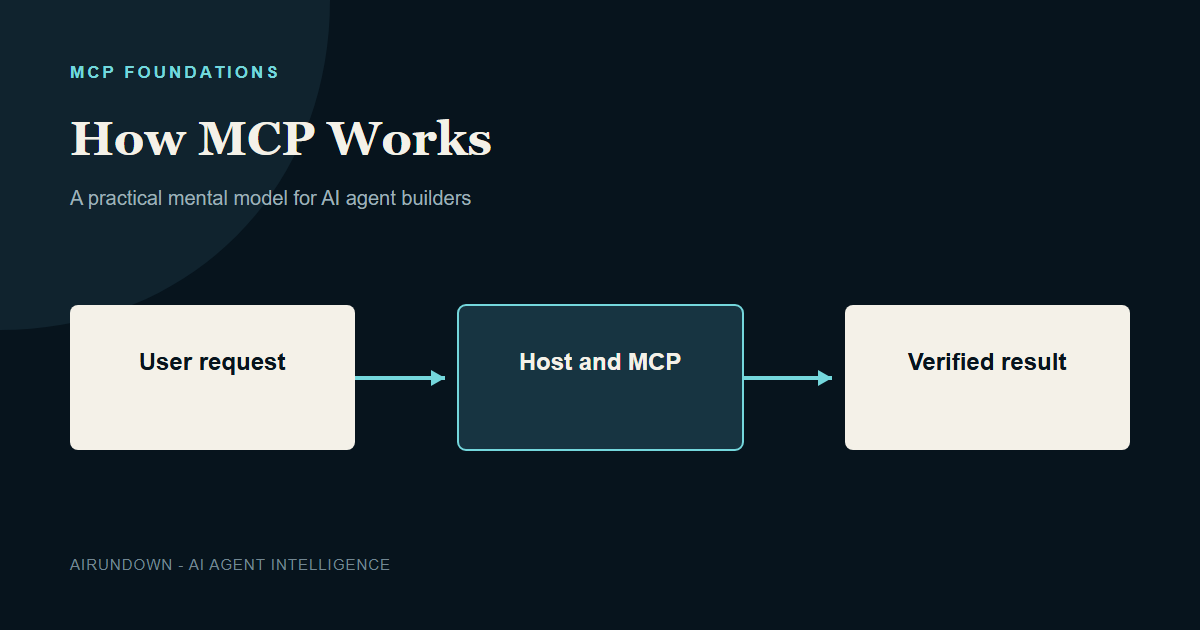
Trace an MCP interaction from server discovery through model tool selection, host authorization, execution, and the final answer.
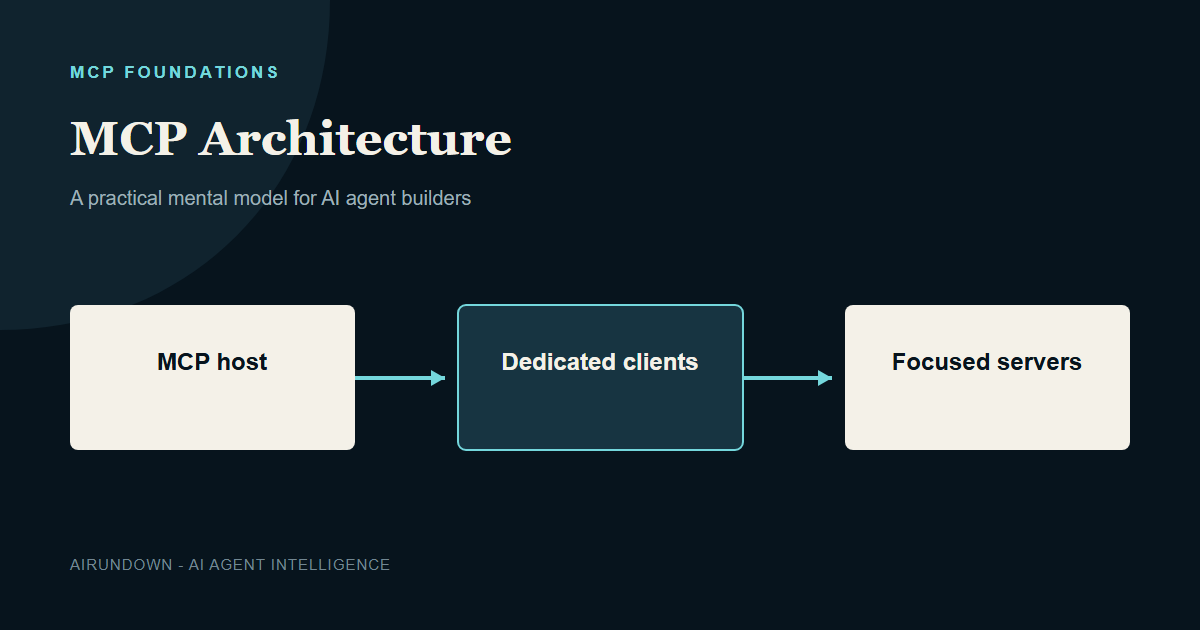
A component-by-component guide to MCP architecture, including host and client responsibilities, server primitives, transports, and trust boundaries.
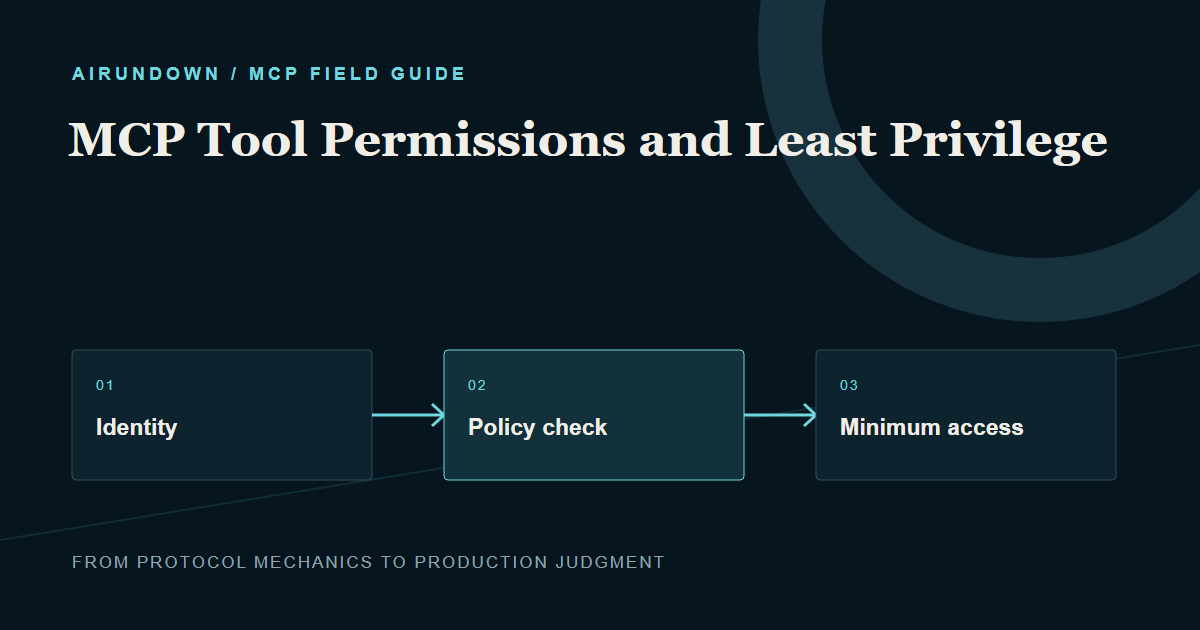
A practical permission model for controlling which MCP tools users and agents can discover, call, and approve.
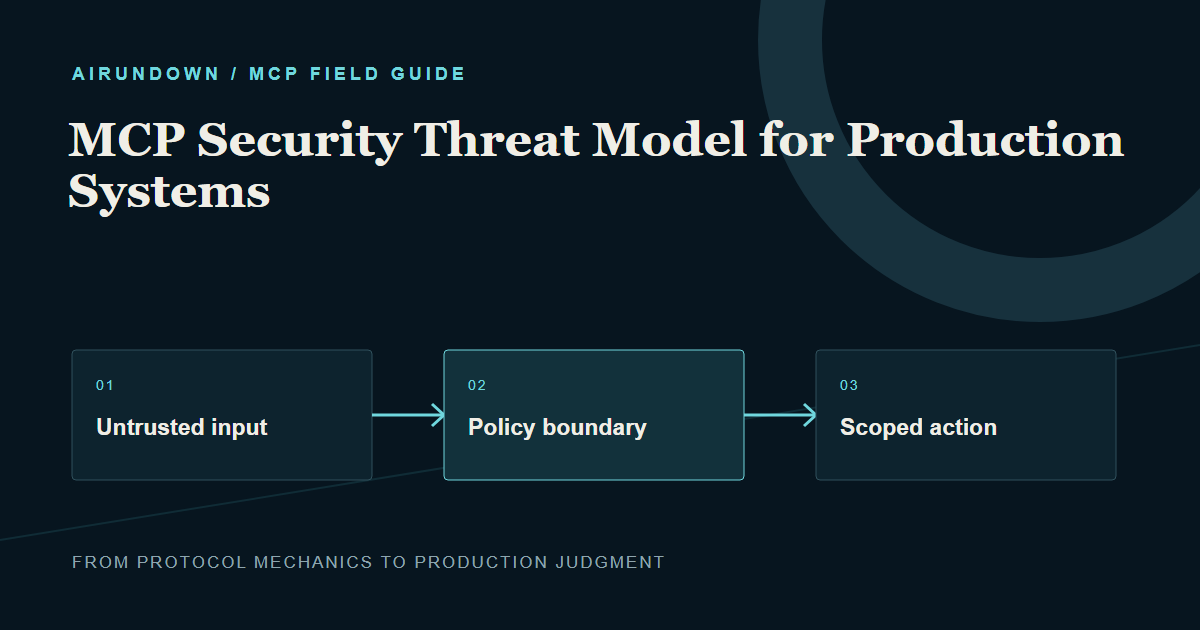
A practical threat model for MCP hosts, clients, servers, tools, credentials, model context, and downstream systems.
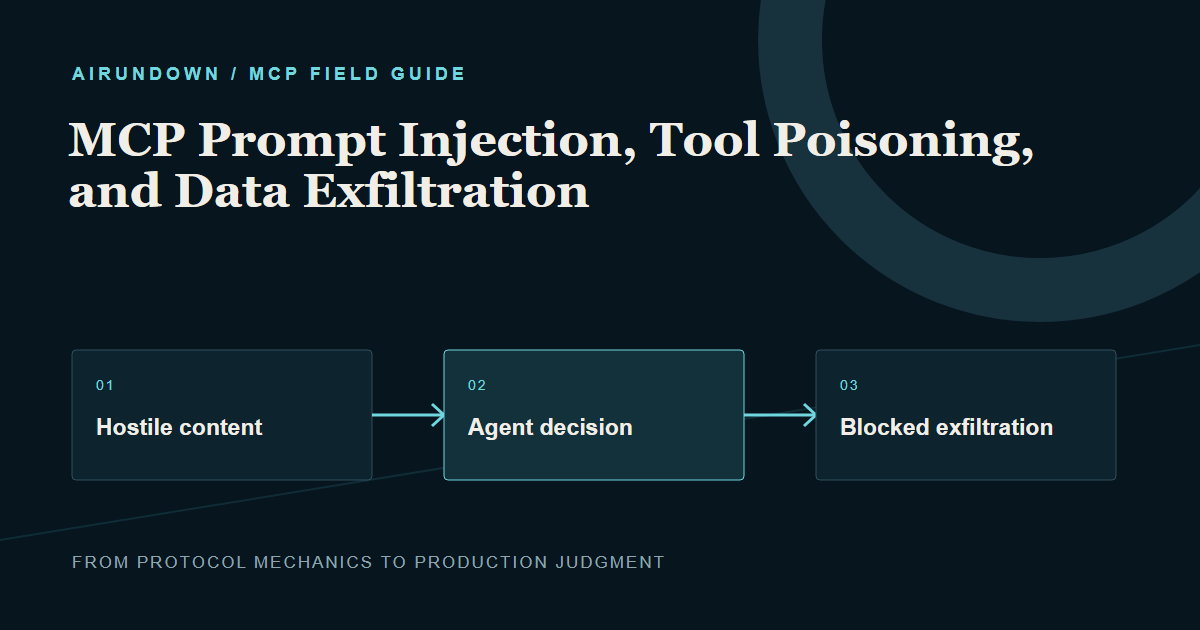
A defensive guide to prompt injection, tool poisoning, confused-deputy risks, and data exfiltration in MCP systems.
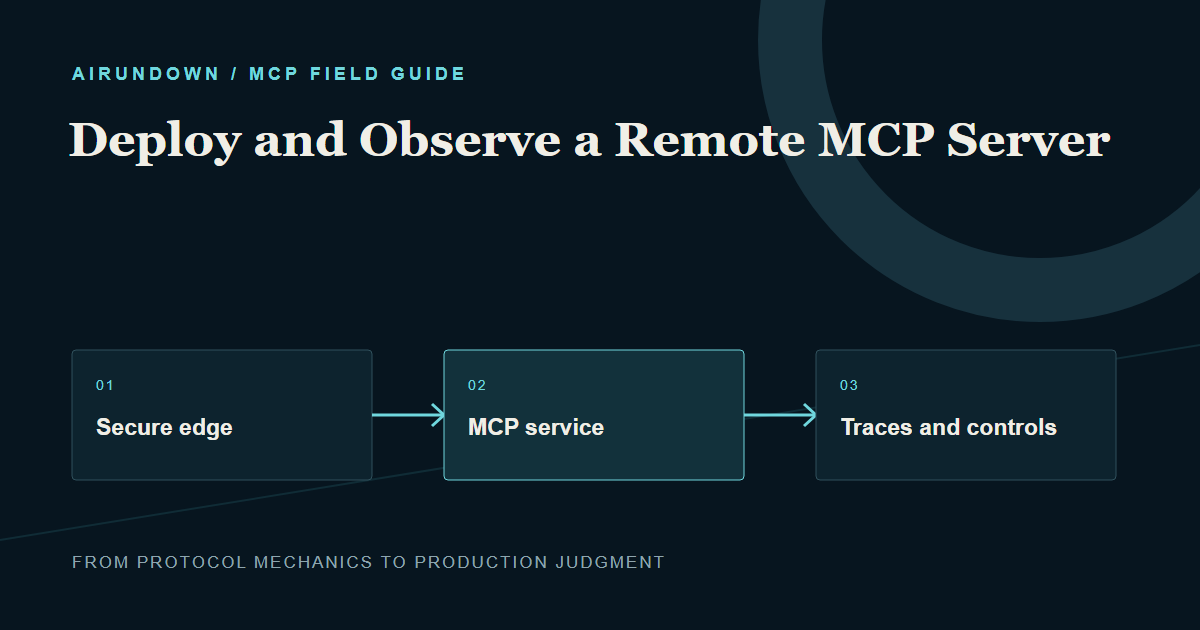
A production deployment guide for remote MCP servers covering network boundaries, identity, scaling, observability, and rollback.
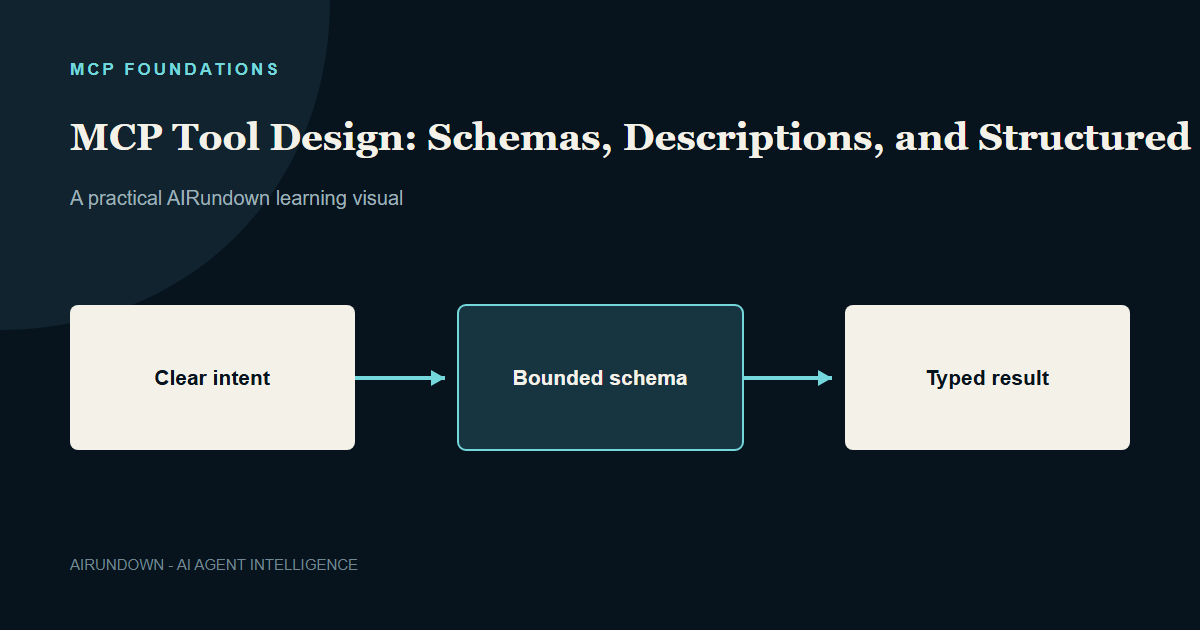
Practical MCP tool-design guidance covering names, descriptions, JSON Schema, structured results, errors, permissions, and testing.
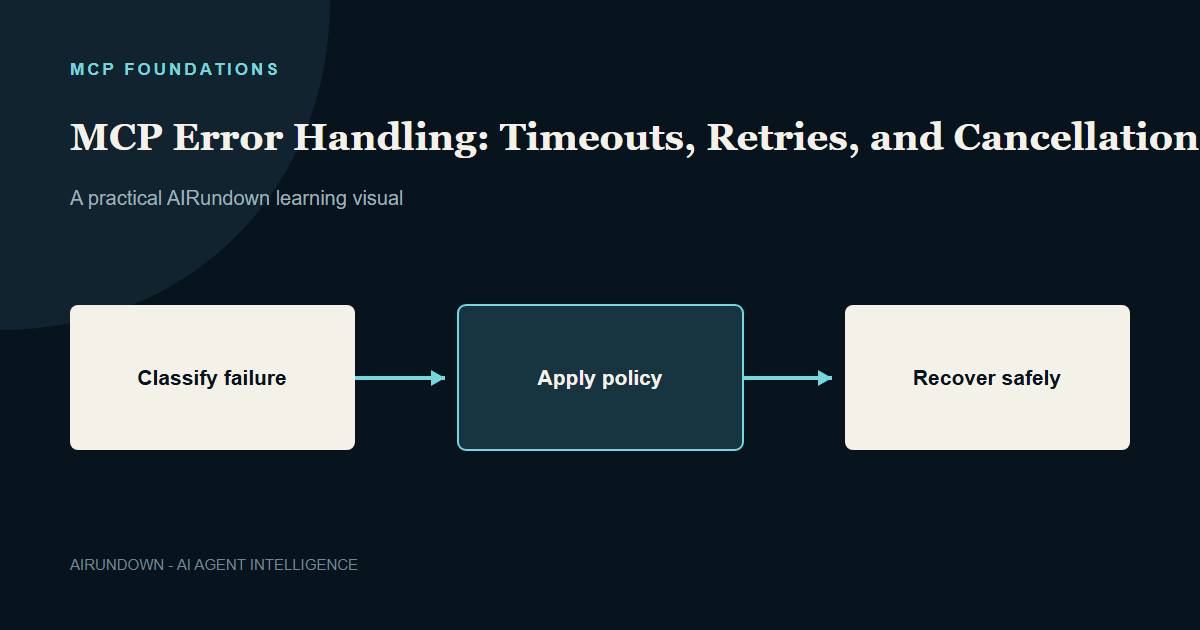
A reliability guide to MCP errors, deadlines, retries, cancellation, progress, idempotency, ambiguous writes, and observable recovery.
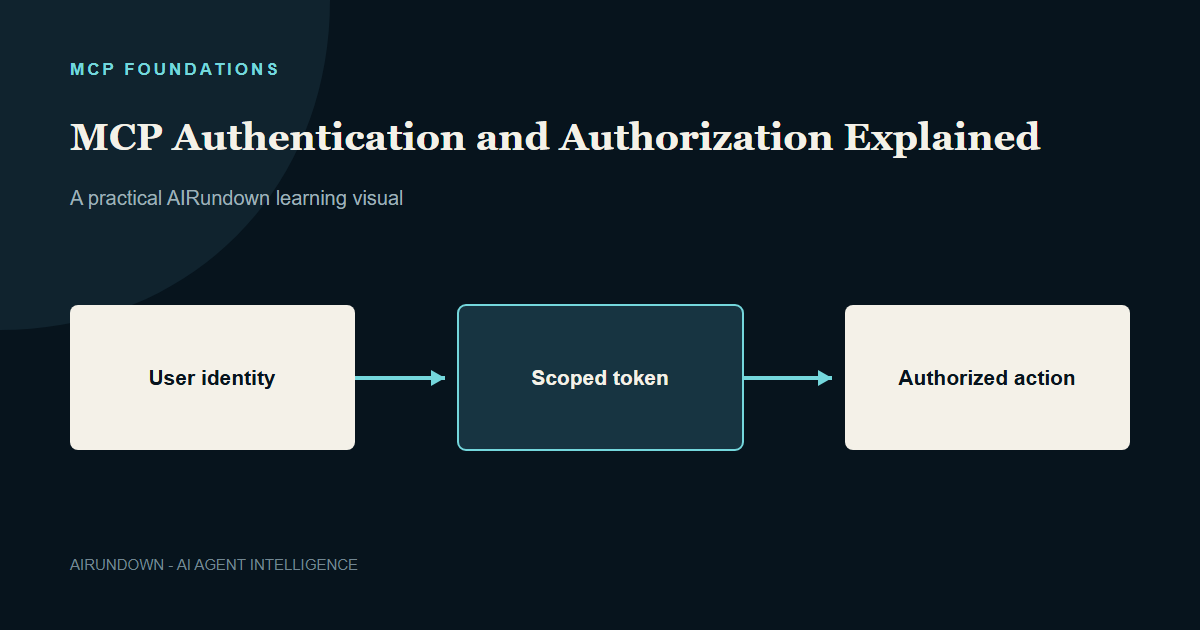
A production-focused guide to authenticating MCP clients and authorizing users, tools, resources, tenants, and downstream actions.
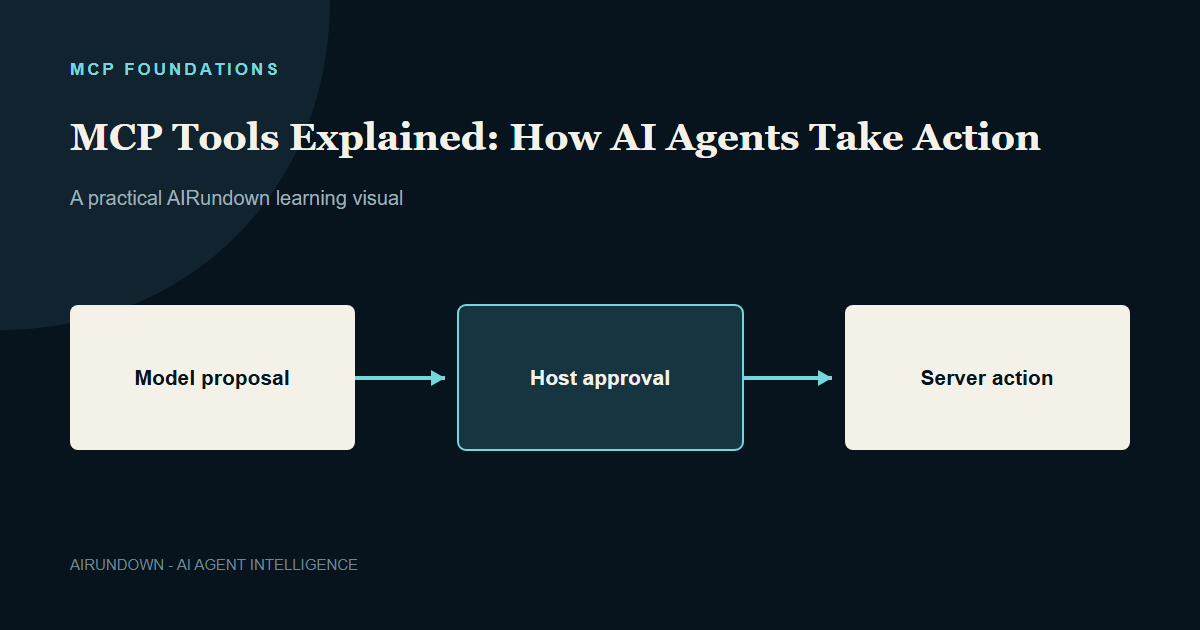
A practical guide to MCP tools, including schemas, discovery, execution, approvals, errors, and safe production design.
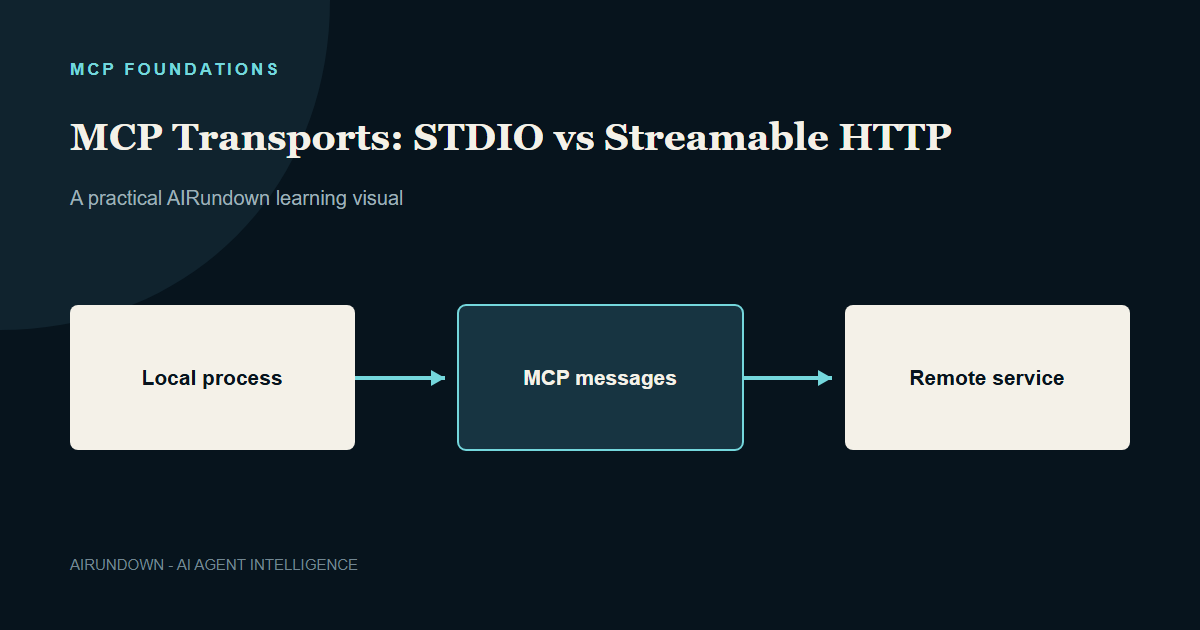
Understand how MCP messages travel over STDIO and Streamable HTTP and how to choose the right transport for local and remote servers.
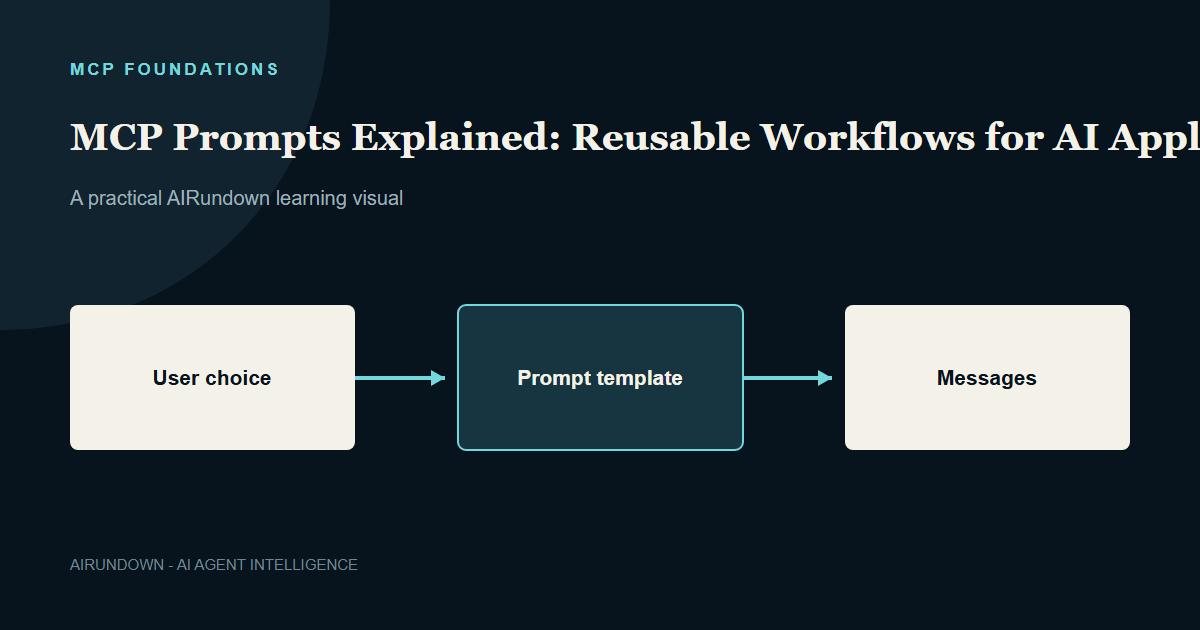
A practical guide to MCP prompts, including discovery, arguments, message content, user control, safety, and design patterns.
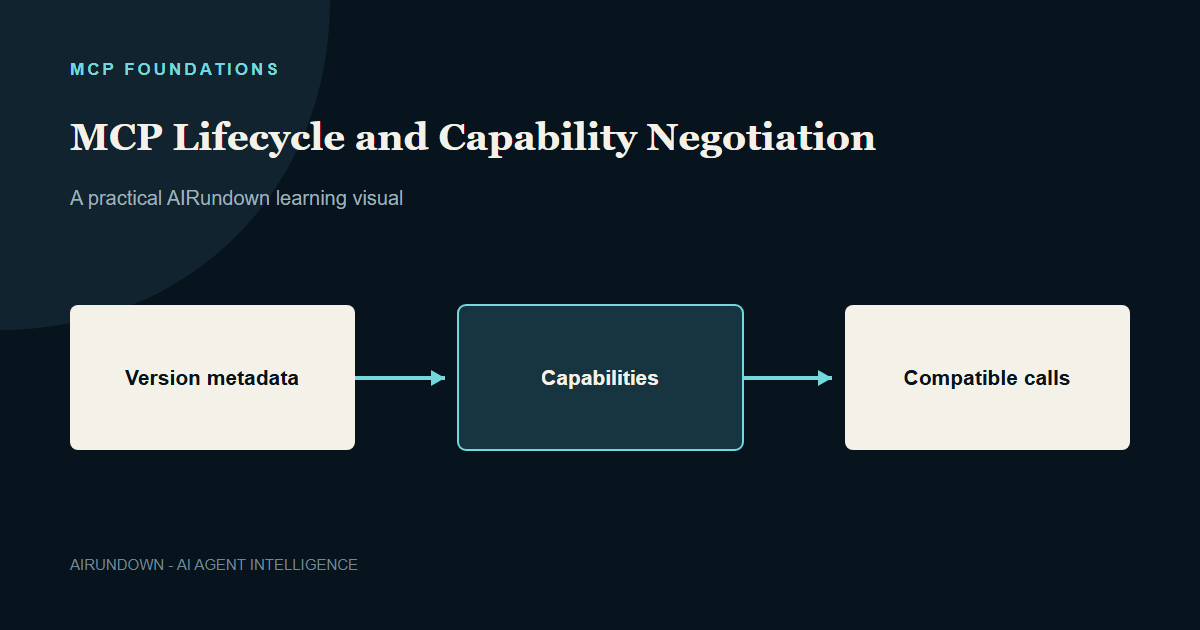
A current guide to MCP version compatibility, capability discovery, request metadata, feature use, and the transition from older handshakes.
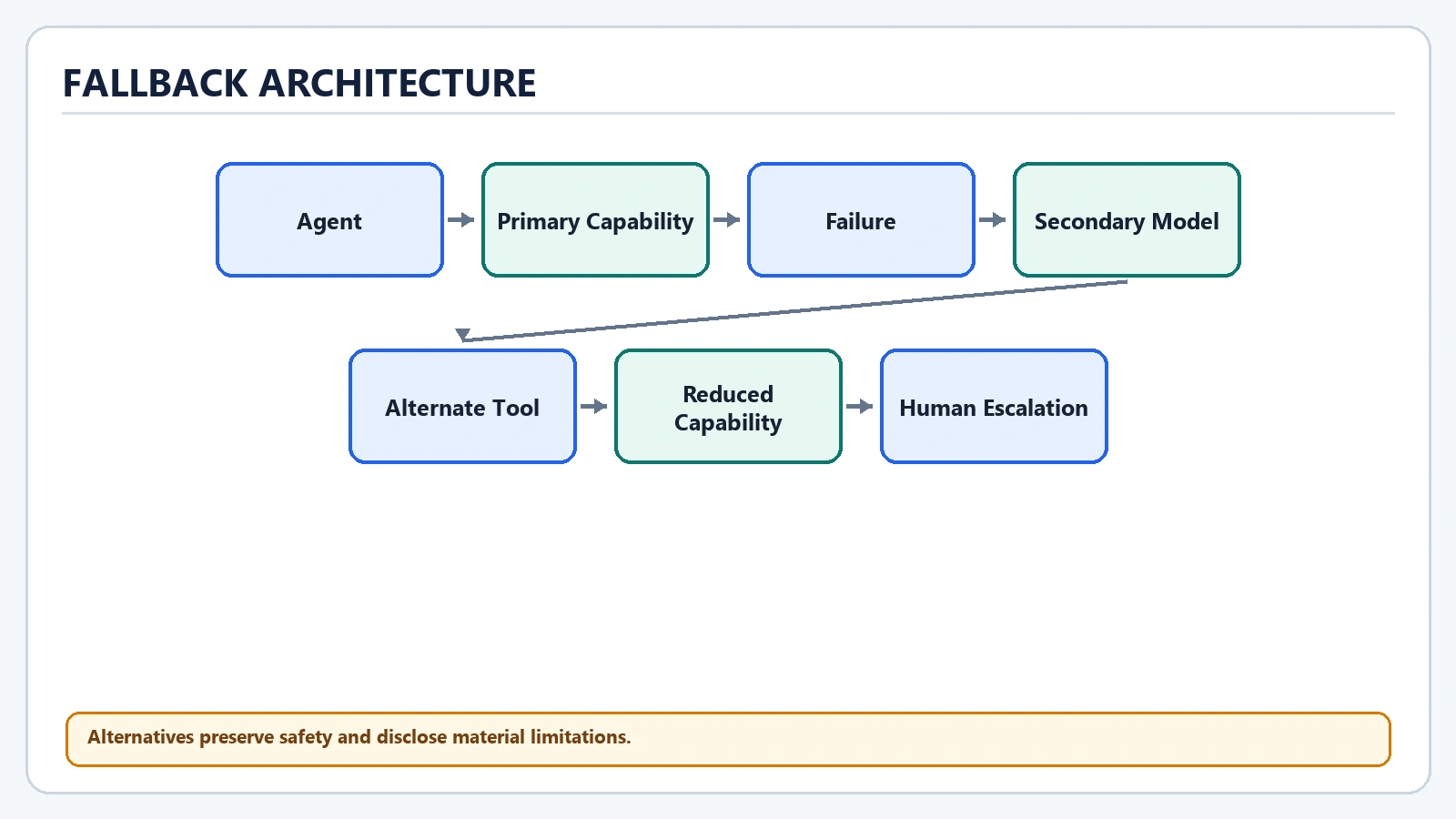
Keep an agent safely useful when models, tools, data, or specialists fail—without fabricating success or silently weakening controls.
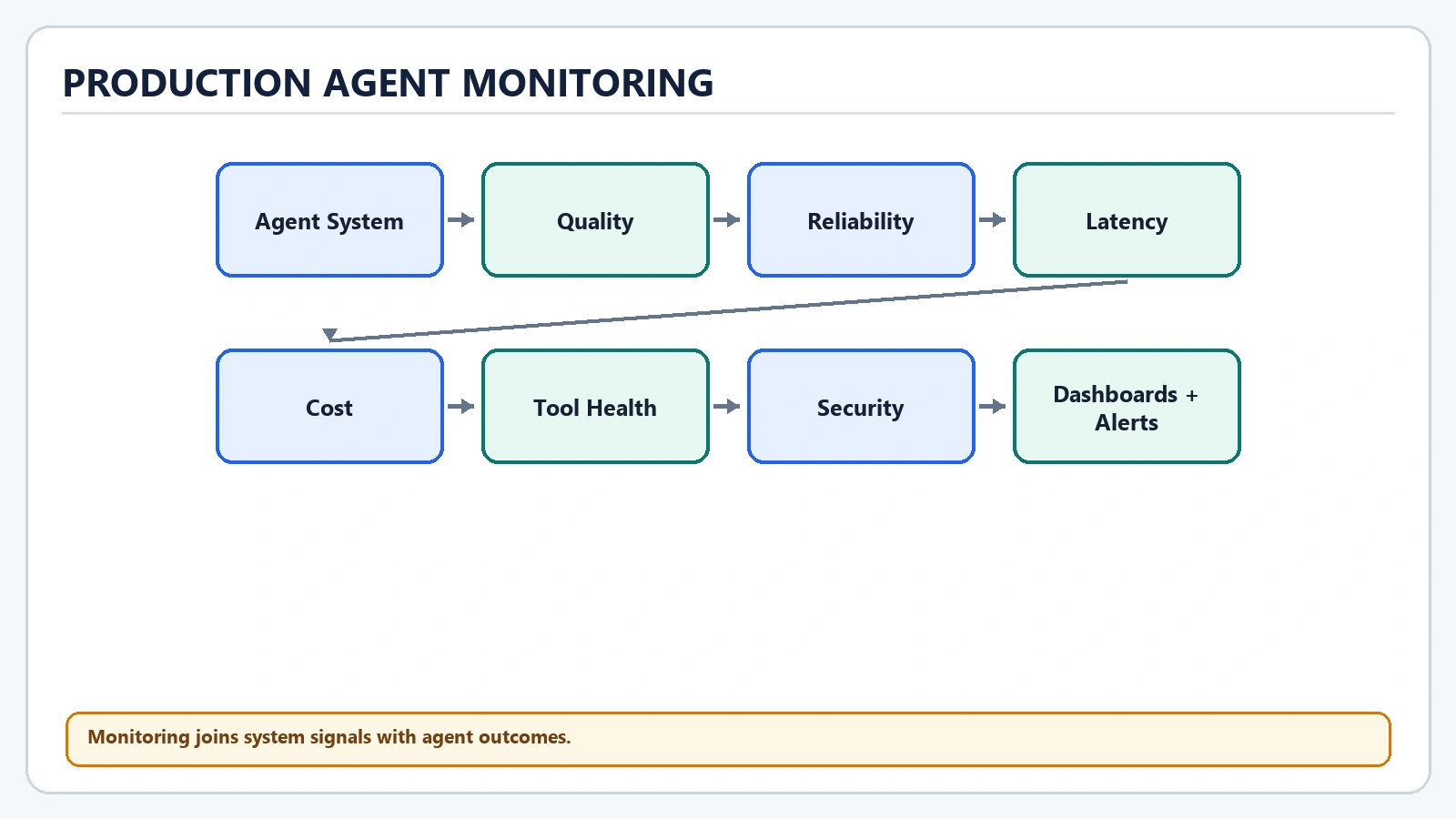
Turn traces, metrics, logs, and evaluations into selected production signals, thresholds, dashboards, and actionable alerts.
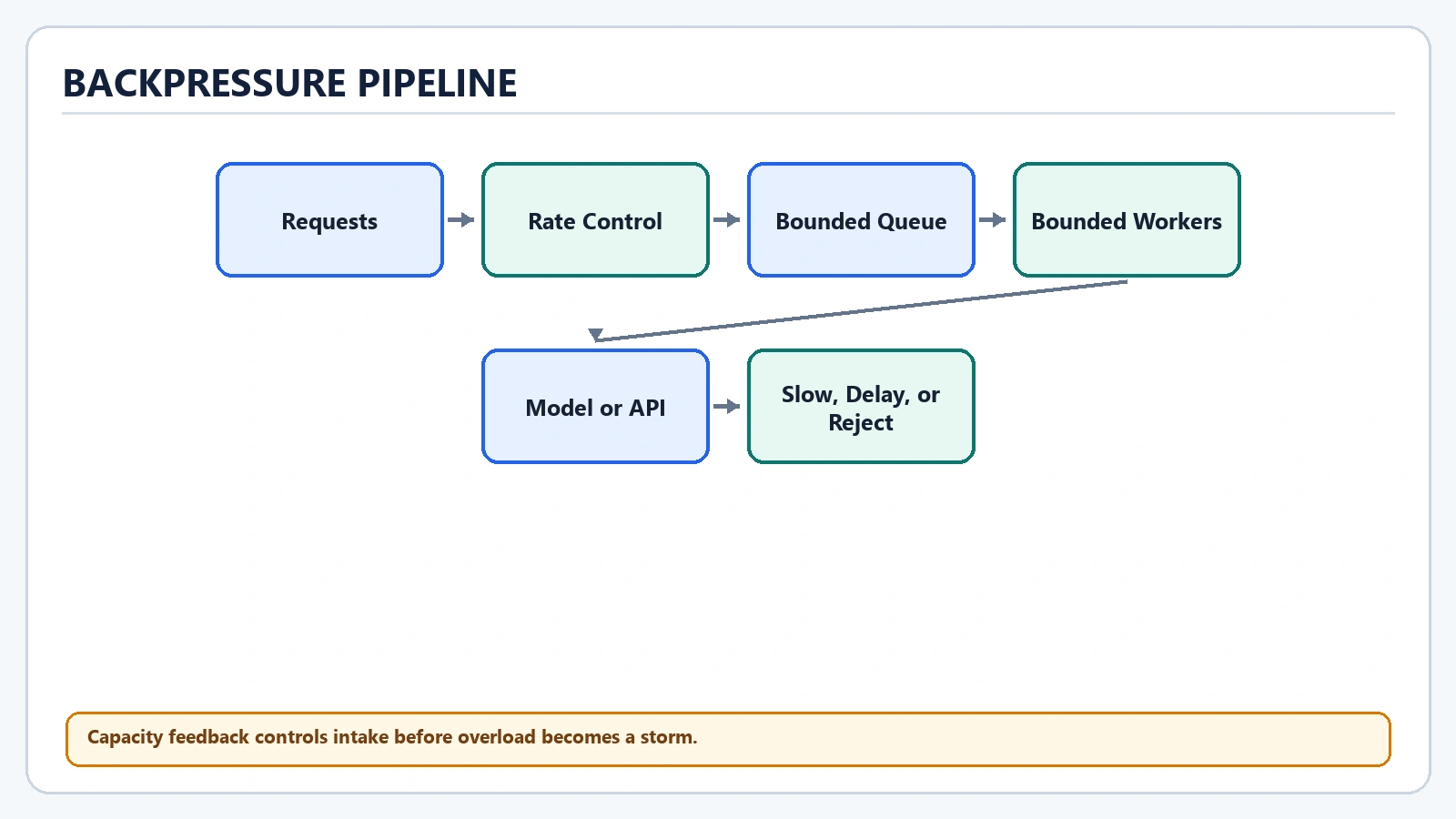
Control overload before immediate retries turn constrained models, tools, or workers into a failure storm.
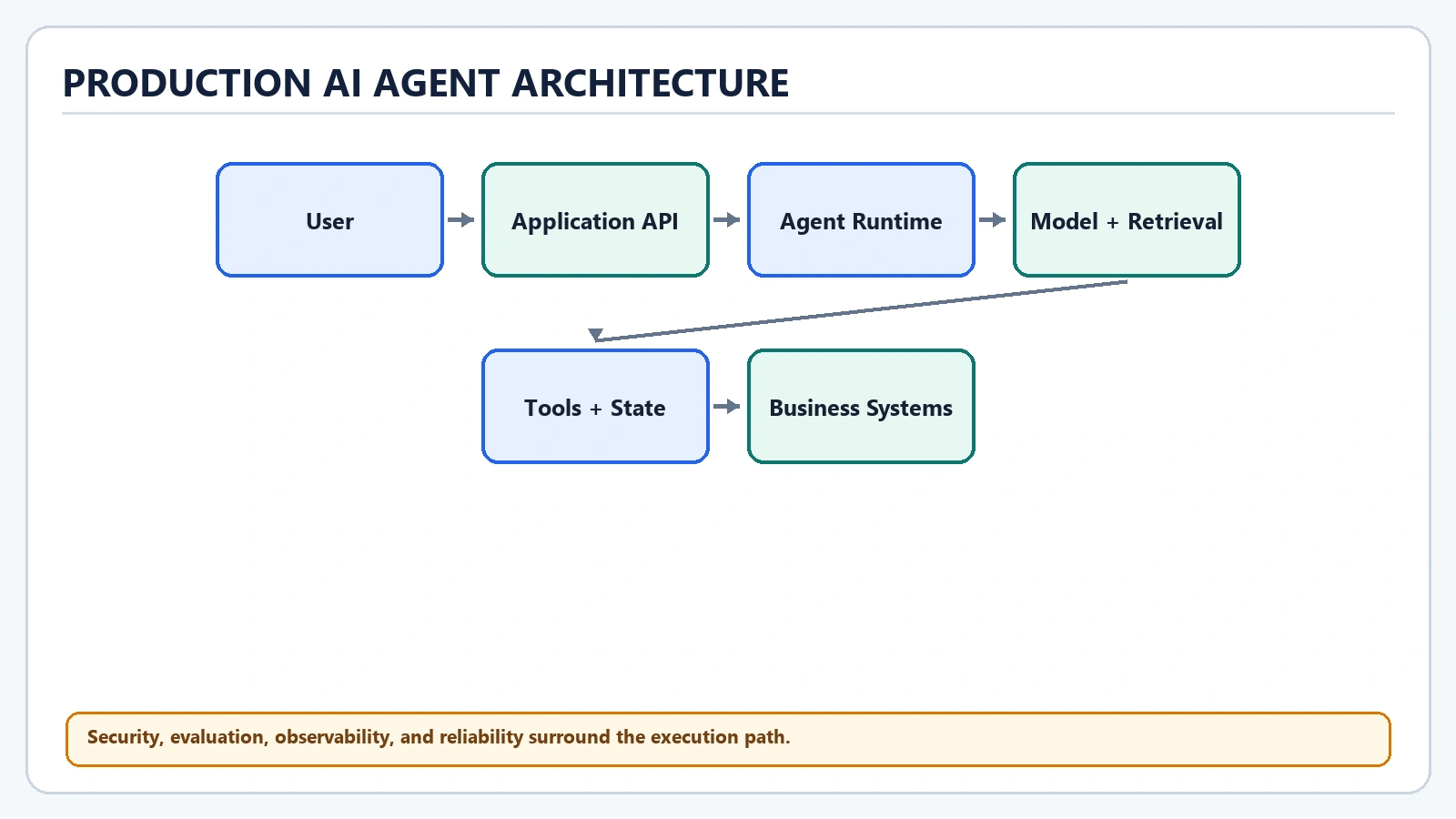
A practical path from a local agent prototype to a controlled, observable, and reversible production service.
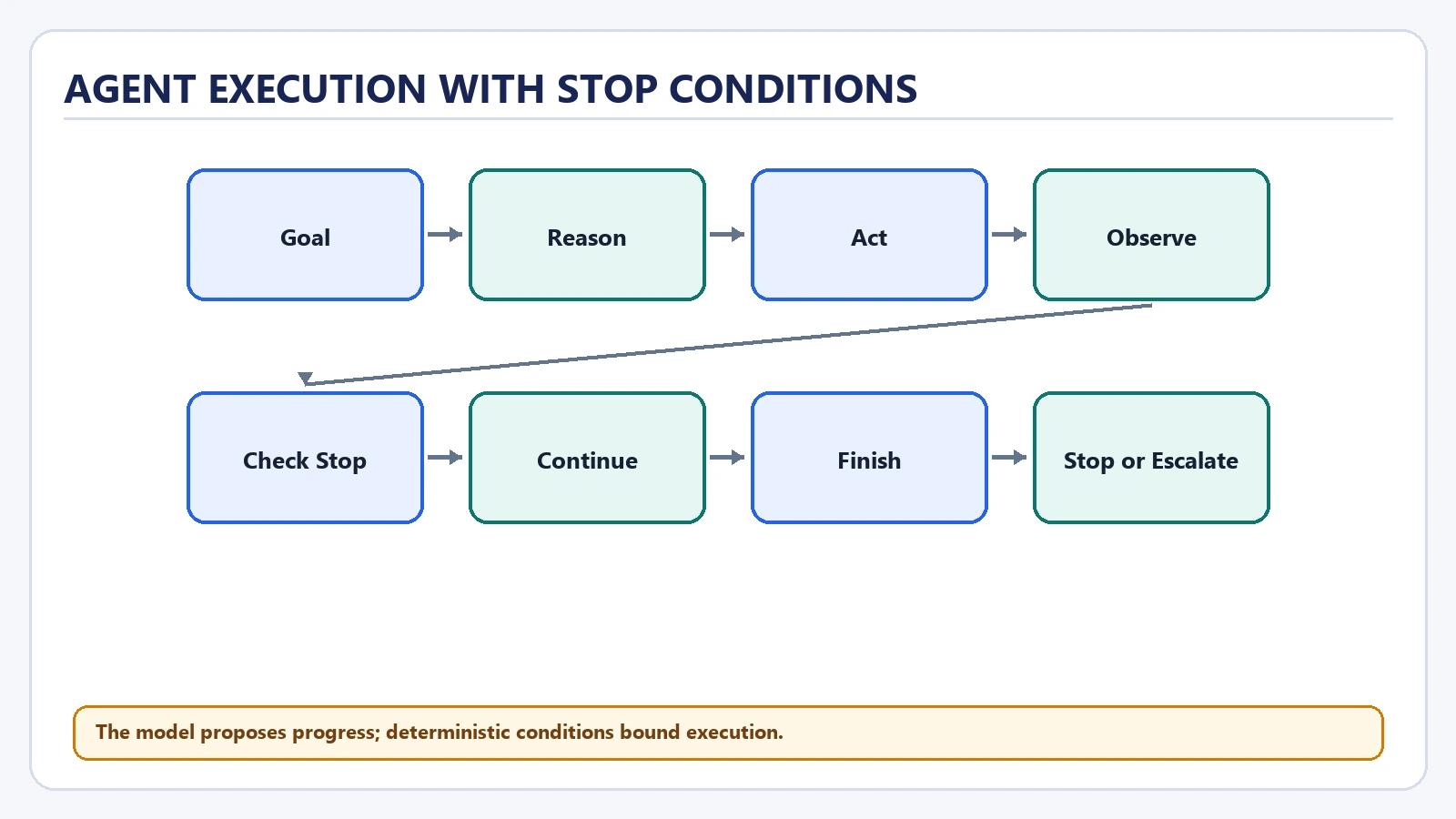
A practical, production-oriented explanation of agent stopping conditions, with examples, boundaries, trade-offs, and failure handling patterns.
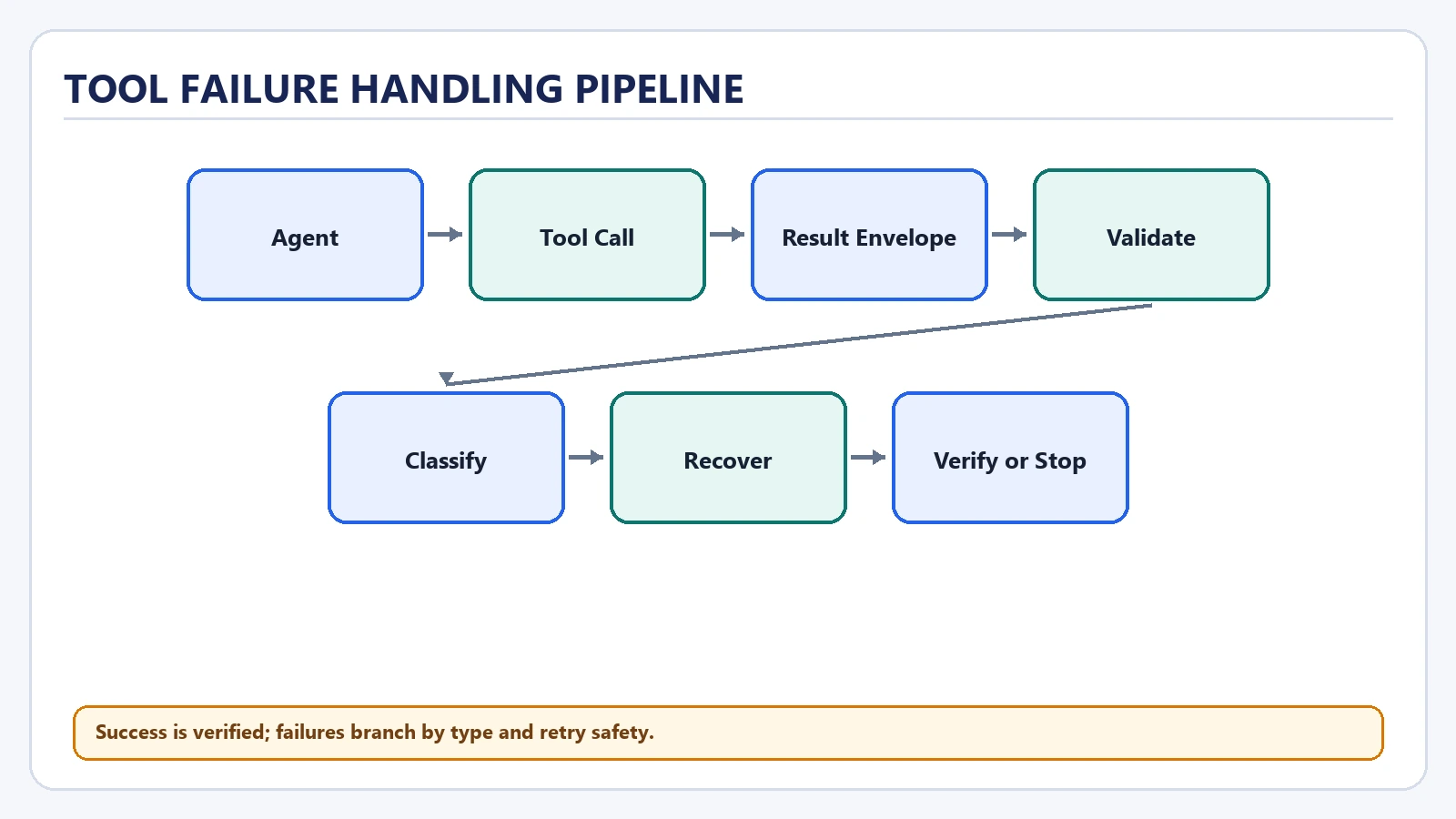
A practical, production-oriented explanation of tool failure handling, with examples, boundaries, trade-offs, and failure handling patterns.
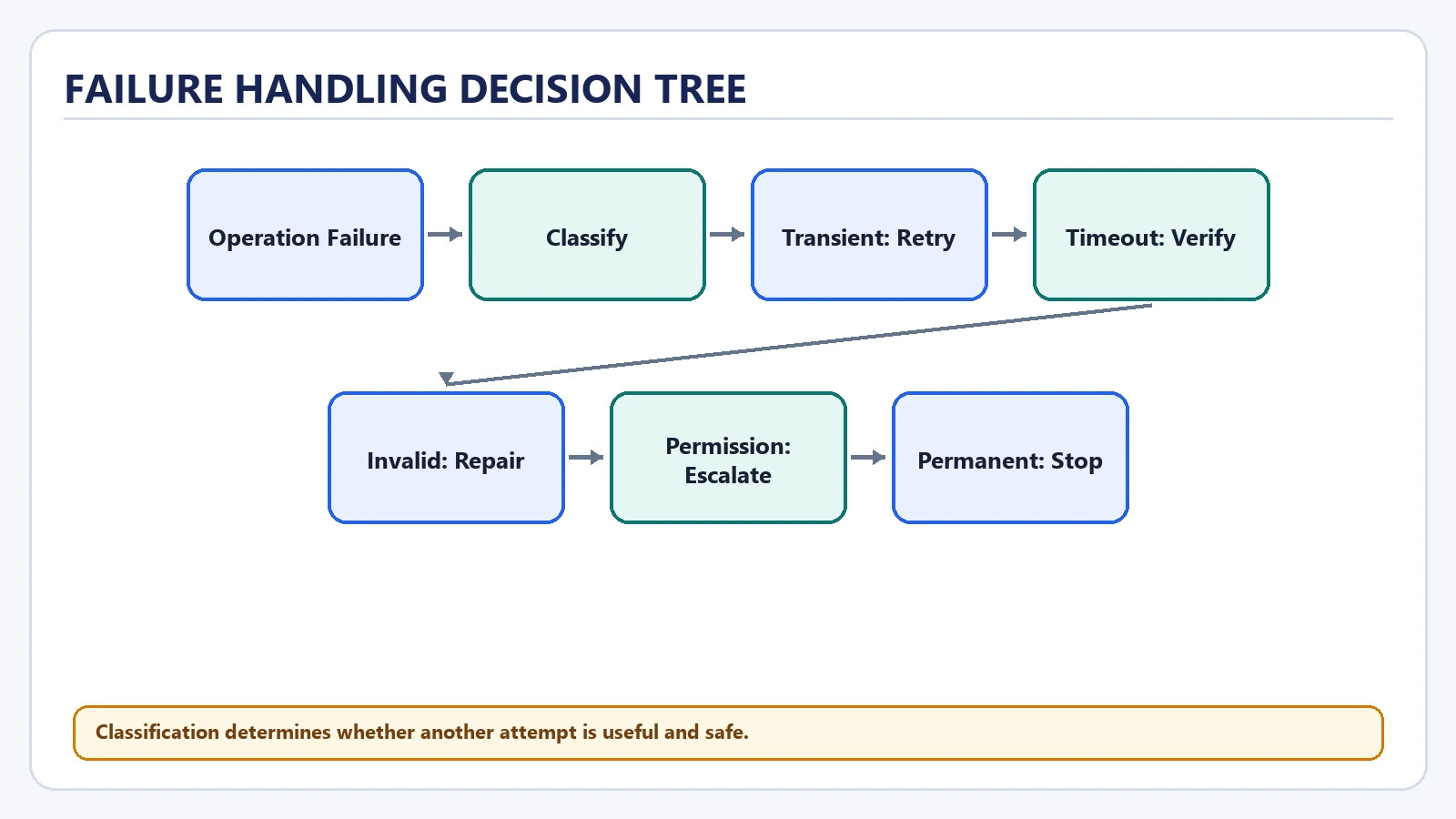
A practical, production-oriented explanation of retries, timeouts, and failure recovery, with examples, boundaries, trade-offs, and failure handling patterns.
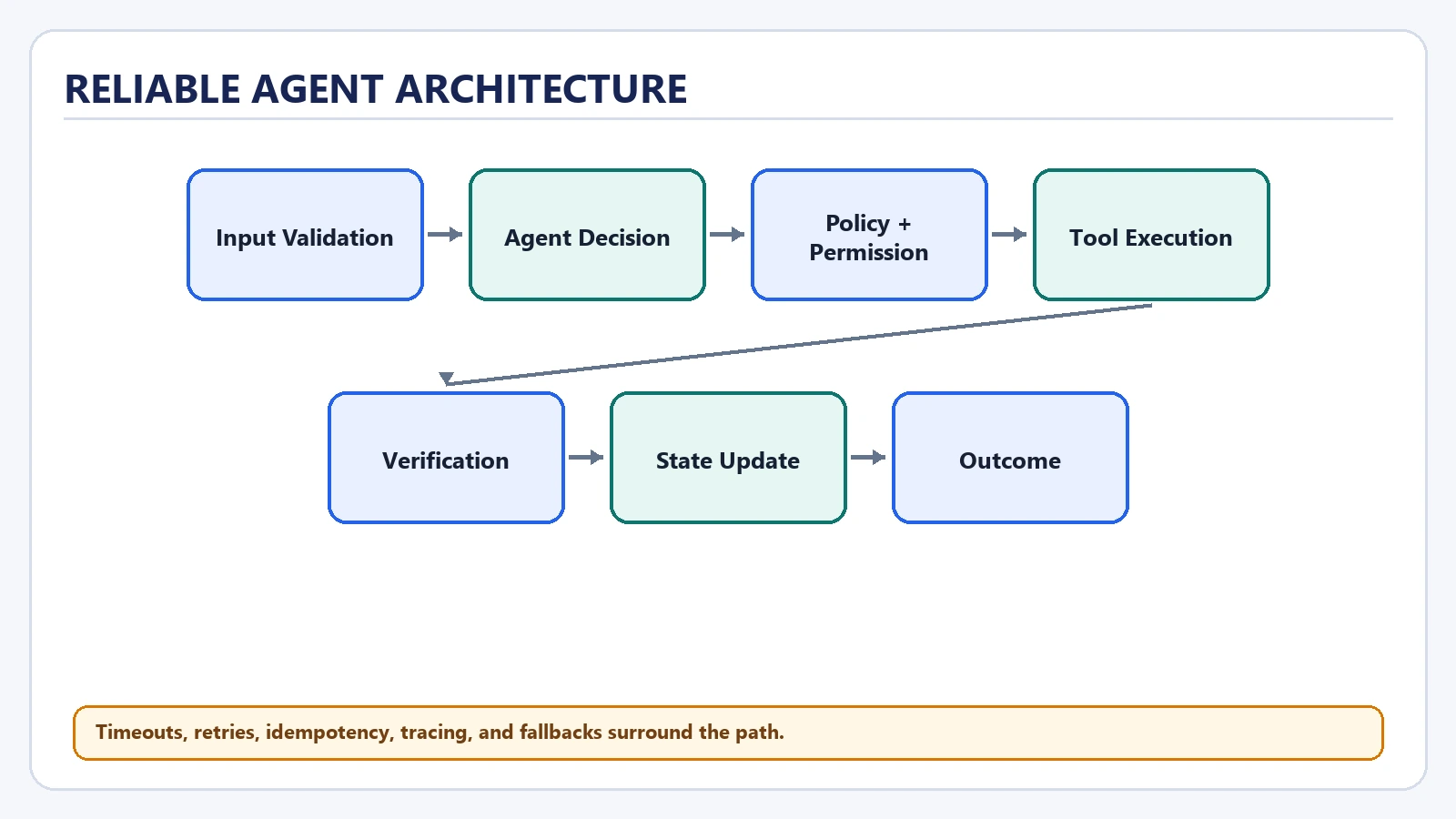
A practical, production-oriented explanation of reliable AI agent architecture, with examples, boundaries, trade-offs, and failure handling patterns.
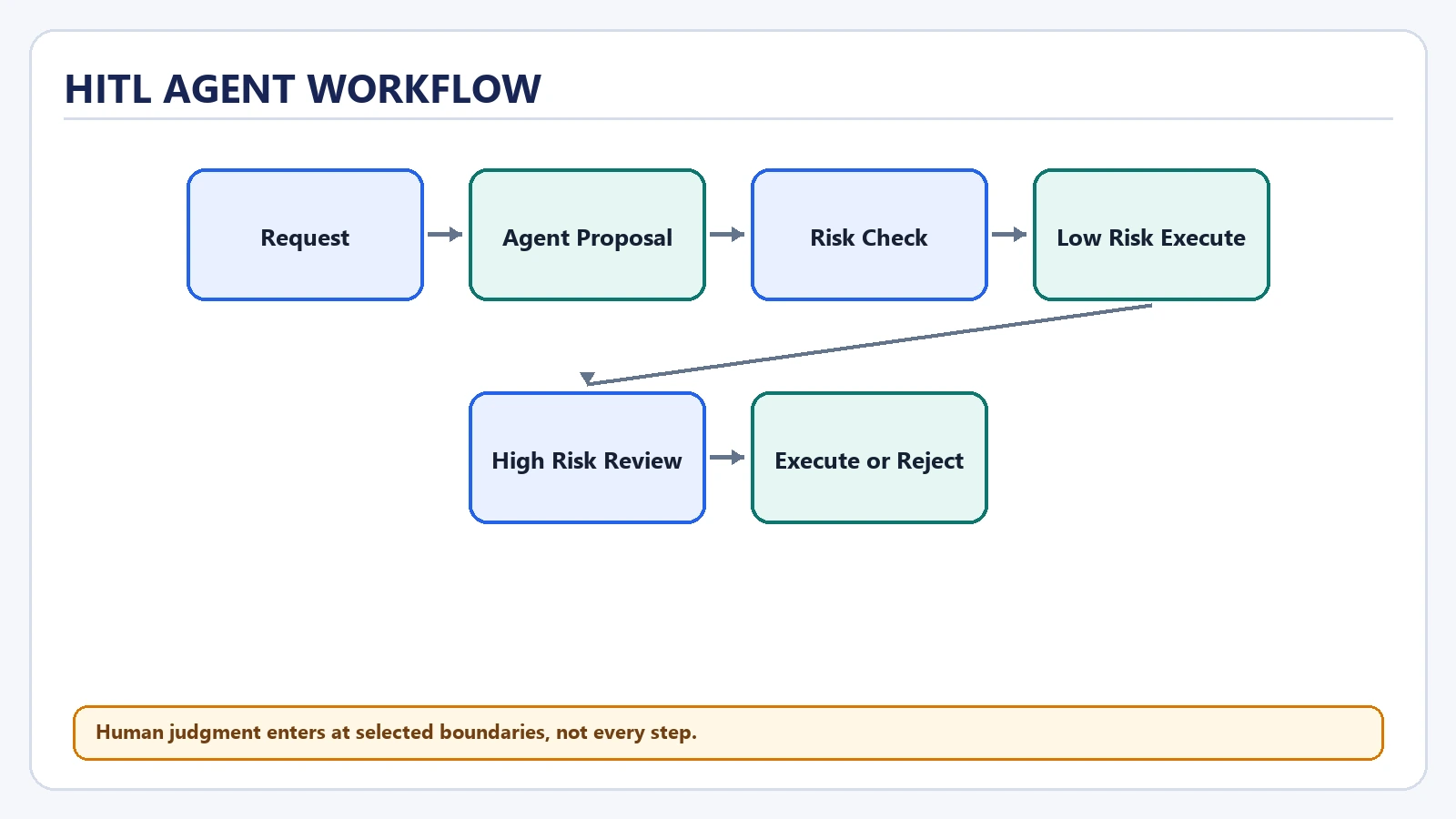
A practical, production-oriented explanation of human-in-the-loop control, with examples, boundaries, trade-offs, and failure handling patterns.
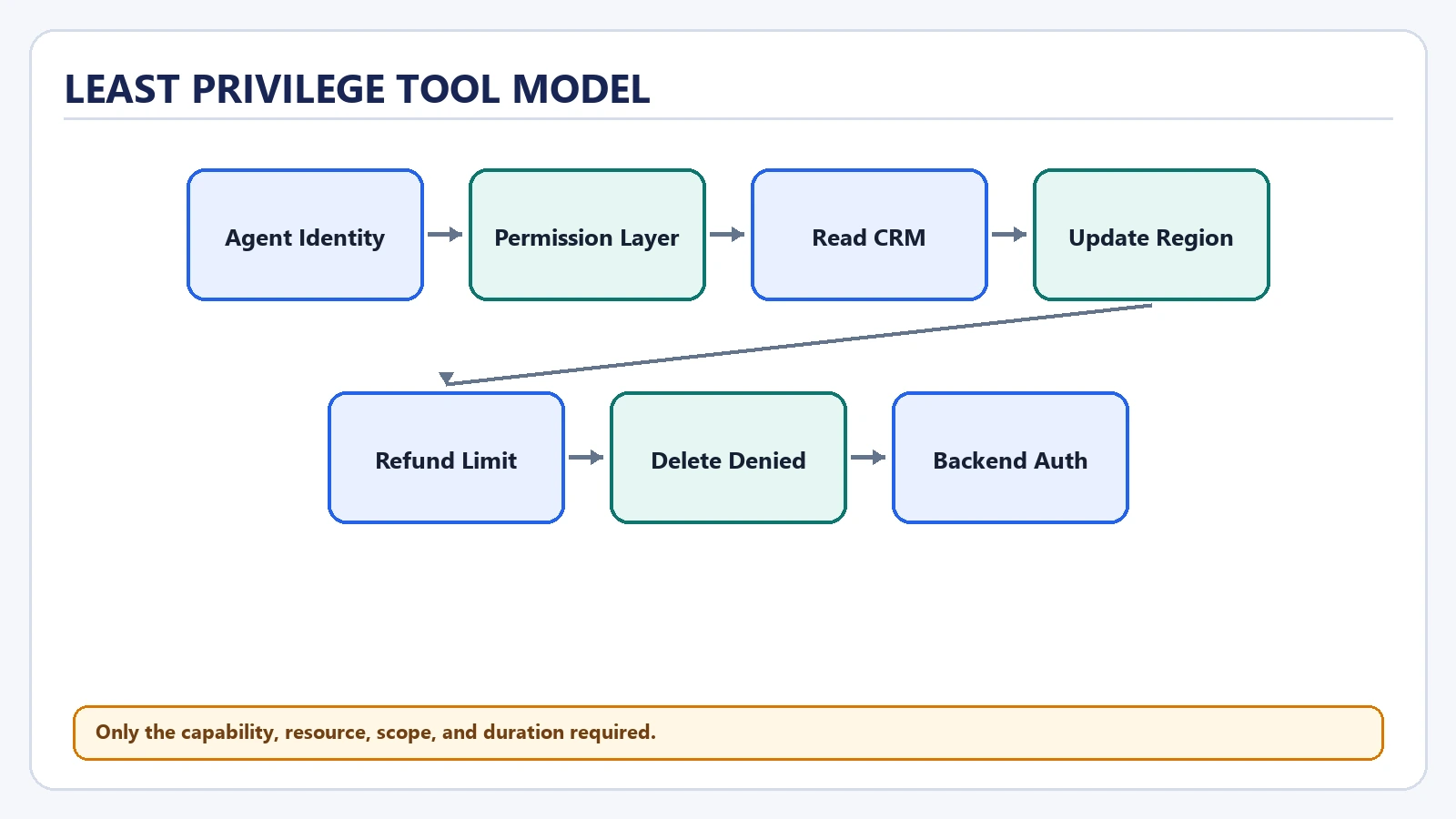
A practical, production-oriented explanation of least-privilege tool permissions, with examples, boundaries, trade-offs, and failure handling patterns.
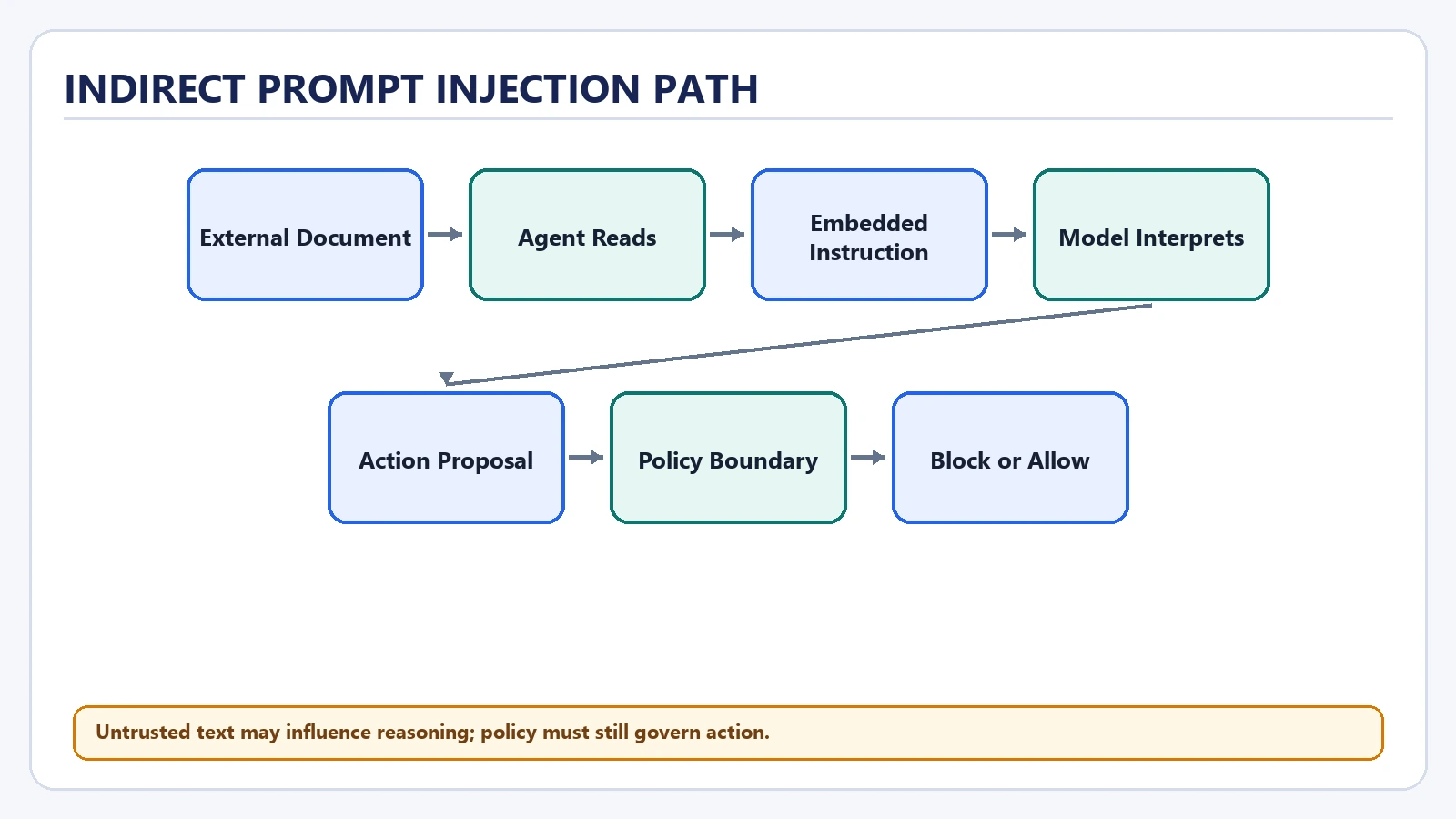
A practical, production-oriented explanation of prompt injection in tool-using agents, with examples, boundaries, trade-offs, and failure handling patterns.
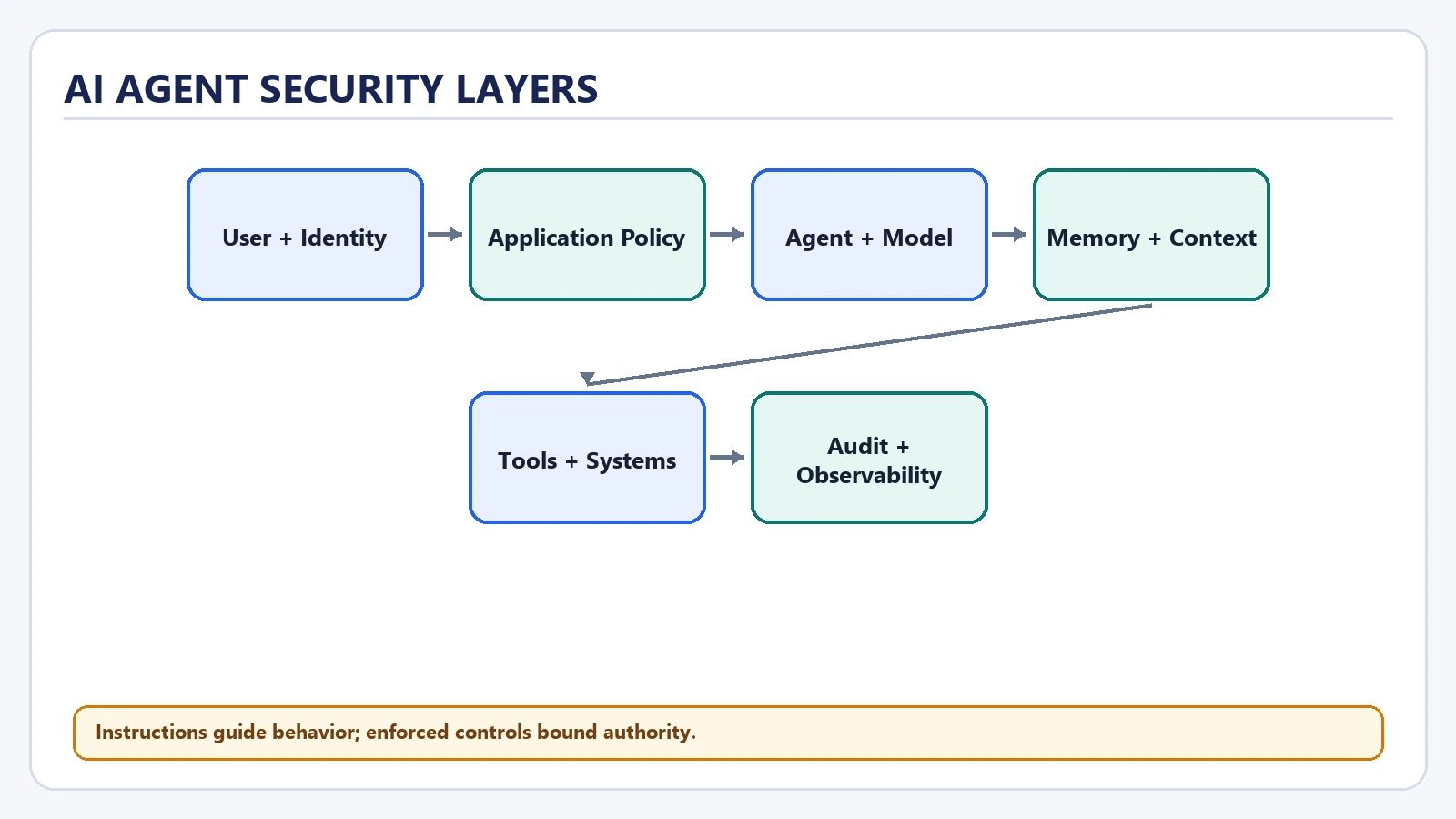
A practical, production-oriented explanation of the security model of an AI agent, with examples, boundaries, trade-offs, and failure handling patterns.
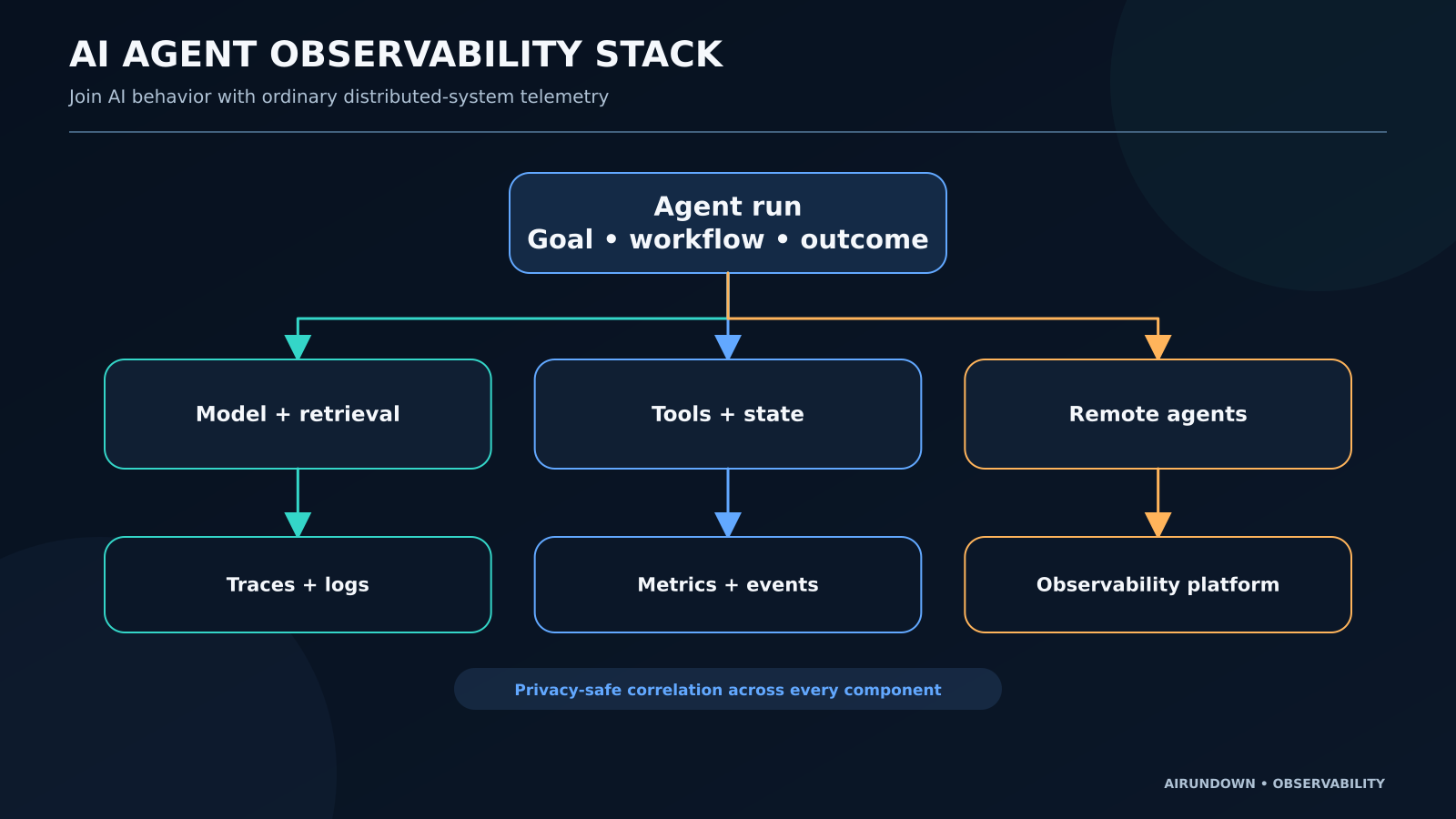
A production observability model for agent, model, retrieval, tool, sub-agent, and infrastructure signals—with privacy and redaction controls.
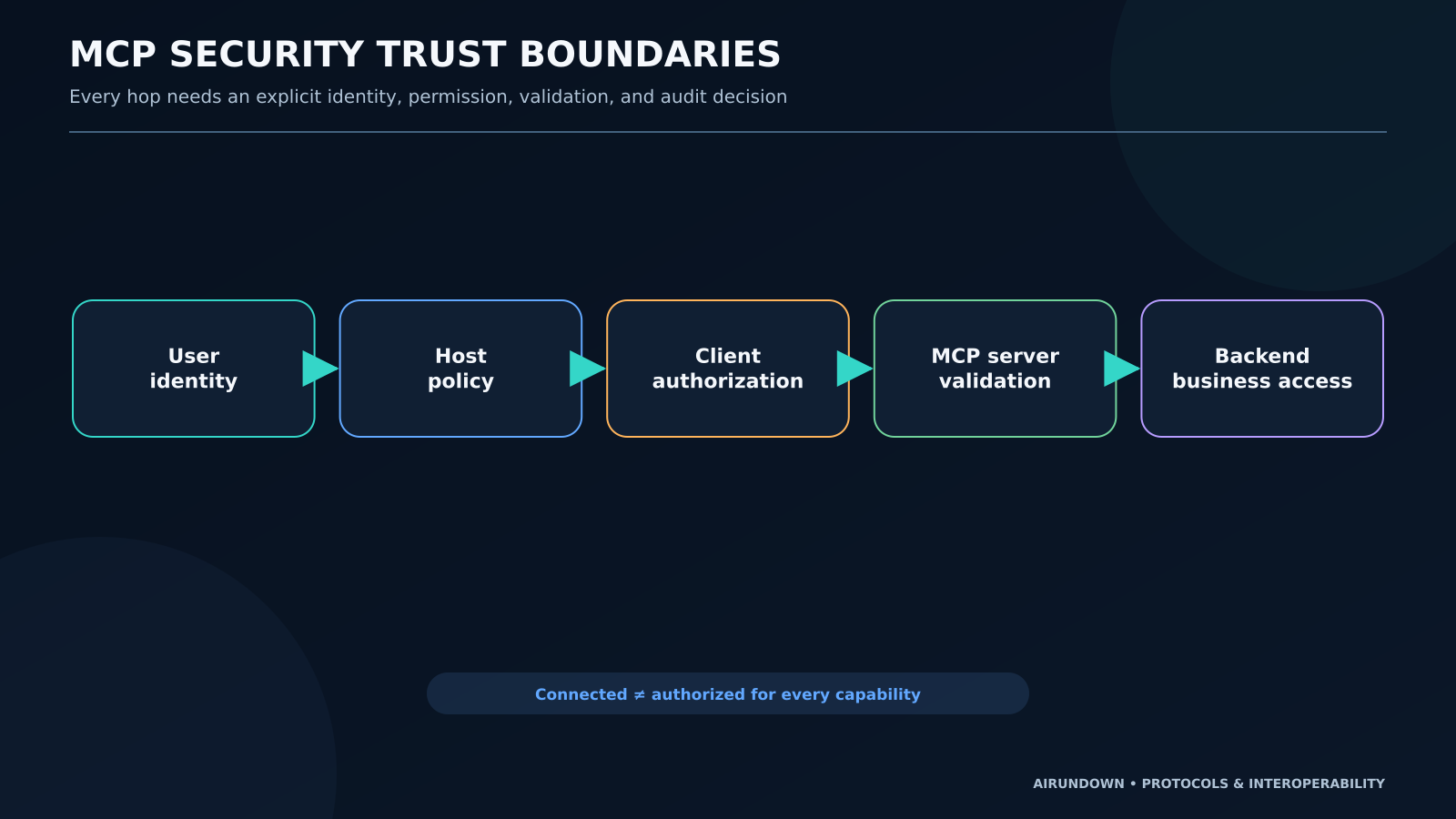
A practical security model for MCP trust boundaries, authorization, least privilege, approvals, external content, backend credentials, and auditability.
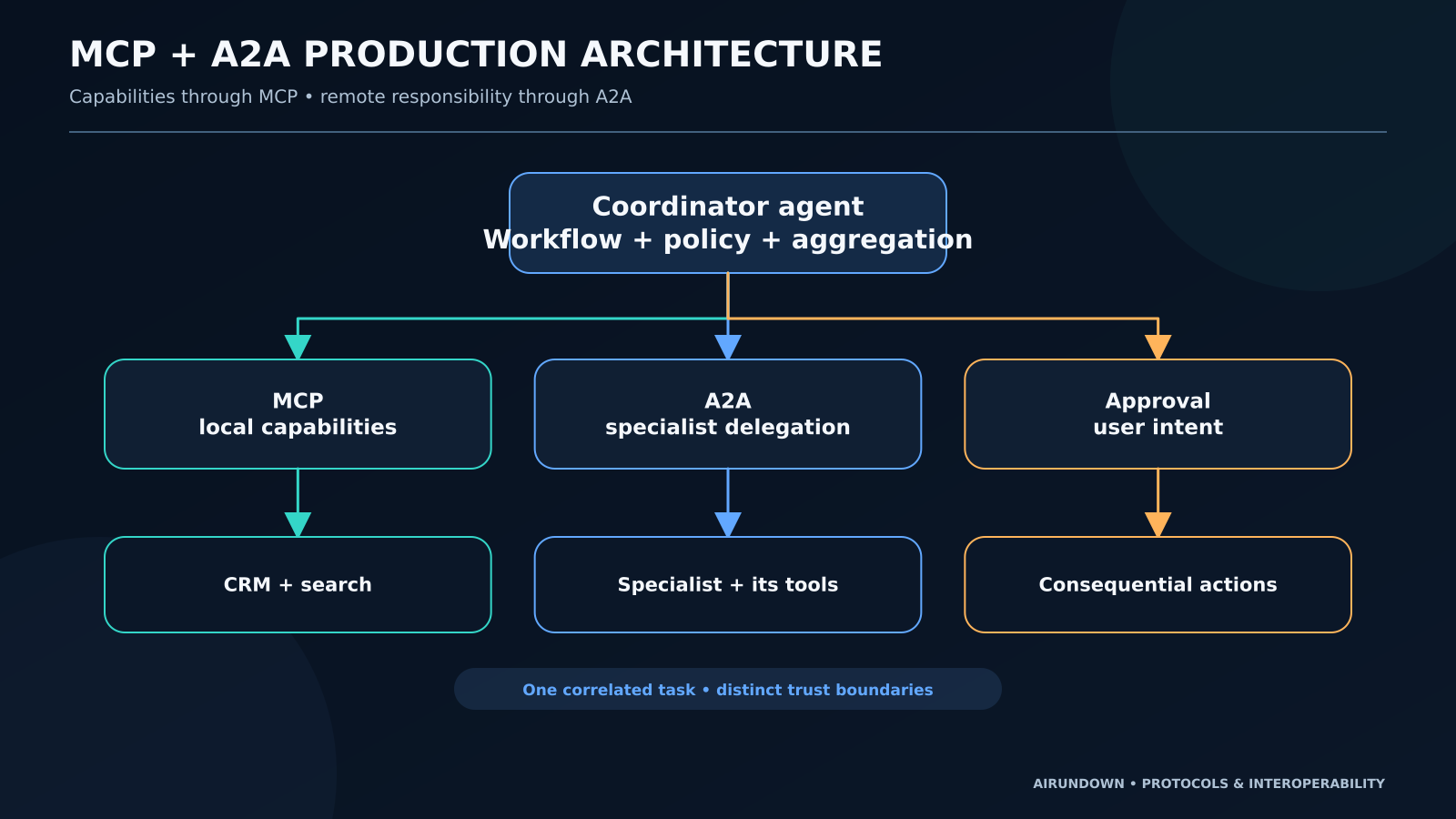
A production architecture for combining MCP capability access with A2A specialist delegation while preserving policy, identity, tracing, and failure boundaries.
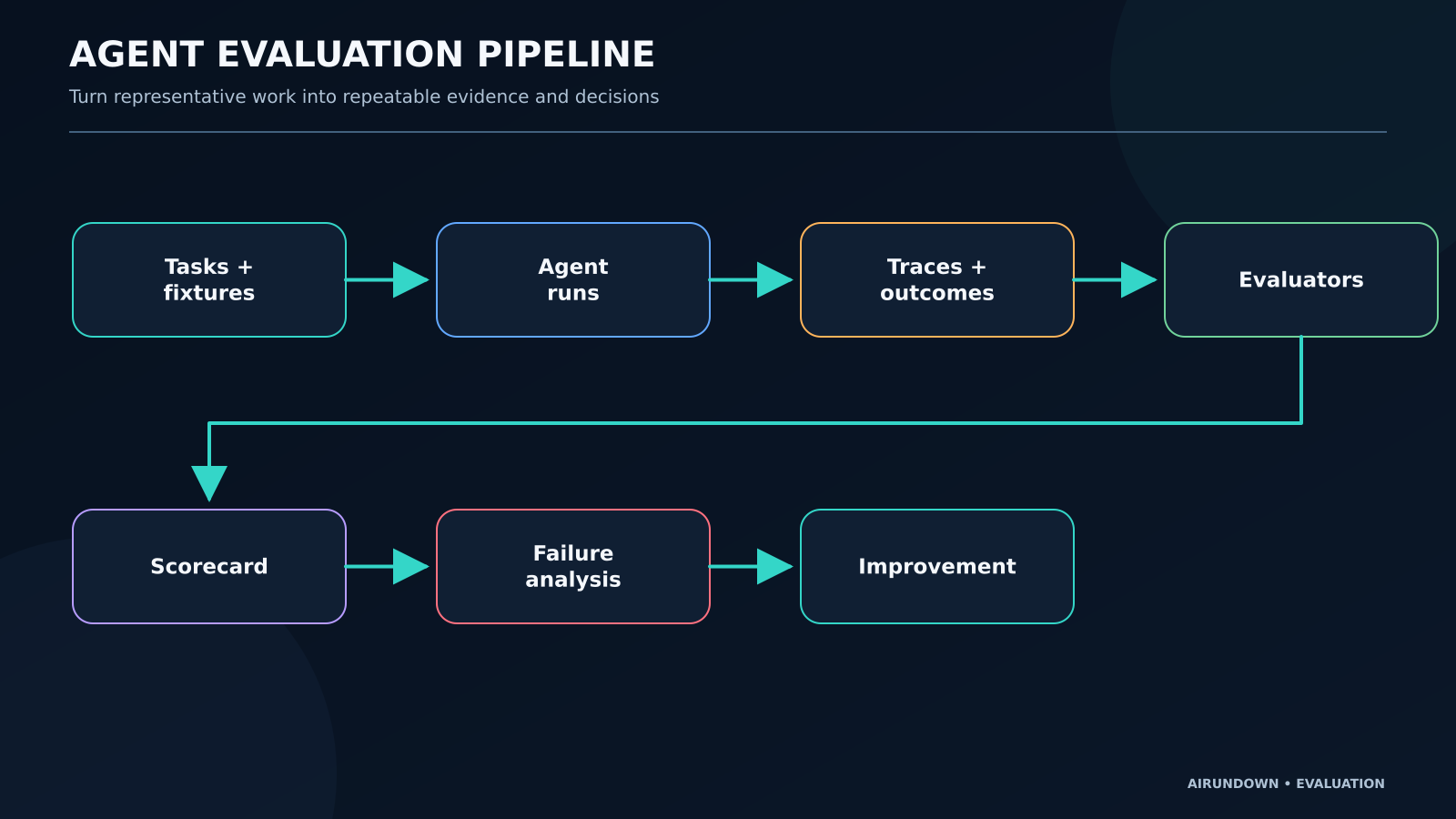
A practical workflow for defining agent success, building evaluation datasets, capturing traces, scoring behavior, analyzing failures, and preventing regressions.
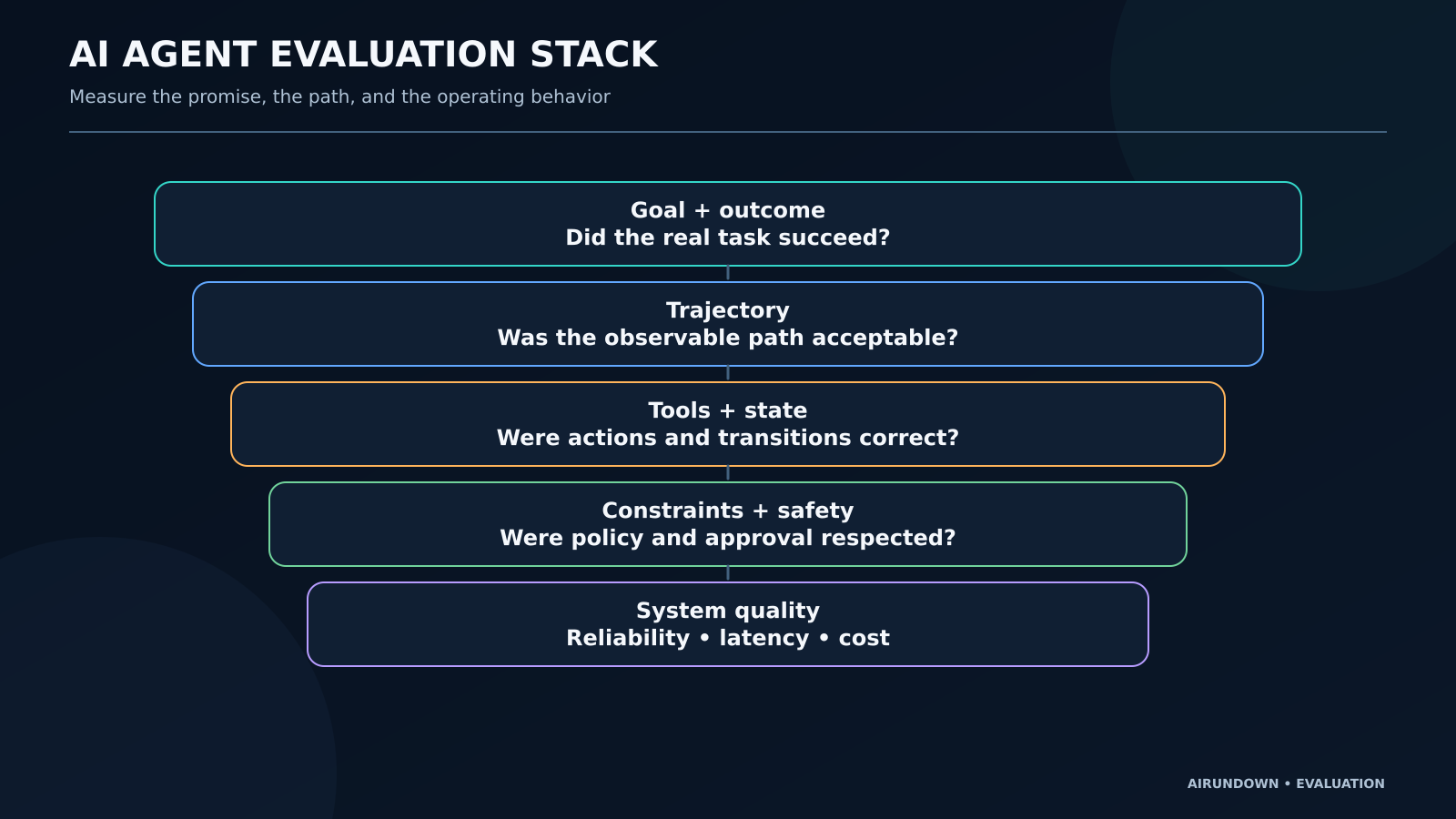
Agent evaluation measures task outcomes, trajectories, tool behavior, constraints, safety, reliability, latency, and cost—not only final prose.
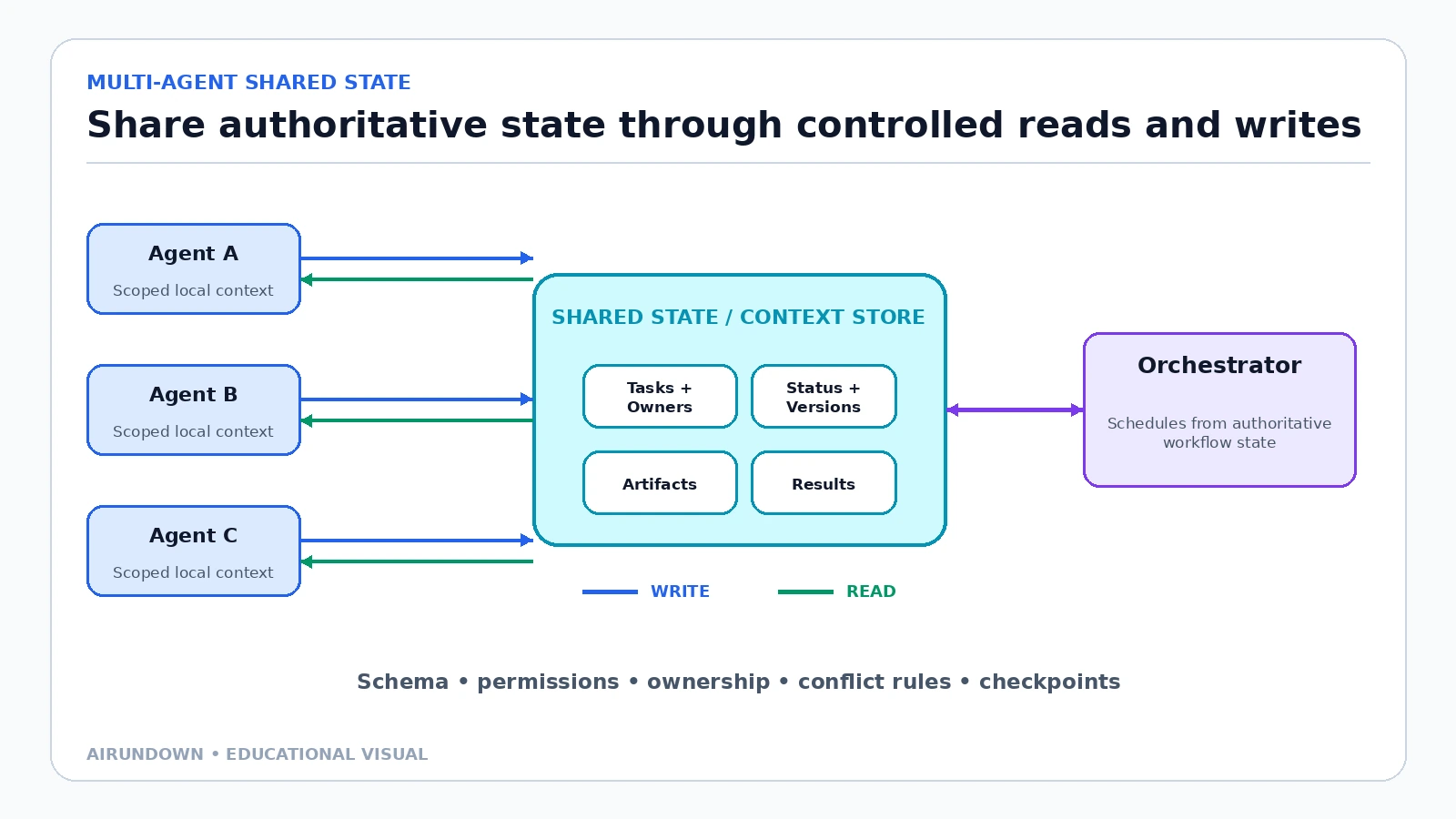
Learn how multi-agent systems separate local context from shared workflow state, exchange artifacts, synchronize updates, persist checkpoints, and avoid state conflicts.
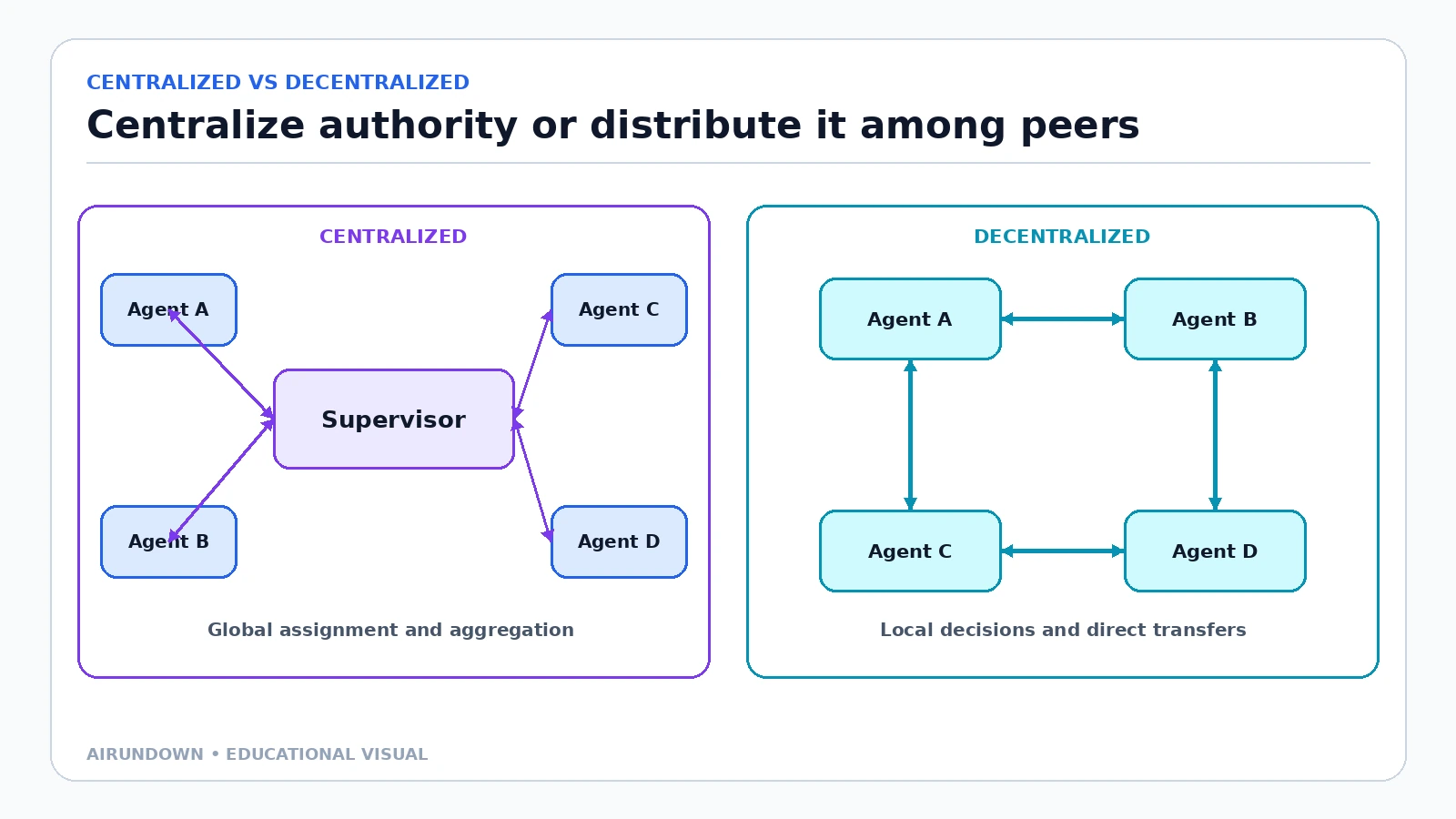
Compare centralized, decentralized, and hybrid multi-agent architectures across control, state, coordination, scale, observability, governance, and resilience.
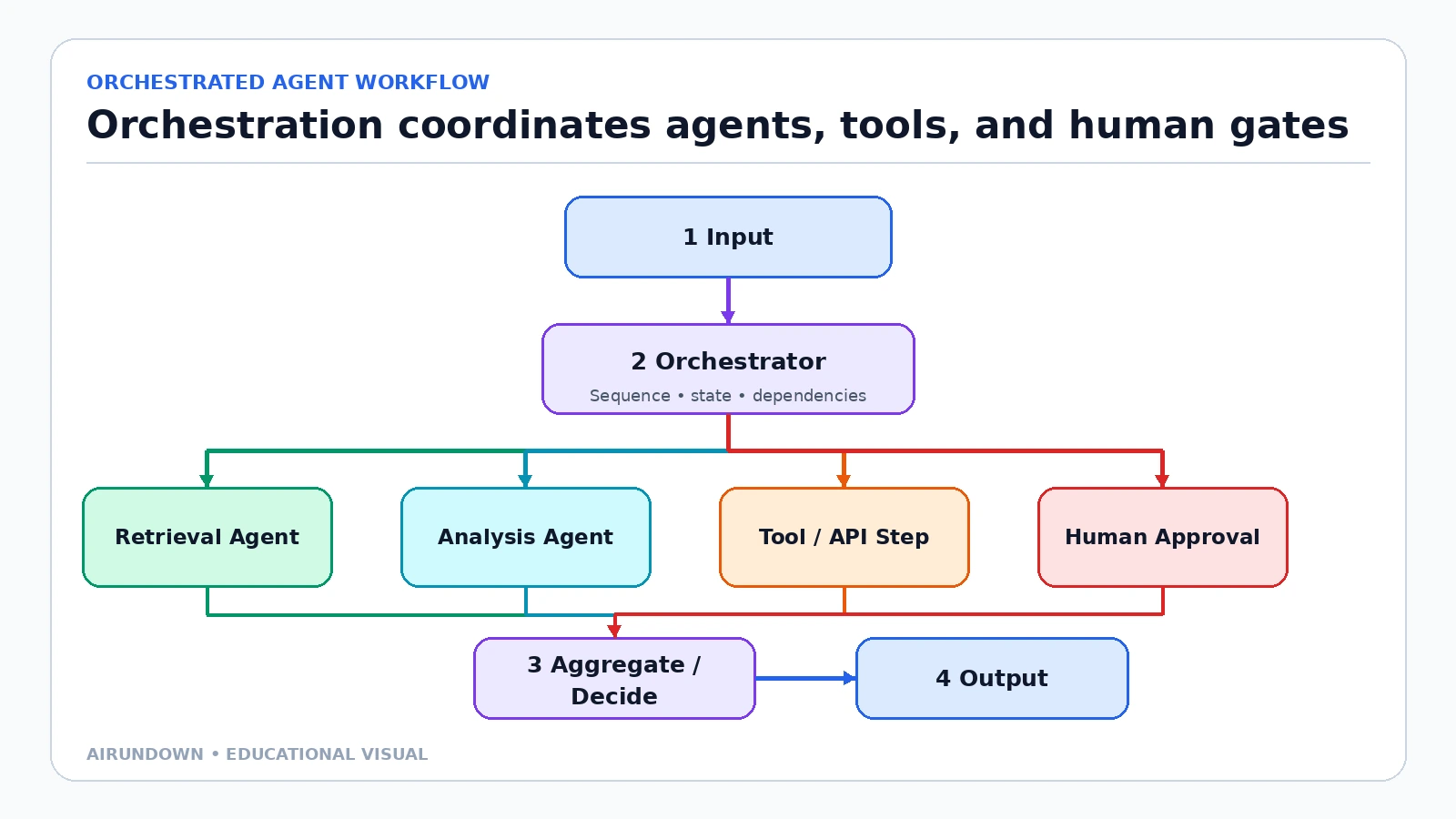
Learn how agent workflows and orchestration coordinate steps, dependencies, branches, parallel work, retries, checkpoints, tools, agents, and humans.
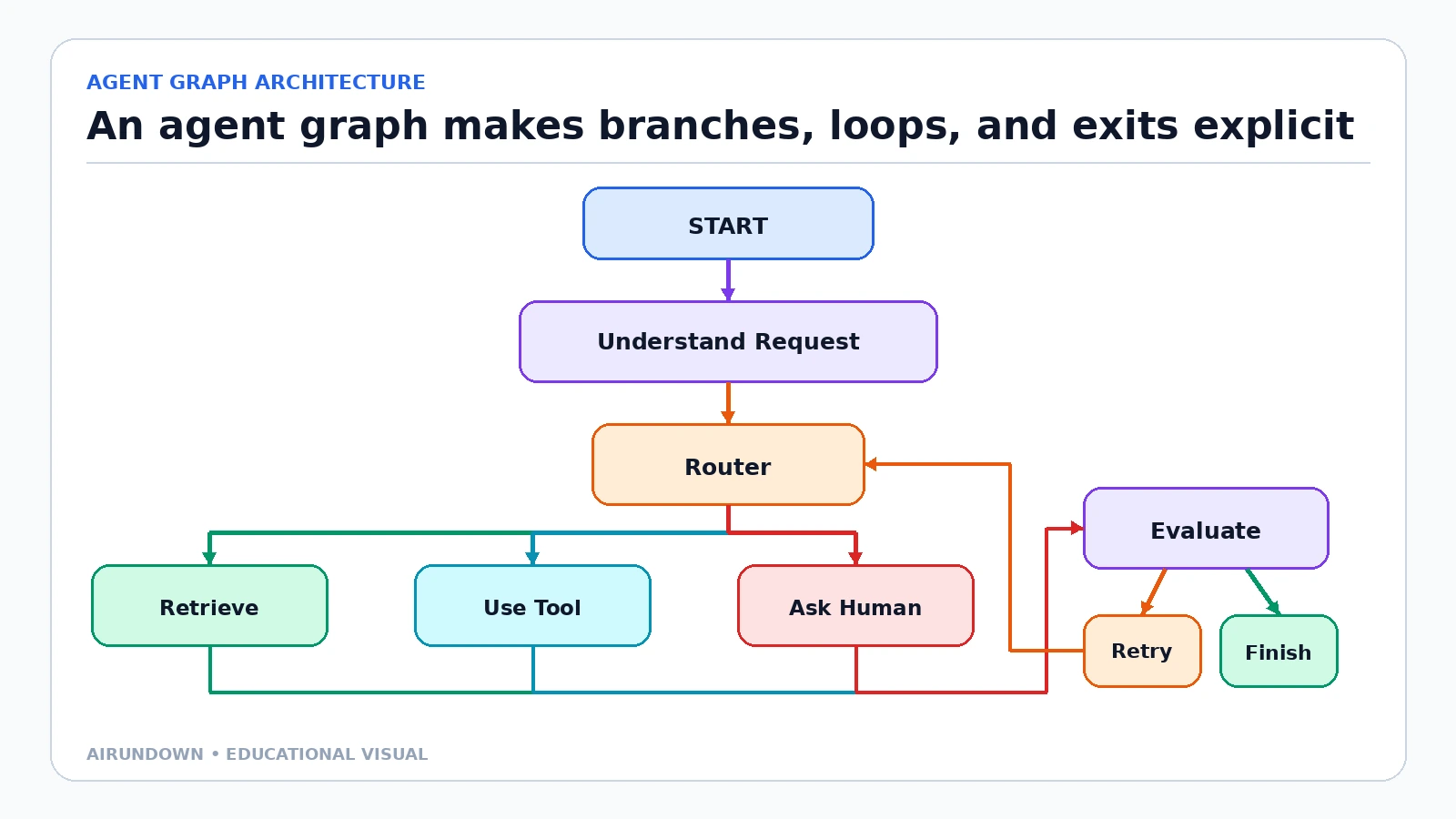
Learn how agent graphs and state machines make nodes, edges, branches, loops, checkpoints, transitions, retries, and terminal outcomes explicit.
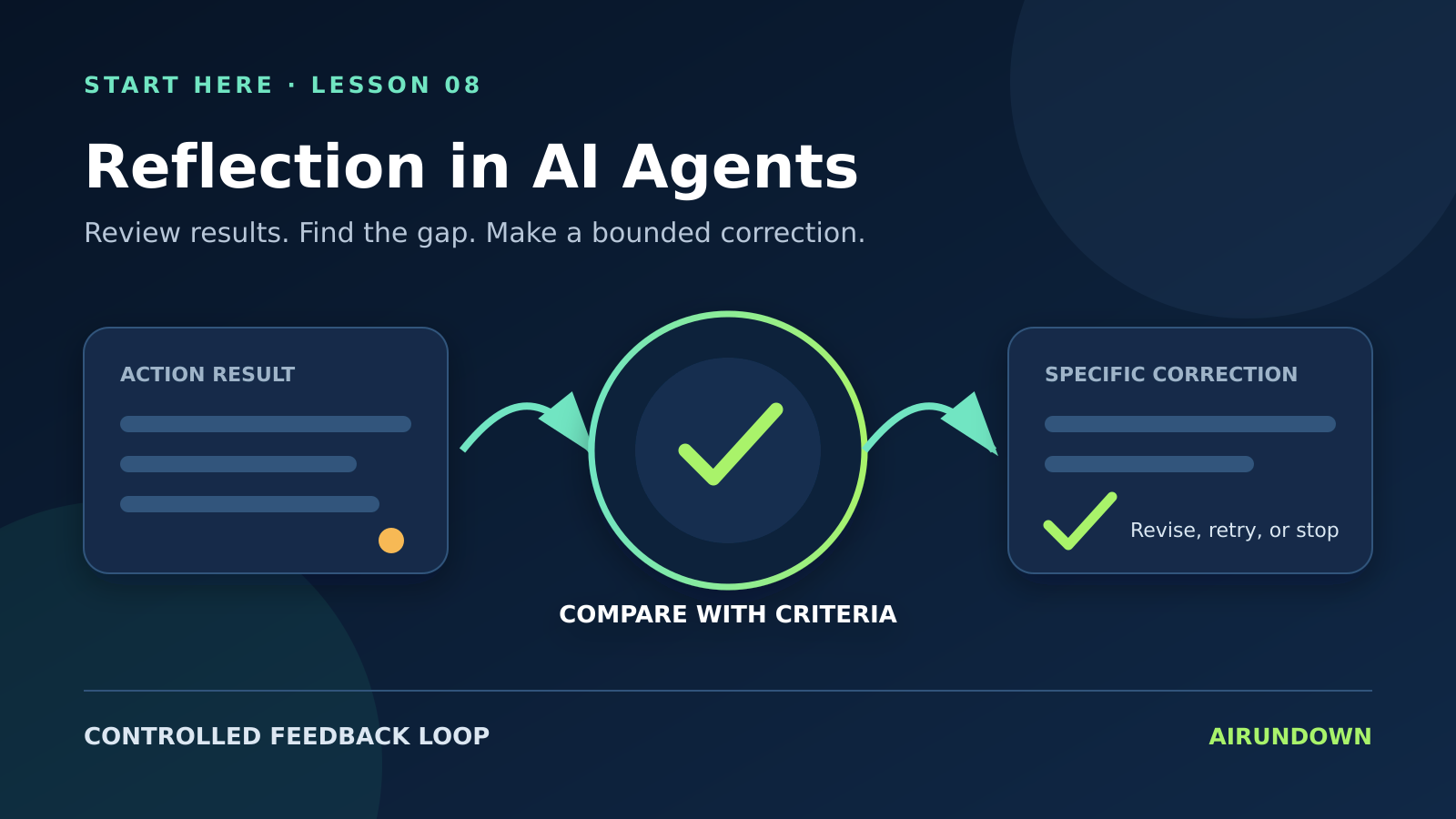
Learn how AI agents use feedback, critique, and execution review to detect mistakes, revise their approach, and improve results without endless retry loops.
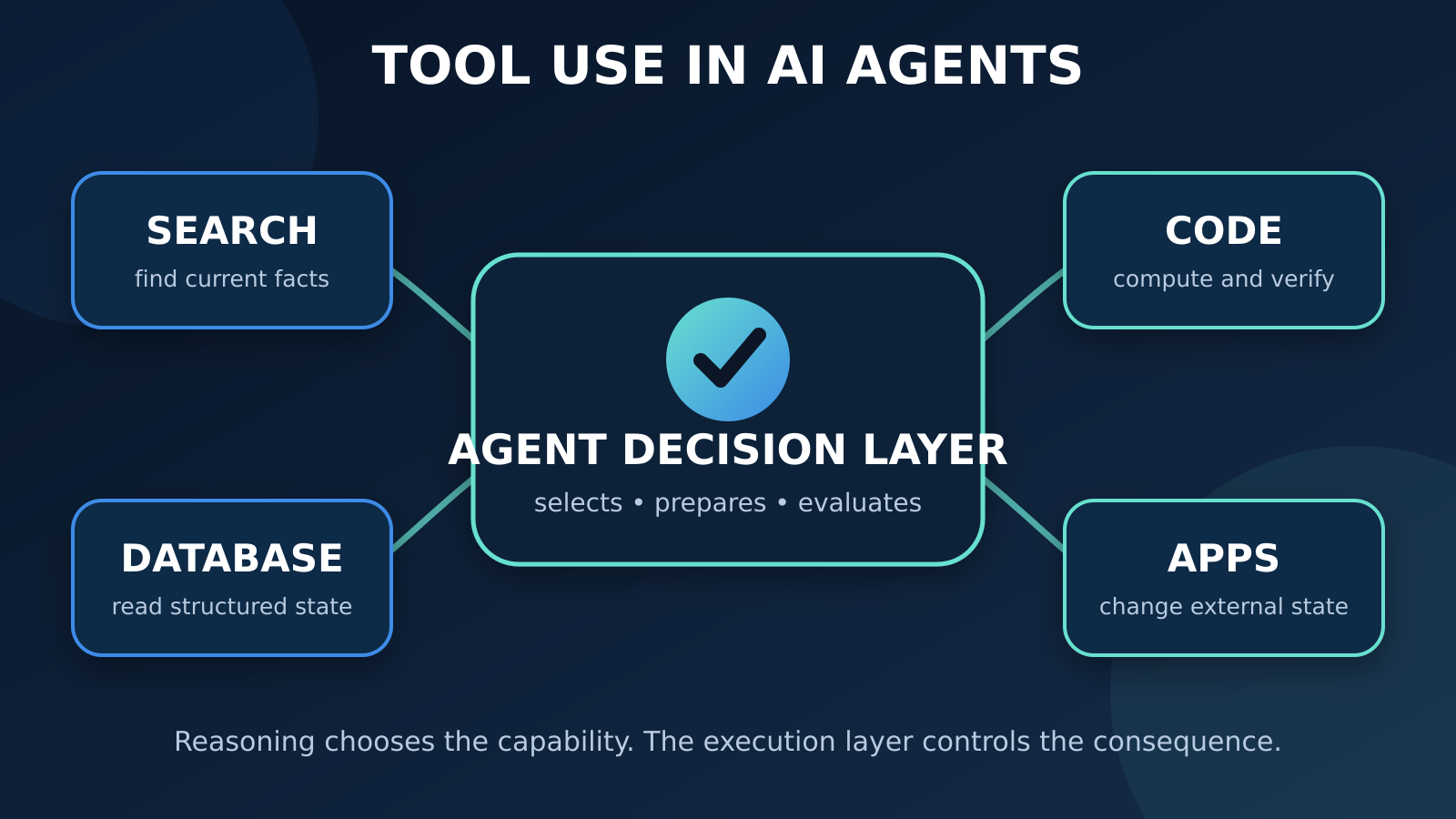
Learn how AI agents select tools, prepare arguments, execute functions and APIs, observe results, recover from errors, and stay within safe permission boundaries.
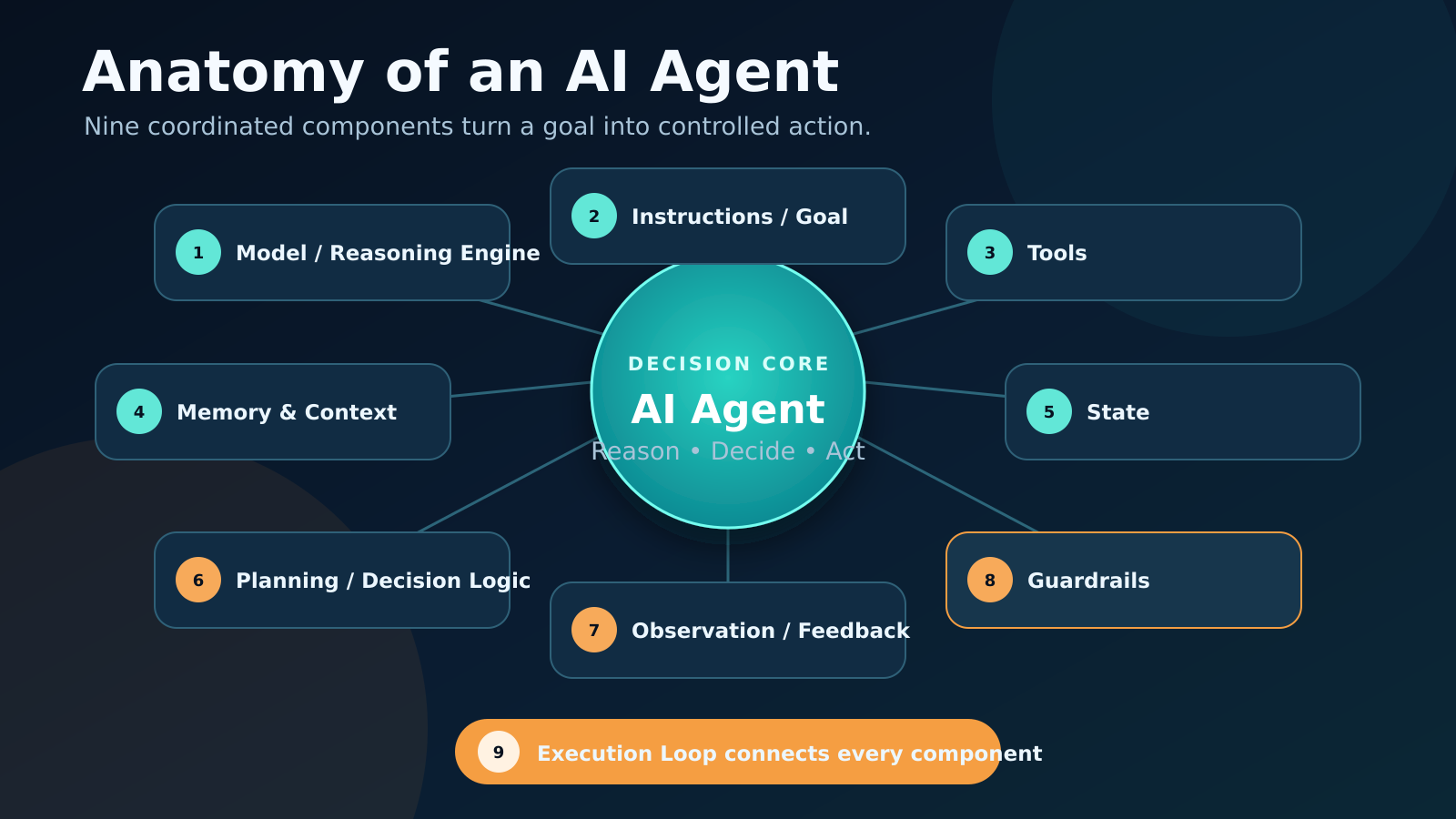
A beginner-friendly breakdown of the model, instructions, tools, memory, state, planning, feedback, guardrails, and execution loop inside an AI agent.
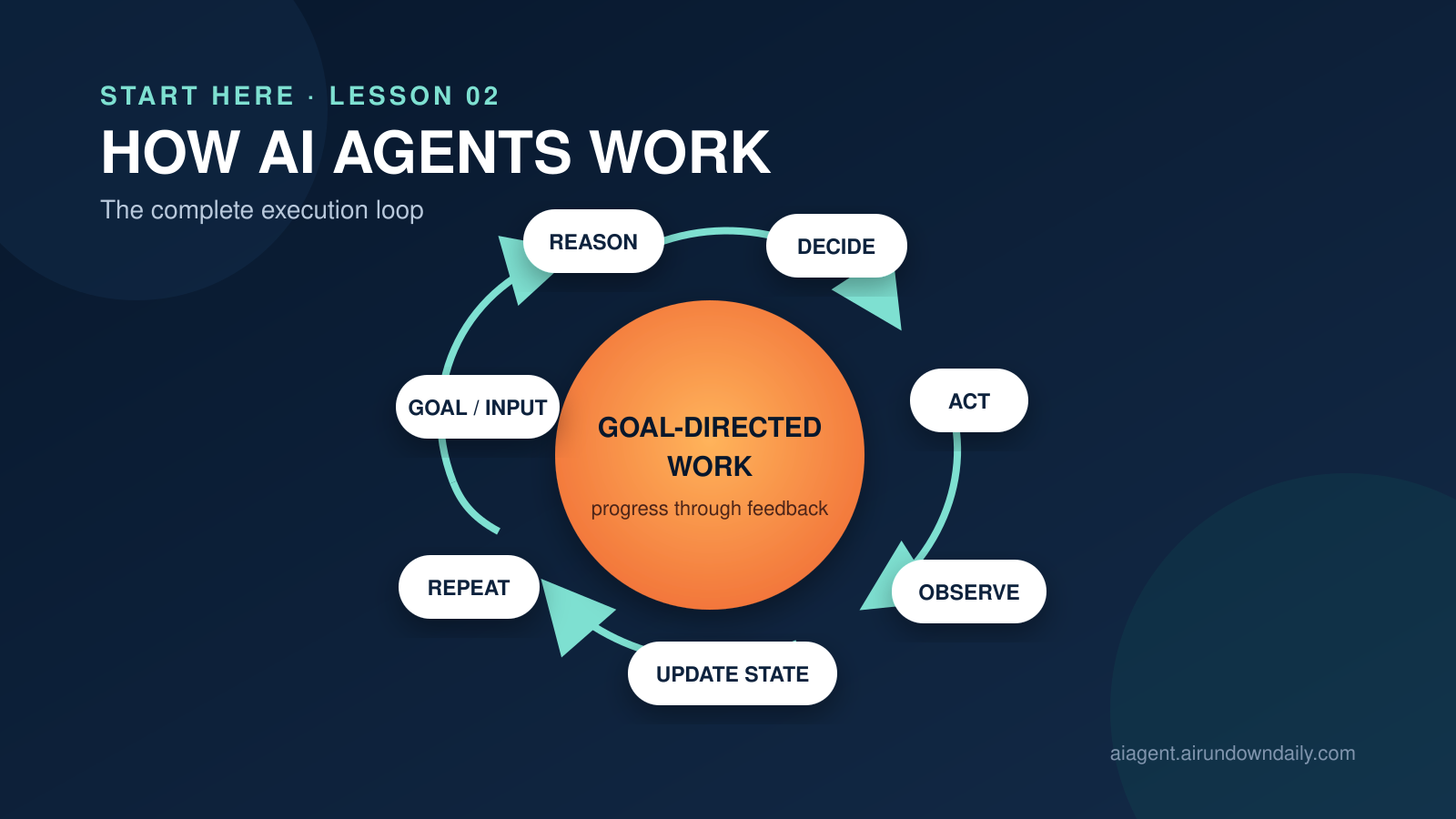
Follow the seven-stage execution loop that lets an AI agent reason, choose actions, use tools, learn from results, and keep working toward a goal.
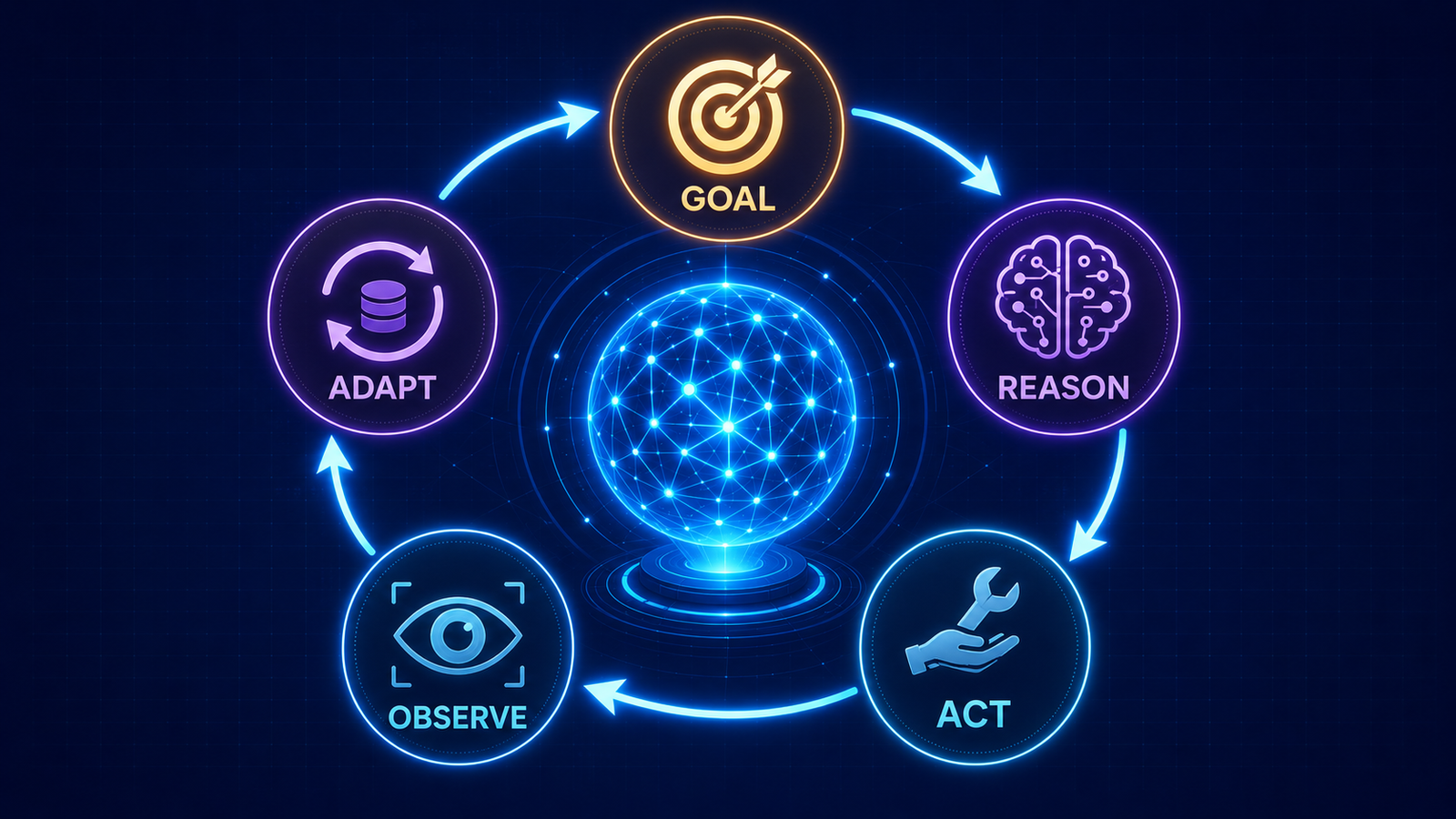
A practical explanation of what makes an AI agent different from a chatbot or fixed workflow, and how the agent loop turns model reasoning into action.