MCP Sampling Explained: Model Calls Requested by Servers
A practical explanation of MCP sampling, including message flow, model preferences, tool use, approvals, security, and current design status.
19 articles — updated daily
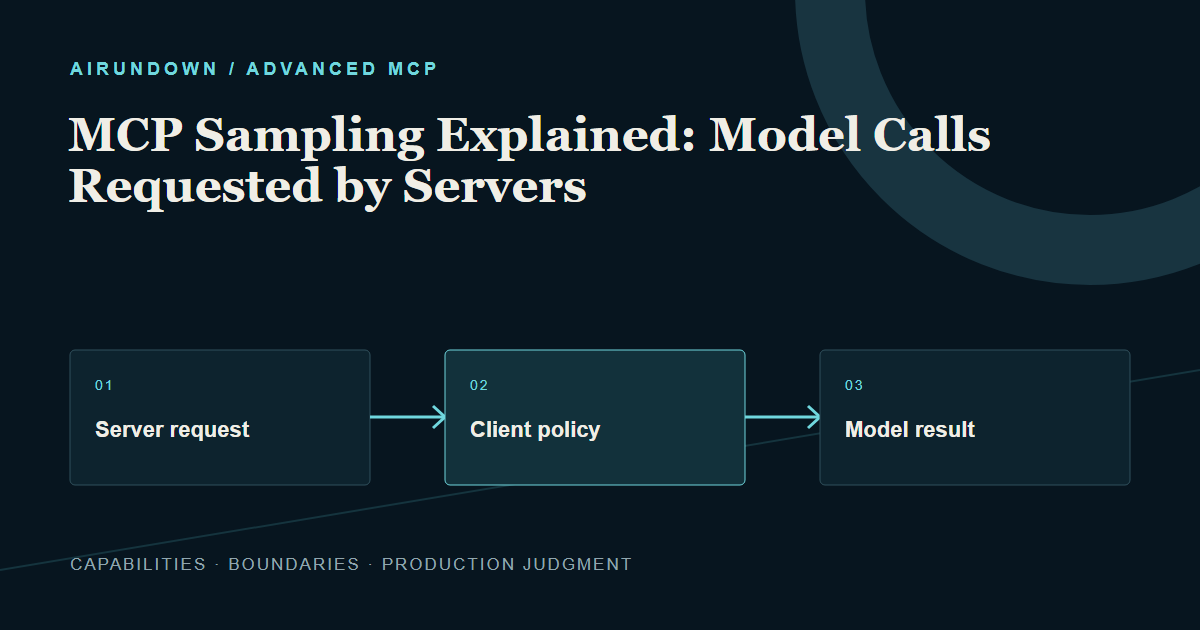
A practical explanation of MCP sampling, including message flow, model preferences, tool use, approvals, security, and current design status.
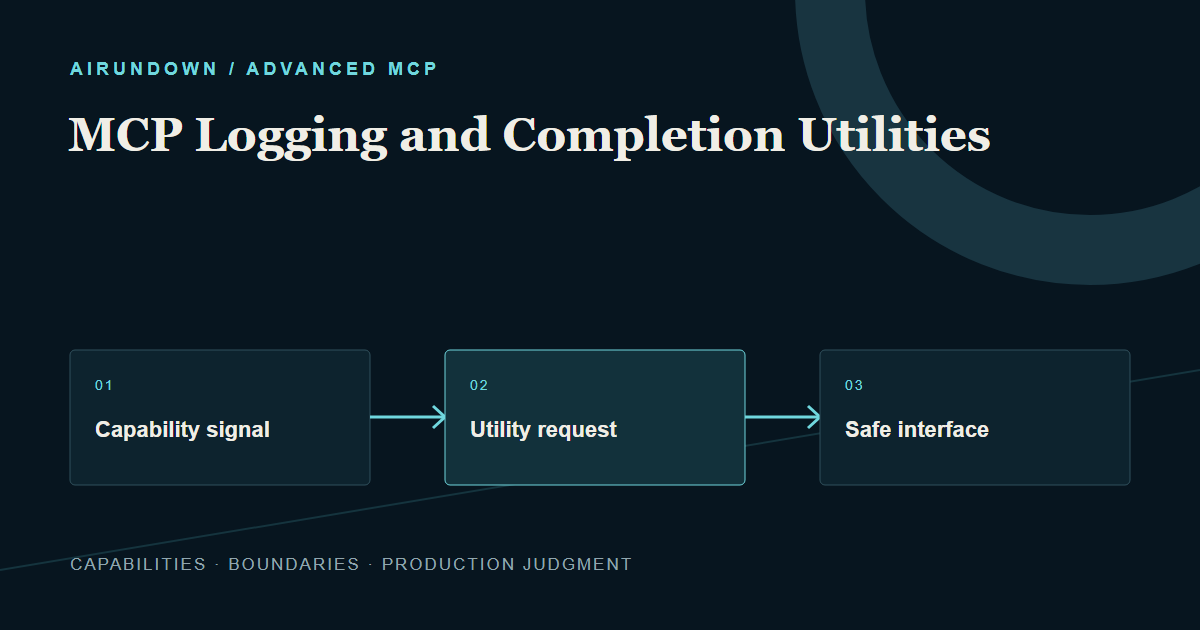
A practical reference to MCP logging notifications and completion suggestions, including current status, security, and implementation boundaries.
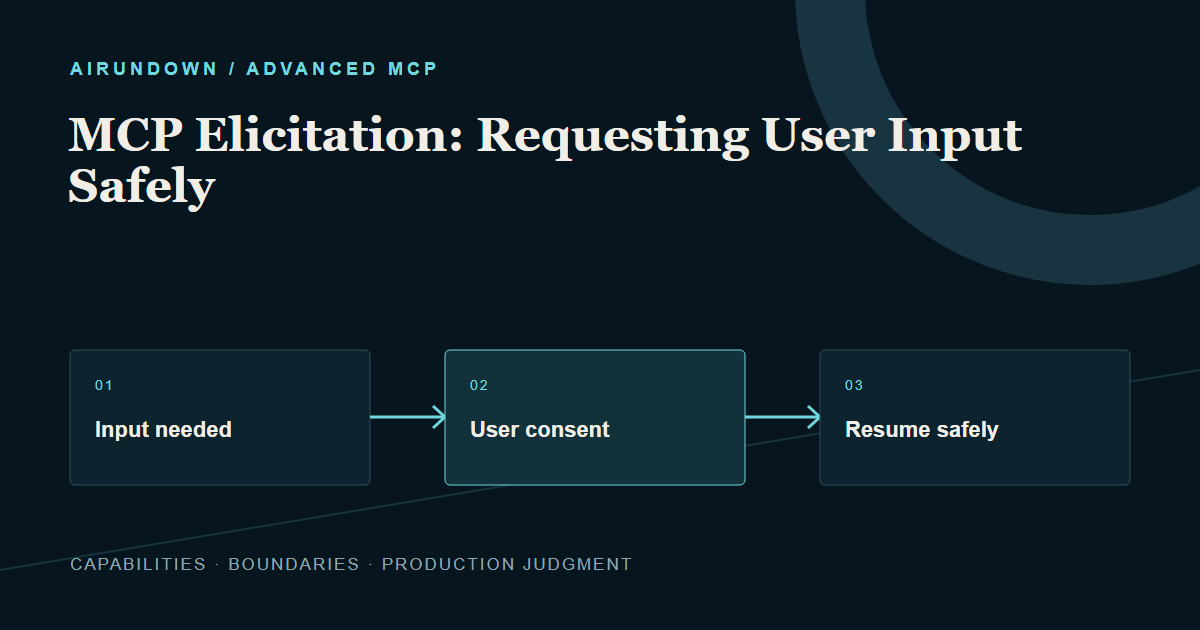
A practical guide to requesting missing user input during MCP operations without confusing conversation, consent, or credentials.
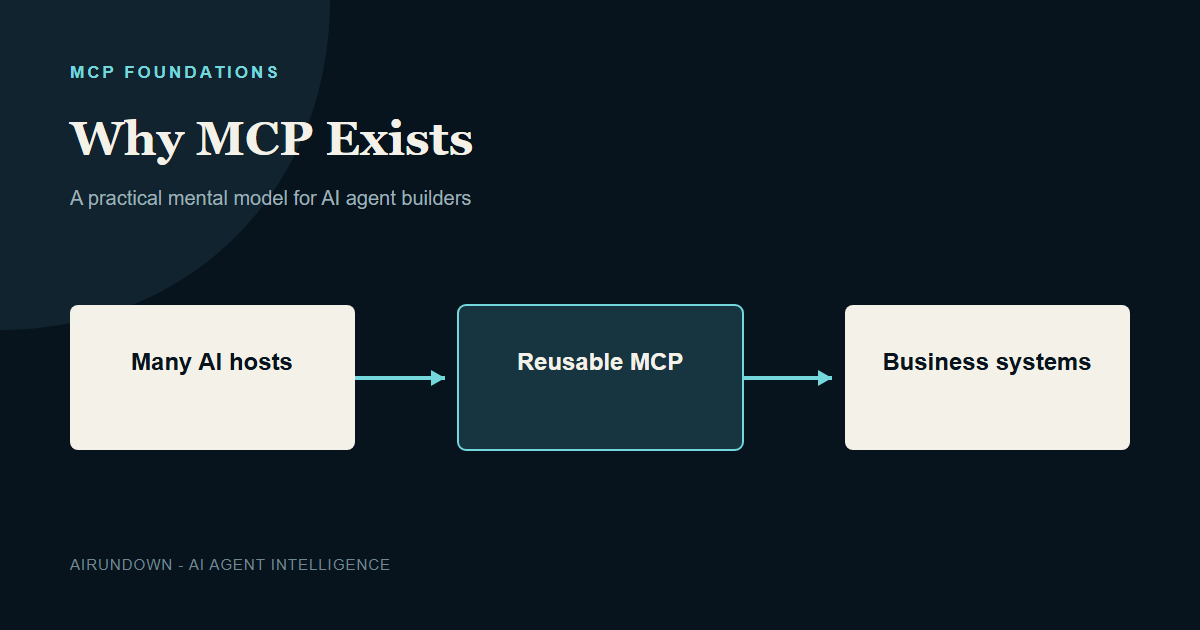
Understand why AI integrations become difficult at scale and how MCP creates a reusable boundary between AI applications and external systems.
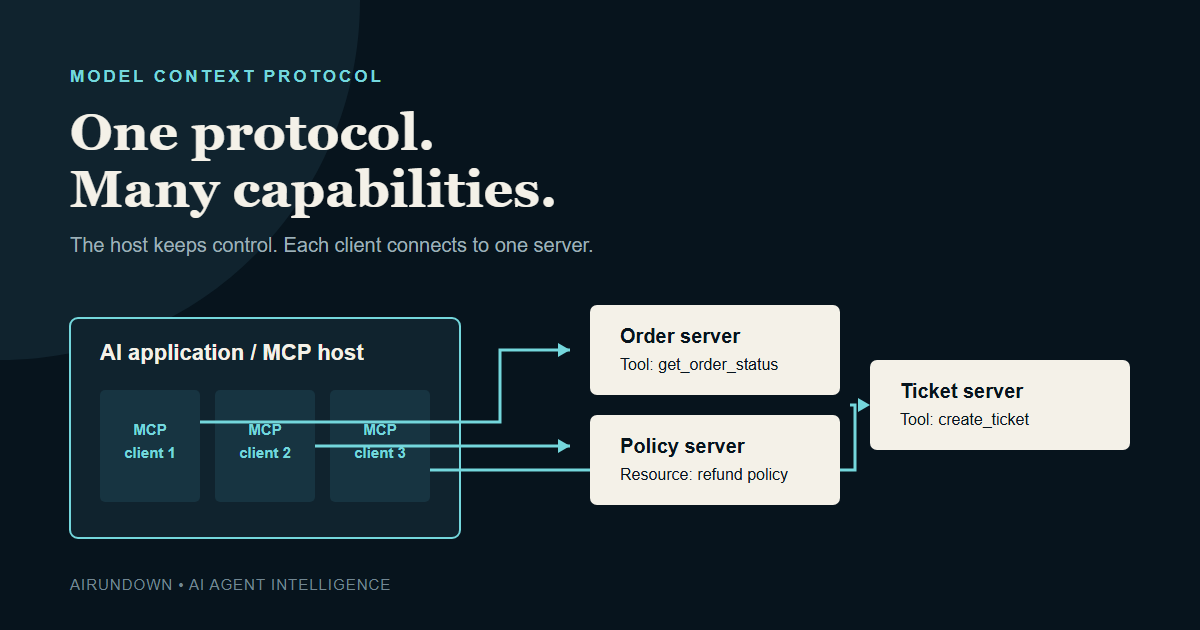
A practical, beginner-friendly guide to the Model Context Protocol: its host-client-server architecture, tools and resources, request flow, trade-offs, and security boundaries.
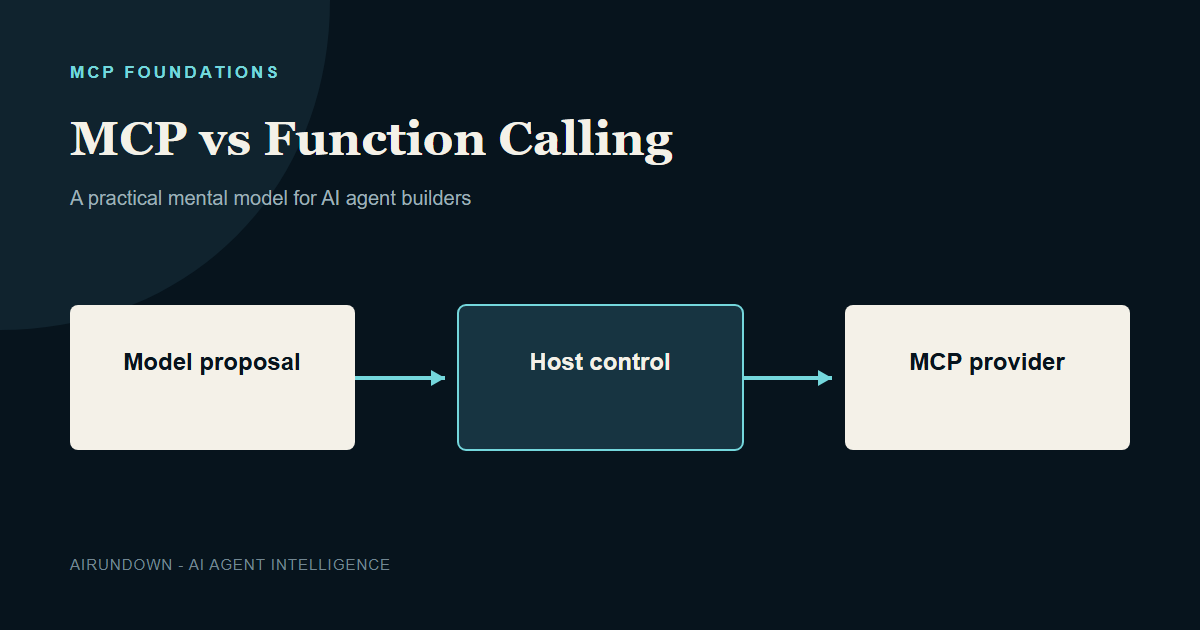
A practical comparison of MCP and model function calling, including their boundaries, request flow, portability, security, and combined architecture.
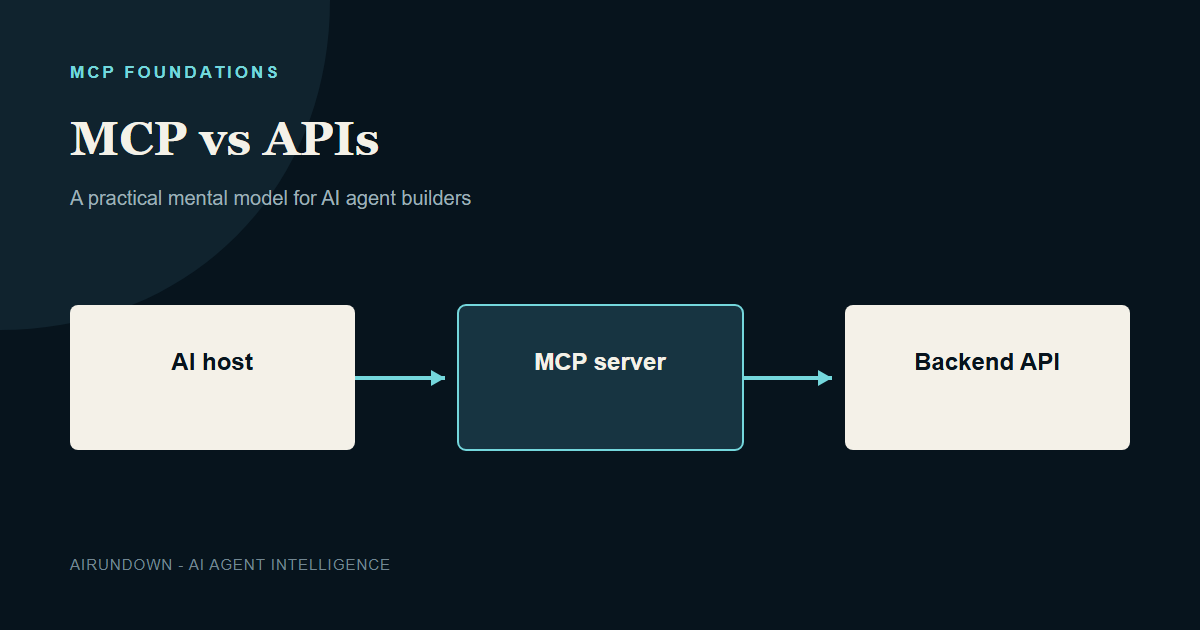
Learn how MCP relates to REST APIs and SDKs, what each layer owns, and why most production MCP servers still call existing APIs.
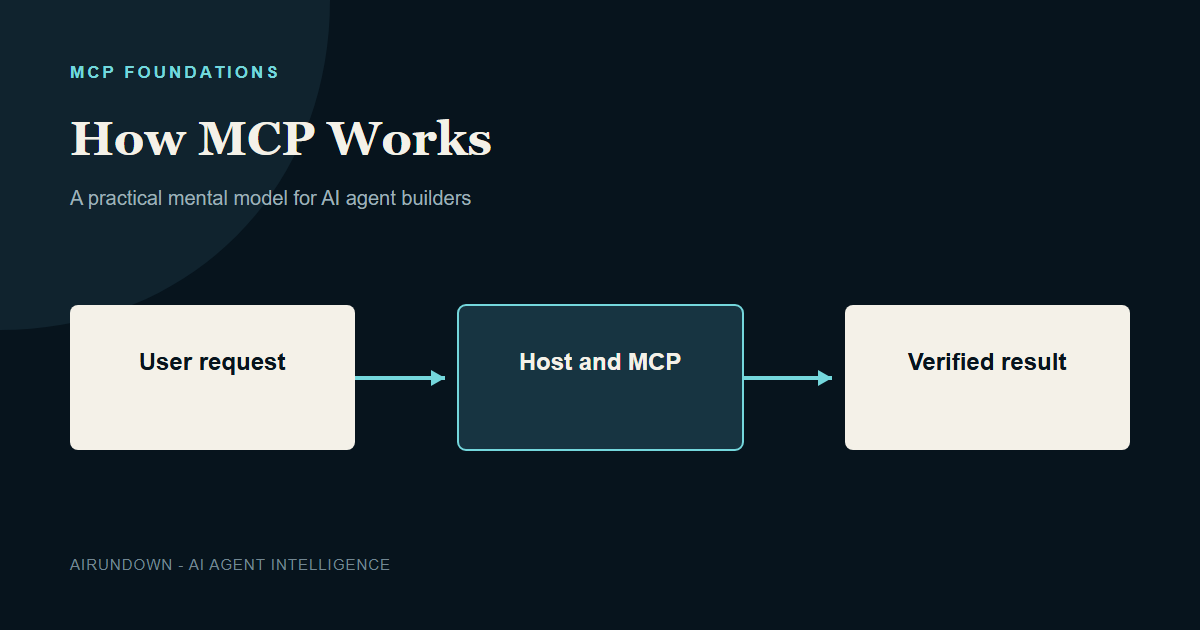
Trace an MCP interaction from server discovery through model tool selection, host authorization, execution, and the final answer.
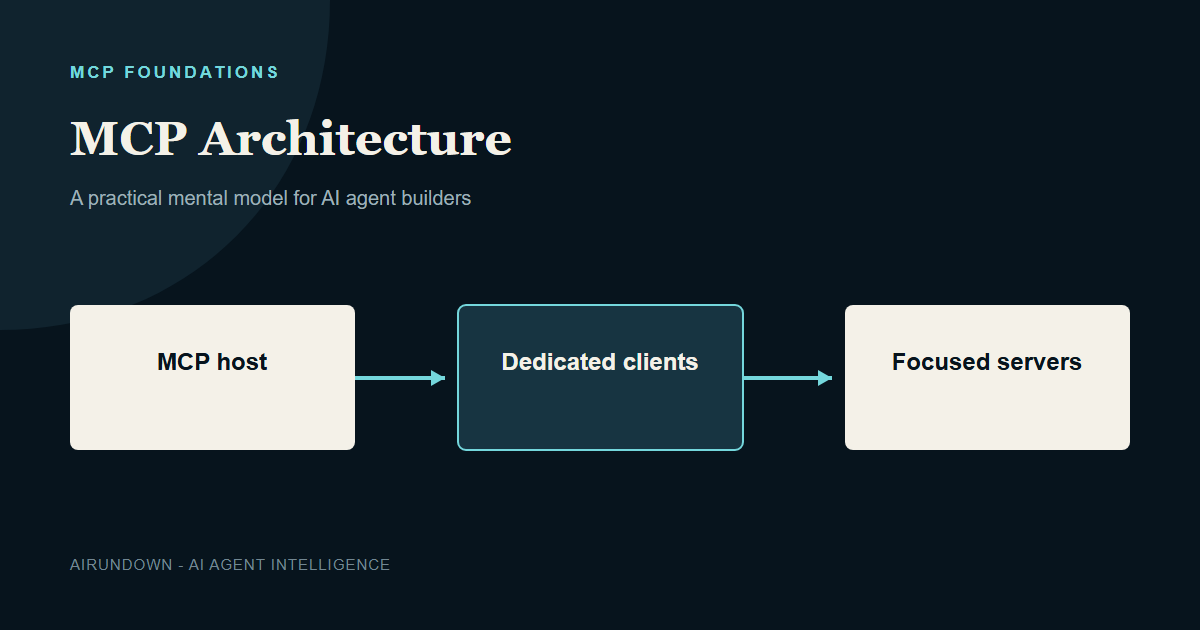
A component-by-component guide to MCP architecture, including host and client responsibilities, server primitives, transports, and trust boundaries.
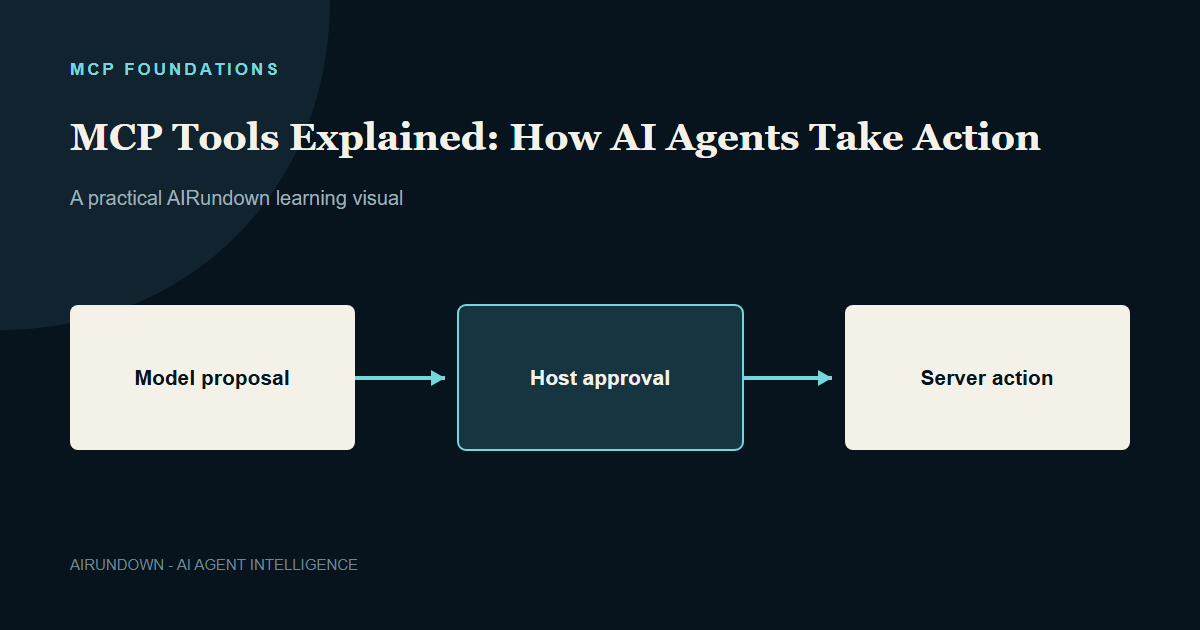
A practical guide to MCP tools, including schemas, discovery, execution, approvals, errors, and safe production design.
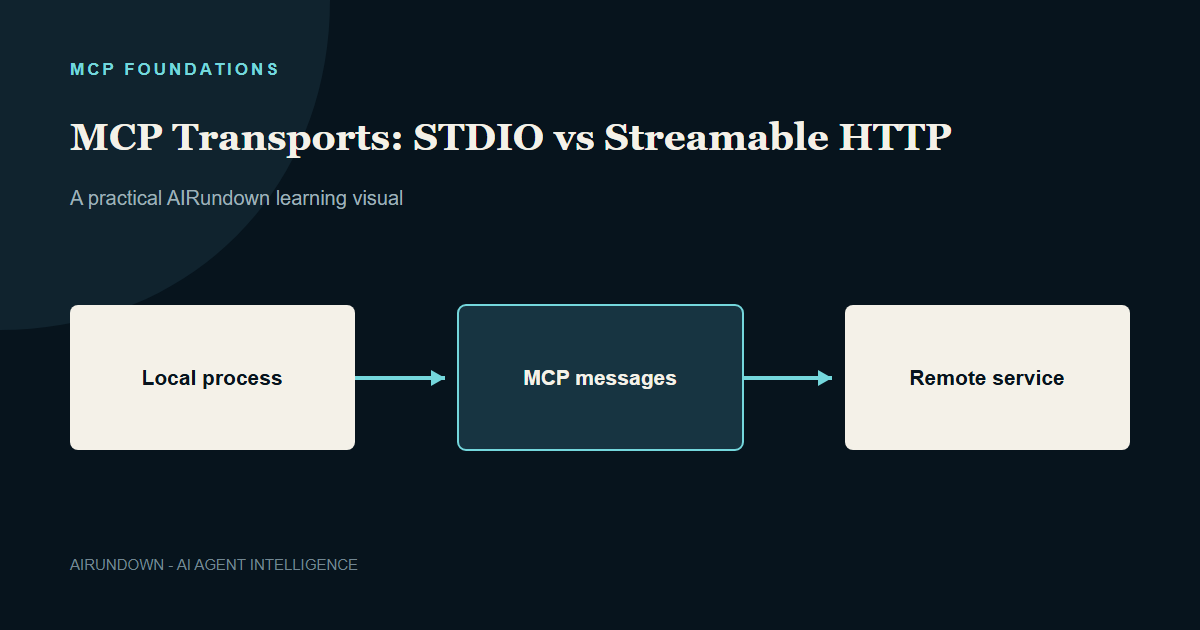
Understand how MCP messages travel over STDIO and Streamable HTTP and how to choose the right transport for local and remote servers.
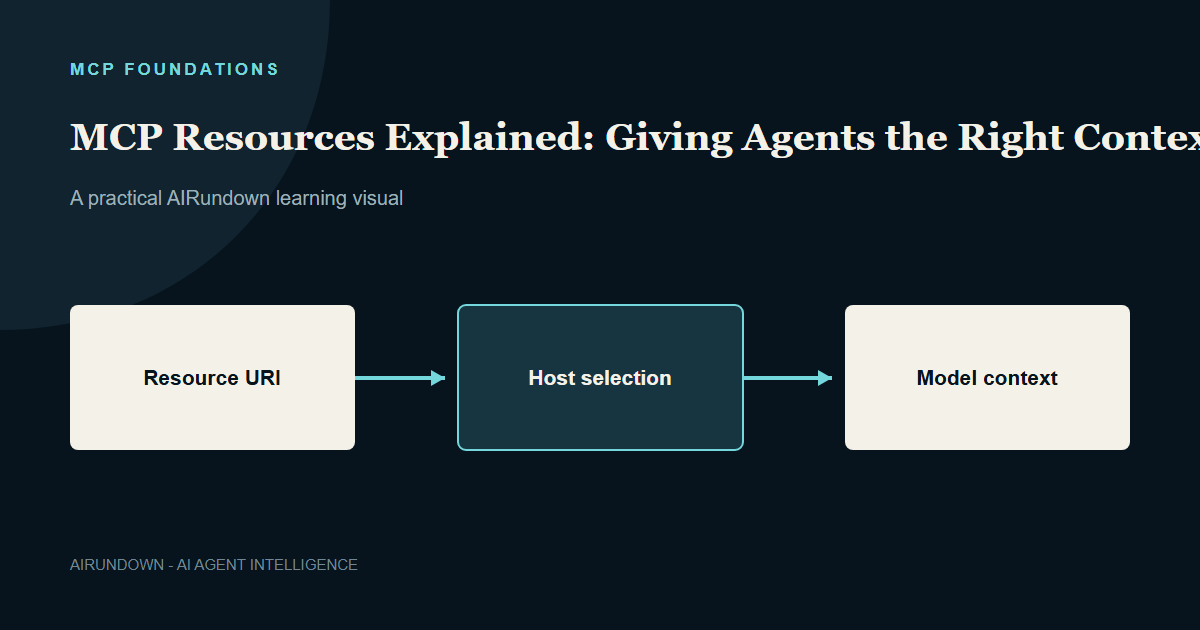
Understand MCP resources, resource URIs, templates, discovery, reading, subscriptions, and safe context selection.
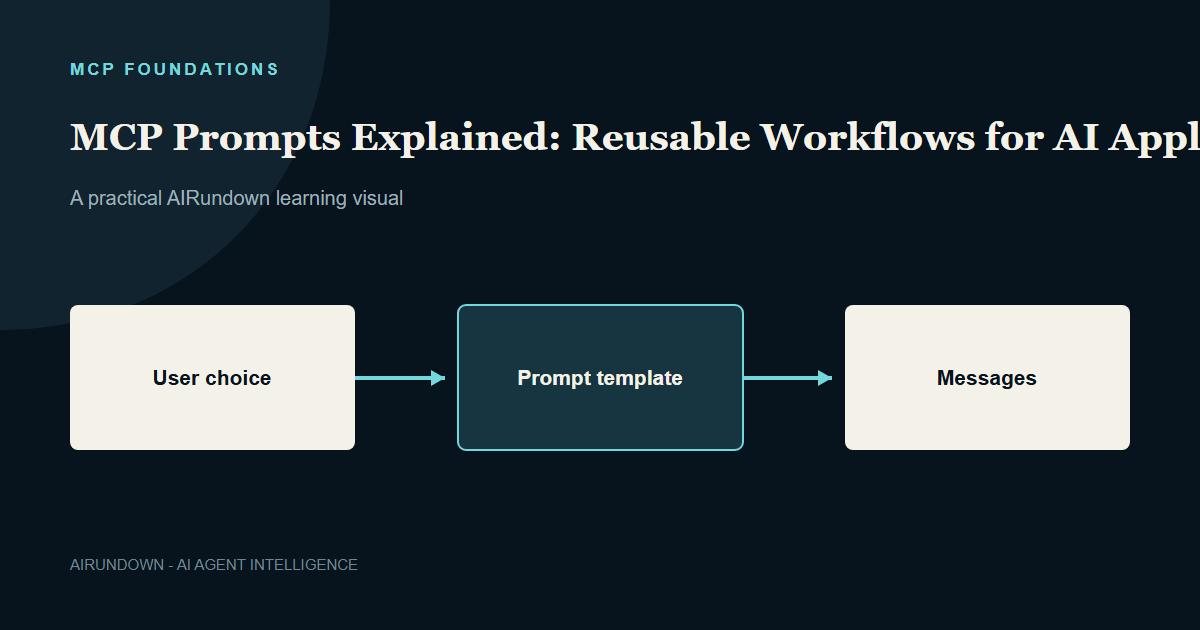
A practical guide to MCP prompts, including discovery, arguments, message content, user control, safety, and design patterns.
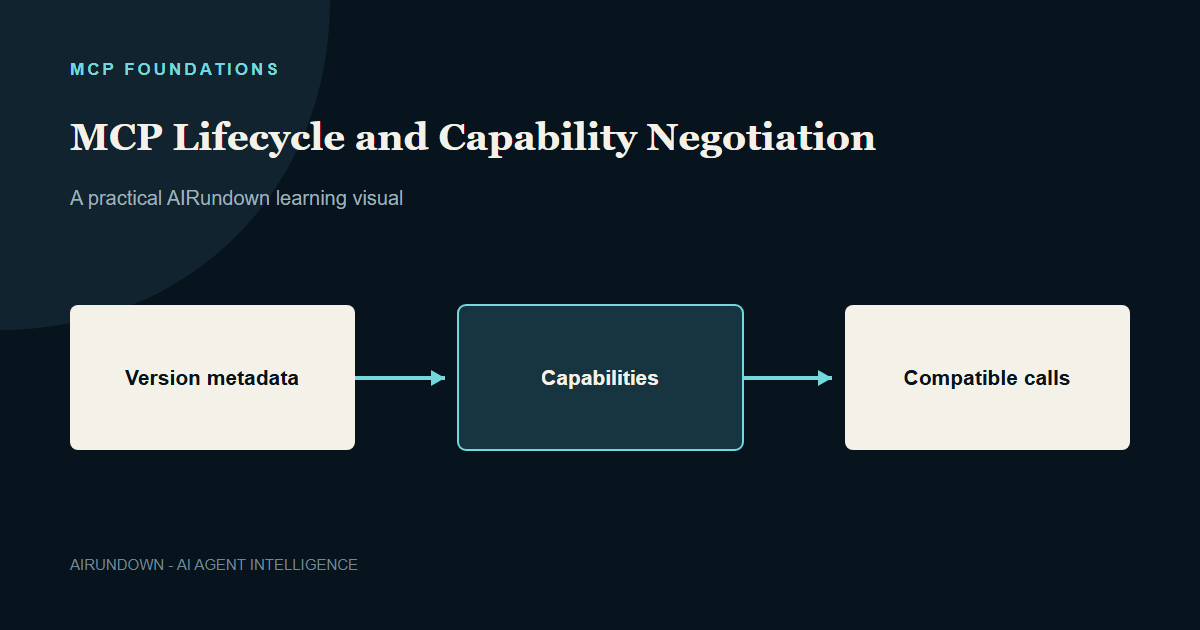
A current guide to MCP version compatibility, capability discovery, request metadata, feature use, and the transition from older handshakes.
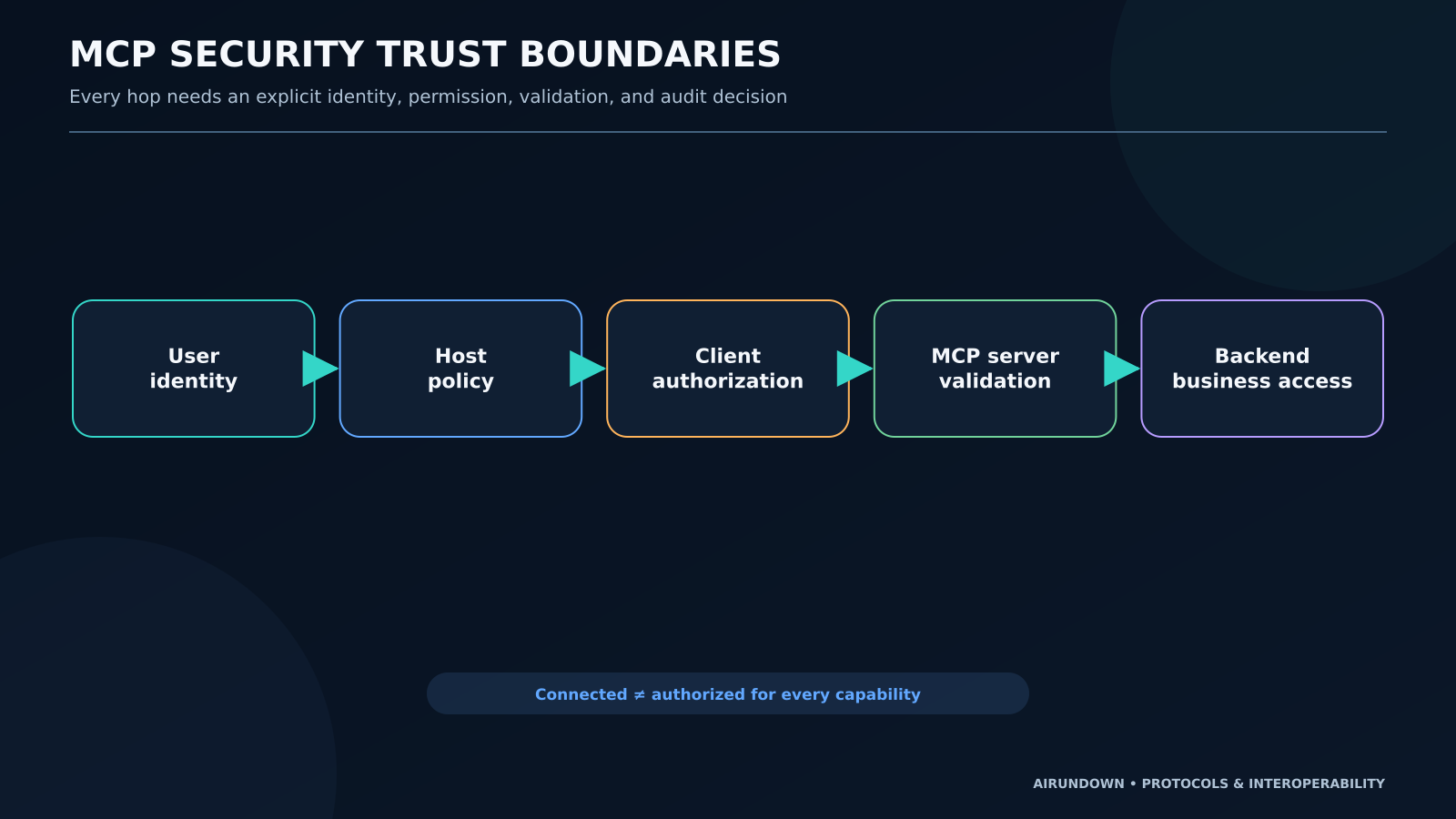
A practical security model for MCP trust boundaries, authorization, least privilege, approvals, external content, backend credentials, and auditability.
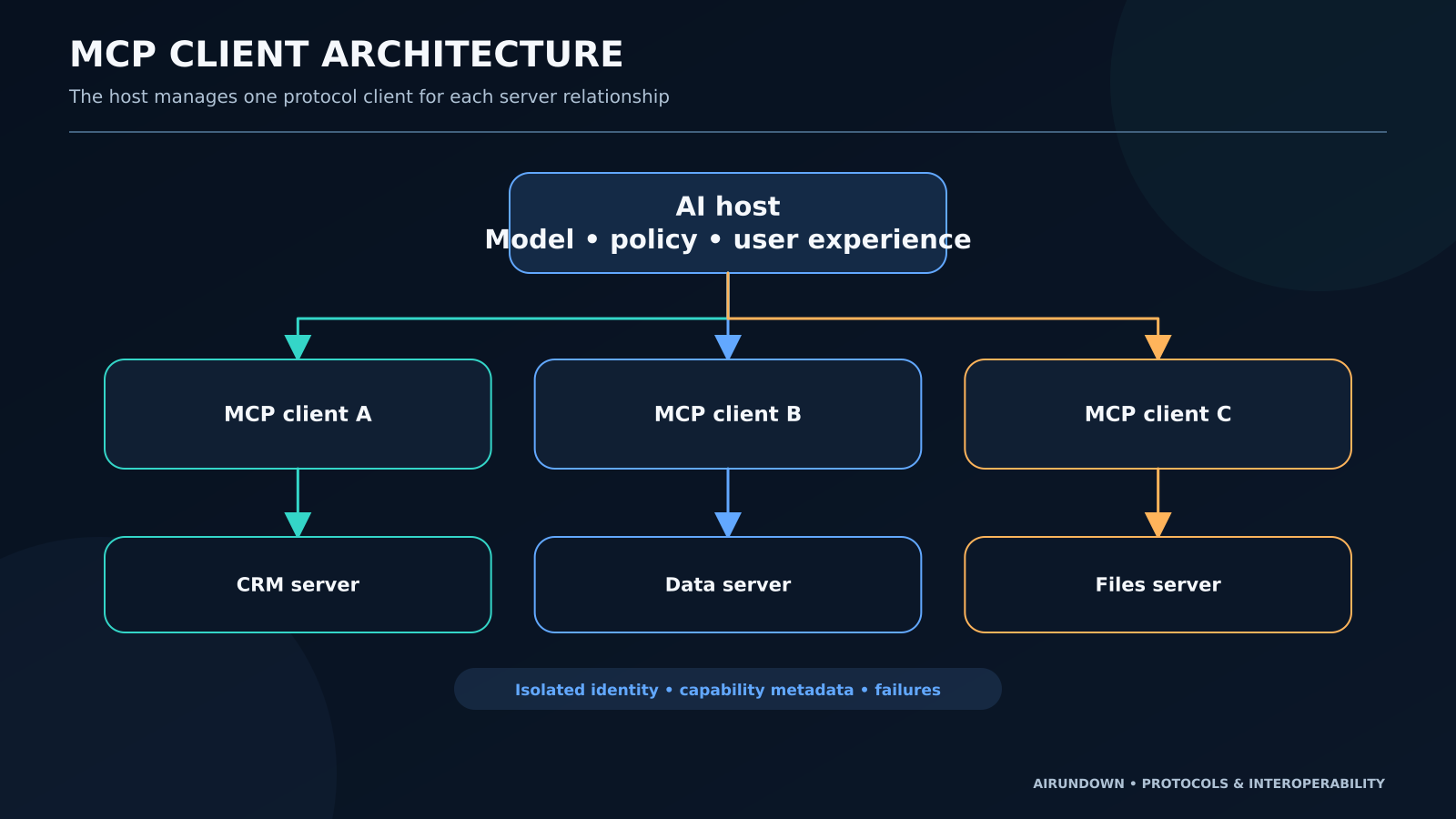
Understand how an MCP host manages dedicated clients, discovers server capabilities, applies policy, invokes operations, and handles failures.
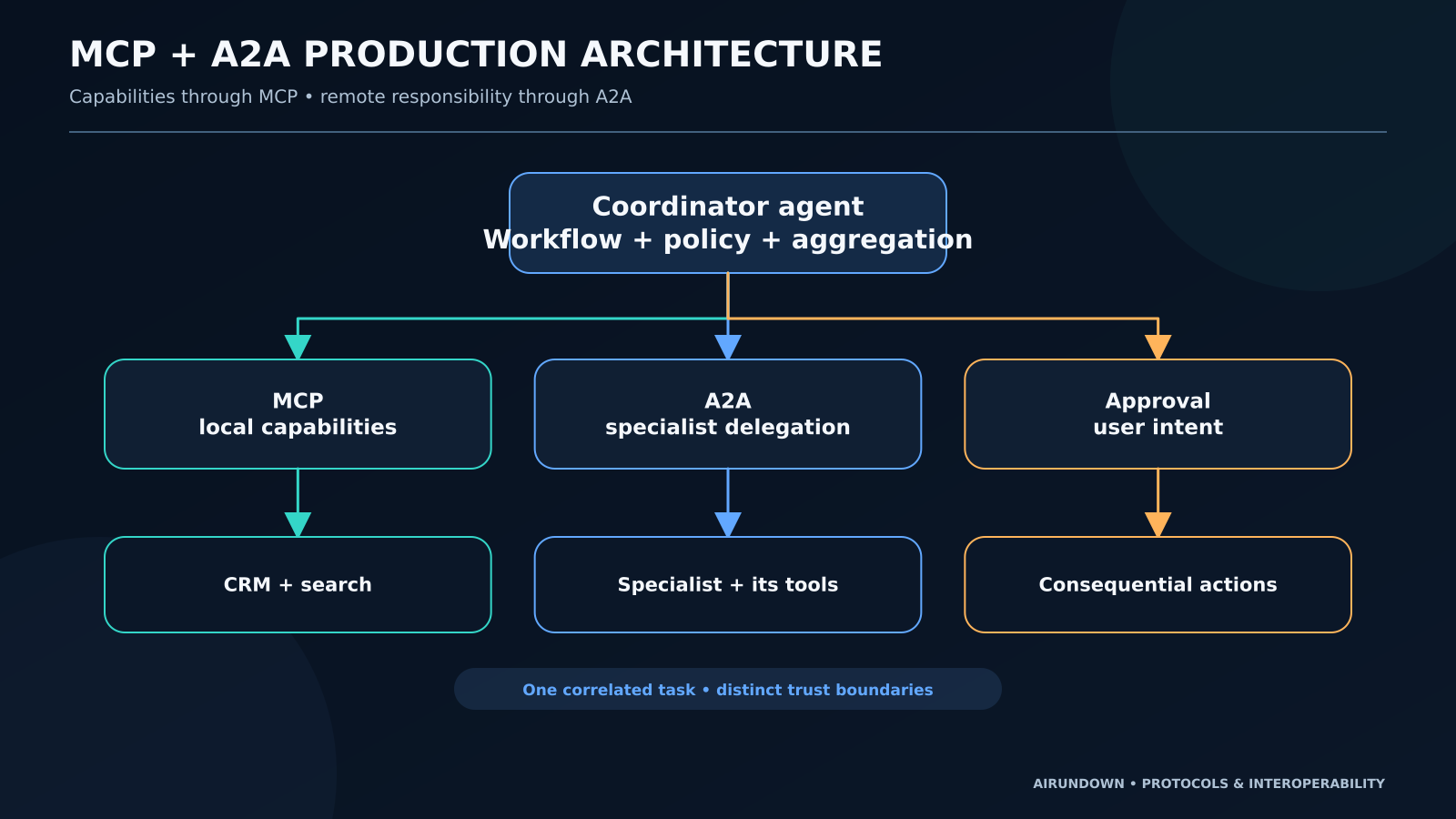
A production architecture for combining MCP capability access with A2A specialist delegation while preserving policy, identity, tracing, and failure boundaries.
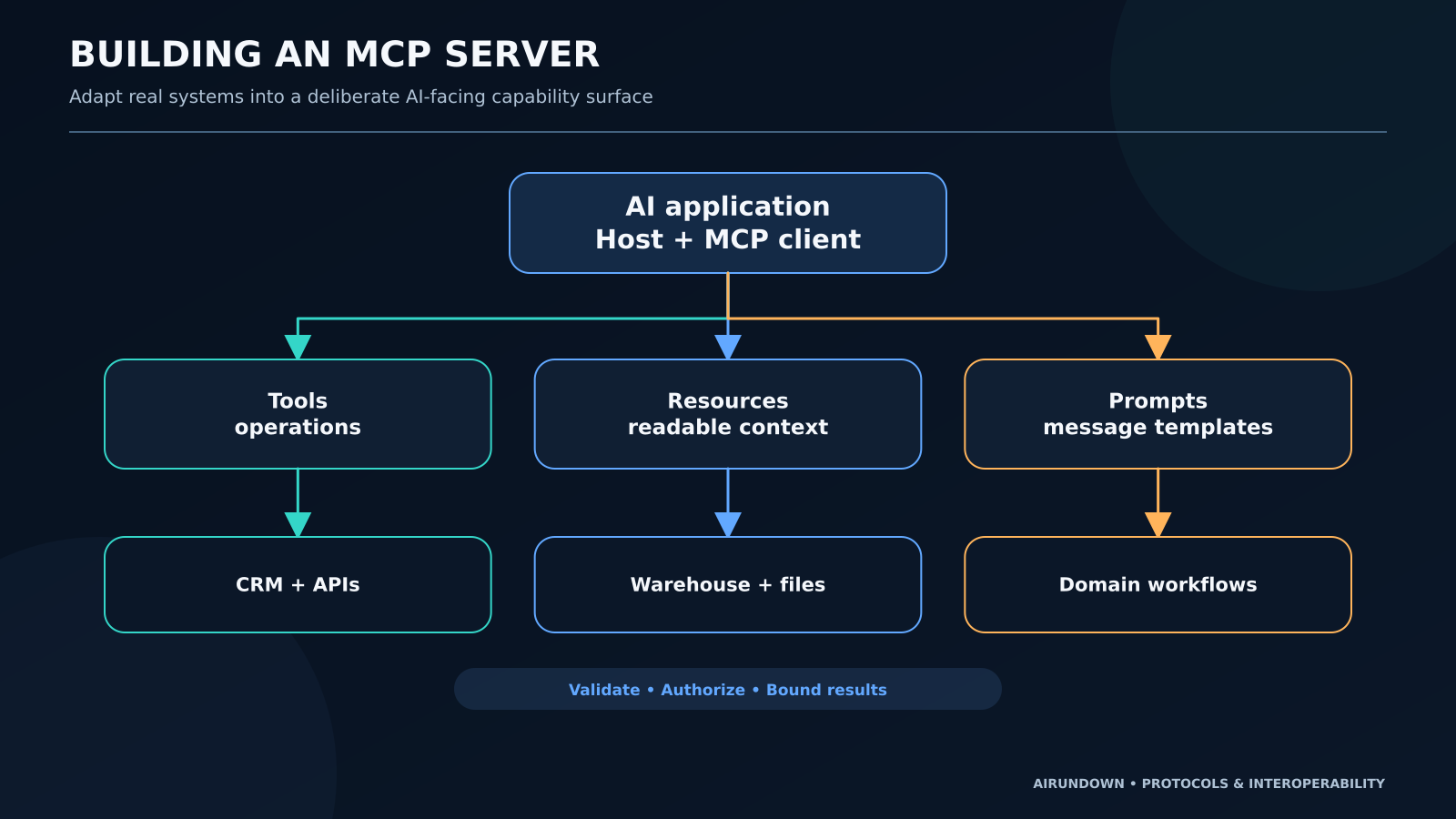
A framework-neutral tutorial for designing, implementing, testing, securing, and deploying an MCP server over real backend systems.
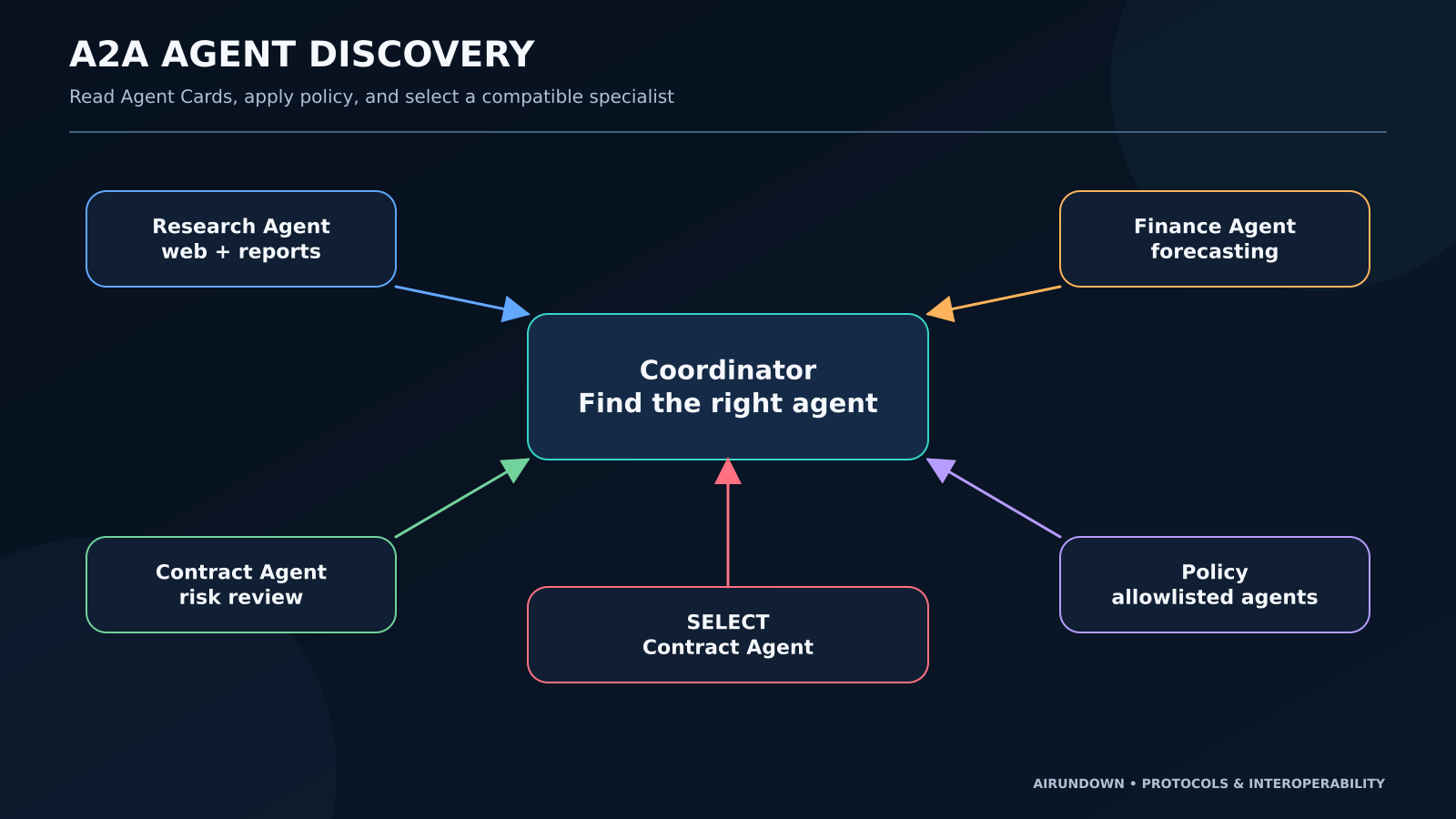
Learn how A2A clients discover remote agents, read Agent Cards, match skills and interfaces, evaluate suitability, and begin an interaction.