Agent Latency Explained
Why multi-step agents feel slow, where elapsed time accumulates, and how to improve speed without breaking the task.
25 articles — updated daily
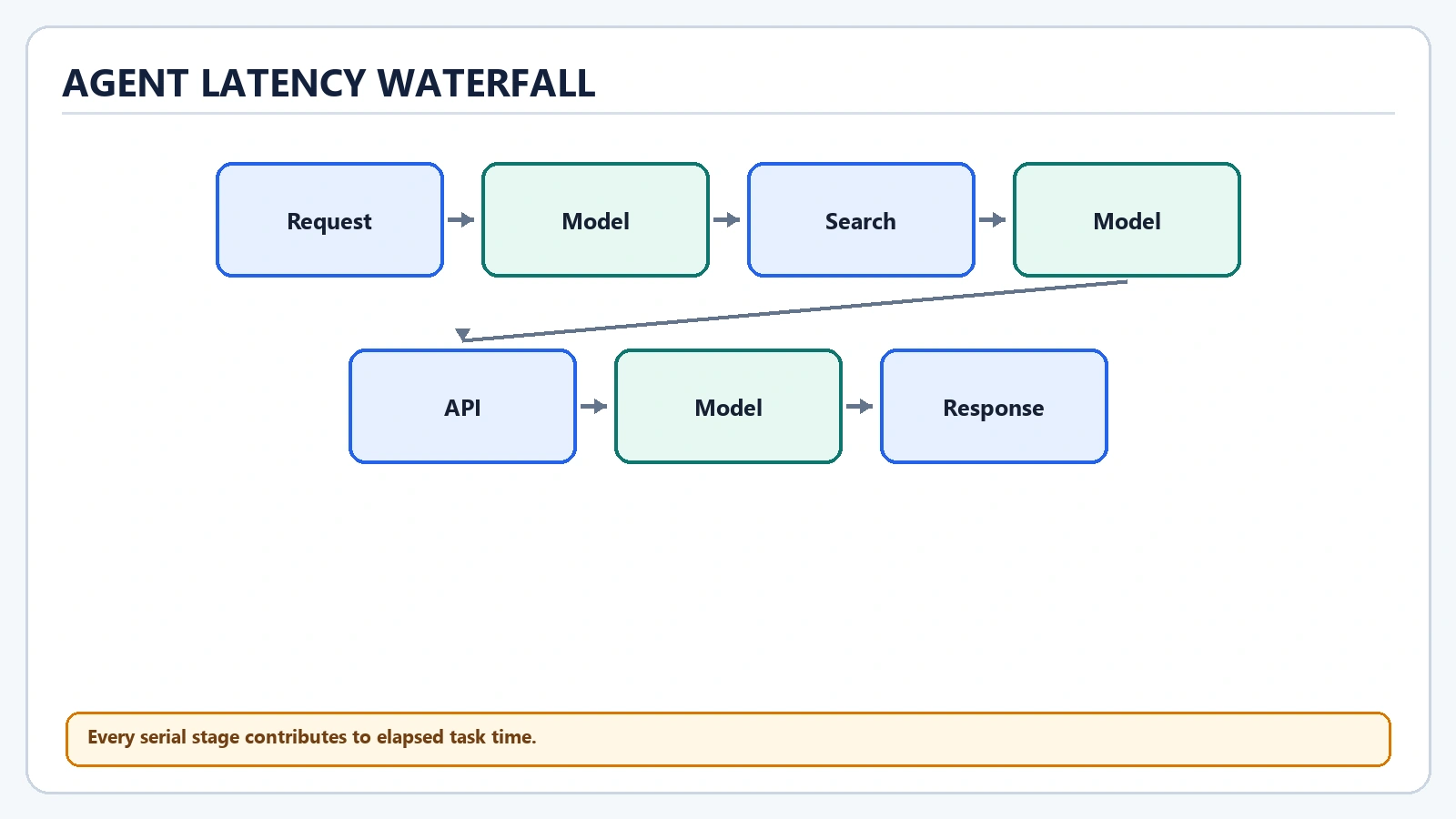
Why multi-step agents feel slow, where elapsed time accumulates, and how to improve speed without breaking the task.
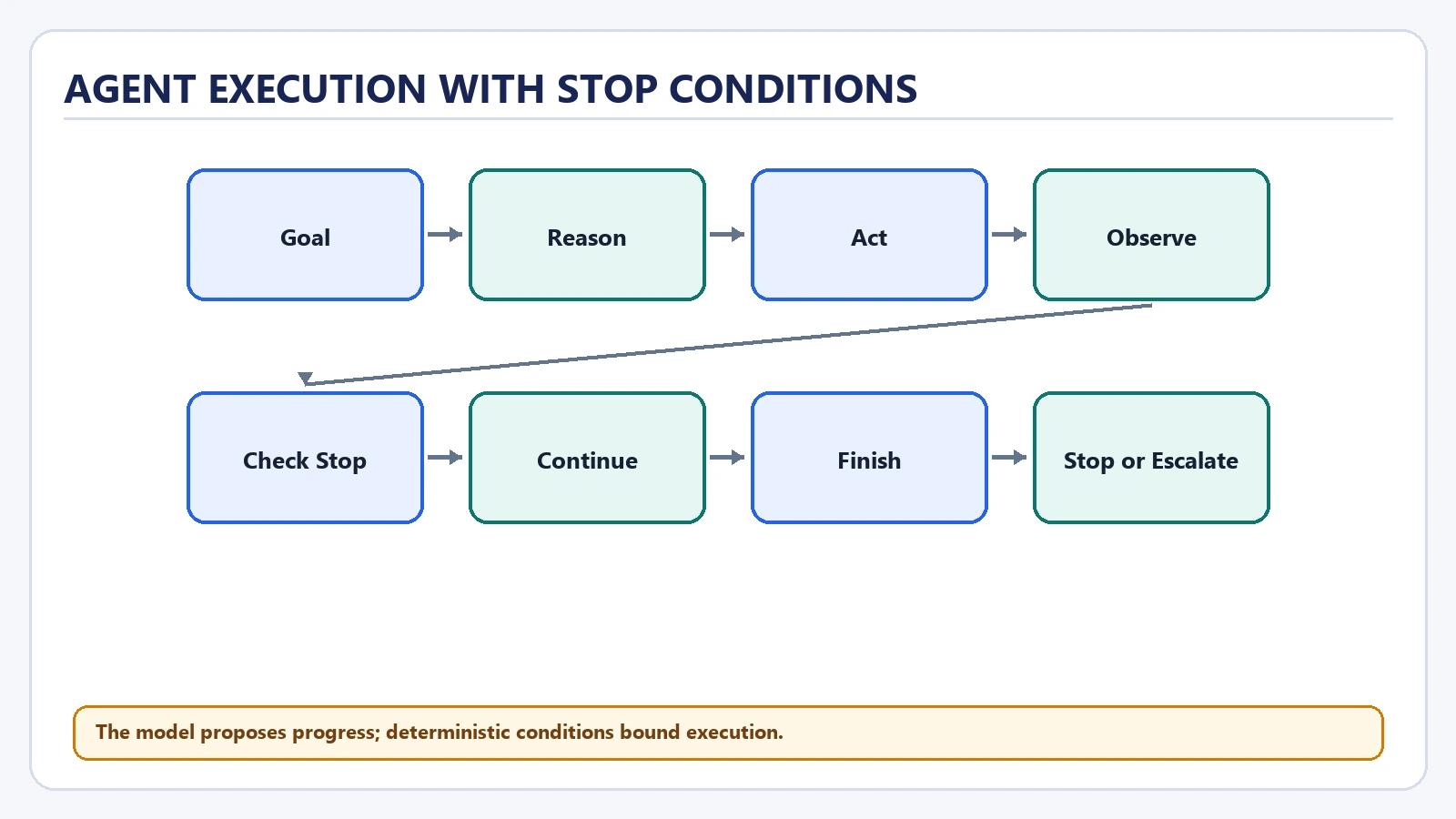
A practical, production-oriented explanation of agent stopping conditions, with examples, boundaries, trade-offs, and failure handling patterns.
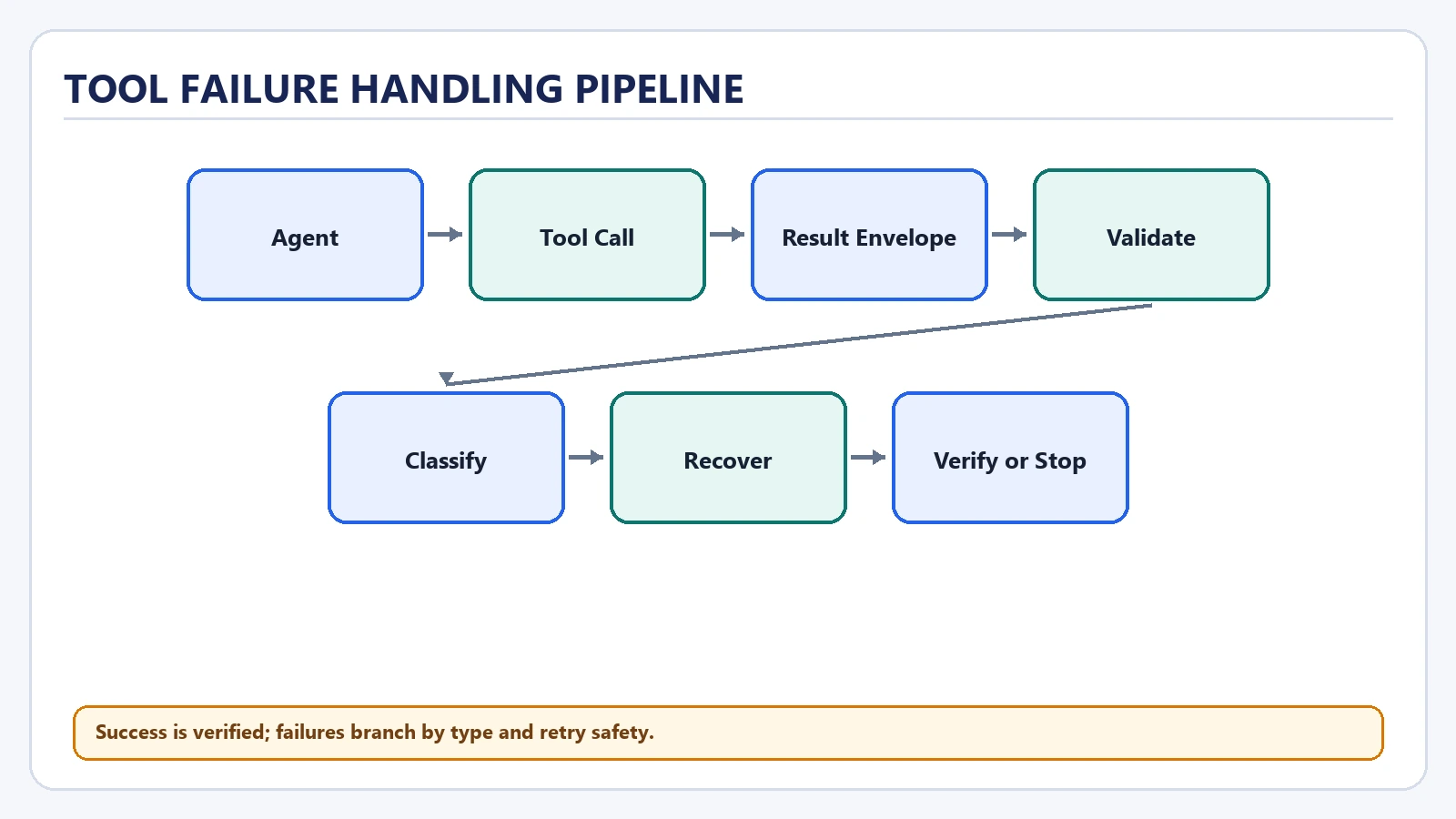
A practical, production-oriented explanation of tool failure handling, with examples, boundaries, trade-offs, and failure handling patterns.
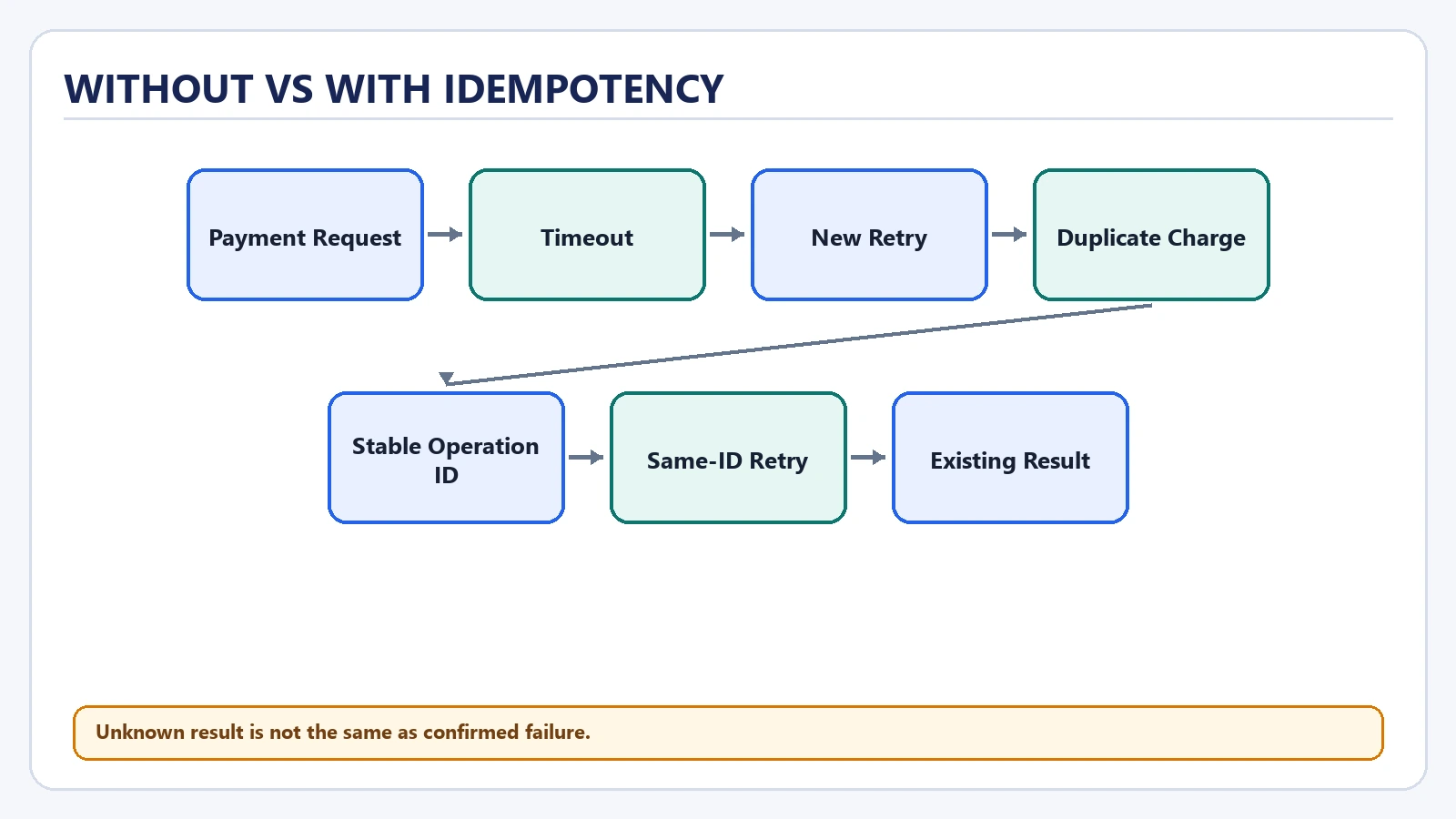
A practical, production-oriented explanation of idempotency in agent workflows, with examples, boundaries, trade-offs, and failure handling patterns.
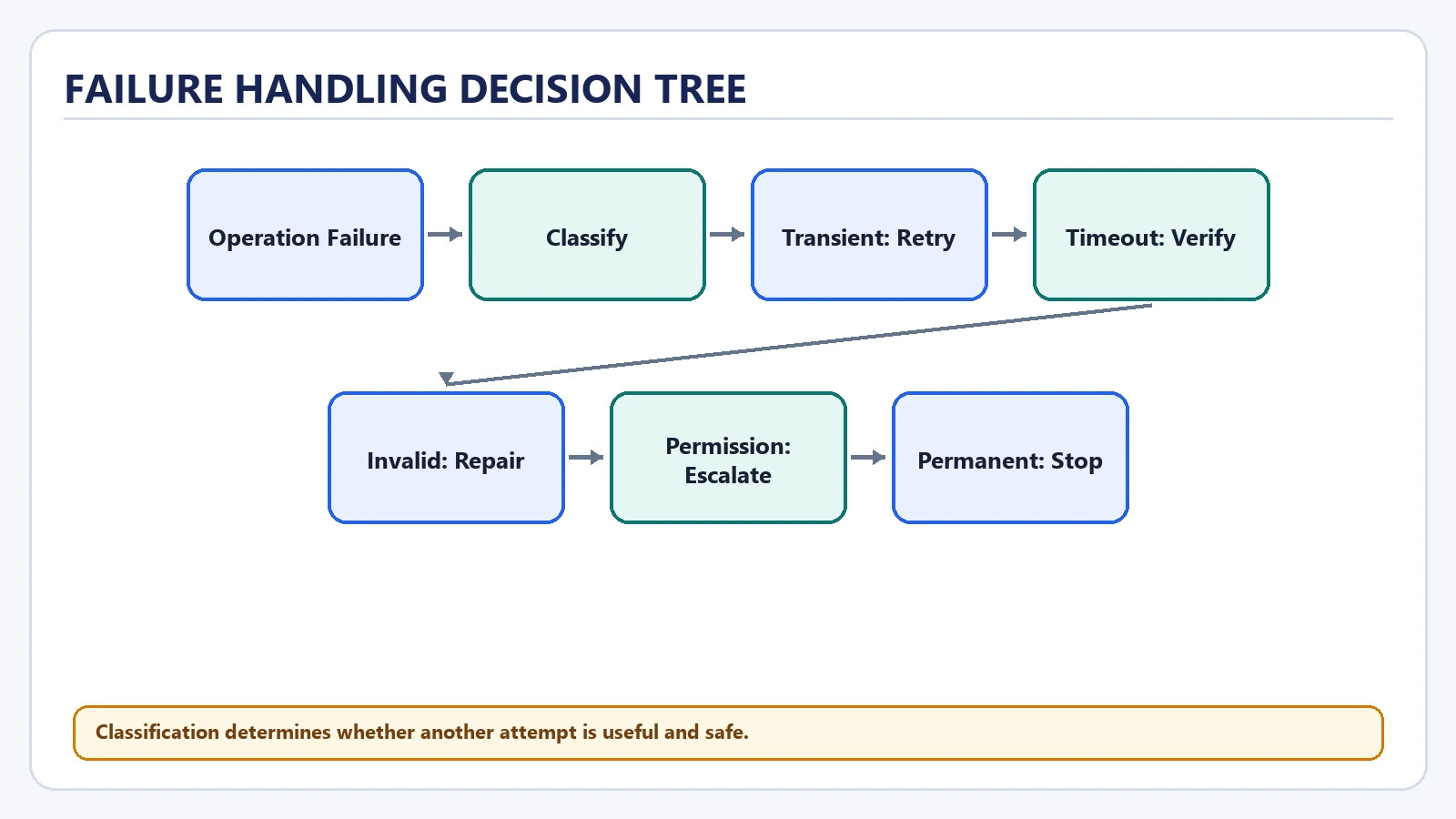
A practical, production-oriented explanation of retries, timeouts, and failure recovery, with examples, boundaries, trade-offs, and failure handling patterns.
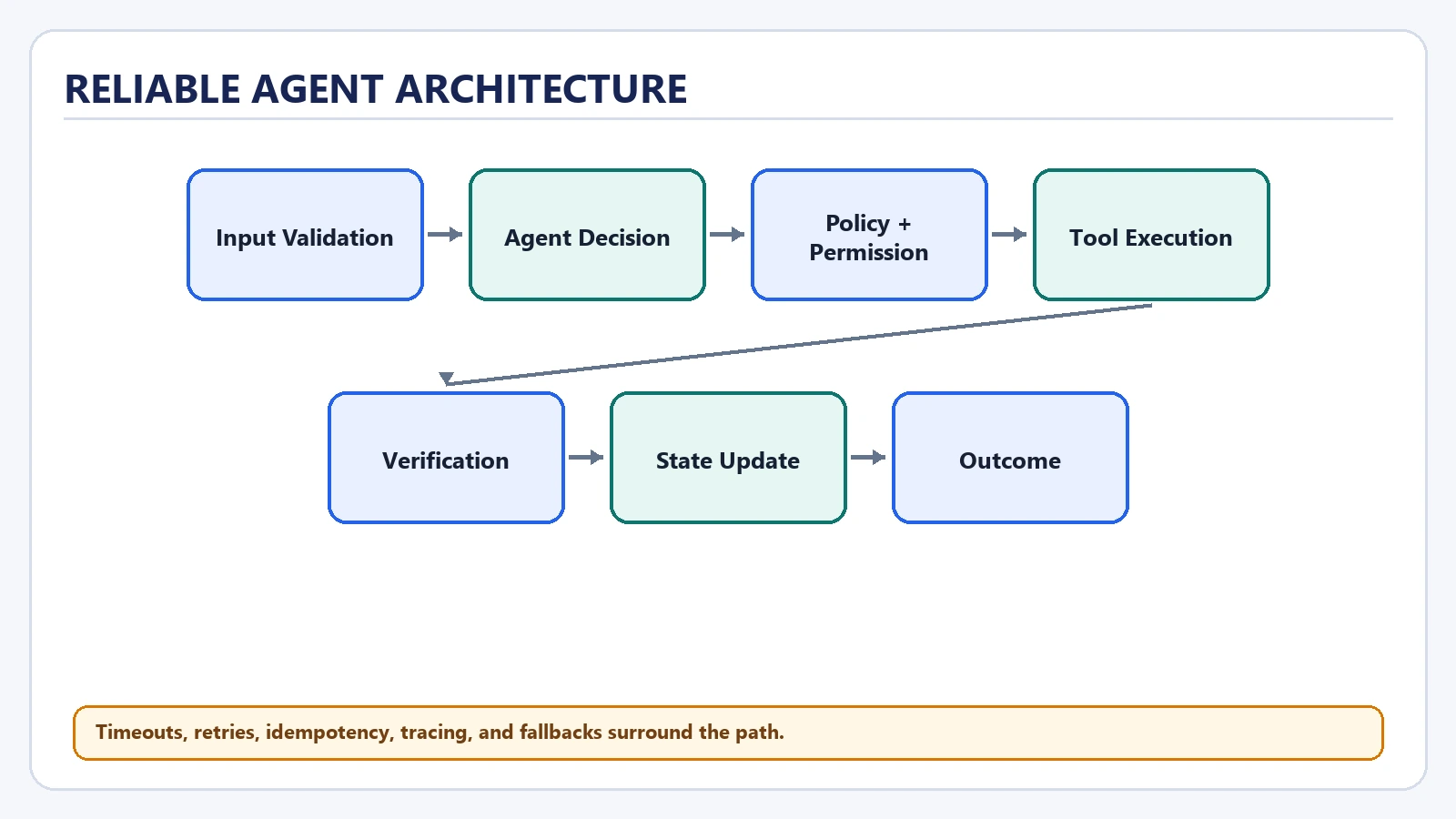
A practical, production-oriented explanation of reliable AI agent architecture, with examples, boundaries, trade-offs, and failure handling patterns.
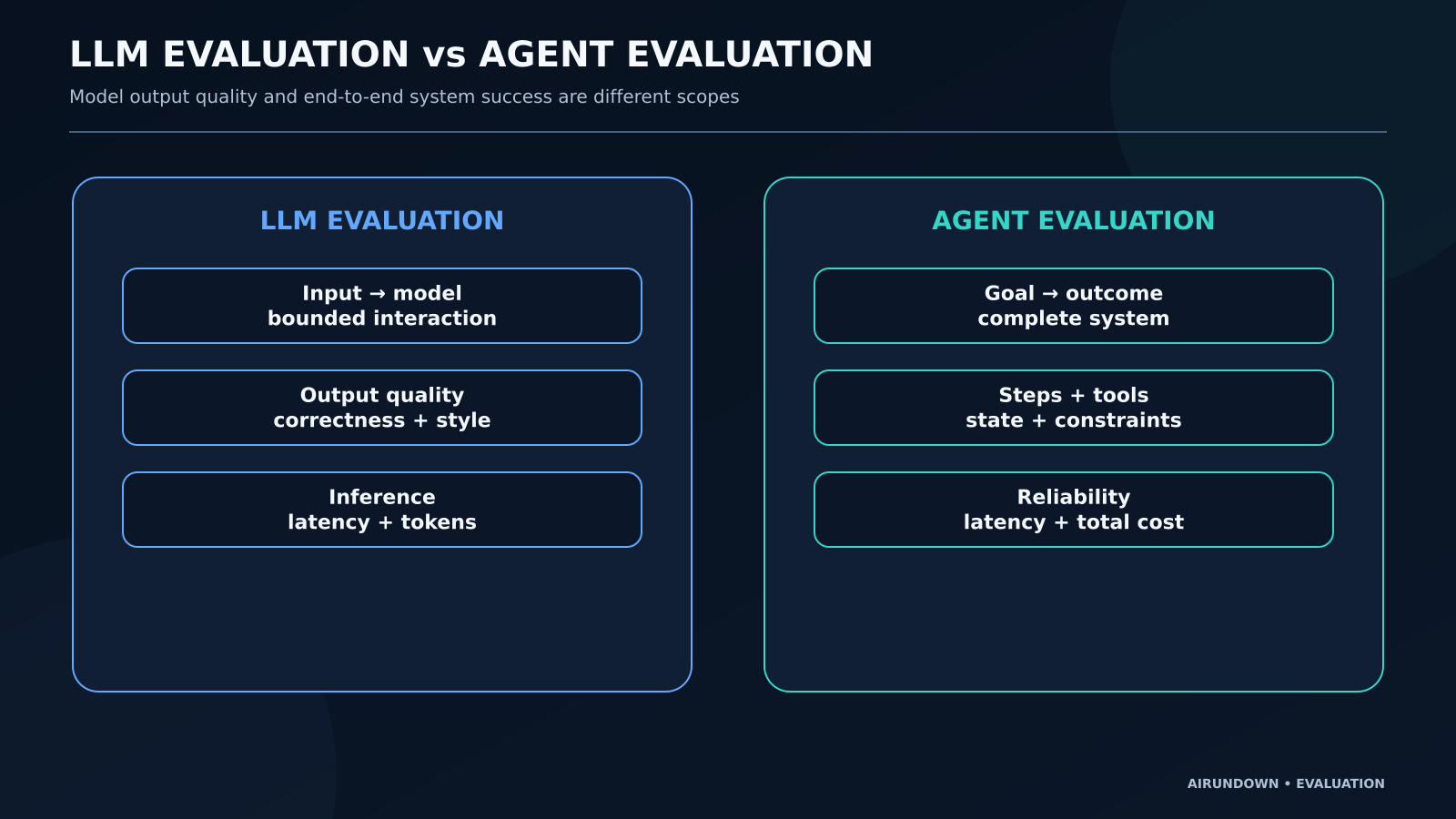
LLM evaluation scores model outputs; agent evaluation measures the whole goal-directed system, including tools, state, constraints, reliability, latency, and cost.
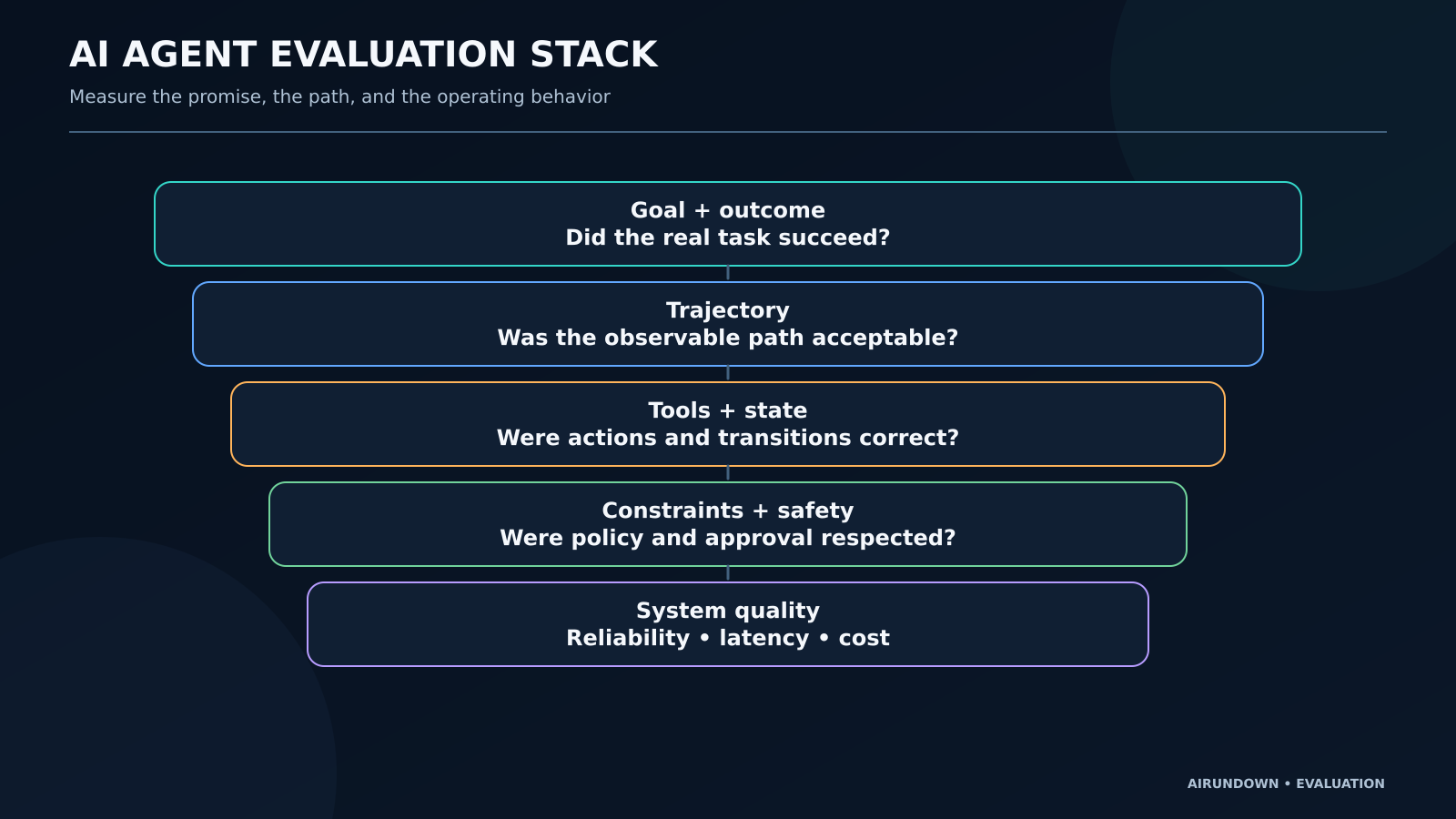
Agent evaluation measures task outcomes, trajectories, tool behavior, constraints, safety, reliability, latency, and cost—not only final prose.
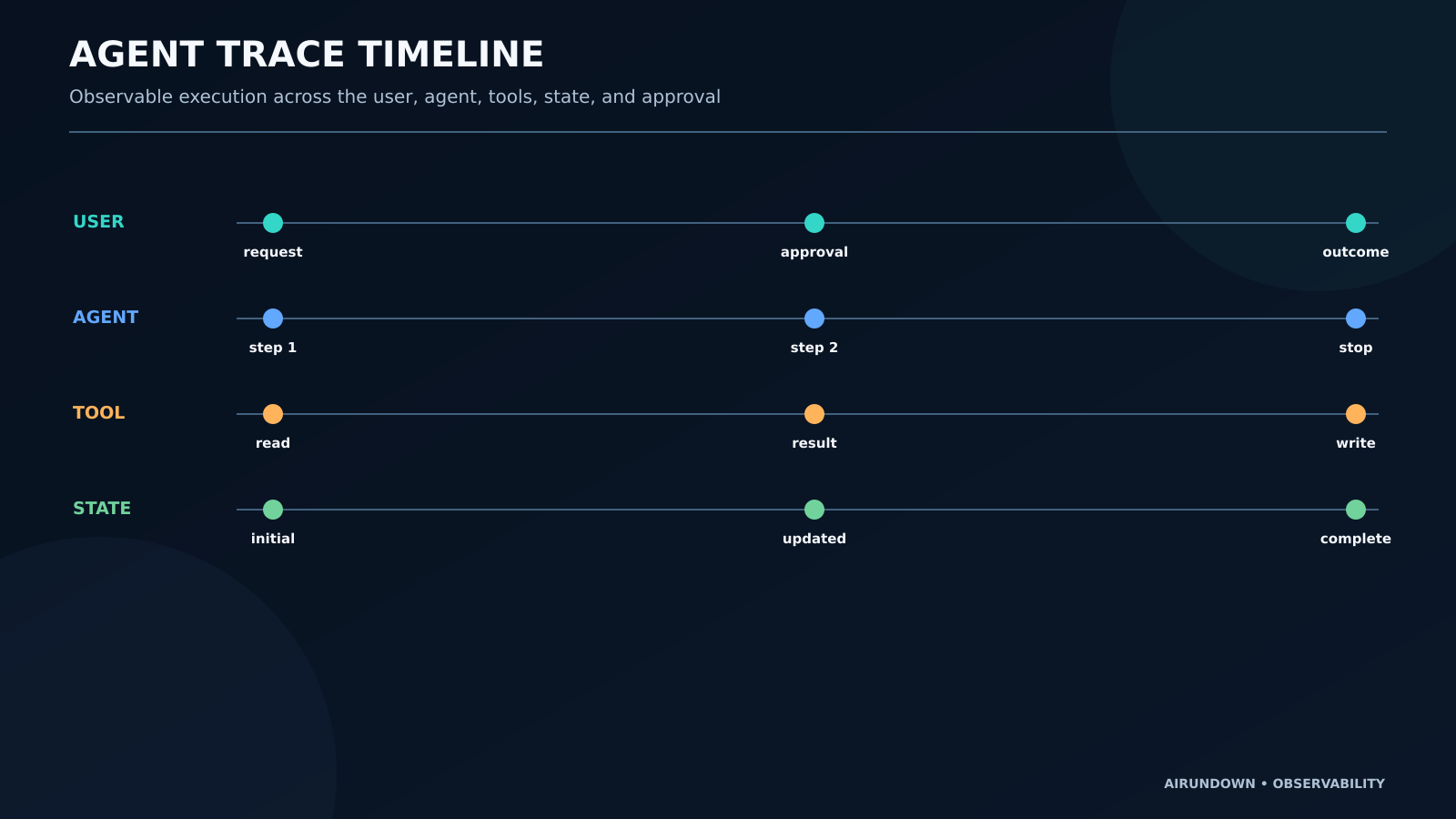
Learn how traces and trajectories represent observable agent execution without requiring storage or exposure of private chain-of-thought.
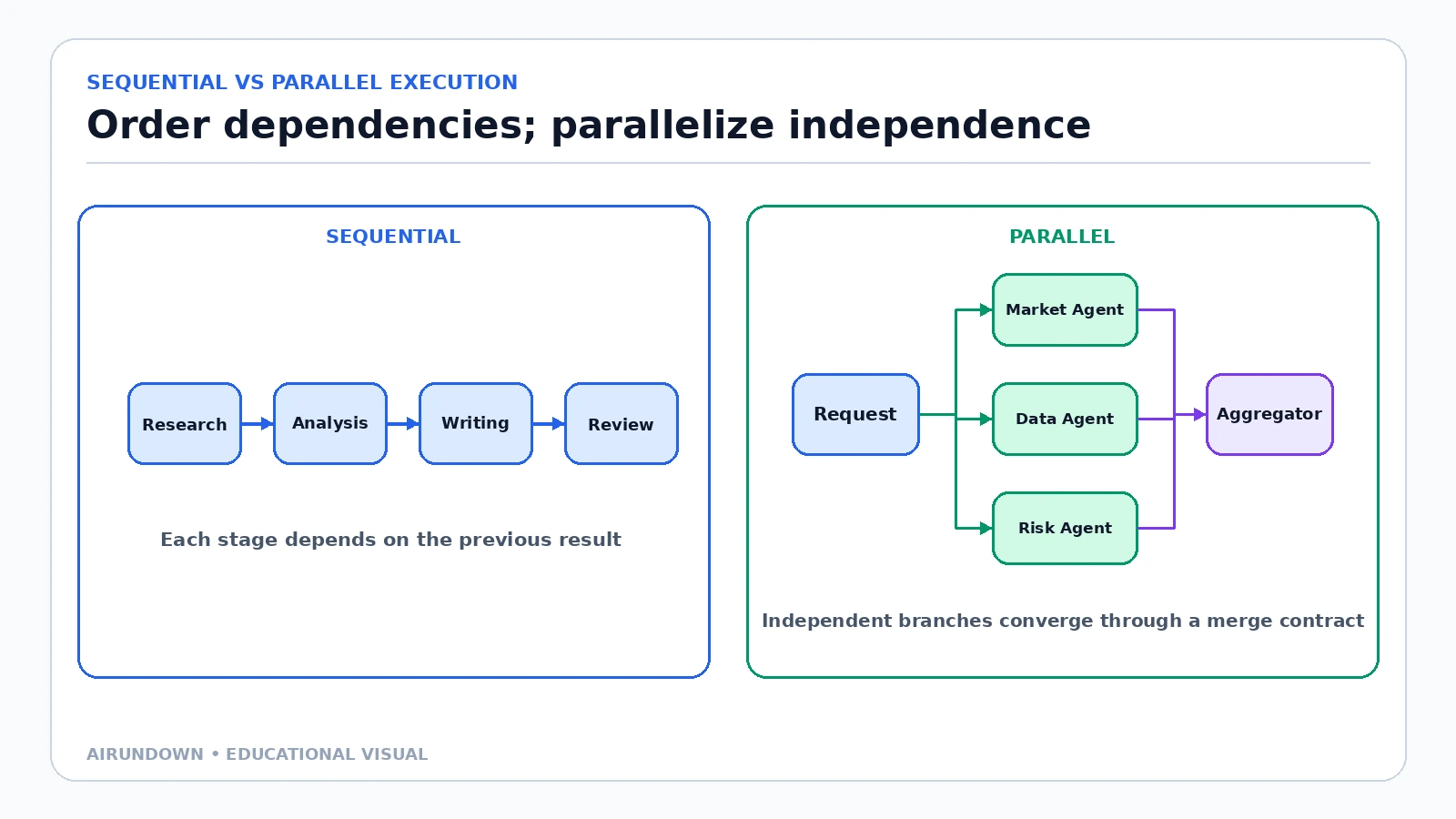
Compare sequential, parallel, and hybrid agent execution by dependencies, latency, cost, state transfer, synchronization, aggregation, and failure handling.
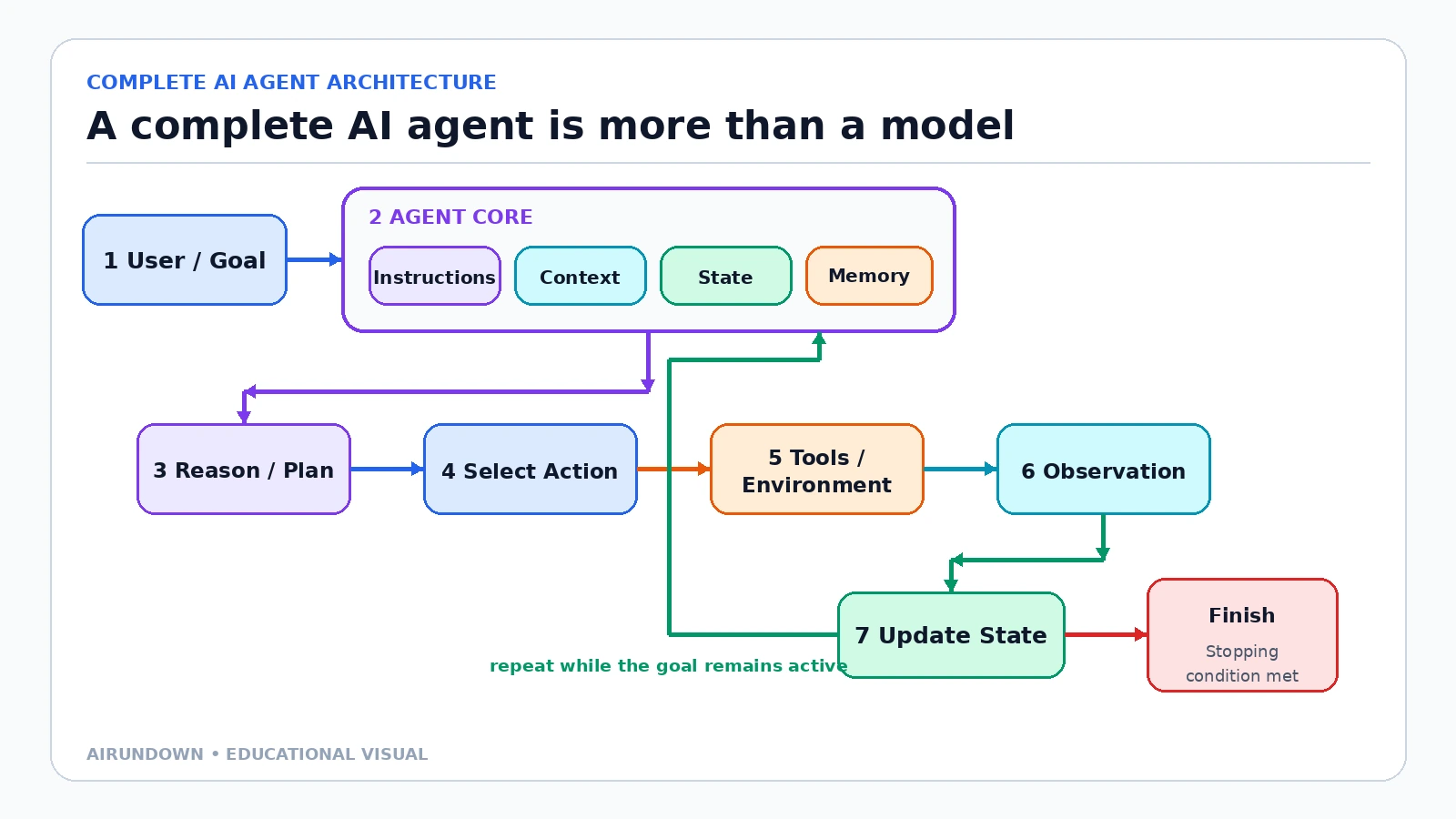
Understand modern AI-agent architecture from goals and instructions through reasoning, tools, observations, state updates, guardrails, and stopping.
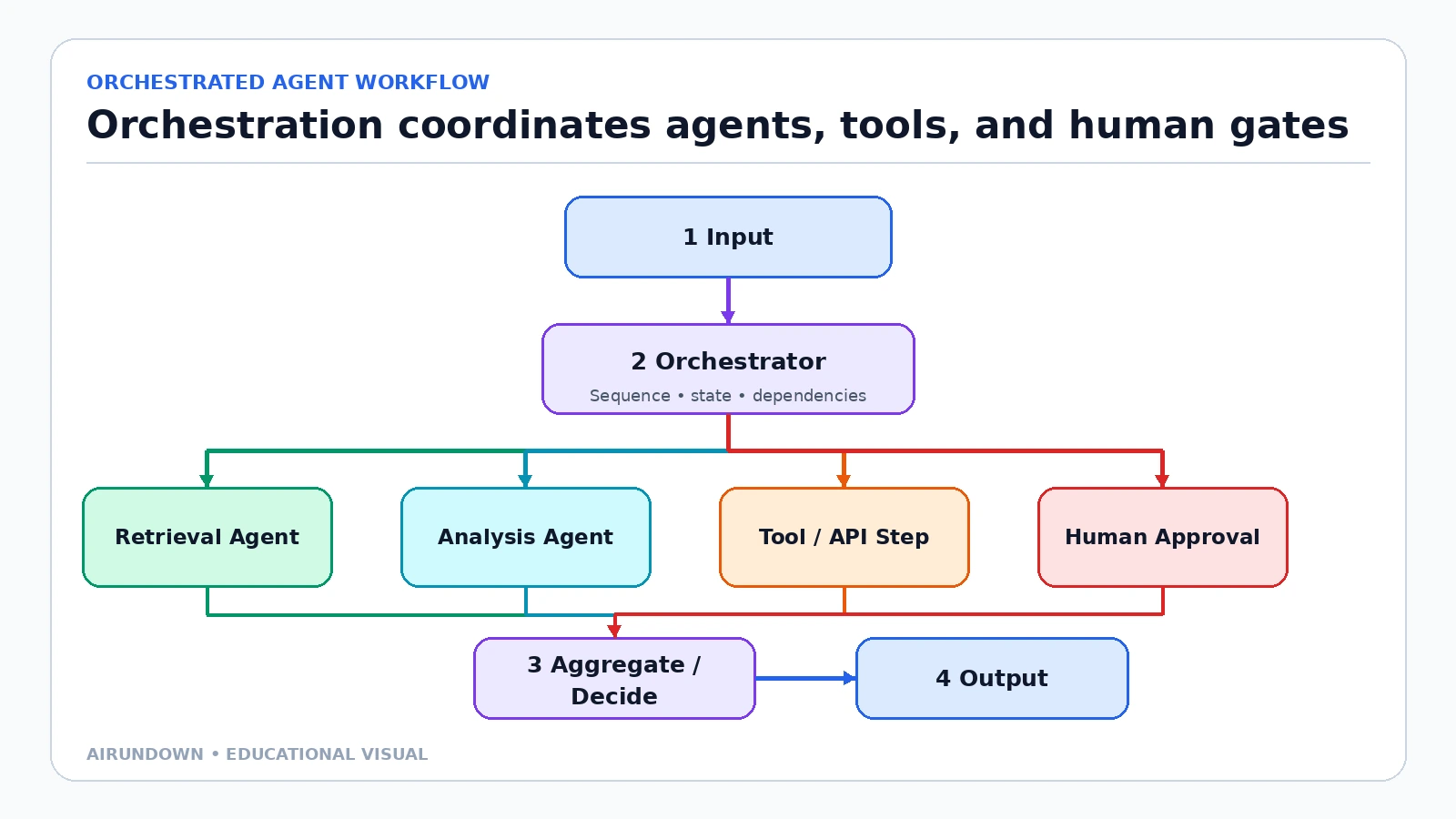
Learn how agent workflows and orchestration coordinate steps, dependencies, branches, parallel work, retries, checkpoints, tools, agents, and humans.
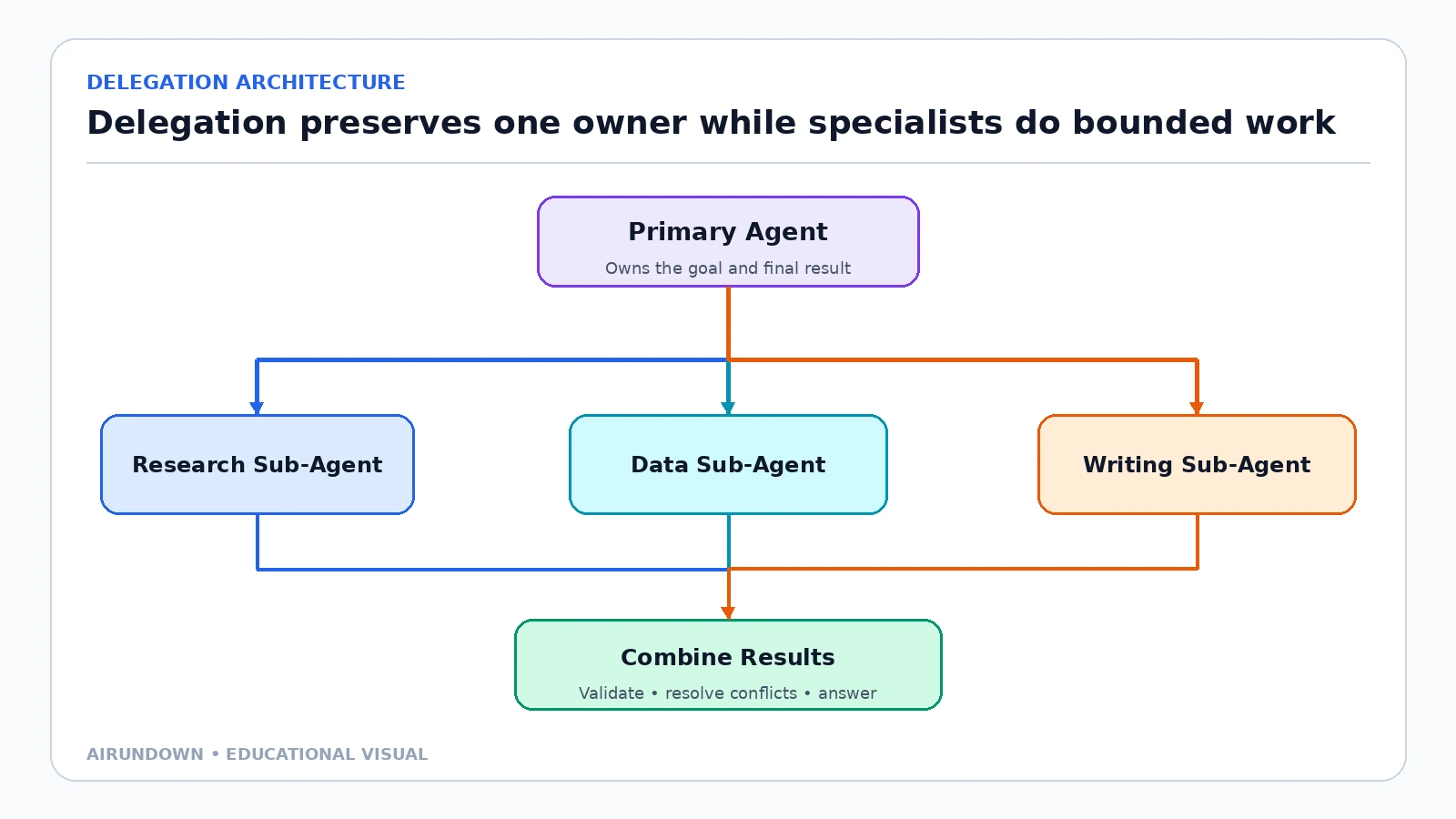
Learn how delegation, handoffs, and sub-agents divide work while preserving task ownership, context, state, permissions, and reliable result contracts.
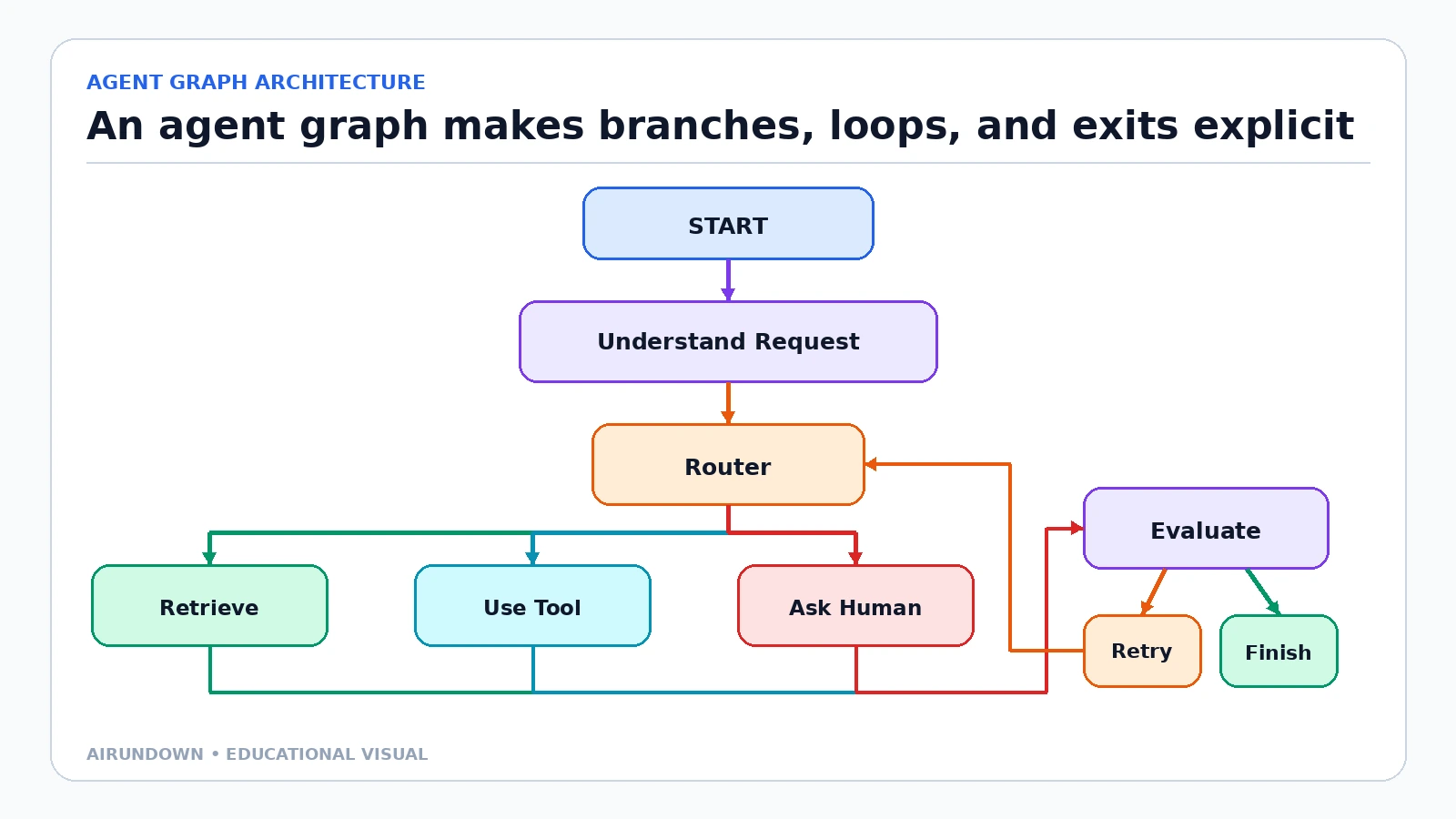
Learn how agent graphs and state machines make nodes, edges, branches, loops, checkpoints, transitions, retries, and terminal outcomes explicit.
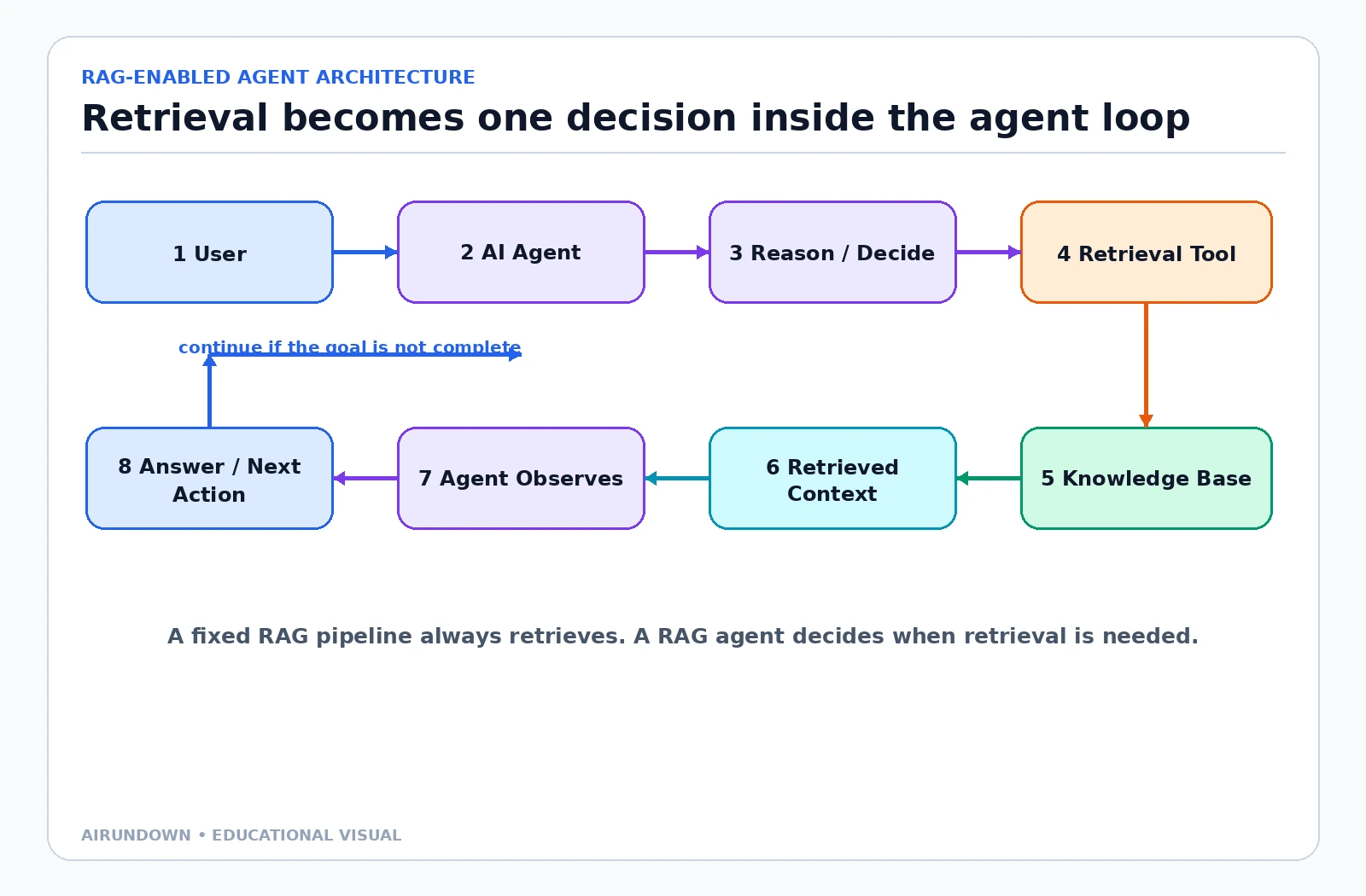
Build a framework-neutral RAG agent with a controlled retrieval tool, attributable evidence, bounded loops, citation checks, traces, and layered evaluation.
A decision-focused comparison of RAG knowledge retrieval and AI-agent execution, including when a simple RAG pipeline is enough and when an agent is justified.
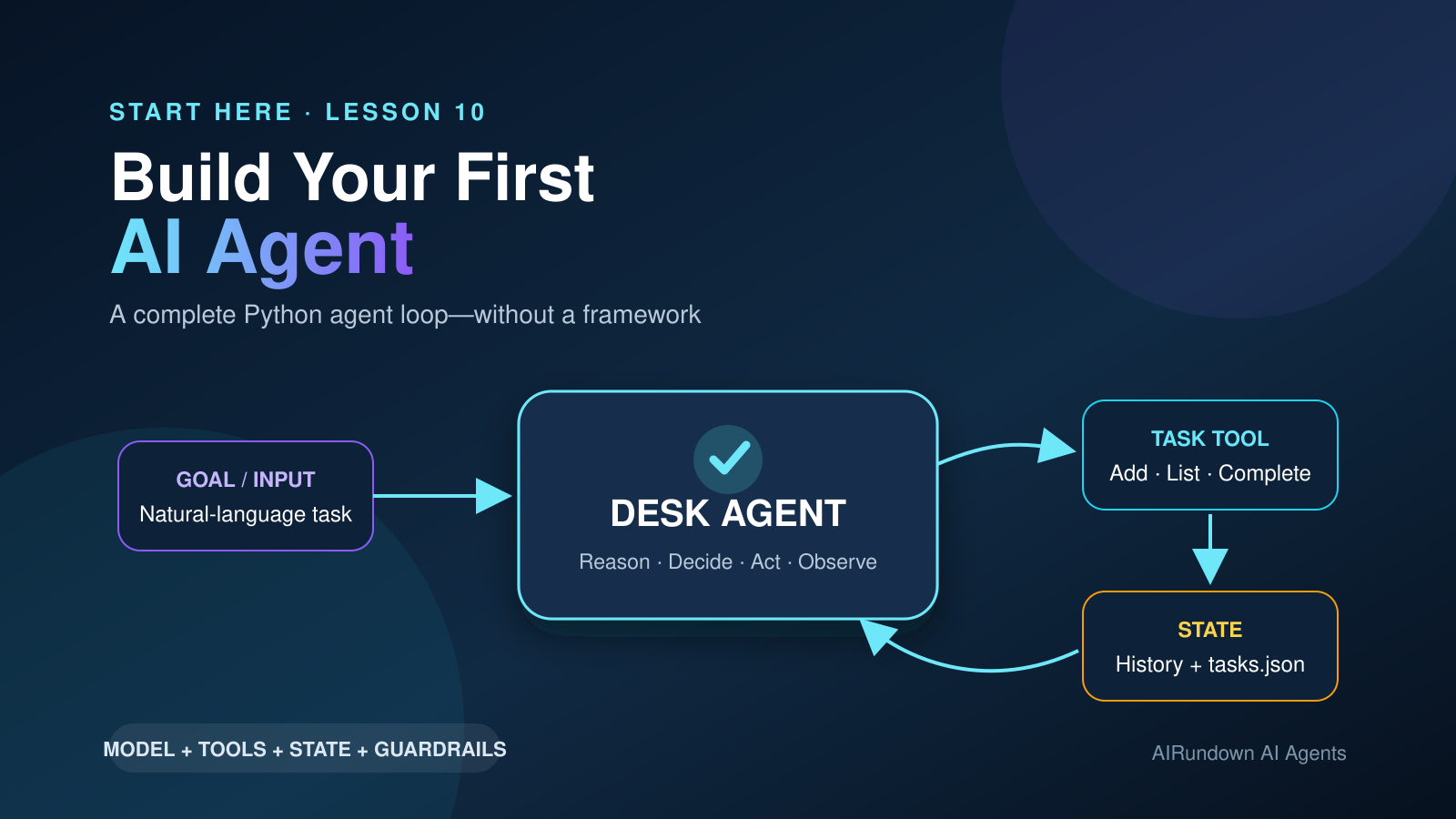
Build a genuine AI task agent in plain Python with tool calling, observations, state, guardrails, logging, error handling, and tests.
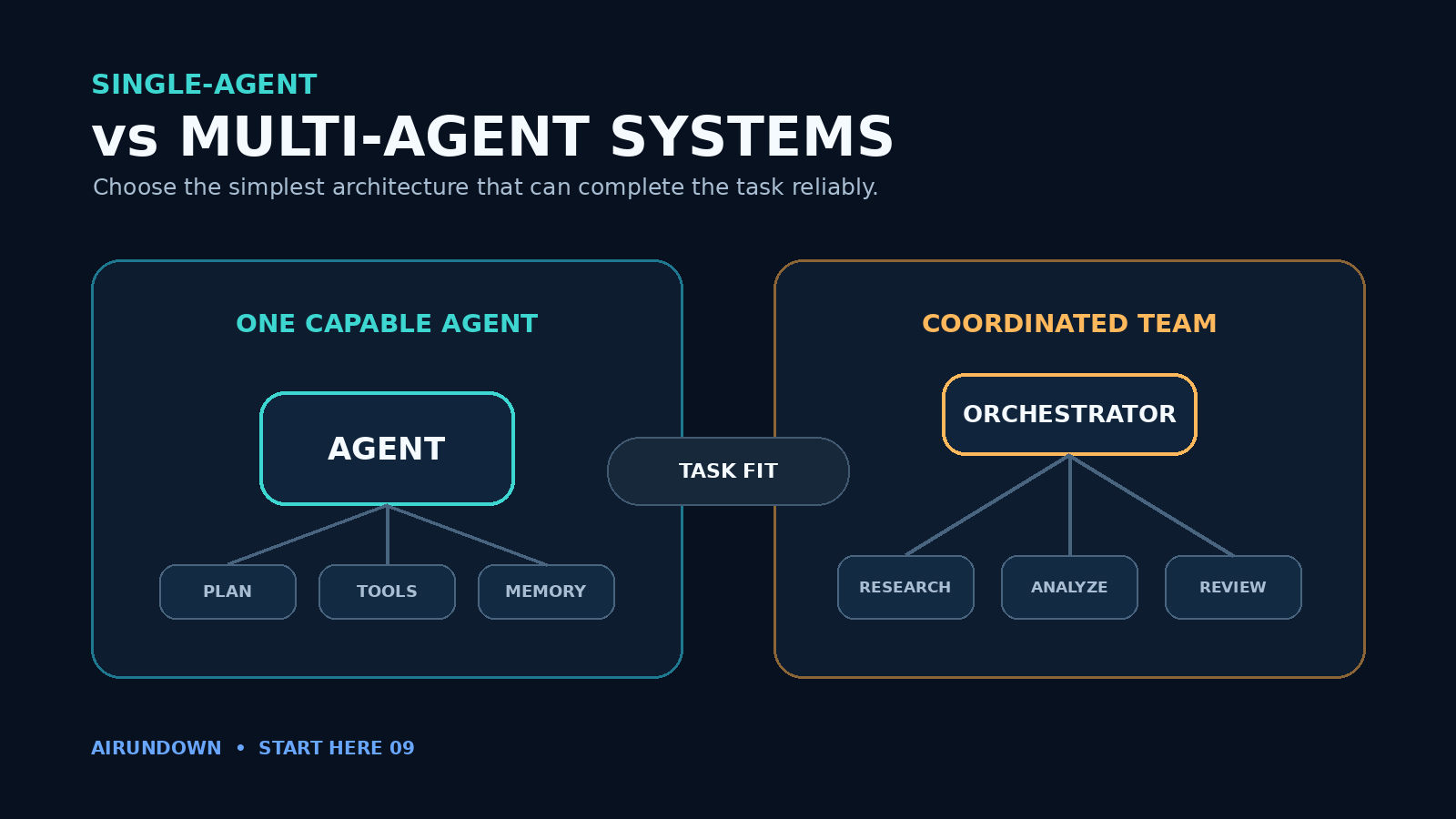
Learn how single-agent and multi-agent systems differ, what extra coordination costs, and how to choose the simplest architecture that works.
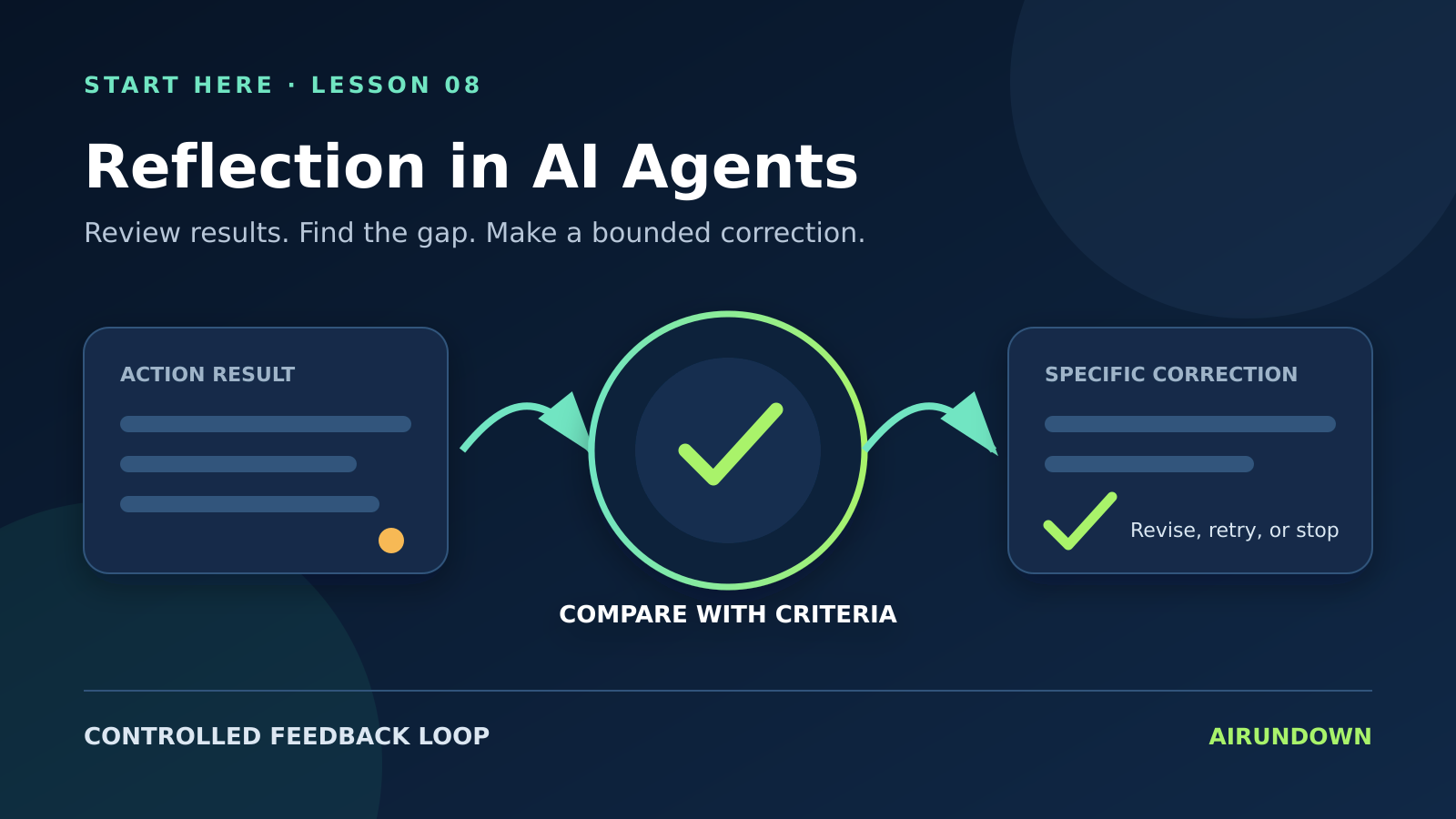
Learn how AI agents use feedback, critique, and execution review to detect mistakes, revise their approach, and improve results without endless retry loops.
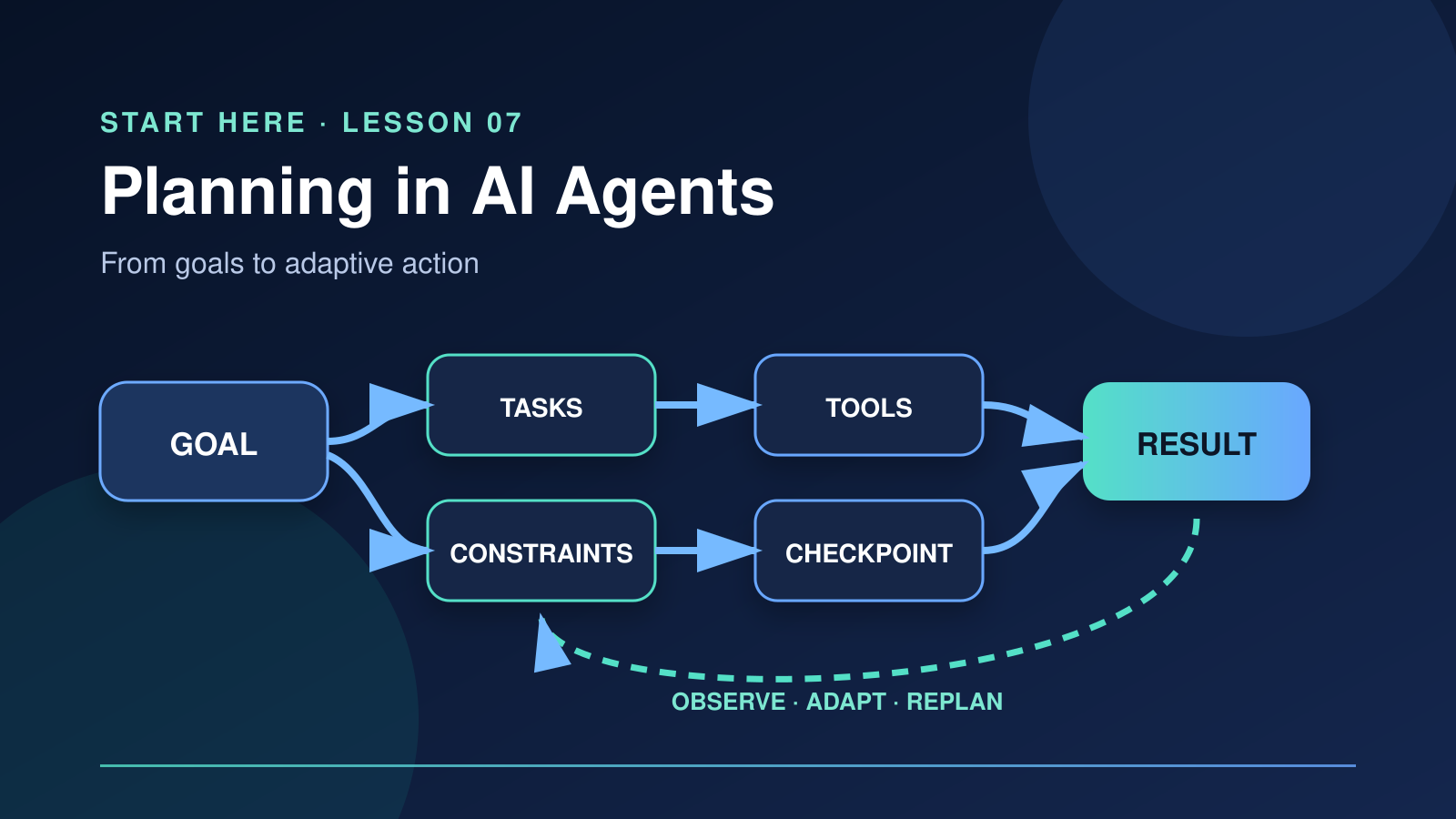
Learn how AI agents turn goals into ordered tasks, account for dependencies and constraints, use tools, track progress, and replan when reality changes.
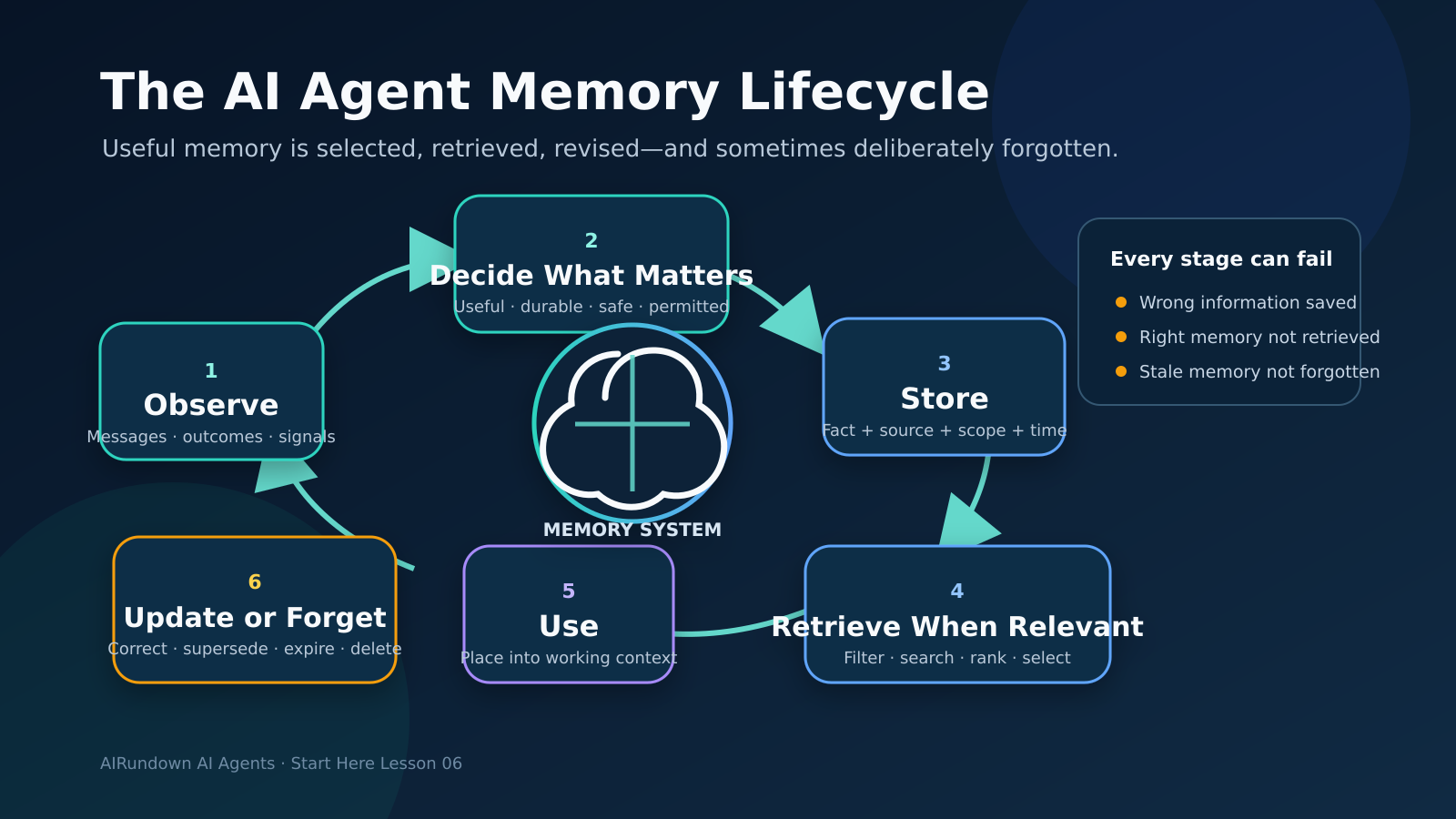
Learn how AI agent memory works, from context windows and working memory to persistent stores, retrieval, updating, forgetting, and memory quality.
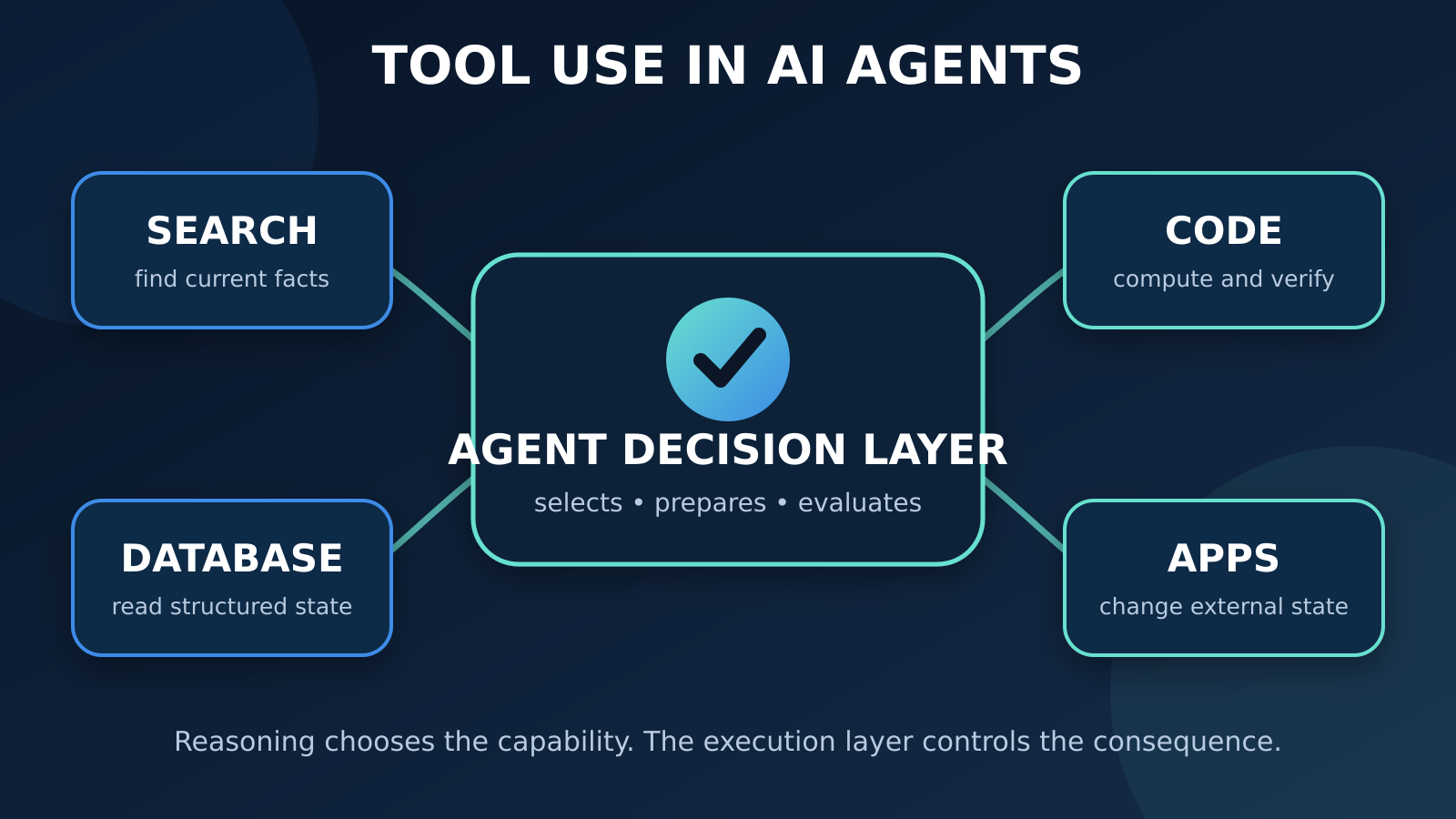
Learn how AI agents select tools, prepare arguments, execute functions and APIs, observe results, recover from errors, and stay within safe permission boundaries.
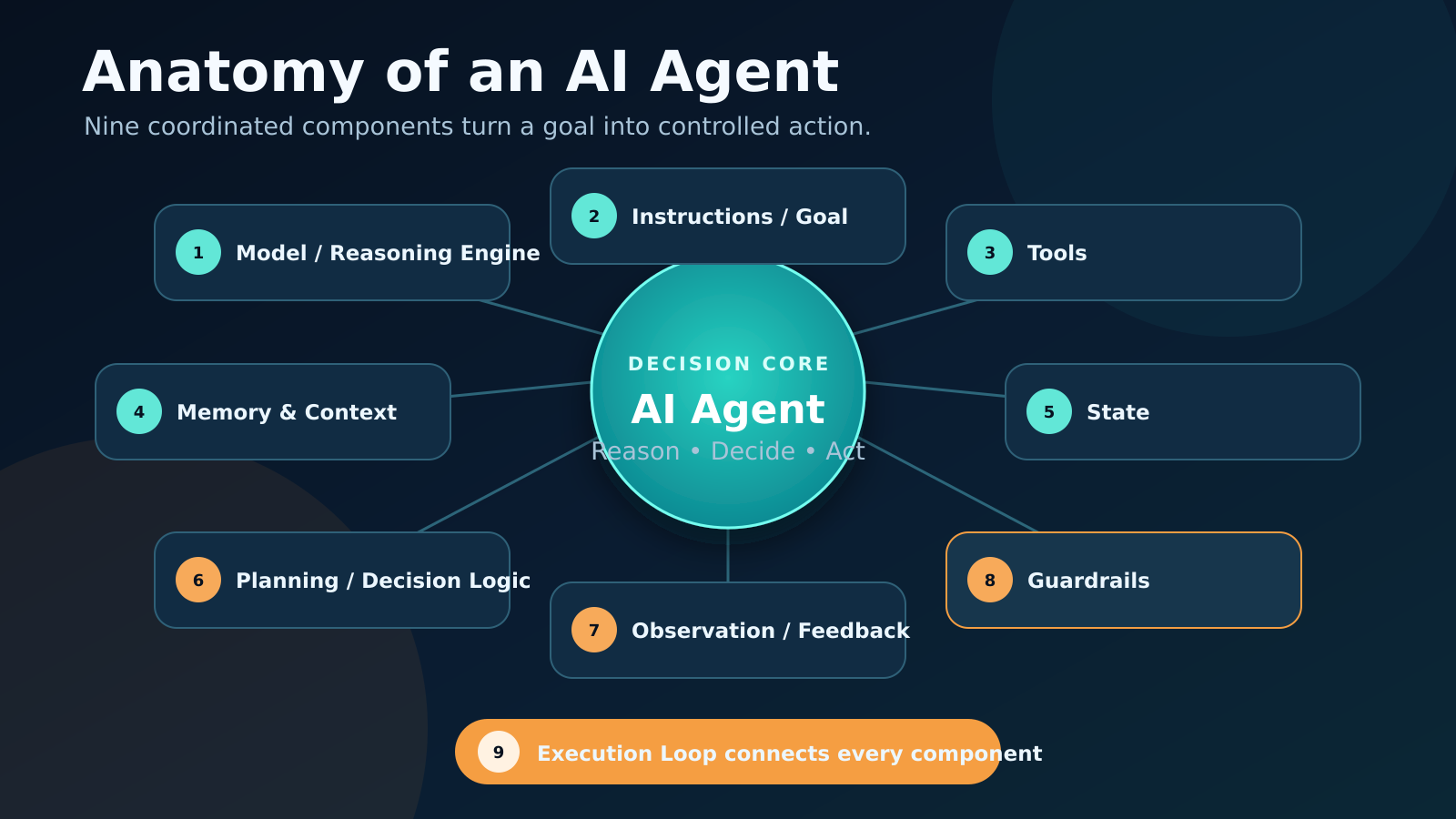
A beginner-friendly breakdown of the model, instructions, tools, memory, state, planning, feedback, guardrails, and execution loop inside an AI agent.
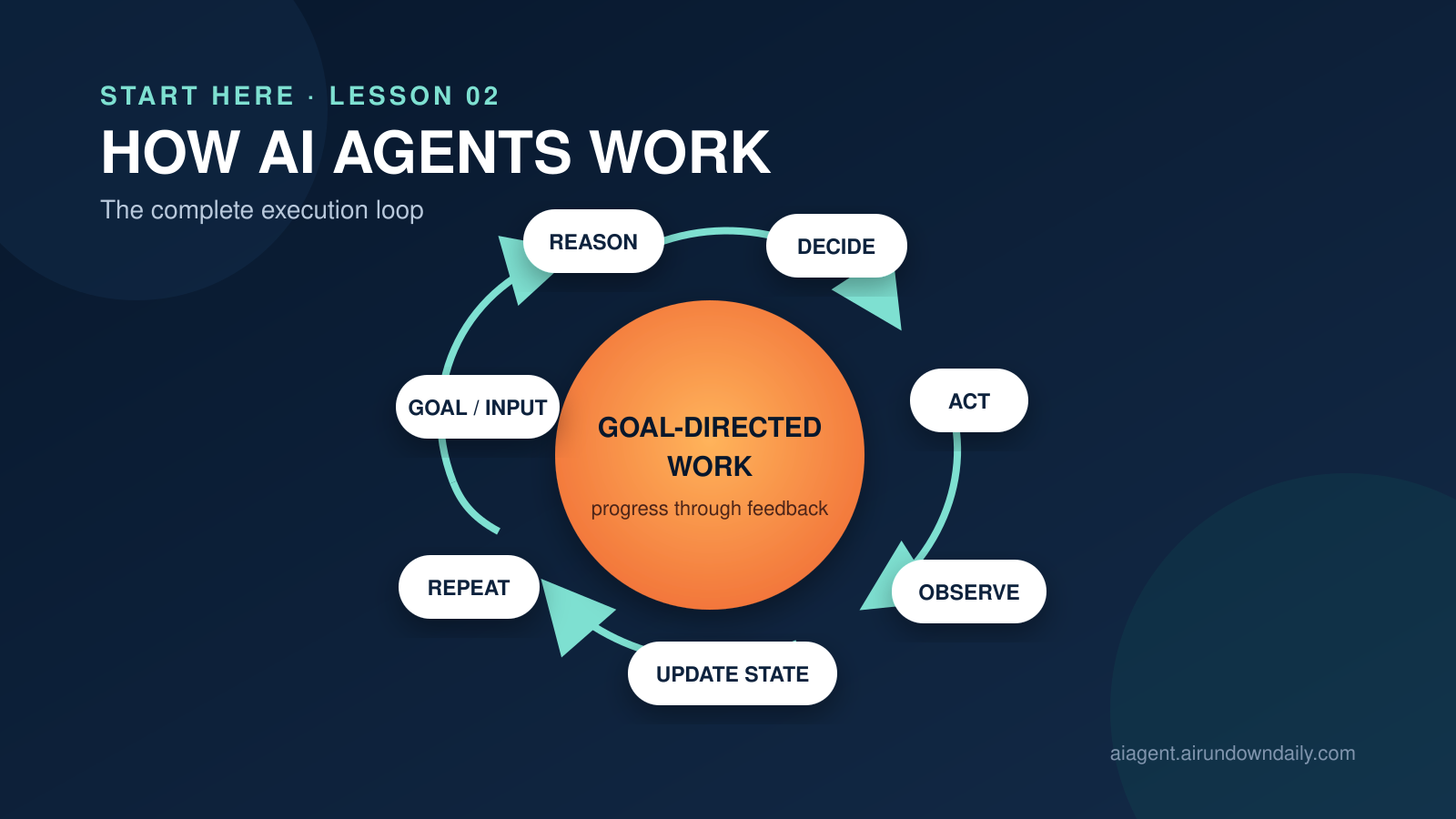
Follow the seven-stage execution loop that lets an AI agent reason, choose actions, use tools, learn from results, and keep working toward a goal.
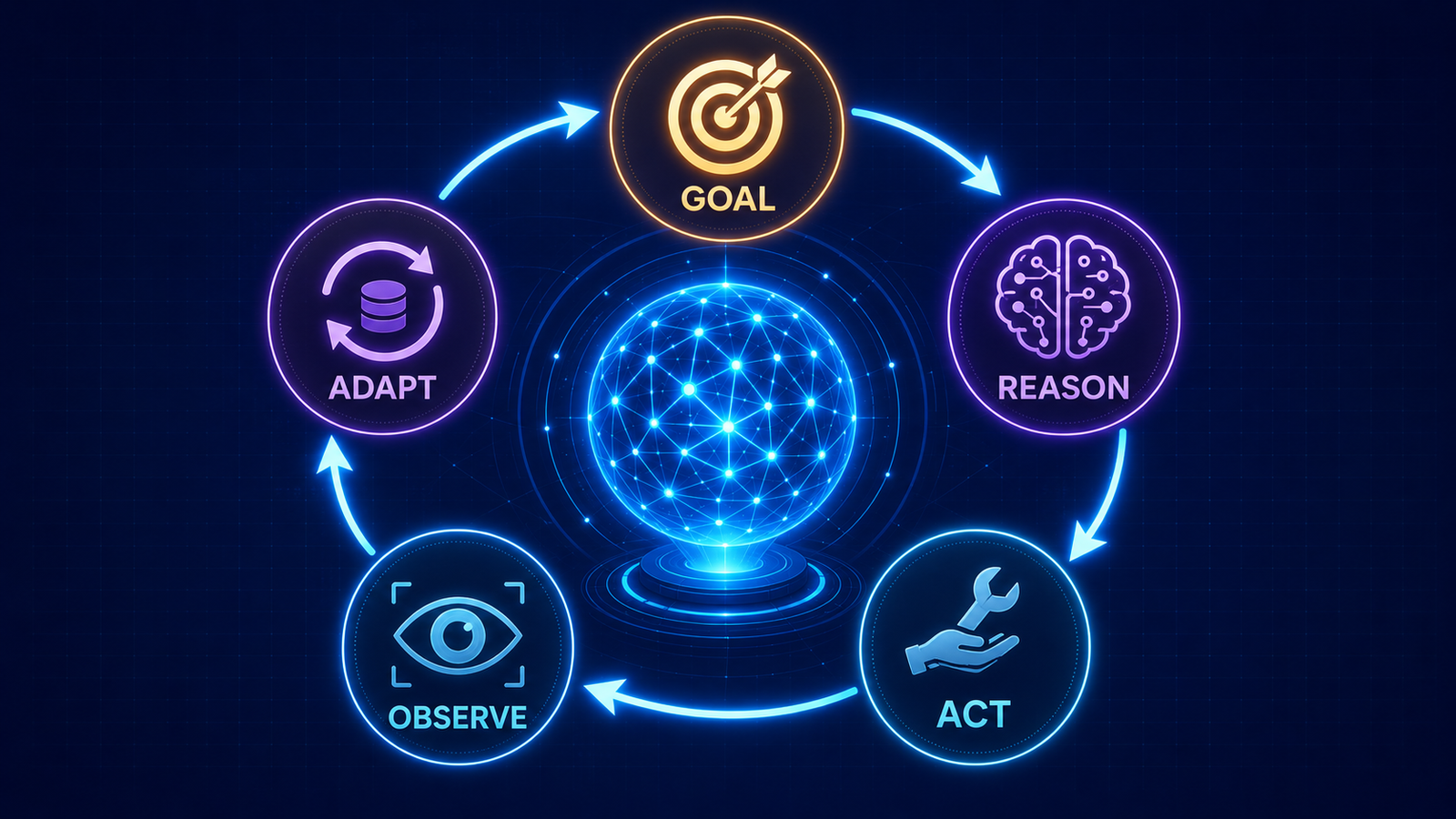
A practical explanation of what makes an AI agent different from a chatbot or fixed workflow, and how the agent loop turns model reasoning into action.