MCP + A2A Production Architecture
A production architecture for combining MCP capability access with A2A specialist delegation while preserving policy, identity, tracing, and failure boundaries.
9 articles — updated daily
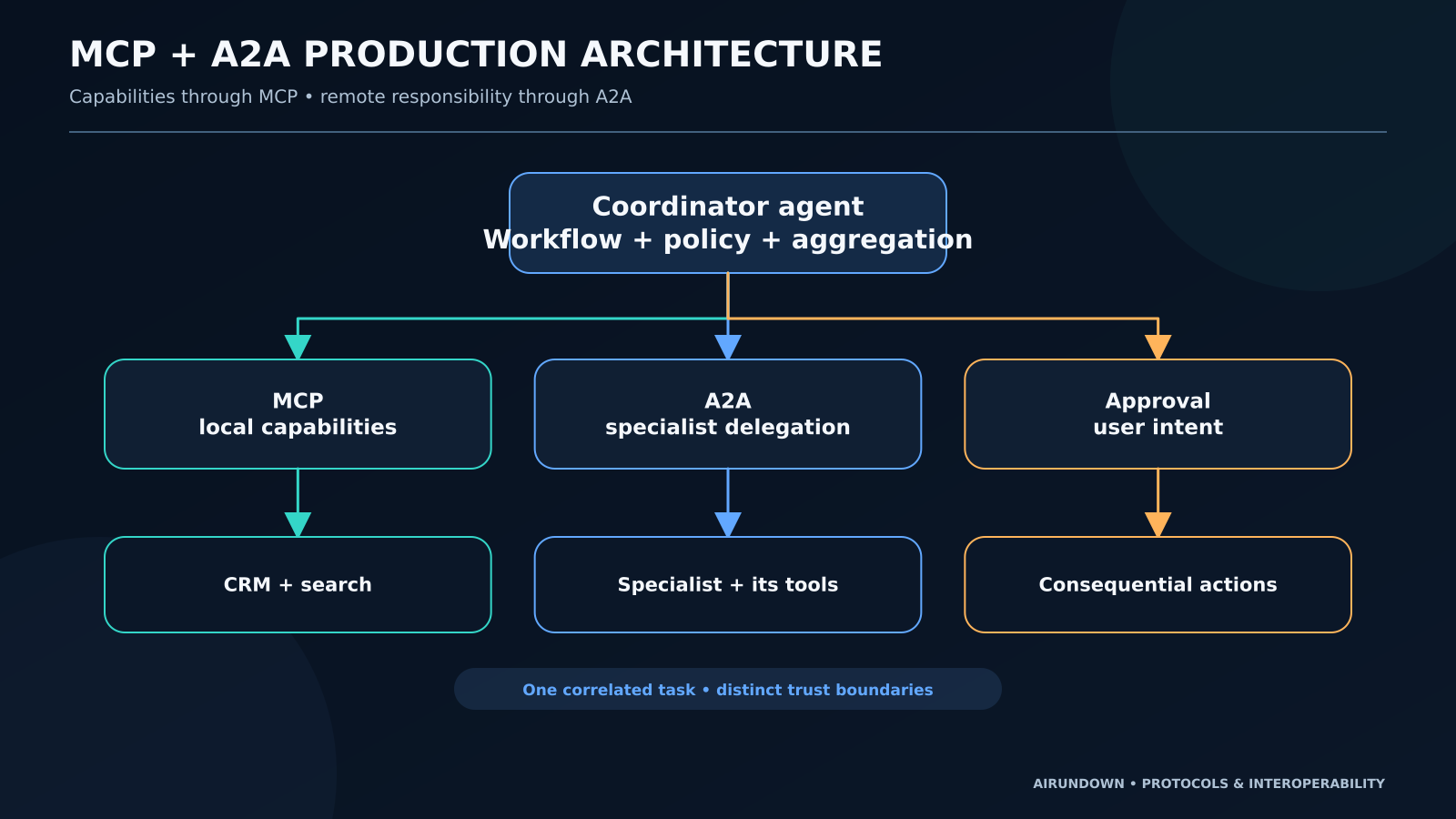
A production architecture for combining MCP capability access with A2A specialist delegation while preserving policy, identity, tracing, and failure boundaries.
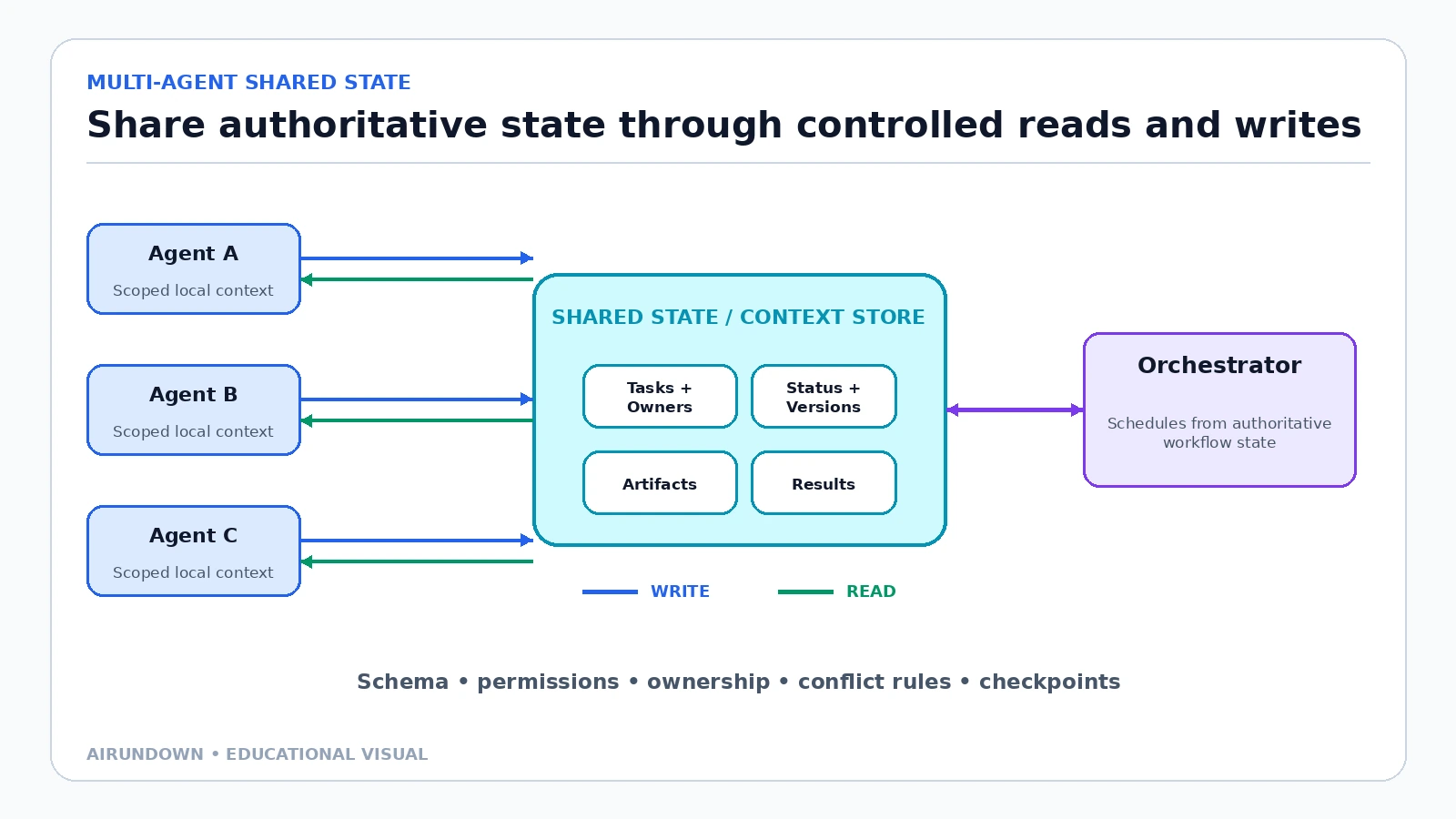
Learn how multi-agent systems separate local context from shared workflow state, exchange artifacts, synchronize updates, persist checkpoints, and avoid state conflicts.
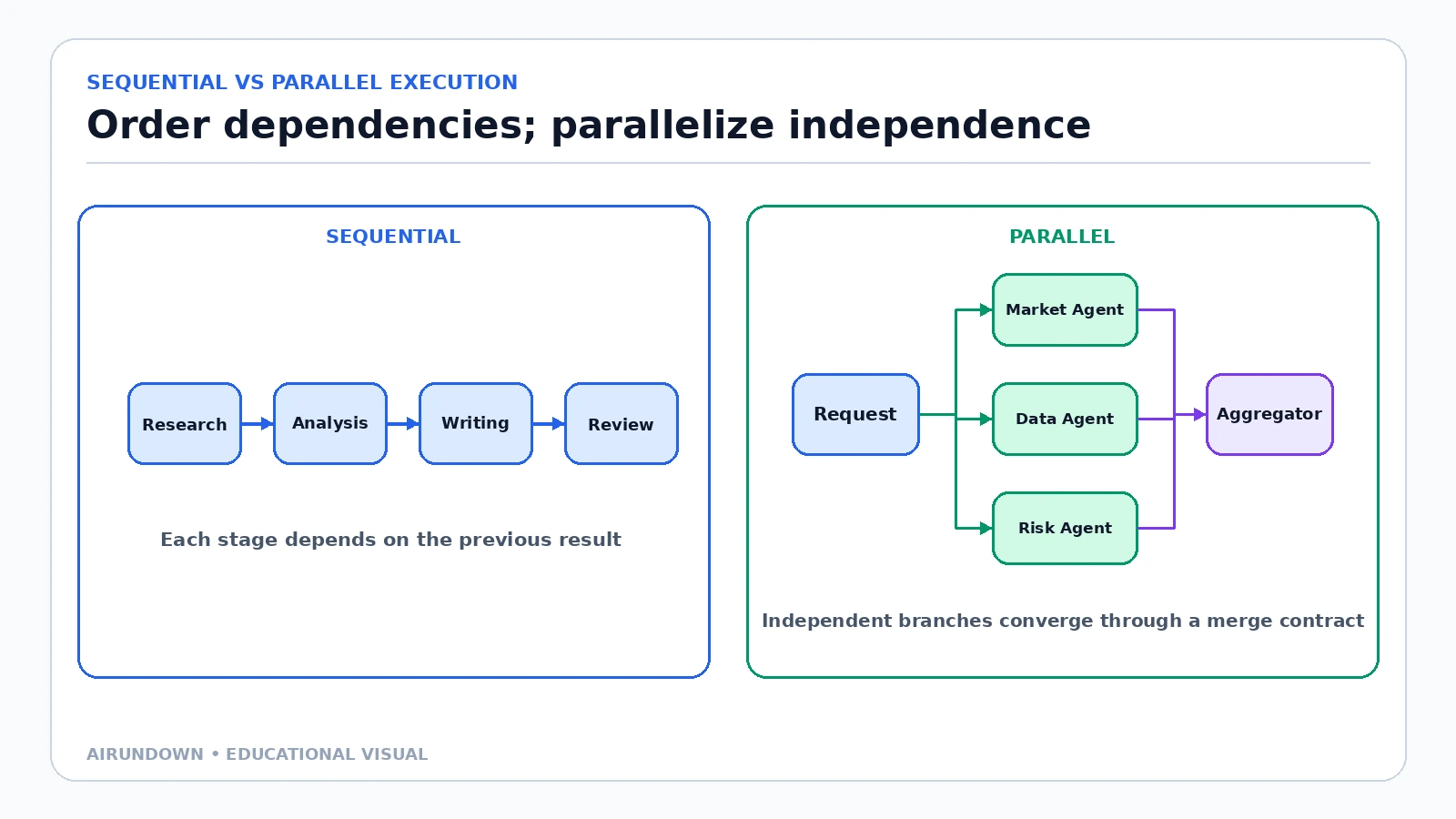
Compare sequential, parallel, and hybrid agent execution by dependencies, latency, cost, state transfer, synchronization, aggregation, and failure handling.
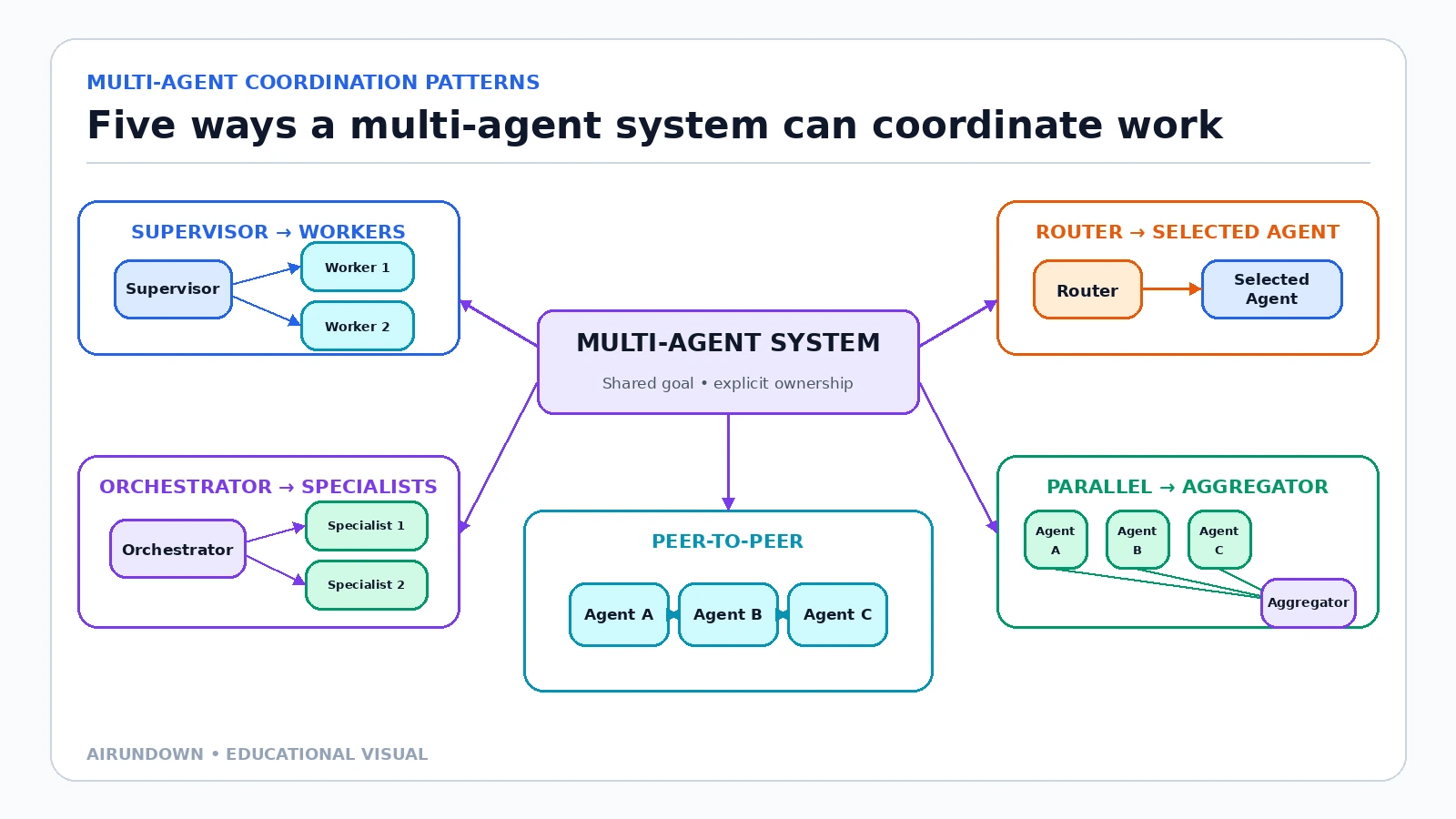
Learn seven practical multi-agent coordination patterns and how they manage roles, ownership, state, handoffs, aggregation, conflicts, and stopping.
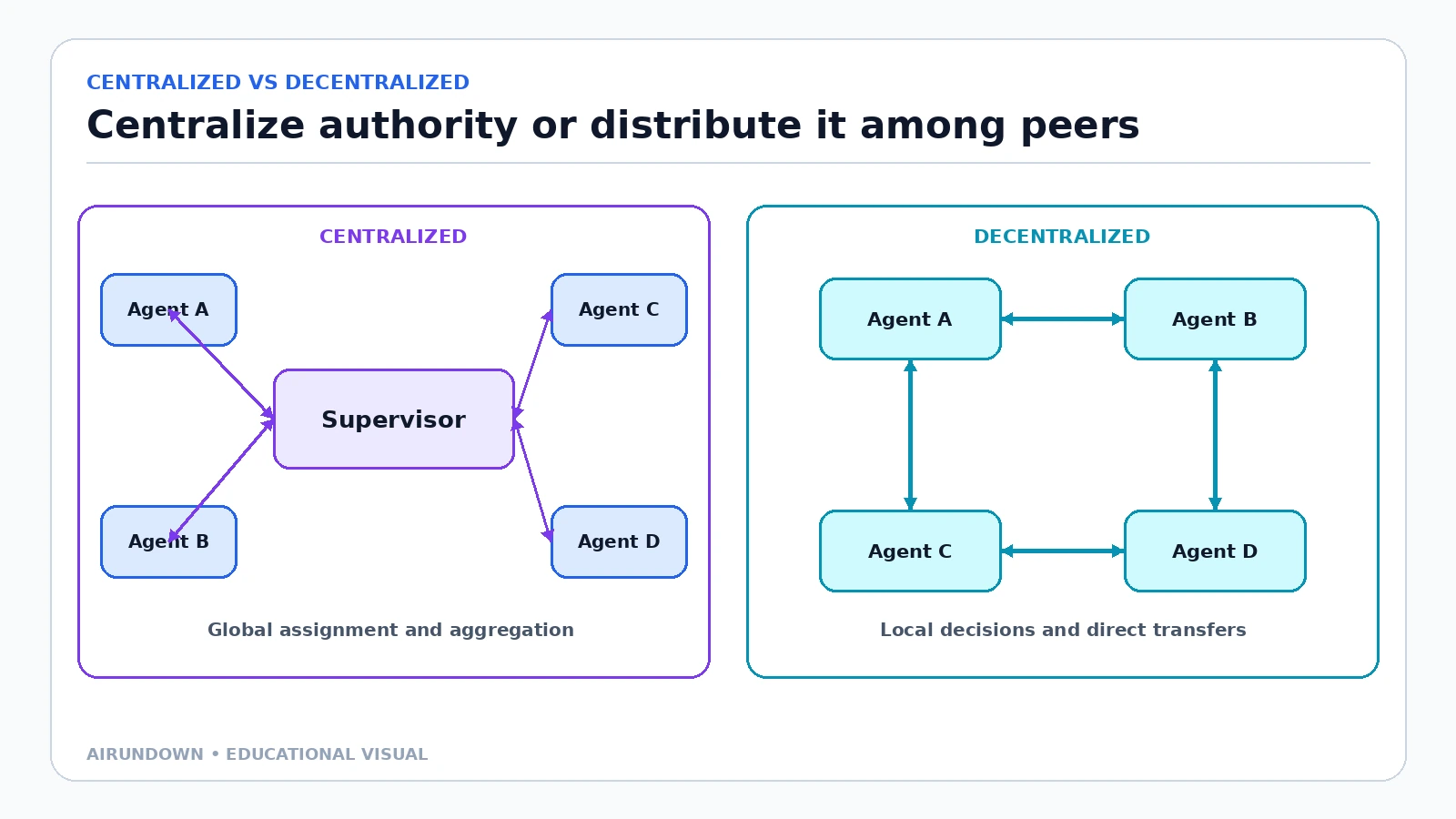
Compare centralized, decentralized, and hybrid multi-agent architectures across control, state, coordination, scale, observability, governance, and resilience.
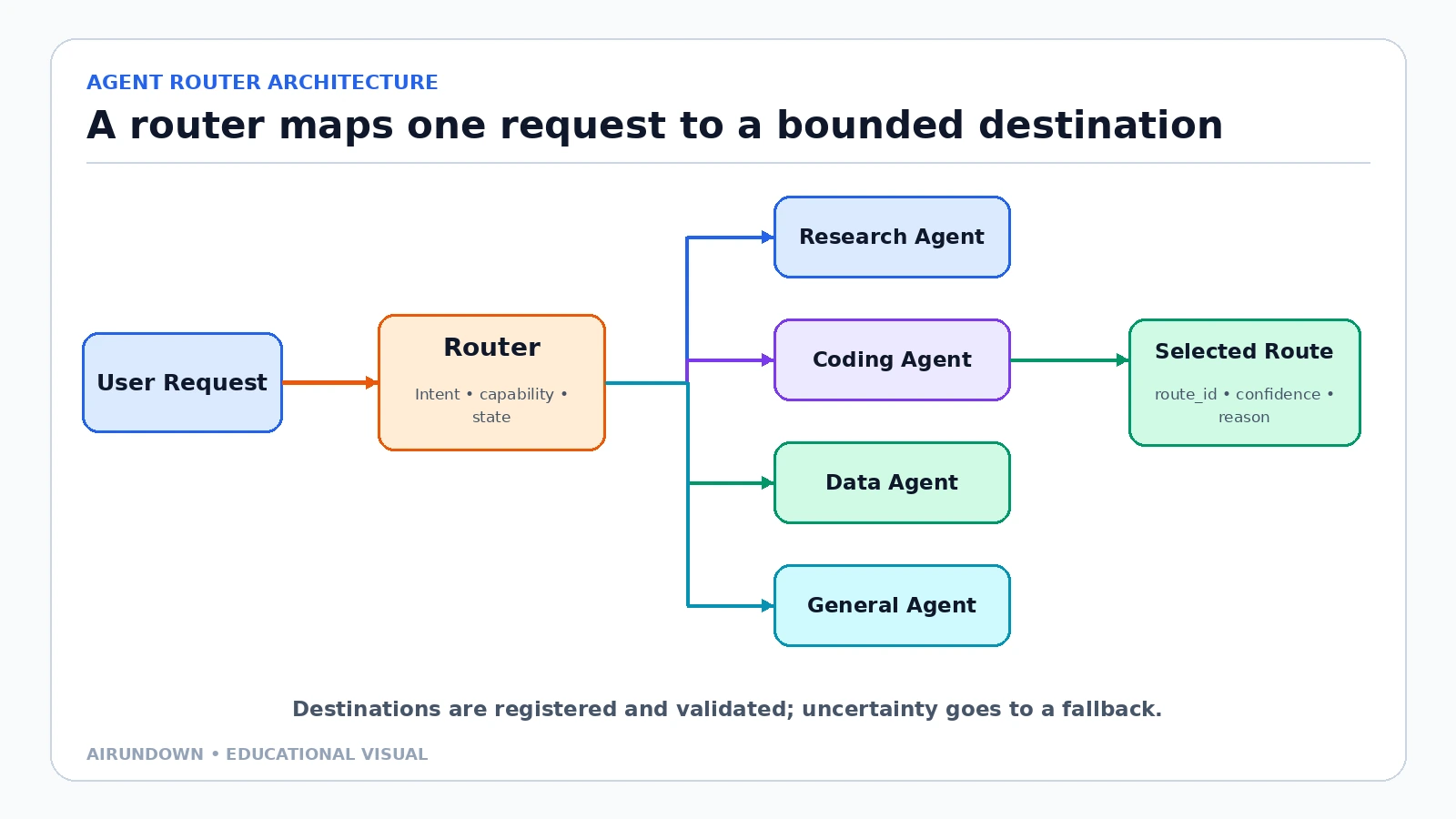
Learn seven agent-routing patterns, from deterministic rules and classifiers to semantic, capability-aware, hierarchical, and fallback routing.
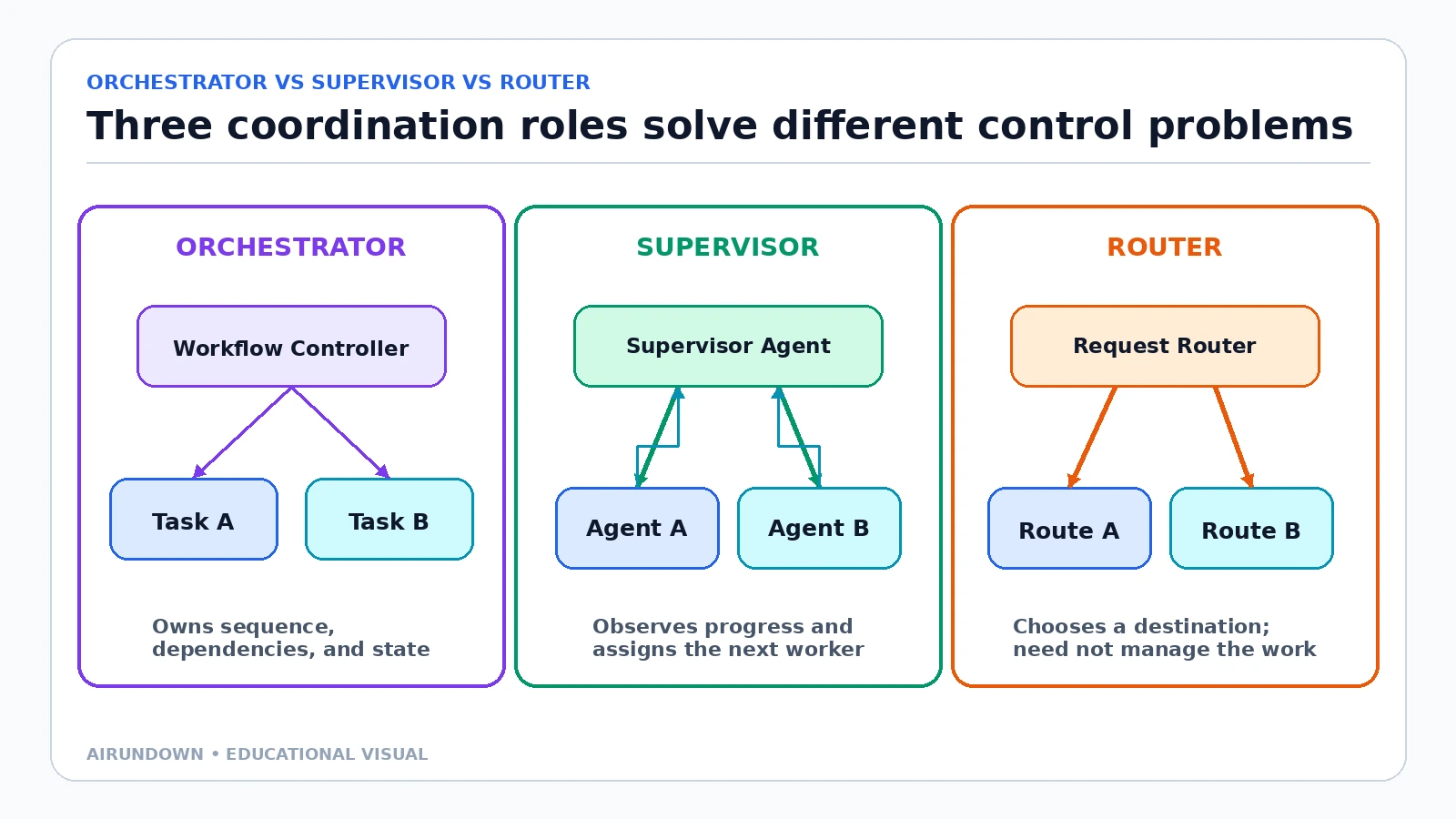
Compare orchestrators, supervisor agents, and routers by purpose, decision ownership, state responsibility, delegation, routing, and workflow control.
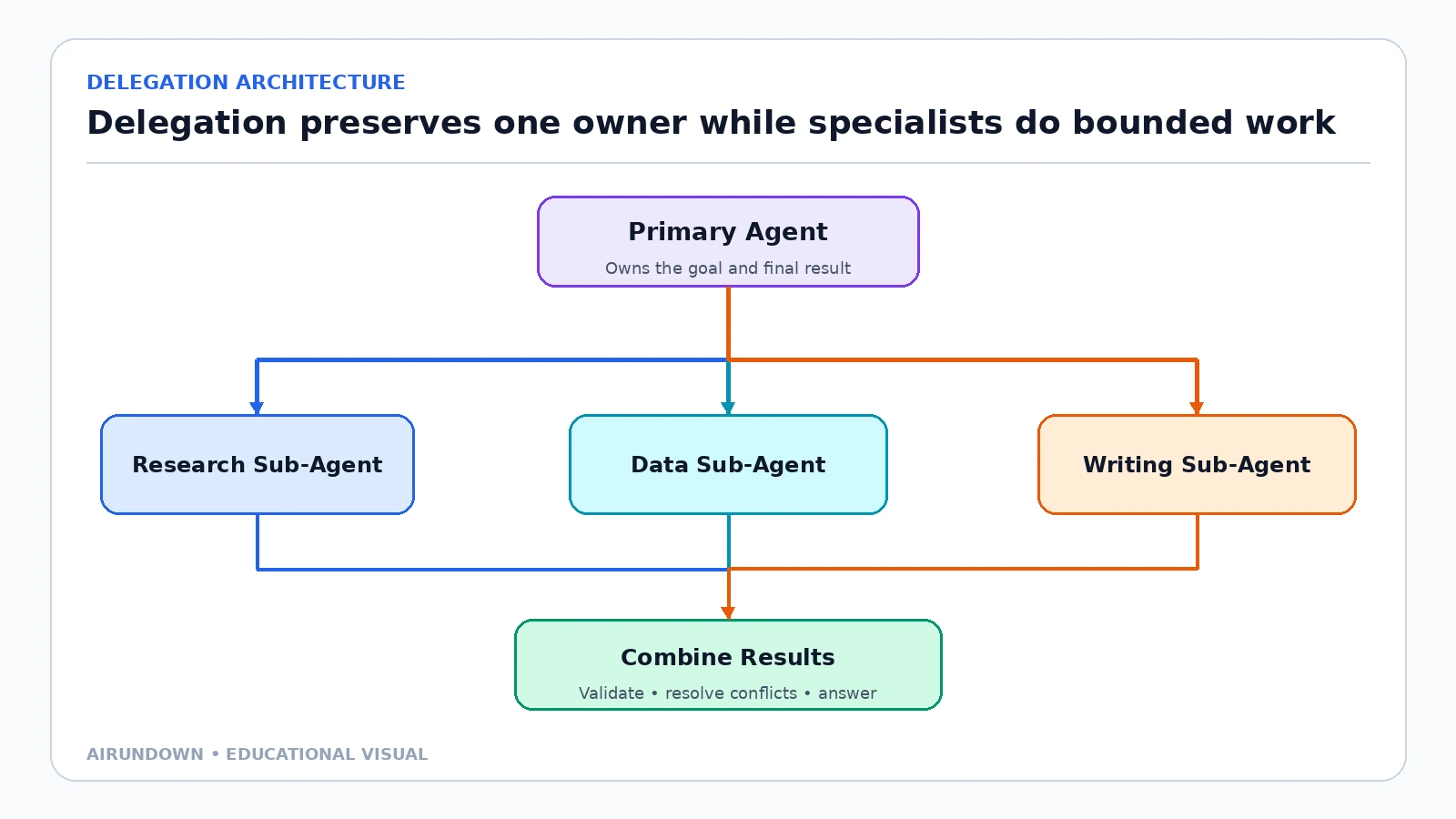
Learn how delegation, handoffs, and sub-agents divide work while preserving task ownership, context, state, permissions, and reliable result contracts.
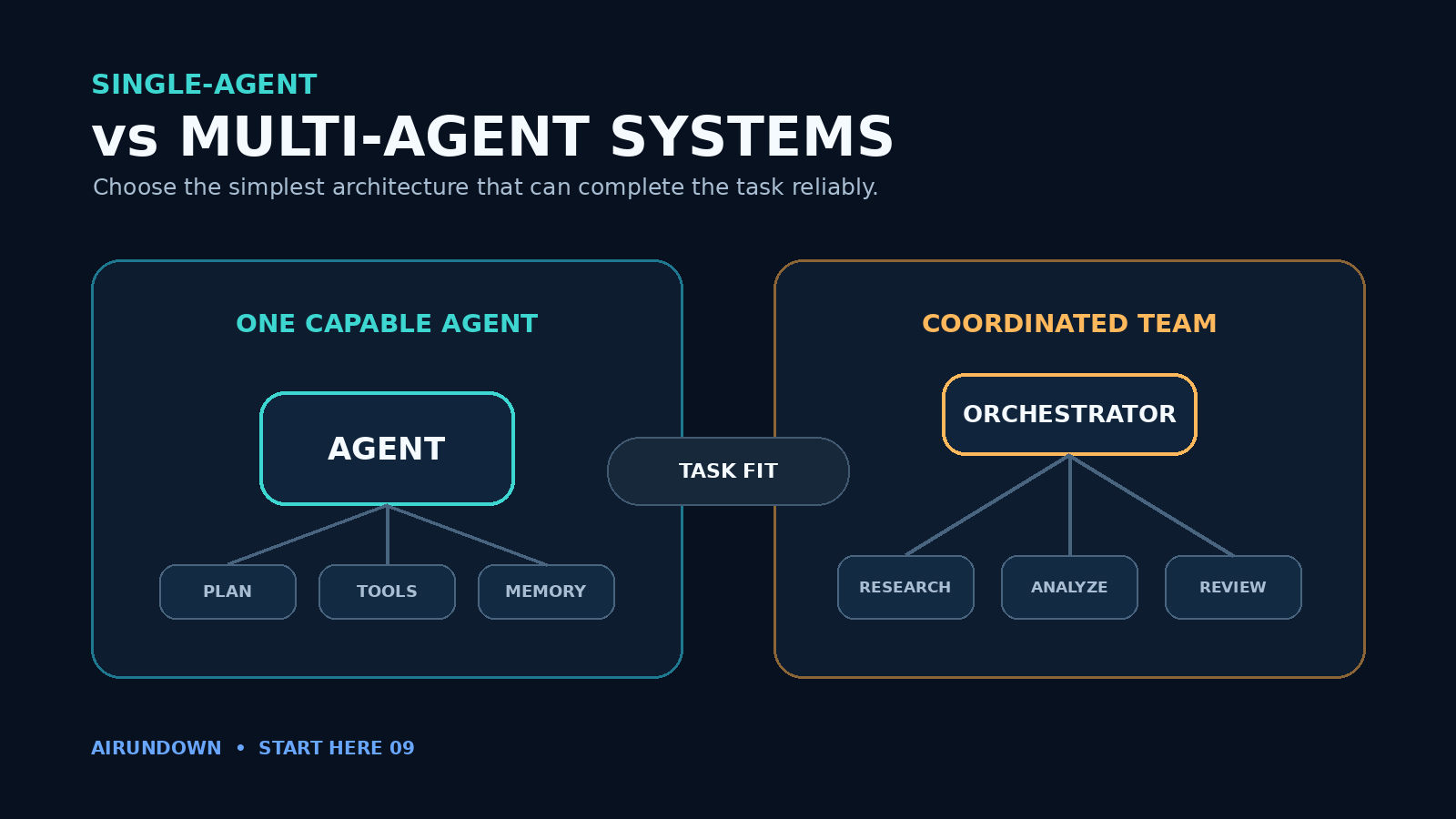
Learn how single-agent and multi-agent systems differ, what extra coordination costs, and how to choose the simplest architecture that works.