Vector Databases Explained for AI Agents
Learn how vector databases store embeddings, power semantic search, and support RAG and memory without replacing a knowledge base or relational database.
9 articles — updated daily
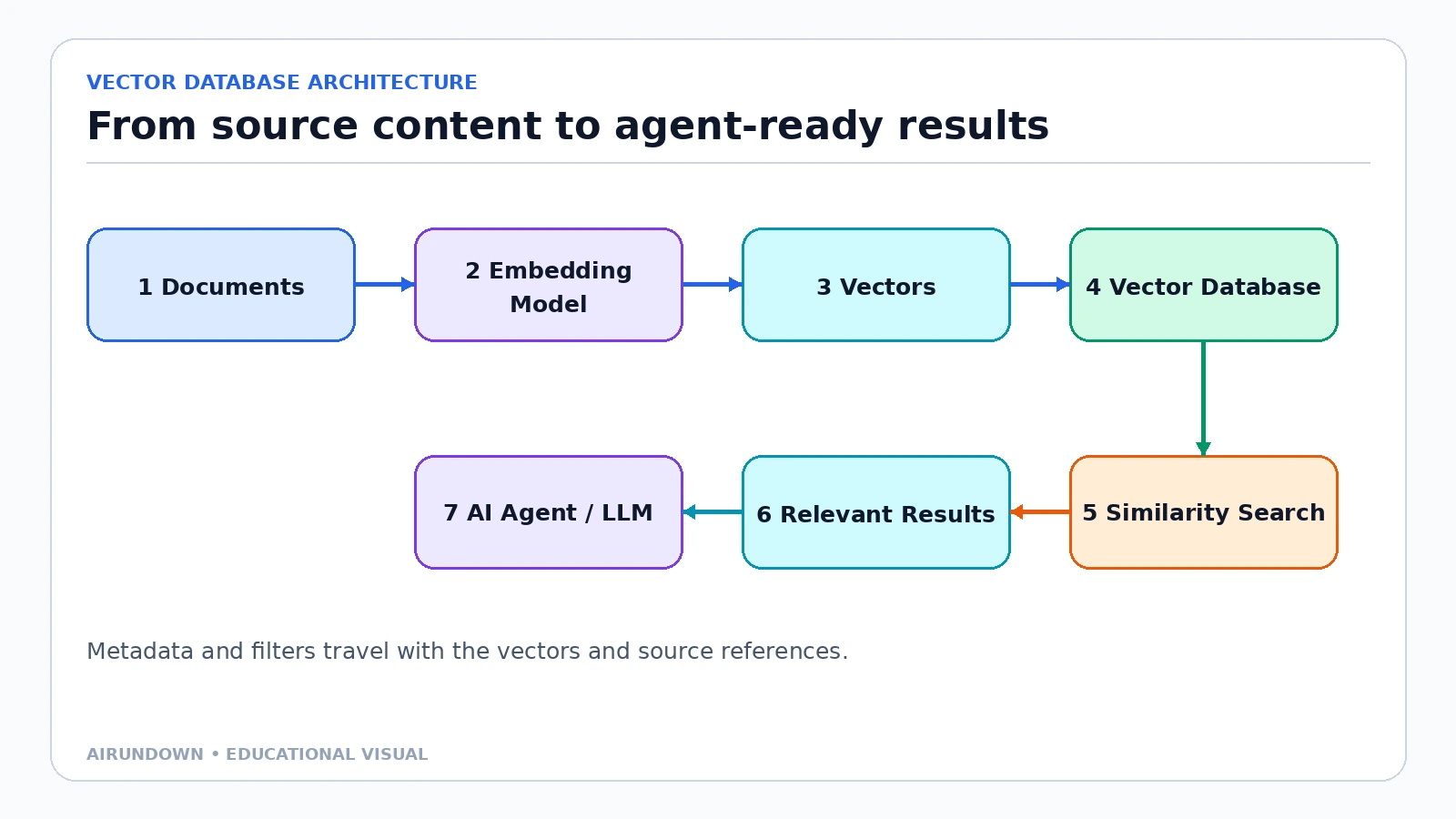
Learn how vector databases store embeddings, power semantic search, and support RAG and memory without replacing a knowledge base or relational database.
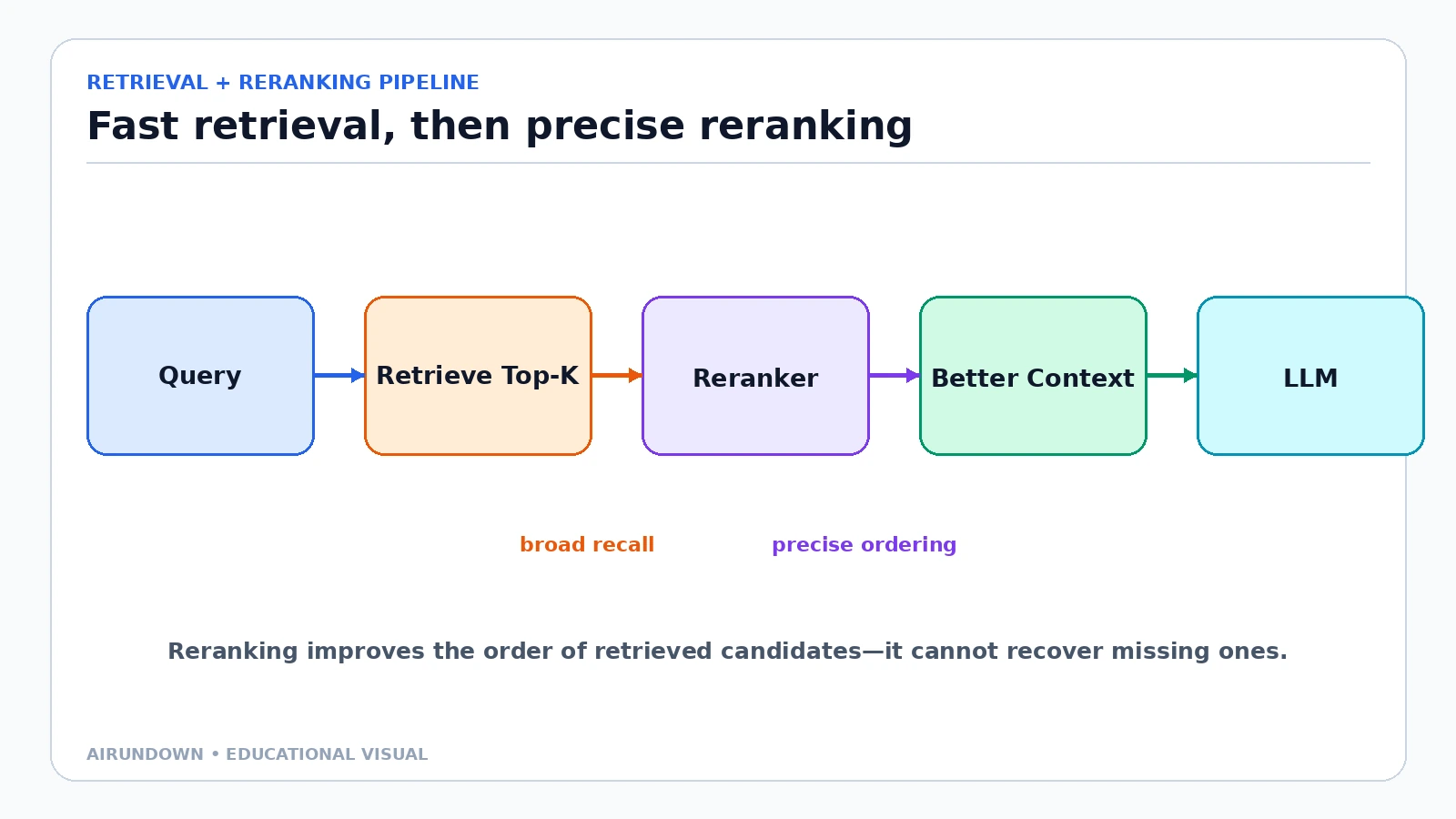
Learn why RAG pipelines rerank retrieved candidates, how cross-encoders and other methods improve ordering, and what reranking cannot fix.
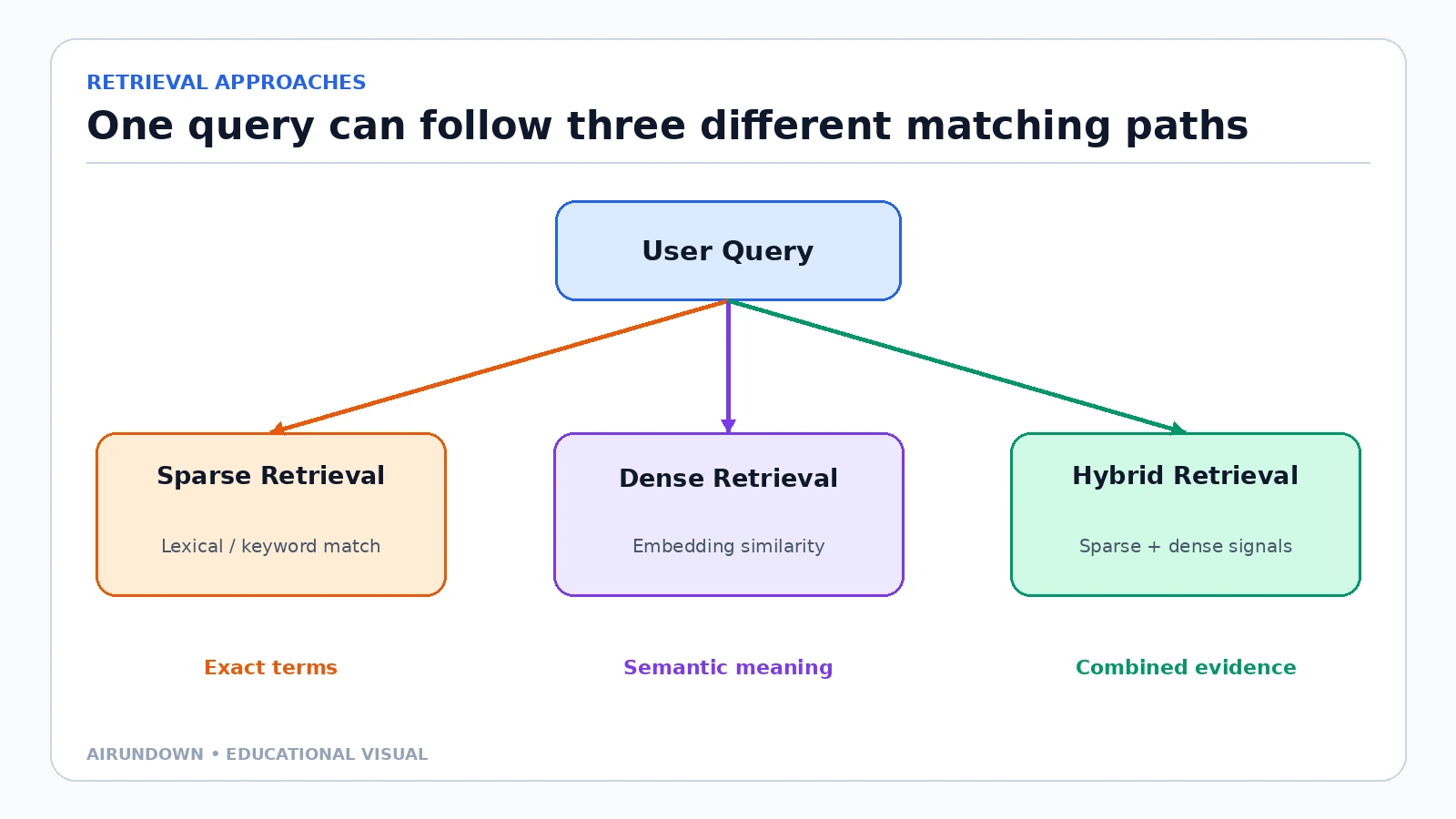
Compare sparse, dense, and hybrid retrieval by matching signal, strengths, failure modes, fusion methods, and the evidence needed to choose a RAG baseline.
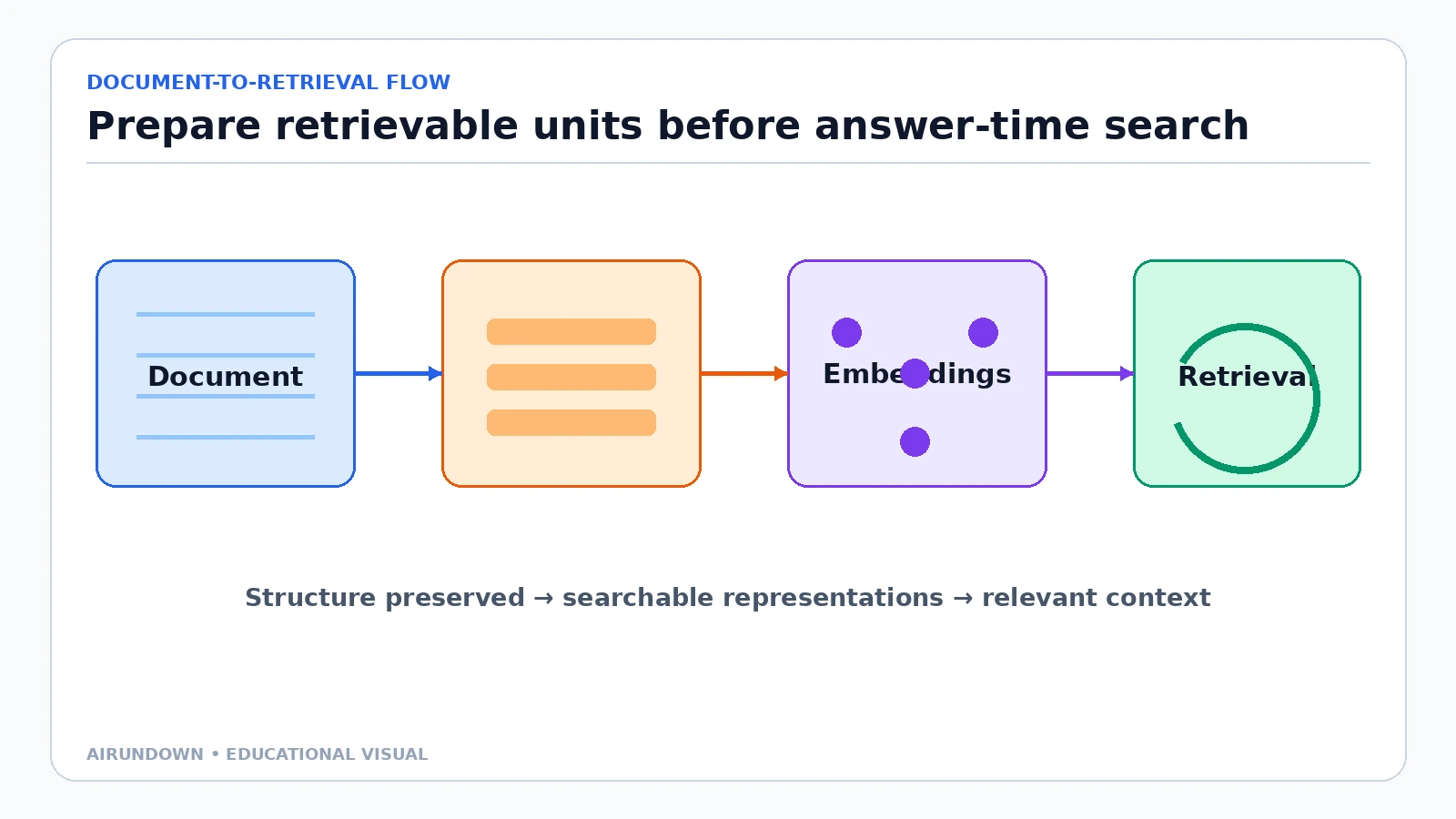
Compare fixed-size, recursive, semantic, and document-aware chunking for RAG, with practical guidance on chunk size, overlap, metadata, and evaluation.
A beginner-friendly mental model of embeddings, vectors, similarity, and how AI agents use them for retrieval and memory without confusing similarity with truth.
A practical comparison of external knowledge retrieval and agent memory, including their overlap, different data lifecycles, and shared vector infrastructure.
A decision-focused comparison of RAG knowledge retrieval and AI-agent execution, including when a simple RAG pipeline is enough and when an agent is justified.
A practical introduction to retrieval-augmented generation, why external knowledge matters, and where RAG fits beside fine-tuning, memory, and AI agents.
A step-by-step guide to the complete RAG pipeline, from document chunking and indexing through retrieval, reranking, context construction, and grounded generation.